

Counselors Deliver More Effective Treatment
Counselors play a crucial role in supporting individuals, couples, families, and groups through emotional, psychological, and behavioral challenges. Delivering more effective treatment means helping clients achieve meaningful, long-lasting improvement in their mental health, relationships, and overall well-being.
Effective treatment is not just about giving advice — it involves structured methods, strong interpersonal skills, ethical practice, and evidence-based approaches tailored to each client.
10 Key Skills That Can Help Counselors Deliver More Effective Treatment
Here are 10 key skills that can help counselors deliver more effective treatment, explained in detail with why they matter and how they improve client outcomes.
1. Active Listening
Active listening is the foundation of effective counseling. It involves fully focusing on the client, understanding their message, and responding thoughtfully.
Why it matters:
- Builds trust and rapport
- Helps clients feel heard and valued
- Reduces misunderstandings
How counselors use it:
- Maintaining eye contact
- Paraphrasing and summarizing
- Avoiding interruptions
- Paying attention to verbal and non-verbal cues
2. Empathy
Empathy means understanding and sharing the feelings of the client without judgment.
Benefits:
- Strengthens the therapeutic relationship
- Encourages openness
- Promotes emotional healing
Example:
Instead of saying “That’s not a big issue,” an empathetic counselor responds, “That sounds really difficult for you.”
3. Communication Skills
Clear and effective communication is essential in counseling.
Key components:
- Using simple and understandable language
- Asking open-ended questions
- Giving constructive feedback
- Explaining treatment plans clearly
This helps clients understand their emotions and solutions better.
4. Emotional Intelligence
This refers to the ability to recognize and manage both the counselor’s and client’s emotions.
Why it’s important:
- Helps regulate reactions in difficult sessions
- Prevents emotional burnout
- Enhances connection with clients
Counselors with high emotional intelligence adapt better to diverse client needs.
5. Cultural Competence
Understanding and respecting cultural, religious, and social backgrounds is crucial.
Impact on treatment:
- Builds trust in diverse populations
- Reduces bias and misunderstandings
- Creates inclusive therapy environments
This skill is especially important in multicultural societies.
6. Problem-Solving and Critical Thinking
Counselors must analyze situations and develop effective strategies.
What this includes:
- Identifying root causes of problems
- Developing practical coping strategies
- Creating personalized treatment plans
This ensures therapy is structured and goal-oriented.
7. Patience and Flexibility
Every client progresses at a different pace.
Why this matters:
- Avoids rushing the therapy process
- Allows adaptation to changing client needs
- Supports long-term healing
Counselors must remain calm and flexible, even in challenging cases.
8. Ethical and Professional Practice
Maintaining confidentiality and professional boundaries is essential.
Core principles:
- Respecting client privacy
- Obtaining informed consent
- Following professional guidelines
- Maintaining trust
Ethical behavior ensures a safe and secure environment for clients.
9. Rapport Building and Trust
Building a strong therapeutic relationship leads to better outcomes.
How counselors build trust:
- Being non-judgmental
- Showing genuine care
- Creating a safe space
- Being consistent and reliable
Clients who trust their counselor are more likely to open up and engage in treatment.
10. Continuous Learning and Self-Reflection
The field of mental health is constantly evolving, so counselors must update their knowledge.
Ways to develop this skill:
- Attending workshops and training
- Learning new therapeutic techniques
- Reflecting on personal biases and growth
- Seeking supervision and feedback
This ensures counselors provide modern and effective treatment methods.
Therapeutic Alliance as a Predictor of Treatment Success
Research consistently identifies the therapeutic alliance as one of the strongest predictors of positive counseling outcomes, often surpassing specific techniques in statistical impact.
Components of a Strong Therapeutic Alliance:
- Agreement on treatment goals
- Consensus on therapeutic tasks
- Emotional bonding and trust
- Client perception of counselor empathy
- Session-to-session continuity
Studies indicate that:
- Approximately 30% of treatment effectiveness can be attributed to alliance quality.
- Clients reporting high alliance levels are 2x more likely to complete therapy programs.
- Dropout rates reduce by nearly 40% when alliance-building strategies are employed early.
Skills to Make Informed Decisions in Major specifications
Counselors can relatively deal with any of the following issues such as trauma, substance abuse, family dynamics, or youth counseling. The ability to make informed decisions in the specialized concentrations allows counselors to choose customized interventions. This is a skill that allows counselors to be specific in their critical thinking and to deliver narrowly focused support to the unique needs of the clients.
The professionals may increase this ability by continuing education with special degrees. As an example, when a professional joins an accelerated degree in counseling online, it might be useful in refining their knowledge in their area of interest even in a lesser period during the time they are carrying out their practice and gaining a hands-on experience. Their expertise in one or more concentration allows them to take a case with more insight and provide valuable and applicable advice. All this will assist them to offer more effective treatment to the needy.
Evidence-Based Counseling Approaches That Improve Treatment Outcomes
Modern counseling effectiveness is increasingly evaluated through evidence-based therapeutic modalities that have demonstrated clinical success across controlled studies and longitudinal trials. These approaches allow counselors to systematically match interventions to client symptomatology, improving remission rates and long-term recovery stability.
| Counseling Approach | Primary Use Cases | Average Success Rate* | Treatment Duration | Cost per Session (India) |
| Cognitive Behavioral Therapy (CBT) | Anxiety, Depression, OCD | 60–75% | 8–20 sessions | ₹1,500 – ₹4,000 |
| Dialectical Behavior Therapy (DBT) | Personality Disorders, Trauma | 50–70% | 6–12 months | ₹2,000 – ₹5,000 |
| Psychodynamic Therapy | Relationship Issues | 55–70% | Long-term | ₹1,800 – ₹4,500 |
| Solution-Focused Therapy | Goal-oriented change | 50–60% | 5–10 sessions | ₹1,200 – ₹3,500 |
| Family Systems Therapy | Family conflict | 65% | 10–15 sessions | ₹2,000 – ₹6,000 |
*Success rates vary depending on diagnosis severity, comorbidity, and therapeutic alliance quality.
Counselors trained in multiple therapeutic modalities demonstrate significantly improved adaptability in treatment planning and intervention selection.
Measurement-Based Care (MBC) in Counseling
Measurement-Based Care (MBC) introduces standardized outcome tracking into the counseling process, allowing practitioners to quantitatively evaluate treatment progress.
Common Assessment Tools Used by Counselors:
| Assessment Tool | Purpose | Administration Time | Cost (Per Use) |
| PHQ-9 | Depression screening | 5 mins | Free |
| GAD-7 | Anxiety severity | 3 mins | Free |
| Beck Depression Inventory | Mood disorders | 10 mins | ₹500 – ₹1,000 |
| CORE-OM | Psychological distress | 10–15 mins | ₹800 – ₹1,200 |
| Outcome Rating Scale (ORS) | Session feedback | 2 mins | ₹300 – ₹700 |
Implementation of MBC has been associated with:
- 20–25% faster symptom reduction
- Reduced relapse rates
- Improved client satisfaction scores
- Enhanced treatment plan personalization (APA)
Client-Centered Outcome Indicators in Counseling
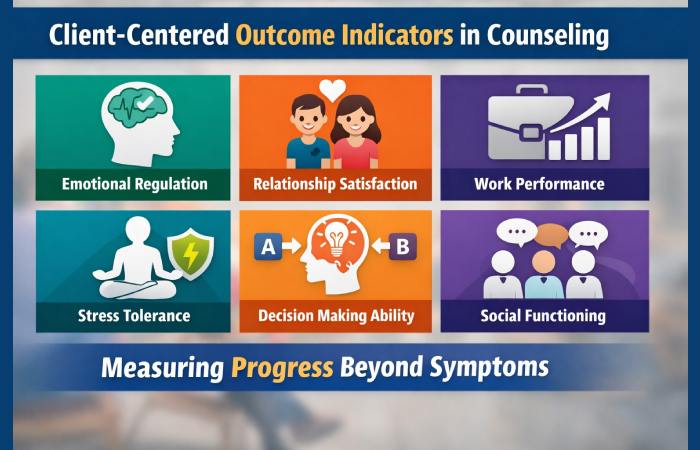
Effective counselors evaluate treatment success based on measurable indicators beyond symptom relief.
Common Outcome Metrics:
- Emotional regulation improvement
- Relationship satisfaction
- Workplace performance
- Stress tolerance levels
- Decision-making ability
- Behavioral consistency
- Social functioning
Outcome-based counseling ensures treatment remains dynamic and aligned with evolving client needs.
Technology-Integrated Counseling for Improved Accessibility
Digital platforms are increasingly utilized by counselors to expand treatment accessibility and continuity of care.
Tele-Mental Health Services:
| Service Type | Average Cost per Session (India) |
| Video Counseling | ₹800 – ₹3,000 |
| Audio Sessions | ₹500 – ₹2,000 |
| Chat-Based Therapy | ₹300 – ₹1,500 |
| Subscription Therapy Plans | ₹4,000 – ₹12,000/month |
Online counseling demonstrates:
- Comparable effectiveness to in-person therapy for mild-to-moderate conditions
- Improved attendance rates
- Reduced treatment interruption
- Increased accessibility for rural populations (WHO)
Continuing Professional Development (CPD) for Counselors
Ongoing professional education significantly enhances counselor competency and treatment delivery.
Advanced Certification Programs and Costs:
| Certification Program | Duration | Average Tuition Fees |
| Trauma-Informed Care Certification | 6–12 weeks | ₹15,000 – ₹40,000 |
| Addiction Counseling Certification | 3–6 months | ₹20,000 – ₹60,000 |
| Child & Adolescent Counseling | 4–8 months | ₹25,000 – ₹70,000 |
| Grief Counseling Training | 6–10 weeks | ₹10,000 – ₹35,000 |
| Cognitive Behavioral Therapy Certification | 3–9 months | ₹30,000 – ₹1,20,000 |
Counselors engaging in CPD programs typically report:
- Improved diagnostic accuracy
- Greater treatment planning efficiency
- Enhanced ethical decision-making
- Reduced professional burnout
Multidisciplinary Collaboration in Counseling Treatment
Collaborative treatment planning involving psychiatrists, social workers, occupational therapists, and clinical psychologists enhances treatment comprehensiveness.
Benefits of Multidisciplinary Collaboration:
- Integrated mental health interventions
- Medication management support
- Holistic recovery planning
- Improved crisis response mechanisms
- Reduced hospitalization rates
Clients receiving multidisciplinary support demonstrate:
- 15–30% higher recovery rates
- Lower relapse frequency
- Greater functional independence
Cost-Effectiveness of Professional Counseling
Investing in professional counseling services has demonstrated long-term economic benefits for individuals and families.
| Counseling Investment | Potential Long-Term Benefit |
| ₹20,000 – ₹50,000/year | Reduced medical expenses |
| Therapy engagement | Improved workplace productivity |
| Early trauma intervention | Lower risk of chronic disorders |
| Family counseling | Reduced legal or conflict costs |
Studies show individuals who engage in structured counseling programs experience:
- Reduced absenteeism
- Lower healthcare expenditure
- Improved quality of life
- Enhanced interpersonal functioning
Conclusion
The mentioned skills are the basis of efficient and caring counseling. Active listening, empathy, specialized knowledge, and adaptability all help in creating a supportive environment that will help clients feel safe and valued. With these skills developed, the counselors would be able to improve their approach in leading the clients to purposeful progress and sustainable transformation. Finally, remain devoted to the development of skills and self-reflection will help the clients, as well as enhance the whole profession of counseling, resulting in trust and good results.