
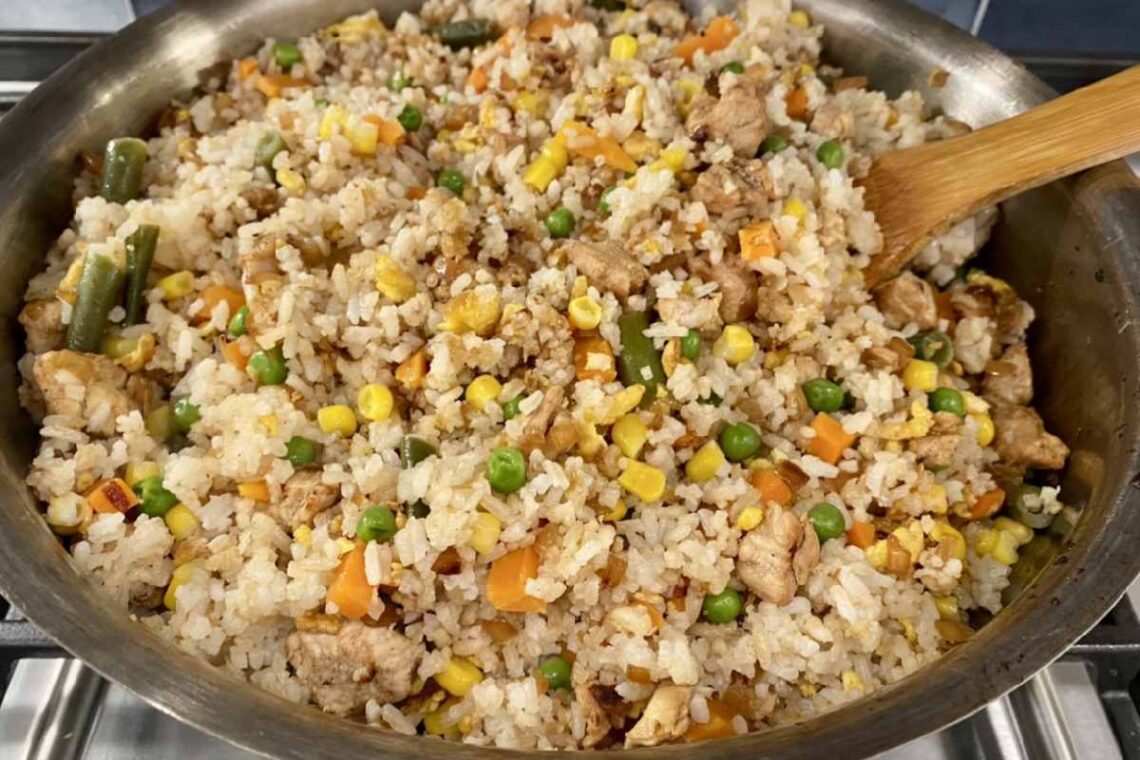
Chicken fried rice is a popular and tasty dish made with rice, chicken, vegetables, eggs, and seasonings. The calorie content can vary depending on the ingredients, portion size, and cooking method (especially the amount of oil used).
Fried rice is a favorite food and a meal of most varieties of Asian food. It is typically cooked rice accompanied by vegetables, eggs, meat, fish or poultry.
Nonetheless, the amount of calories contained in fried rice may also change according to the ingredients of the same.
This paper gives one an idea of the number of calories found in various varieties of fried rice.
Detailed Nutritional Breakdown of Chicken Fried Rice
While you mentioned 343 calories per 1 cup (198g), calorie values vary depending on preparation method, oil usage, and portion size.
Standard Homemade Chicken Fried Rice (1 cup / 198–200g)
| Nutrient | Average Amount |
| Calories | 320–360 kcal |
| Protein | 14–18 g |
| Carbohydrates | 45–55 g |
| Fat | 7–12 g |
| Saturated Fat | 1.5–3 g |
| Sodium | 500–900 mg |
| Fiber | 2–4 g |
| Sugar | 2–4 g |
Why sodium varies: Soy sauce, oyster sauce, and seasoning powders significantly increase sodium levels. (USDA FoodData Central)
Types of Fried Rice
Beef Fried Rice: 352 calories
Most of the varieties of fried rice and beef are cooked with either ground beef or a piece of flank, which is a slender part of the abdominal meat of the cow.
As such, compared to other types of fried rice, beef fried rice contains more protein. It is also quite fatty dish, which contributes to the sum of calories per dish.
Beef in Fried rice (198 grams) contains the following:
- Calories: 352
- Protein: 16 grams
- Carbs: 55 grams
- Fat: 8 grams
Shrimp Fried Rice: 329 calories
Fried rice is the favorite dish of shrimp which is rich in taste and soft in texture.
It is prepared with peeled and deveined shrimp that is less fat and has fewer calorie content compared to other forms of meat and poultry commonly used to prepare fried rice.
One cup (198 grams) of fried rice with shrimp contains:
- Calories: 329
- Protein: 13 grams
- Carbs: 55 grams
- Fat: 6 grams
Pork Fried Rice: 354 calories
Fried rice pork is usually prepared using ground pork, pork chops or pork loin.
The level of calories in fried rice with pork is the greatest in contrast to other types of fried rice.
The reason is that pork may have some amount of fat though this will depend on the type of pork cut you have.
Fried pork is a one-cup (198 g) of rice with pork inside it:
- Calories: 354
- Protein: 15 grams
- Carbs: 55 grams
- Fat: 8 grams
Chicken Fried Rice: 343 calories
Though you can prepare chicken fried rice with practically any kind of chicken, chicken breast is the most common ingredient of most recipes.
An average serving of chicken breast is a good source of protein, has moderate fat and calories.
1 cup (198 g) of fried rice with chicken has:
- Calories: 343
- Protein: 14 grams
- Carbs: 55 grams
- Fat: 7 grams
Vegetarian fried rice: 289 calories
Vegan-fied rice typically contains such ingredients as soy sauce, gestating vegetables and sesame oil. It is also characterized by the general presence of scrambled eggs that are stirred into the fried rice.
Fried rice which is done in vegetarian style is also less caloric and protein and fat rich than other types of fried rice since it contains no meat.
Vegetarian fried rice 1 cup (166 grams) provides:
- Calories: 289
- Protein: 6 grams
- Carbs: 54 grams
- Fat: 5 grams
Portion Size Comparison
Portion control directly impacts calorie intake.
| Size | Approximate Calories |
| ½ cup (100g) | 160–180 kcal |
| 1 cup (200g) | 320–360 kcal |
| 2 cups (400g) | 640–720 kcal |
| 1 restaurant plate (500–600g) | 800–1,000 kcal |
Most restaurant servings equal 2–3 cups, which can exceed 900 calories.
Restaurant vs Homemade Chicken Fried Rice Calories
Calories increase significantly in restaurant-style versions due to oil quantity.
| Type | Calories (per cup) | Oil Usage |
| Homemade (light oil) | 320–350 kcal | 1 tbsp or less |
| Chinese Takeout | 380–450 kcal | 2–3 tbsp |
| Fast Food Asian Chain | 400–500 kcal | High oil + sauces |
| Street-Style (India/Asia) | 450–600 kcal | Heavy oil + sauces |
Key contributor: 1 tablespoon oil = ~120 calories.
Restaurants often use 2–4 tablespoons per batch.
Calorie Comparison Chart of All Fried Rice Types
| Type | Calories (1 cup) |
| Chicken | 343 kcal |
| Beef | 352 kcal |
| Pork | 354 kcal |
| Shrimp | 329 kcal |
| Vegetarian | 289 kcal |
Chicken remains mid-range in calories.
Calorie Comparison: White Rice vs Brown Rice vs Cauliflower Rice
Base Ingredient Impact
| Rice Type | Calories (1 cup cooked) | Carbs | Fiber |
| White Rice | 205 kcal | 45g | 0.6g |
| Brown Rice | 215 kcal | 45g | 3.5g |
| Cauliflower Rice | 25–30 kcal | 5g | 2g |
Switching to cauliflower rice can reduce total dish calories by 150–200 calories per serving.
Chicken Cut Impact on Calories
| Chicken Cut | Calories (100g cooked) |
| Skinless Chicken Breast | 165 kcal |
| Chicken Thigh (skinless) | 209 kcal |
| Chicken Thigh (with skin) | 240–250 kcal |
Using chicken thighs can increase meal calories by 50–100 kcal per serving.
Calories Based on Cooking Method
Traditional Wok Frying
- 400–500 kcal
- High oil
- Higher sodium
Air-Fried Version
- 300–340 kcal
- 50% less oil
Stir-Fried (Minimal Oil)
- 320–360 kcal
Meal-Prep Version (Low Sodium)
- 280–320 kcal
Calorie Reduction Strategies (Advanced)
Use Spray Oil Instead of Pouring
Reduces 80–100 calories.
Replace Half Rice With Vegetables
Reduces 100–150 calories.
Skip Egg
Saves 70 calories.
Use Low-Sodium Soy Sauce
Reduces sodium by 30–40%.
Increase Protein Ratio
Improves satiety and reduces overeating.
Is Chicken Fried Rice Healthy?
Here is a clear table showing the health benefits and concerns of chicken fried rice to help you understand whether it fits into a balanced diet.
| Aspect | Healthy Points | Possible Concerns |
| Protein Content | Rich in protein from chicken and eggs, which supports muscle growth and keeps you full longer. | Too much chicken or fried eggs can increase calorie intake. |
| Energy Source | Provides carbohydrates from rice for quick energy and daily activities. | White rice may increase blood sugar levels if eaten in large amounts. |
| Vitamins & Minerals | Vegetables like carrots, peas, and capsicum add fiber, vitamins, and antioxidants. | Low vegetable content in restaurant versions reduces nutritional value. |
| Fat Content | Can be healthy if cooked with small amounts of oil and lean chicken. | High oil or butter increases unhealthy fat and calories. |
| Weight Management | Homemade chicken fried rice in controlled portions can support weight management. | Large servings or takeaway versions may contribute to weight gain. |
| Heart Health | Using healthy oils and brown rice can improve heart health. | High sodium from soy sauce may raise blood pressure. |
| Digestive Health | Fiber from vegetables and brown rice supports digestion. | Low fiber in white rice versions may not be ideal for gut health. |
| Customization | Easy to make healthier by adding more vegetables and reducing oil. | Fast-food versions are often high in salt and preservatives. |
| Balanced Meal | Combines protein, carbs, and vegetables in one dish. | Imbalance occurs if the meal lacks vegetables or uses too much oil. |
| Frequency of Eating | Healthy when eaten occasionally and prepared at home. | Regular consumption of oily fried rice may affect overall health. |
How to Cut Down On Calories?
When a person is preparing fried rice at home there are numerous opportunities to reduce the amount of calories in your food.
Consume as many vegetables as possible because it is a great way to minimize the amount of calories as well as multiply the ratio of fibers, vitamins and minerals in your diet.
Another way you can save calories in your meal is by using the lean portions of meat which are either fish or poultry. Or you do not need to add meat, and prepare your fried rice without meat.
A simple replacement of white rice with cauliflower rice is also a way of reducing the amount of carbohydrates and calories.
You can also use less oil and saute your rice rather than frying it so that you can check your caloric intake.
- Spray oil method
- Skip egg option
- Replace half rice with vegetables
- Low-sodium soy sauce strategy
Glycemic Index & Blood Sugar Impact
- White rice GI: 70–89 (High)
- Brown rice GI: 50–68 (Moderate)
- Cauliflower rice GI: Very Low
High GI can spike blood sugar levels.
Adding:
- Protein
- Fiber
- Healthy fats
Can reduce glycemic impact. (Cleveland Clinic)
Micronutrient Profile of Chicken Fried Rice
Key Vitamins & Minerals
- Vitamin B6 (from chicken)
- Niacin
- Iron
- Phosphorus
- Selenium
- Magnesium
- Zinc
- Vitamin A (from vegetables)
- Vitamin C (if bell peppers added)
However, sodium content may exceed 40–60% of daily recommended intake in restaurant versions.
Calories Burned to Offset 1 Cup (350 kcal)
| Activity | Time Required (70kg person) |
| Walking | 70–90 minutes |
| Jogging | 35–40 minutes |
| Cycling | 45 minutes |
| Strength Training | 60 minutes |
Price Analysis (India & Global Averages)
Prices vary by region and outlet type.
India (2026 estimated averages)
| Type | Price (INR) |
| Street-Style Chicken Fried Rice | ₹120–₹180 |
| Mid-Range Restaurant | ₹220–₹350 |
| Premium Asian Restaurant | ₹400–₹650 |
| Food Delivery Apps | ₹250–₹450 |
USA (Average)
| Type | Price (USD) |
| Chinese Takeout | $8–$12 |
| Fast Casual Asian Chain | $9–$14 |
| Premium Restaurant | $15–$22 |
Larger portions increase calorie intake proportionally.
FAQ Section – Chicken Fried Rice Calories
How many calories are in 1 cup of chicken fried rice?
An average of 1 cup (198-200 grams) of chicken fried rice has a range of 320 to 360 calories, which varies according to the quantity of oil, chicken cut, and sauces applied in the process of making it.
How many calories are in 2 cups of chicken fried rice?
There are approximately 640 and 720 calories in two cups of chicken fried rice. Servings of restaurant style can be over 800 calorie because of increased oil.
Is chicken fried rice high in calories?
Chicken fried rice is said to be a rather high-calorie food. Much of the calories are found in white rice and cooking oil as opposed to the chicken itself.
Does using chicken breast reduce calories in fried rice?
Yes. Skinless chicken breast may be used instead of chicken thighs to cut down on the number of calories in a dish by about 50100 calories per serving.
Is homemade chicken fried rice healthier than restaurant versions?
Chicken fried rice that is prepared at home generally uses less oil and sodium, which makes it fewer calories than restaurant and takeout versions.
Can I eat chicken fried rice during weight loss?
Yes, on the one hand, when taken in moderation and made with:
- Minimal oil
- Lean chicken breast
- Brown rice or cauliflower rice
- Increased vegetable content
How can I reduce calories in chicken fried rice?
You can reduce the calorie level by:
- Using less cooking oil
- Replacing white rice with cauliflower rice
- Increasing vegetables
- Skipping eggs
- Using low-sodium soy sauce
Does egg add calories to the fried rice?
Yes. One large egg adds approximately 70 calories to the dish.
Should chicken fried rice be on the diet of diabetics?
One can eat it in moderate amounts, but he or she should eat it using brown rice or cauliflower rice to lessen the glycemic effect.
Why is restaurant chicken fried rice more caloric?
Restaurant versions often include:
- Excess oil
- High-sodium sauces
- Larger portion sizes
- Butter or MSG seasoning
Conclusion
It is all a matter of ingredients and the quantity of calories in fried rice depends on the ingredients you use.
Fried rice dishes that are made of beef, chicken, pork, shrimp, and vegetarian foods have different caloric content.
The quantity of calories in your meal can be reduced by choosing lean meat cuts, less oil, loading up on vegetables or substituting white rice with cauliflower rice.