

 Afiya Jafar
Fitness & Wellness Writer
Afiya Jafar is a fitness and wellness writer who focuses on making health, exercise, and healthy lifestyle information simple and practical.
Read Full Bio of Author →
Afiya Jafar
Fitness & Wellness Writer
Afiya Jafar is a fitness and wellness writer who focuses on making health, exercise, and healthy lifestyle information simple and practical.
Read Full Bio of Author →
 Sameena Begum
Health, Fitness & Digital Content Reviewer
Sameena reviews selected health, wellness, fitness, and digital content for clarity, factual presentation, and reader usefulness.
Read Full Bio of Reviewer →
Sameena Begum
Health, Fitness & Digital Content Reviewer
Sameena reviews selected health, wellness, fitness, and digital content for clarity, factual presentation, and reader usefulness.
Read Full Bio of Reviewer →
 Dr. Khizrana Begum
General Physician & Dermatologist
Dr. Khizrana Begum is a General Physician and Dermatologist with MBBS and MD qualifications and 5+ years of experience in the medical field.
Read Full Bio of Medical Reviewer →
Dr. Khizrana Begum
General Physician & Dermatologist
Dr. Khizrana Begum is a General Physician and Dermatologist with MBBS and MD qualifications and 5+ years of experience in the medical field.
Read Full Bio of Medical Reviewer →
Yet, in order to successfully navigate through the difficulties that will arise, we must give ourselves a beginner’s boost of motivation. Here are tips for you that will push you from questioning, to knowing that you have the power, and will be able to build healthy habits for life. Combining information from top-ranked fitness resources with trending 2026 tips will encourage you to act and remain disciplined.
❝
This article is a part of
Gym Hub
Beating First-Day Gym Nerves
Here’s your first workout in the gym and you’re already a little nervous about how things are supposed to be going on. It’s something that’s familiar to all of us whether we’re hesitant when confronting the machinery at our local gym, the burly men and women power lifting their personal bests at the bench press, or we are lost as where to start from.
We’ve compiled simple, actionable steps to combat first time gym nerves. By minimizing uncertainty we can create a straightforward plan for your visit.
Plan Your First Workout in Advance
Don’t wander into the gym with no aim. Knowing exactly what exercises you’ll be doing eliminates brain drain and helps with focus. A simple template could be as basic as:
- 5–10 minutes of light cardio
- 3–4 machine-based strength exercises
- A short cool-down
Knowing exactly what to do allows you to stay focused instead of feeling lost.
Follow these practical gym motivation tips to overcome excuses and make working out a lasting habit.
Choose the Right Time to Go
When you visit can go a long way in ensuring that you’re comfortable. Visit during a off-peak hour (usually morning or mid afternoon when there is no one using the facilities). This makes it more likely for you to learn your equipment with fewer eyes watching.
Understand That No One Is Watching You
There’s a significant fear of judgment associated with the gym. Though the majority of people at the gym are wrapped up in their own personal fitness journeys. Stop looking at things from “all eyes on me” to “everybody is looking at themselves.”
Wear Comfortable and Functional Clothing
Make sure that your clothes assist rather than deter movement. The proper footwear for any workout routine-whether it’s running shoes or weight training sneakers- can elevate not only your performance but also your state of mind.
Learn Basic Equipment Before You Start
Familiarity reduces fear. If possible:
- Ask for a quick gym orientation
- Watch short tutorials beforehand
- Start with machines instead of free weights
This minimizes confusion and helps you maintain proper form.
Set a Simple First-Day Goal
Do not aim for performance or results on your first day. Your only objective should be:
- Show up
- Complete your planned routine
- Leave feeling accomplished
Achieving this small goal builds momentum and makes returning easier.
Focus on Repetition, Not Perfection
You don’t need to have confidence before starting it – it builds through repetition. One trip down decreases doubt, a second visit helps make you more at ease, and you begin to feel at home during your third or fourth time.
Setting Expectations for Early Progress
| Week Range | Expected Results | Reality Check |
| 1–2 Weeks | Increased energy | No visible changes |
| 3–4 Weeks | Strength improvement | Minor physical changes |
| 6–8 Weeks | Early toning | Requires consistency |
| 12 Weeks | Noticeable transformation | Depends on diet and training |
Progress is gradual and often non-linear.
Learning Basic Gym Etiquette
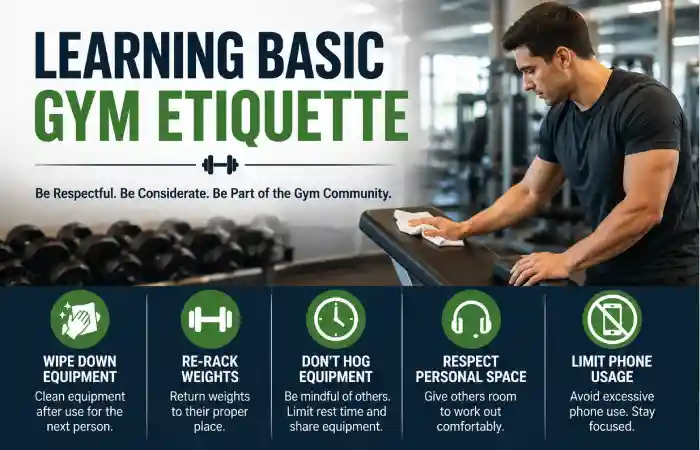
Understanding gym norms reduces anxiety and improves confidence:
- Clean equipment after use
- Avoid prolonged equipment usage
- Return weights to racks
- Maintain personal space
Choosing Workouts You Enjoy
Here’s what might be one of the most underutilized elements in beginner gym motivation: Personal preference. When most new gym-goers give up early it’s not that their workouts don’t work but rather that they simply don’t like them. If workouts are fun you’re going to be more likely to be consistent. If you’re consistent, you will get results.
Want to learn more? Explore our complete gym motivation guide for proven strategies to stay committed to your fitness journey.
Identify What Feels Engaging, Not Just Effective
The one “best” workout is likely to be the workout routine that works best for your consistency, that is the work out that you will be able to keep doing. You might be one of the individuals who are more prone to do your strength exercises in a workout routine while someone else likes cardio workouts.
Some other workouts group sessions of some form.
Start with Simple, Beginner-Friendly Options
- Machine-based strength training
- Light cardio (treadmill walking, cycling)
- Bodyweight exercises
- Beginner group classes
These options reduce the learning curve and help you build confidence quickly.
Experiment Before You Commit
The first 2–3 weeks should be treated as a testing phase. Try different types of workouts to determine what suits your preferences and schedule. For example:
- Strength training on one day
- Cardio-focused session on another
- A group class later in the week
This approach prevents boredom and helps you discover what you genuinely enjoy.
Match Workouts to Your Personality and Goals
Your workout style should align with both your fitness goals and personal tendencies:
- If you prefer structure, follow a fixed gym routine
- If you get bored easily, rotate between workout types
- If you enjoy social environments, consider group classes
- If you prefer independence, stick to solo training
This alignment increases long-term adherence.
Avoid Comparing Your Routine with Others
As a beginner you will inevitably find yourself wanting to copy those really advanced workouts and programs that you find all over the internet and in the gym.
Focus on Enjoyment to Build Consistency
Initially, fun comes before optimizing your fitness goals. You’ll gain a lot more from a moderate training program that you can maintain with your routine than something more intensive you’re unable to keep up with. Once consistency has been built, you can begin optimizing.
One of the best ways to stay motivated is to set realistic fitness goals that match your current fitness level.
Track What You Like and Progress From There
Just think about what you already know you’re okay with doing and what works for your body. Expand from there slowly. Find a mix that works for you of old favorites and new adventures.
What works for you works for you is always true in the fitness world!
When you look forward to moving your body as part of a regular routine, working out become less of a conscious decision based on willpower and more of an automatic habit.
Save these motivational gym quotes for those days when you need an extra boost before your workout.
Building Confidence Through Small Wins
Avoid focusing only on large goals:
- Complete 3 workouts per week
- Increase weights gradually
- Improve exercise form
These small achievements build consistency.
Tracking Beginner Milestones
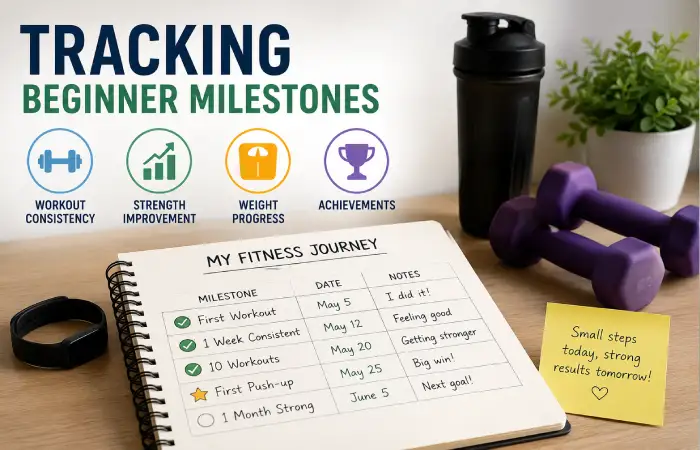
| Metric | Tool | Frequency |
| Weight | Digital scale | Weekly |
| Strength | Workout tracking app | Each session |
| Measurements | Measuring tape | Bi-weekly |
| Progress photos | Smartphone | Monthly |
Fitness tracking tools are increasingly integrated with AI coaching, improving adherence rates.
Once you’ve built the habit, learn how to stay motivated to go to the gym with long-term strategies that keep you consistent.
Avoiding Information Overload
Excess information leads to inaction.
Solution:
- Follow one structured plan for 4–6 weeks
- Avoid advanced techniques initially
- Prioritize consistency
Beginner Fitness Tools Comparison (2026)
| Category | Option A | Option B | Best For |
| Fitness App | MyFitnessPal | Fitbod | Tracking vs automation |
| Wearables | Fitbit Inspire 3 | Apple Watch SE | Budget vs ecosystem |
| Shoes | Nike Revolution | Adidas Duramo | Comfort vs durability |
| Equipment | Resistance bands | Dumbbells | Flexibility vs progression |
Troubleshooting Common Motivation Issues
Problem: Lack of visible results
Solution: Track strength improvements instead of only weight
Problem: Feeling judged
Solution: Most gym users focus on their own workouts
Problem: Skipping workouts
Solution: Schedule sessions as fixed commitments
FAQs
How do beginners stay motivated at the gym?
Goals are kept realistic. Progress should be followed. Routine should not be skipped.
How long does it take to see results?
If training with consistency, one could notice results in 6 to 12 weeks.
What is the best workout for beginners?
A program which includes strength and cardiovascular training works well.
Are supplements necessary?
Not in the initial stages; focus on diet and consistency first.
Expert Insight (E-E-A-T Focus)
This article integrates:
- Behavioral science principles
- Current fitness adherence trends
- Practical beginner frameworks
- Structured, actionable guidance
The emphasis is on sustainable habits rather than short-term motivation.
Conclusion
The motivation for beginners for a gym has become developed by the structure habits, the realism expectations and the sustained efforts. Begin your workouts from steps you can control, monitoring the concrete results obtained, having an organized activity, since the long-term motivation comes by far of a great and consistent discipline rather than one based solely on momentary feelings.
As your routine develops, understanding motivation vs. discipline will help you stay consistent even on days when enthusiasm is low.
Afiya Jafar is a fitness and wellness writer who focuses on making health, exercise, and healthy lifestyle information simple and practical. Her work covers workouts, fitness motivation, strength training, nutrition, weight management, stress management, mindfulness, and everyday wellness.
Read Full Bio of Afiya Jafar →
Sameena Begum reviews selected health, wellness, fitness, and digital content for clarity, factual presentation, consistency, and reader usefulness. Her review work helps maintain clear and responsible editorial standards across PhysicalFitt content.
Read Full Bio of Sameena Begum →
Dr. Khizrana Begum is a qualified medical professional with MBBS and MD qualifications and 5+ years of experience in the medical field. She works as a General Physician and Dermatologist, with expertise in general medicine, dermatology, preventive healthcare, and skin health.
Read Full Bio of Dr. Khizrana Begum →