

 Afiya Jafar
Fitness & Wellness Writer
Afiya Jafar is a fitness and wellness writer who focuses on making health, exercise, and healthy lifestyle information simple and practical.
Read Full Bio of Author →
Afiya Jafar
Fitness & Wellness Writer
Afiya Jafar is a fitness and wellness writer who focuses on making health, exercise, and healthy lifestyle information simple and practical.
Read Full Bio of Author →
 Sameena Begum
Health, Fitness & Digital Content Reviewer
Sameena reviews selected health, wellness, fitness, and digital content for clarity, factual presentation, and reader usefulness.
Read Full Bio of Reviewer →
Sameena Begum
Health, Fitness & Digital Content Reviewer
Sameena reviews selected health, wellness, fitness, and digital content for clarity, factual presentation, and reader usefulness.
Read Full Bio of Reviewer →
 Dr. Khizrana Begum
General Physician & Dermatologist
Dr. Khizrana Begum is a General Physician and Dermatologist with MBBS and MD qualifications and 5+ years of experience in the medical field.
Read Full Bio of Medical Reviewer →
Dr. Khizrana Begum
General Physician & Dermatologist
Dr. Khizrana Begum is a General Physician and Dermatologist with MBBS and MD qualifications and 5+ years of experience in the medical field.
Read Full Bio of Medical Reviewer →
Weight loss motivation is really what it all comes down to. What will get you started on your weight loss mission, and, most importantly, what will keep you on track long after the initial motivation has faded? While we all get a surge of enthusiasm for trying a new diet plan, dealing with our demanding lives, sugar cravings, steady but frustrating progress, or frustrating weight loss plateaus will eventually test our determination.
Motivation isn’t a magical force; it is something you develop by forming good habits, adapting a positive attitude, and taking action daily.
Whether you are hoping to shed those first five pounds, get your body functioning better overall or establish a healthier and sustainable lifestyle that you can maintain forever, learning how motivation works can put you on the path to success, even when you no longer feel a burst of inspiration. A growing amount of research has highlighted over recent years that enduring success for weight loss isn’t derived from periodic high bursts of motivation or extreme diets but from consistent good habits and routines.
❝
This article is a part of
Weight Loss Motivation Hub
What Is Weight Loss Motivation?
Motivation of weight loss helps you stay in practice with your lifestyle changes, and inspires you to work out regularly and follow the healthy plan. It helps to guide each of your daily decision. For instance, if you select a wholesome diet to avoid junk or work out inspite of having tiring day at the job. But motivation isn’t static; at times, it’s on high and then other times you may face some difficult moments where staying committed can become a challenge.
Understand this and you will be able to develop strategies to ride out these times instead of quitting your mission the moment your motivation slips.
Setting realistic weight loss goals helps you stay motivated and measure progress without feeling overwhelmed.
Intrinsic vs. Extrinsic Motivation
There are two types of motivation that are of the essence in your weight loss journey.
Keeping a weight loss journal can help you track meals, workouts, and daily progress while staying accountable.
| Motivation Type | Example | Description |
| Intrinsic Motivation | Wanting to feel healthier, stronger, and more energetic | Comes from personal satisfaction and internal goals |
| Extrinsic Motivation | Fitting into a dress, receiving compliments, preparing for an event | Comes from outside rewards or pressures |
Although you might be able to use either to kick-start good habits, you’re more likely to maintain intrinsic habits long term because you’re motivated by how your healthy habits can lead to a better quality of life, not by external approval.
Why Motivation Matters
What’s the role of motivation:
– getting started on your workout
– eating better
– finding motivation during a particularly trying week
– getting over a slip-up and bouncing back to continue
– finding further motivation once you’ve achieved the first milestone but this all takes much more than just motivation
– it ultimately requires consistency, discipline and healthy habits
Motivation vs. Discipline
The majority of all successful people fall into thistrap When the y tell you to just keep beingmotivated every single day. It has more to do with habit and discipline than motivation
| Motivation | Discipline |
| Emotional | Habit-based |
| Temporary | Long-lasting |
| Changes daily | Remains consistent |
| Depends on mood | Depends on routine |
| Helps you start | Helps you continue |
Why Motivation Changes Over Time
We all know the story – jumping into a weight loss quest with gusto, only to peter out after a few weeks. One of the most frustrating and dangerous myths we’re sold, is that super successful individuals are highly motivated all of the time. The truth is, motivation fluctuates – biologically, psychologically and circumstantially.
The “Motivation Dip” Is Normal
At the start of a new workout plan everything can feel like the greatest thing on earth. The new workout gear you’ve just bought. The fresh and exciting meal plans that actually look and taste good! You get all the initial positive results, and feel amazing.
Unfortunately, about three weeks into it things may become less enthusiastic. Other life issues: work, family, social gatherings or even life events such as stress all get in the way, making it difficult to keep making good choices. Many refer to this time as the “motivation dip” and is when people are likely to quit. Rather than expecting motivation to always be at its highest, successful people learn to be in it and operate on routine, not on emotions.
Your Brain Loves Immediate Rewards
Evolution is to blame! Your brain is designed to seek pleasure and happiness as quickly as possible. High-sugar, high-fat, and highly processed foods stimulate the reward center in your brain much quicker than the health benefits associated with exercise or proper nutrition.
It is a whole different beast, to crave that instant satisfaction versus long-term gains of the results of healthy eating.
You can get a quick high from a slice of cake, for example, and your brain will love it! The results from your workout will slowly build up over weeks and months, or a good-looking healthy meal may offer little or no reward. This makes the act of sticking to it difficult especially early on when working towards a weight goal. One option you can make sure to reward yourself immediately when sticking to good health choices.
Keep track of what you accomplish in your weekly workout log, or set a reward when you achieve milestones along your way such as new work out apparel.
Habits Eventually Replace Motivation
Motivation starts your day, habit gets you to the end. Repeatedly practicing an act like a walk at morning, pre-pping lunch, strength exercises, or drinking water reinforces the neural paths for those acts. This is how those actions become second nature.
Stress Can Reduce Motivation
And, whether we realize it or not, it impacts the body and it impacts our choices. Your brain craves comfort when it feels swamped. It would much prefer quick fixes over long-term ambitions. This can manifest in the form of: binge-eating snack attacks workouts abandoned unhealthy choices cravings high energy depleted “How long have you been feeling like you can’t catch a break?”
This question doesn’t require you to list out every single source of your anxiety and worry.
The most common causes include:
- A massive workload financial struggles the kids a packed family life zero personal time
- Work/life balance not quite balanced
- When life gets demanding and overwhelming, don’t let perfection be the enemy of good
- Aim to get in just one thing
That might be a quick walk around the block, a brief stretching session or a healthy breakfast. These wins are often just enough to help you tread water
Progress Naturally Slows Down
Most of the lost weight the first few weeks on a diet plan is lost water weight, water weight and improved diet eating choices. Your body will adapt and start losing weight at a slow and sporadic pace. That doesn’t mean the diet is not working at all. Keep the scale’s numbers at bay by recording some non-weight scale successes, too:
- Waist Measurements
- Progress pictures
- Strength and energy improvements
- Clothing improvements
- Sleep quality improvements
Your Environment Influences Motivation
Your surroundings can either support or sabotage your weight loss journey.
Motivation-Boosting Environment
- Healthy foods are easy to access.
- Workout clothes are prepared the night before.
- Water bottle stays nearby.
- Friends and family encourage healthy habits.
- Fitness reminders are visible.
Motivation-Reducing Environment
- Junk food is always available.
- Long periods of sitting without movement.
- Lack of meal planning.
- Negative social influences.
- Constant exposure to unhealthy temptations.
Make a few changes to your environment-small changes- to cut out the willpower necessary to stick to your health habits.
Motivation Evolves Throughout Your Journey
Your reasons for losing weight are likely to change over time.
| Stage | Common Motivation |
| Beginning | Lose weight quickly |
| After 1 Month | Build consistency |
| After 3 Months | Improve fitness and strength |
| After 6 Months | Feel healthier and more confident |
| Long-Term | Maintain a healthy lifestyle and prevent weight regain |
When you begin to reap the rewards such as greater energy levels, an enhanced range of motion, greater enthusiasm, and greater self confidence then typically your goals will naturally shift from external image related ones to those focusing on the lasting health benefits of your body.
Setting Realistic Weight Loss Goals
Why you lose weight loss motivation “Set unrealistic goals”. What you want, of course, is rapid weight loss, and we’d all do better to be slimmer now and tomorrow rather than in months, perhaps years.
That said, real weight loss is about many tiny, almost unnoticeable steps rather than one great leap.
To give direction to what you’re doing, motivate yourself to carry on with it and celebrate successes along the way, then you must have goals. Just remember not to concentrate solely on how much you weigh!
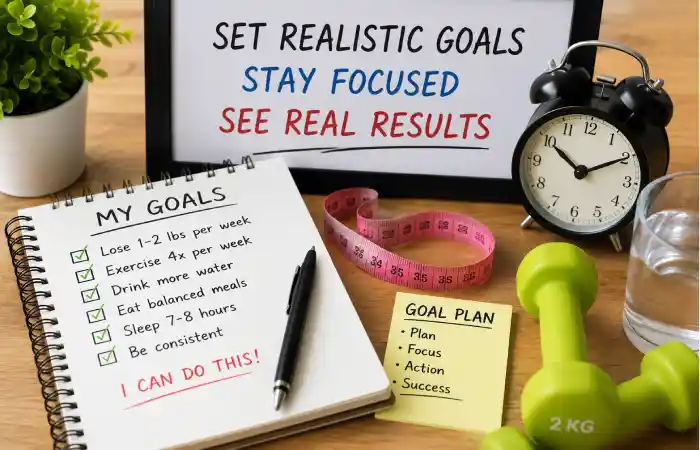
Why Realistic Goals Matter
Goals that many people set when starting an exercise journey
- “I will lose 10 kg this month”.
- “I will never touch sweets again”.
- “I will train everyday”.
The expectations sounds exciting in the beginning but those are hard to achieve in the long run, because when expectations don’t meet up with reality frustration takes over.
Realistic goals are goals which we achieve with ease, with lots of flexibility to change things around, as long as they keep up with the plan. This process not only brings confidence but also keeps a healthy habit in your life.
Unrealistic Goals vs. Realistic Goals
| Unrealistic Goal | Better Alternative |
| Lose 10 kg in 30 days | Lose 2–4 kg over 8–12 weeks |
| Exercise 7 days a week immediately | Start with 3–4 workout sessions weekly |
| Never eat dessert again | Enjoy occasional treats in moderation |
| Eliminate all carbohydrates | Focus on balanced, nutrient-rich meals |
| Reach my dream body in two months | Build healthy habits for lifelong fitness |
The most effective goals challenge you without setting you up for disappointment.
Use the SMART Goal Framework
A proven way to stay motivated is by setting SMART goals, which are:
| SMART Element | Meaning | Example |
| Specific | Clearly define your objective | Walk 8,000 steps daily |
| Measurable | Track your progress | Lose 5 kg over four months |
| Achievable | Keep it realistic | Exercise four times each week |
| Relevant | Align with your lifestyle | Improve overall health and energy |
| Time-Bound | Set a target date | Complete within 16 weeks |
Better Ways to Measure Success
| Progress Indicator | Why It Matters |
| Waist circumference | Reflects fat loss more accurately than weight alone |
| Progress photos | Highlights physical changes over time |
| Strength improvements | Shows increased fitness and muscle development |
| Energy levels | Indicates better overall health |
| Clothing fit | Demonstrates body composition changes |
| Sleep quality | Supports recovery and consistency |
| Daily step count | Encourages regular movement |
These “non-scale victories” often appear before significant changes on the scale.
Expect Progress to Be Gradual
Healthy weight loss is not perfectly linear. You might lose some weeks but others you might stay the same on your plan!
A realistic pace for most adults is:
| Goal | Expected Timeline* |
| Lose 2–3 kg | 1–2 months |
| Lose 5 kg | 2–4 months |
| Lose 10 kg | 5–8 months |
| Lose 20 kg | 10–16 months |
*Timelines vary based on age, starting weight, activity level, nutrition, health conditions, and adherence.
Remember that building sustainable habits is more important than achieving rapid results.
Reevaluate Your Goals Regularly
As you make progress, your goals should evolve.
For example:
| Stage | Goal Focus |
| Month 1 | Build consistency with nutrition and exercise |
| Month 2 | Improve endurance and daily activity |
| Month 3 | Increase strength and preserve muscle |
| Month 4 | Refine nutrition and maintain healthy habits |
| Long-Term | Sustain weight loss and prevent regain |
Adjusting your goals keeps your journey engaging and ensures you’re always working toward meaningful improvements.
Building Healthy Habits That Last
Your motivation can be the spark to get you started, but a good set of healthy habits are what sustain the momentum when motivation wanes. It works because good habits require less daily effort. You stop making decisions, such as whether or not to exercise today.
Your habit means that rather than thinking, “Should I work out today?”
it automatically triggers, “It’s time for my workout!” Small changes like that make all the difference in consistency. Your ultimate goal should be a sustainable routine rather than a perfect plan-simple and effective.
Start Small Instead of Changing Everything at Once
Many beginners try to transform their entire lifestyle in a single day by:
- Following a strict diet.
- Exercising every day.
- Eliminating all favorite foods.
- Sleeping earlier overnight.
- Drinking large amounts of water immediately.
While ambitious, these changes are difficult to maintain.
Instead, focus on one or two habits at a time. Once they become automatic, add another healthy behavior.
Example Habit Progression
| New Habit | Week |
| Walk for 20–30 minutes daily. | Week 1 |
| Drink at least 2 liters of water each day. | Week 2 |
| Add vegetables to lunch and dinner. | Week 3 |
| Strength train three times per week. | Week 4 |
| Sleep 7–9 hours consistently. | Week 5 |
Build Habits Using Habit Stacking
Habit stacking is a simple technique where you attach a new habit to an existing one.
Examples
| Current Habit | New Healthy Habit |
| After brushing your teeth | Drink a glass of water. |
| After your morning coffee | Take a 15-minute walk. |
| After work | Change into workout clothes immediately. |
| Before dinner | Prepare tomorrow’s lunch. |
| Before bed | Plan tomorrow’s meals and workouts. |
Because the existing habit already happens automatically, the new habit becomes easier to remember and maintain.
Make Healthy Eating More Convenient
One of the biggest reasons people abandon healthy eating is convenience.
After a busy day, ordering fast food often feels easier than preparing a balanced meal.
The solution is to make healthy choices the easiest choices.
Practical Meal Planning Tips
- Prepare meals for several days at once.
- Wash and chop vegetables in advance.
- Keep healthy snacks available.
- Store nutritious foods where they’re easy to see.
- Freeze homemade meals for busy days.
When healthy food is already prepared, you’re much more likely to stay consistent.
Prioritize Protein and Fiber
Balanced meals help control hunger and support muscle maintenance during weight loss.
A simple plate might include:
- Lean protein (chicken, fish, eggs, tofu, beans, or Greek yogurt)
- Plenty of vegetables
- Whole grains or other high-fiber carbohydrates
- Healthy fats such as nuts, seeds, or avocado
Protein helps increase fullness, while fiber supports digestion and helps reduce unnecessary snacking.
Stay Hydrated Throughout the Day
Hydration is often overlooked, yet it plays an important role in overall health and exercise performance.
Sometimes thirst is mistaken for hunger, leading to unnecessary snacking.
Easy Hydration Habits
- Carry a reusable water bottle.
- Drink water before meals.
- Set reminders if needed.
- Choose water instead of sugary beverages most of the time.
- Increase fluid intake during hot weather or intense exercise.
Small hydration habits can contribute to better energy levels and improved workout performance.
Make Sleep Part of Your Fitness Plan
Sleep isn’t simply rest—it’s when your body recovers, repairs muscles, and regulates hormones involved in appetite and energy.
Poor sleep often leads to:
- Increased cravings
- Reduced motivation
- Lower workout performance
- Slower recovery
Healthy Evening Routine
- Stop using electronic devices 30–60 minutes before bed.
- Keep your bedroom cool and dark.
- Maintain consistent sleep and wake times.
- Limit caffeine late in the day.
- Practice relaxation techniques if stress affects your sleep.
Treating sleep as a priority can improve both your physical and mental ability to stay consistent.
Design an Environment That Supports Healthy Choices
Your surroundings have a significant influence on your daily decisions.
Helpful Environmental Changes
| Instead of… | Try This… |
| Keeping sweets on the kitchen counter | Display fresh fruit instead. |
| Searching for workout clothes every morning | Prepare them the night before. |
| Forgetting to drink water | Keep a filled water bottle on your desk. |
| Watching TV all evening | Take a short walk during commercial breaks or after dinner. |
| Skipping breakfast | Prepare overnight oats or boiled eggs in advance. |
Small changes to your environment reduce reliance on willpower.
Track Your Habits, Not Just Your Weight
Many people weigh themselves daily but never track the behaviors that actually lead to progress.
Instead, monitor habits such as:
- Daily step count
- Workout completion
- Water intake
- Vegetable servings
- Protein intake
- Hours of sleep
- Meal preparation
- Stretching or mobility work
Consistency with these behaviors is often a better predictor of long-term success than short-term weight fluctuations.
Weekly Habit Tracker Example
| Habit | Goal | Mon | Tue | Wed | Thu | Fri | Sat | Sun |
| Walk 8,000+ steps | Daily | ✓ | ✓ | ✓ | ✓ | ✗ | ✓ | ✓ |
| Strength training | 3x/week | ✓ | — | ✓ | — | ✓ | — | — |
| Drink 2–3 L water | Daily | ✓ | ✓ | ✓ | ✗ | ✓ | ✓ | ✓ |
| Sleep 7–9 hours | Daily | ✓ | ✗ | ✓ | ✓ | ✓ | ✓ | ✓ |
| Eat vegetables twice daily | Daily | ✓ | ✓ | ✓ | ✓ | ✓ | ✗ | ✓ |
Tracking habits highlights what you’re doing well and where small adjustments can make the biggest difference.
Staying Motivated During Weight Loss
Staying motivated throughout your weight loss journey can be challenging, especially after the initial excitement wears off. Busy schedules, slow progress, social events, and occasional setbacks can make it tempting to give up. However, long-term success isn’t about feeling motivated every day—it’s about creating strategies that help you stay committed even when motivation is low.
Think of motivation as a rechargeable battery. Some days it will be full, while other days it may feel almost empty. The key is having systems in place that keep you moving forward regardless of how you feel.
Create a Consistent Routine
Motivation is often highest when healthy behaviors become part of your daily schedule.
Instead of exercising whenever you “find time,” schedule workouts just like work meetings or appointments.
Example Daily Routine
| Time | Healthy Habit |
| 7:00 AM | Drink water and stretch |
| 7:30 AM | Morning walk or workout |
| 8:30 AM | High-protein breakfast |
| 1:00 PM | Balanced lunch |
| 4:00 PM | Healthy snack |
| 6:30 PM | Strength training or walk |
| 9:30 PM | Prepare meals and plan tomorrow |
| 10:30 PM | Sleep |
Having a predictable routine reduces decision fatigue and makes healthy behaviors automatic.
Track Your Progress Regularly
Progress tracking helps you see improvements that may not be visible from day to day.
Instead of checking your weight every morning and feeling discouraged by normal fluctuations, review your progress weekly.
Track:
- Body weight
- Waist measurements
- Progress photos
- Workout performance
- Step count
- Energy levels
- Sleep quality
- Mood
Seeing steady improvements in these areas reinforces your motivation.
Progress Tracking Comparison
| Daily Tracking | Weekly Tracking |
| Can cause unnecessary stress | Shows meaningful trends |
| Focuses on short-term changes | Highlights long-term progress |
| Easily affected by water weight | More accurate representation |
| May reduce motivation | Encourages consistency |
Find an Accountability System
It’s easier to stay motivated when someone else supports your journey.
Accountability can come from:
- A workout partner.
- Friends or family.
- Online fitness communities.
- Personal trainers.
- Health coaches.
- Fitness apps.
Sharing your goals with others creates a sense of commitment and encouragement.
Even simply checking in with a friend each week can increase consistency.
Reward Your Progress
Your brain responds well to positive reinforcement.
Instead of rewarding yourself with unhealthy food, celebrate milestones with rewards that support your healthy lifestyle.
Healthy Reward Ideas
| Milestone | Reward |
| Complete 10 workouts | New gym gloves or resistance bands |
| Lose first 3 kg | New workout outfit |
| Walk 100 km | Fitness tracker accessory |
| Exercise consistently for one month | Massage or spa session |
| Reach your goal weight | Weekend trip or new hobby equipment |
Celebrating progress reminds you that your hard work is paying off.
Stay Flexible During Setbacks
No one follows a perfect plan.
You may experience:
- Missed workouts.
- Holiday meals.
- Vacations.
- Busy work weeks.
- Illness.
- Family commitments.
These situations don’t erase your progress.
The most successful people don’t avoid setbacks—they recover from them quickly.
Instead of Thinking:
“I missed one workout. I’ve failed.”
Think:
“I missed today. I’ll continue tomorrow.”
One missed workout won’t stop your progress, but giving up completely might.
Surround Yourself With Positive Influences
Your environment has a powerful effect on motivation.
Spend more time with people who encourage healthy habits and less time with those who discourage your efforts.
You can also create a motivating environment by:
- Following evidence-based fitness educators.
- Listening to motivational podcasts.
- Reading inspiring success stories.
- Keeping healthy foods visible.
- Displaying your goals where you’ll see them daily.
Reading real weight loss success stories can inspire you to stay consistent during your own fitness journey.
Positive influences make healthy choices feel more natural.
Visualize Your Success
Visualization is a simple mental technique used by athletes and high performers.
Spend a few minutes each day imagining yourself:
- Completing your workouts.
- Making healthy food choices.
- Feeling stronger and more energetic.
- Wearing clothes that fit comfortably.
- Achieving your long-term goals.
Visualization doesn’t replace action, but it can strengthen your commitment by keeping your goals top of mind.
Remember Your “Why”
Your motivation becomes much stronger when it’s connected to a meaningful purpose.
Instead of focusing only on appearance, think about the deeper reasons behind your journey.
Examples include:
- Living a longer, healthier life.
- Reducing the risk of chronic diseases.
- Having more energy for your children.
- Improving confidence.
- Feeling stronger and more capable.
- Enjoying activities without getting tired.
Write your personal reason down and review it whenever motivation decreases.
Overcoming Weight Loss Plateaus
Reaching a weight loss plateau can be one of the most frustrating parts of your fitness journey. After weeks or months of steady progress, the number on the scale suddenly stops changing—even though you’re still eating well and exercising regularly.
Many people lose motivation at this stage and assume their efforts are no longer working. However, plateaus are a normal part of sustainable weight loss and don’t necessarily mean you’ve stopped making progress.
Understanding why plateaus happen and knowing how to respond can help you stay consistent and continue moving toward your long-term goals.
Why Weight Loss Plateaus Happen
Several factors can contribute to a temporary slowdown in progress.
Your Body Needs Fewer Calories
As your weight decreases, your body burns fewer calories during everyday activities and workouts.
For example:
| Starting Weight | Estimated Daily Energy Needs* |
| 100 kg | Higher |
| 90 kg | Moderate |
| 80 kg | Lower |
*Energy needs vary based on age, sex, height, body composition, and activity level.
This doesn’t mean your metabolism is “broken.” It simply means your calorie needs change as your body changes.
You’re Building Muscle While Losing Fat
If you’ve started strength training, you may be gaining lean muscle while losing body fat.
Since muscle is denser than fat, your body shape can improve even if the scale doesn’t change dramatically.
Look for other signs of progress:
- Clothes fit better.
- Waist measurement decreases.
- Strength increases.
- Progress photos show visible changes.
- Daily activities feel easier.
This is why relying only on the scale can be misleading.
Water Retention Can Hide Fat Loss
Body weight naturally fluctuates due to:
- Increased sodium intake
- Hormonal changes
- Stress
- Poor sleep
- Intense workouts
- Hydration levels
It’s possible to lose body fat while temporary water retention masks that progress on the scale.
If your weight hasn’t changed for one or two weeks, avoid making drastic changes. Instead, continue following your plan and monitor long-term trends.
Portion Sizes May Have Increased
Over time, it’s easy for portion sizes to gradually grow without noticing.
Examples include:
- Adding extra cooking oil.
- Larger servings of rice or pasta.
- Frequent “healthy” snacks.
- Sugary coffee drinks.
- Weekend overeating.
Reviewing your eating habits for a few days can help identify small changes that may be affecting your calorie intake.
Daily Activity Has Decreased
Many people focus only on structured workouts while overlooking overall daily movement.
Ask yourself:
- Are you walking less?
- Are you sitting more during work?
- Have you stopped taking the stairs?
- Are you driving instead of walking short distances?
Increasing daily movement—often called non-exercise activity—can make a meaningful difference without requiring longer gym sessions.
How to Break Through a Weight Loss Plateau
Review Your Nutrition
Rather than making extreme dietary changes, evaluate your current eating habits.
Consider:
- Eating enough protein.
- Including more vegetables and high-fiber foods.
- Reducing sugary drinks.
- Watching portion sizes.
- Limiting highly processed snacks.
Small improvements are usually more sustainable than restrictive diets.
Increase Physical Activity Gradually
If you’ve been following the same routine for months, your body may have adapted.
You don’t need to double your workouts. Instead, try one or two of these changes:
- Add 10–15 minutes to your daily walk.
- Increase weekly step count.
- Include one extra strength-training session.
- Try interval training occasionally.
- Increase resistance or weights gradually.
Progressive overload—slowly increasing the challenge of your workouts—helps support continued fitness improvements.
Prioritize Strength Training
Strength training helps preserve and build lean muscle during weight loss.
Benefits include:
- Improved body composition.
- Greater functional strength.
- Better physical performance.
- Support for long-term weight management.
Aim to train all major muscle groups at least two to three times per week, using proper form and allowing adequate recovery.
Improve Recovery
Recovery is often overlooked, yet it plays a vital role in maintaining consistency.
Focus on:
- 7–9 hours of quality sleep.
- Managing stress through relaxation techniques.
- Taking rest days when needed.
- Staying hydrated.
A well-recovered body is more likely to perform well during workouts and support healthy lifestyle habits.
Stop Obsessing Over the Scale
Instead of weighing yourself every day, track multiple indicators of progress.
Better Progress Markers
| Progress Measure | Why It Matters |
| Waist measurement | Reflects changes in body composition. |
| Progress photos | Makes gradual visual changes easier to see. |
| Strength gains | Shows improvements in fitness. |
| Clothing fit | Often changes before the scale does. |
| Daily energy | Indicates positive lifestyle changes. |
| Workout performance | Demonstrates increasing fitness levels. |
These measurements provide a more complete picture of your progress.
The Role of Mindset in Weight Loss
Your mindset is one of the most powerful factors influencing long-term weight loss success. While nutrition and exercise provide the physical tools for losing weight, your thoughts, beliefs, and attitudes determine whether you’ll stay consistent when challenges arise.
Many people focus entirely on finding the “perfect” diet or workout plan, but lasting transformation often begins with changing the way you think about health, progress, and setbacks.
A positive mindset doesn’t mean ignoring difficulties. It means approaching challenges with patience, resilience, and the belief that improvement is always possible.
Developing a positive weight loss mindset can help you overcome setbacks and stay committed to healthy habits.

Adopt a Growth Mindset
A growth mindset is the belief that your abilities and habits can improve through consistent effort and learning.
In contrast, a fixed mindset assumes that success depends only on natural talent or willpower.
Fixed Mindset vs. Growth Mindset
| Fixed Mindset | Growth Mindset |
| “I’ve always been overweight.” | “I can improve my health one habit at a time.” |
| “I failed my diet.” | “I learned what didn’t work and can adjust.” |
| “I’m not disciplined enough.” | “Discipline develops through consistent practice.” |
| “I missed one workout.” | “I’ll get back on track tomorrow.” |
| “Progress is too slow.” | “Small improvements lead to lasting results.” |
A growth mindset helps you view setbacks as opportunities to learn instead of reasons to quit.
Change the Way You Talk to Yourself
Your internal dialogue has a significant impact on motivation.
Negative self-talk often sounds like:
- “I’ll never lose weight.”
- “I’m too lazy.”
- “I always fail.”
- “What’s the point?”
Over time, these thoughts can reduce confidence and make healthy habits harder to maintain.
Instead, practice supportive and realistic self-talk.
Replace Negative Thoughts
| Instead of… | Try Saying… |
| “I ruined everything.” | “One meal doesn’t define my progress.” |
| “I’m not motivated.” | “I’ll start with five minutes and see how I feel.” |
| “I can’t do this.” | “This is challenging, but I can improve with practice.” |
| “I’m behind.” | “I’m making progress at my own pace.” |
Speaking to yourself with the same kindness you’d offer a friend can make it easier to recover from setbacks.
Focus on Progress, Not Perfection
Perfectionism is one of the biggest obstacles to sustainable weight loss.
Many people believe they must:
- Eat perfectly every day.
- Never miss a workout.
- Avoid all treats.
- Lose weight every week.
When reality doesn’t match these expectations, they feel discouraged and give up.
Instead, aim for consistency.
Imagine two people:
- Person A follows their plan perfectly for two weeks, then quits completely.
- Person B follows their plan about 85% of the time for an entire year.
Person B is far more likely to achieve lasting results because consistency matters more than perfection.
Build Confidence Through Small Wins
Confidence grows through action, not waiting until you feel ready.
Every healthy choice reinforces the belief that you’re capable of succeeding.
Celebrate achievements like:
- Completing a workout.
- Choosing water instead of a sugary drink.
- Walking after dinner.
- Preparing healthy meals.
- Reaching your daily step goal.
These small victories build momentum and strengthen your identity as someone who prioritizes health.
Common Motivation Mistakes
Even with the best intentions, many people unintentionally make mistakes that weaken their weight loss motivation. These mistakes often lead to frustration, inconsistency, and eventually giving up—not because the person lacks willpower, but because their approach isn’t sustainable.
The good news is that these challenges are preventable. By recognizing common pitfalls early, you can make smarter decisions that support steady, long-term progress.
Mistake 1: Relying Only on Motivation
One of the biggest misconceptions is believing you need to feel motivated every day to exercise or eat well.
The reality is that motivation naturally fluctuates. Some days you’ll feel excited, while other days you won’t.
If you only work out when you feel motivated, your progress will likely be inconsistent.
Better Approach
Build routines that don’t depend on your mood.
For example:
- Exercise at the same time each day.
- Prepare meals in advance.
- Schedule workouts on your calendar.
- Keep healthy snacks available.
Habits keep you moving forward when motivation is low.
Mistake 2: Setting Unrealistic Expectations
Many people expect dramatic results within a few weeks.
Examples include:
- Losing 10 kilograms in one month.
- Getting visible abs in eight weeks.
- Never eating unhealthy food again.
When these expectations aren’t met, discouragement follows.
Better Approach
Focus on gradual, sustainable improvements.
Celebrate:
- Walking farther than last week.
- Lifting heavier weights.
- Preparing healthy meals consistently.
- Sleeping better.
- Feeling more energetic.
These improvements often appear before significant weight changes.
Mistake 3: Comparing Yourself to Others
Social media makes it easy to compare your progress with someone else’s highlight reel.
However, everyone has different:
- Genetics
- Age
- Starting weight
- Lifestyle
- Medical history
- Fitness experience
Comparisons often create unnecessary frustration.
Better Approach
Compare yourself only with your past self.
Ask:
- Am I stronger than last month?
- Am I making healthier food choices?
- Have my energy levels improved?
- Am I more consistent?
Personal progress is the comparison that truly matters.
Mistake 4: Chasing Quick Fixes
Extreme diets, detox teas, “fat-burning” products, and other shortcuts often promise rapid results.
While some approaches may produce temporary weight loss, they’re usually difficult to maintain and can lead to regaining the weight.
Better Approach
Prioritize evidence-based habits:
- Balanced nutrition
- Regular physical activity
- Strength training
- Quality sleep
- Stress management
- Consistent calorie control
Sustainable habits consistently outperform short-term solutions over time.
Mistake 5: Focusing Only on the Scale
Daily weight fluctuations are normal.
Factors such as hydration, sodium intake, hormones, and digestion can cause your weight to change from one day to the next.
If the scale becomes your only measure of success, motivation can quickly disappear.
Better Approach
Track multiple indicators of progress.
Include:
- Body measurements
- Progress photos
- Workout performance
- Daily steps
- Energy levels
- Clothing fit
- Sleep quality
These metrics provide a much more complete picture of your health improvements.
Long-Term Strategies for Success
Losing weight is a significant achievement, but maintaining that progress is where the real challenge begins. Many people can follow a healthy routine for a few weeks or months, yet long-term success comes from building a lifestyle that remains sustainable through changing schedules, holidays, stressful periods, and major life events.
The goal isn’t to stay on a diet forever—it’s to create habits that support a healthier life for years to come.
Think Beyond Your Goal Weight
Many people believe their journey ends once they reach a target number on the scale.
In reality, reaching your goal is the beginning of a new phase: weight maintenance.
Instead of asking:
“How can I lose weight?”
Start asking:
“How can I continue living this healthy lifestyle?”
This shift in perspective helps prevent returning to old habits that may have contributed to weight gain.
Build a Lifestyle, Not a Temporary Diet
The most successful weight loss plans are the ones you can realistically maintain.
Ask yourself:
- Can I eat this way six months from now?
- Can I continue this workout routine next year?
- Does this plan fit my work schedule and family life?
- Can I enjoy social occasions without feeling guilty?
If the answer is “no,” your plan may be too restrictive.
Choose habits that are flexible, enjoyable, and realistic.
Continue Setting New Goals
Reaching one goal shouldn’t mean the end of your progress.
After achieving your initial weight loss target, consider setting goals such as:
- Improving cardiovascular fitness.
- Building lean muscle.
- Running your first 5K.
- Increasing strength.
- Learning new healthy recipes.
- Improving flexibility and mobility.
- Reducing stress.
- Sleeping more consistently.
These new challenges keep your fitness journey interesting and provide fresh motivation.
Keep Monitoring Your Progress
Even after reaching your goal, continue tracking key health indicators.
Monthly Check-In Checklist
| Metric | Why Track It? |
| Body weight | Monitor long-term trends rather than daily fluctuations. |
| Waist measurement | Detect changes in body composition. |
| Progress photos | Visual reminder of your achievements. |
| Strength levels | Ensure continued fitness improvements. |
| Energy and mood | Reflect overall well-being. |
| Sleep quality | Supports recovery and healthy habits. |
Regular check-ins help identify small changes before they become larger setbacks.
Prepare for Life’s Challenges
Every weight loss journey includes obstacles.
Examples include:
- Vacations.
- Holidays.
- Family celebrations.
- Work deadlines.
- Illness.
- Travel.
- Busy parenting schedules.
Instead of aiming to avoid these situations, prepare for them.
Practical Strategies
- Pack healthy snacks when traveling.
- Schedule shorter workouts during busy weeks.
- Prioritize protein and vegetables at restaurants.
- Stay active through walking and outdoor activities.
- Return to your normal routine after celebrations without guilt.
Planning ahead reduces stress and makes healthy choices easier.
Continue Learning
Health and fitness are constantly evolving.
Stay informed by:
- Reading evidence-based health articles.
- Learning new cooking techniques.
- Trying different forms of exercise.
- Reviewing your progress every few months.
- Adjusting your routine as your goals change.
A willingness to learn helps keep your journey engaging and adaptable.
Create a Personal Success System
Rather than relying on motivation alone, build a system that supports healthy decisions every day.
Example Weekly Success Framework
| Habit | Weekly Target |
| Strength training | 3 sessions |
| Cardio or walking | 150–300 minutes |
| Daily steps | 8,000–10,000 |
| Protein-rich meals | Daily |
| Vegetables and fruit | Daily |
| Water intake | 2–3 liters daily |
| Sleep | 7–9 hours nightly |
| Meal planning | Once per week |
| Progress review | Every Sunday |
Having a simple framework removes uncertainty and keeps you focused on behaviors you can control.
Long-Term Success Roadmap
| Stage | Primary Focus | Success Indicator |
| Months 1–2 | Build consistent habits | Regular workouts and balanced meals |
| Months 3–6 | Improve strength and endurance | Better fitness and steady progress |
| Months 6–12 | Maintain healthy routines | Weight remains stable and habits feel automatic |
| Beyond 1 Year | Lifestyle maintenance | Health-focused decisions become part of daily life |
This roadmap highlights that sustainable success is a gradual process rather than a single destination.
Frequently Asked Questions
-
How can I stay motivated to lose weight every day?
The best way to stay motivated is to focus on building daily habits instead of relying on motivation alone. Schedule your workouts, prepare healthy meals in advance, track your progress weekly, and celebrate small achievements. Even on low-motivation days, completing one healthy action—such as taking a short walk or eating a balanced meal—helps maintain momentum.
-
Why do I lose motivation after a few weeks?
Losing motivation after the initial excitement fades is completely normal. As your brain adapts to your new routine, the novelty decreases and daily responsibilities can make healthy habits feel more challenging. This is why creating routines, setting realistic goals, and developing discipline are more effective than depending on motivation alone.
Long-term success comes from building healthy habits for weight loss instead of relying on short-term motivation alone.
-
What is the best motivation for weight loss?
The strongest motivation usually comes from internal reasons rather than external ones.
Examples include:
- Improving overall health
- Having more energy
- Reducing the risk of chronic diseases
- Feeling stronger and more confident
- Being active with family and friends
While appearance-based goals can help you get started, health-focused goals are generally more sustainable over the long term.
-
How much weight is healthy to lose each week?
For most adults, a gradual rate of 0.25–1 kg (approximately 0.5–2 pounds) per week is considered a realistic and sustainable target. Individual results vary depending on factors such as starting weight, nutrition, physical activity, medical conditions, and adherence to the plan. If you have a medical condition or are considering significant dietary changes, consult a qualified healthcare professional.
-
What should I do if I hit a weight loss plateau?
A plateau is a normal part of many weight loss journeys. Instead of making drastic changes, review your nutrition, increase daily movement, continue strength training, prioritize quality sleep, and track body measurements or progress photos in addition to your weight. Stay consistent for several weeks before deciding whether your plan needs adjustment.
If your progress slows down, learn practical ways to overcome a weight loss plateau and continue moving toward your goals.
Final Thoughts
Weight loss motivation isn’t something you either have or don’t have—it’s something you build through consistent actions, realistic expectations, and a positive mindset. While motivation can help you begin, it’s your daily habits, routines, and resilience that determine your long-term success.
Remember that meaningful progress rarely happens overnight. There will be weeks when everything goes according to plan and others when life gets in the way. What matters most is your ability to keep moving forward, learn from setbacks, and stay committed to the healthy lifestyle you’re creating.
Focus on improving just 1% each day. Small actions—like taking a walk, preparing a balanced meal, getting enough sleep, or completing a workout—may seem insignificant on their own, but they compound into remarkable results over time.
By combining realistic goals, healthy habits, effective progress tracking, and a growth mindset, you’ll be well equipped to stay motivated, overcome challenges, and achieve lasting weight loss success.
The journey isn’t about becoming perfect—it’s about becoming healthier, stronger, and more consistent than you were yesterday.
Afiya Jafar is a fitness and wellness writer who focuses on making health, exercise, and healthy lifestyle information simple and practical. Her work covers workouts, fitness motivation, strength training, nutrition, weight management, stress management, mindfulness, and everyday wellness.
Read Full Bio of Afiya Jafar →
Sameena Begum reviews selected health, wellness, fitness, and digital content for clarity, factual presentation, consistency, and reader usefulness. Her review work helps maintain clear and responsible editorial standards across PhysicalFitt content.
Read Full Bio of Sameena Begum →
Dr. Khizrana Begum is a qualified medical professional with MBBS and MD qualifications and 5+ years of experience in the medical field. She works as a General Physician and Dermatologist, with expertise in general medicine, dermatology, preventive healthcare, and skin health.
Read Full Bio of Dr. Khizrana Begum →