
 Afiya Jafar
Fitness & Wellness Writer
Afiya Jafar is a fitness and wellness writer who focuses on making health, exercise, and healthy lifestyle information simple and practical.
Read Full Bio of Author →
Afiya Jafar
Fitness & Wellness Writer
Afiya Jafar is a fitness and wellness writer who focuses on making health, exercise, and healthy lifestyle information simple and practical.
Read Full Bio of Author →
 Sameena Begum
Health, Fitness & Digital Content Reviewer
Sameena reviews selected health, wellness, fitness, and digital content for clarity, factual presentation, and reader usefulness.
Read Full Bio of Reviewer →
Sameena Begum
Health, Fitness & Digital Content Reviewer
Sameena reviews selected health, wellness, fitness, and digital content for clarity, factual presentation, and reader usefulness.
Read Full Bio of Reviewer →
 Dr. Khizrana Begum
General Physician & Dermatologist
Dr. Khizrana Begum is a General Physician and Dermatologist with MBBS and MD qualifications and 5+ years of experience in the medical field.
Read Full Bio of Medical Reviewer →
Dr. Khizrana Begum
General Physician & Dermatologist
Dr. Khizrana Begum is a General Physician and Dermatologist with MBBS and MD qualifications and 5+ years of experience in the medical field.
Read Full Bio of Medical Reviewer →
It’s easy to think the secret to building muscle is all in how heavy you can lift, but building a better physique requires something else entirely: a diet that delivers the nutrients your muscles need to recover and grow after each exercise session. For this, the right protein powder can be your secret weapon and make getting your daily protein intake that much easier-especially if you’re finding it hard to achieve through diet alone.
From beginners to seasoned weightlifters, learning about various protein types, your protein needs and key ingredients to look for in the top protein powders will make this purchase a more intelligent one. This article is going to be taking a lot of these to you in simple English, in addition to a variety of a breakdown of the best protein powders on the marketplace, currently in 2026.
❝
This article is a part of
Muscle Building Hub
Why Protein Is Essential for Muscle Growth
Every time you work out, you tear the muscles you used. While your body rests, the muscle fibres recover from the tear and build up even bigger and stronger. In science terms, we refer to this process as Muscle Protein Synthesis (MPS).
Protein contains the amino acids needed for MPS, including leucine, the main stimulus to build muscle. The consistent evidence from studies performed in the past few years proves that adding protein to resistance training has a more profound effect on building muscle size and strength than training alone.
While protein is essential for muscle repair and growth, our complete guide to muscle-building supplements explains how protein, creatine, amino acids, and recovery supplements work together for better results.
Benefits of Adequate Protein Intake
| Benefit | Why It Matters |
| Faster recovery | Repairs muscle tissue |
| Increased muscle growth | Stimulates muscle protein synthesis |
| Improved strength | Supports consistent training |
| Better satiety | Helps maintain healthy body composition |
| Reduced muscle loss | Important during fat-loss phases |
Expert Tip: Spread protein intake across 3–5 meals daily instead of eating it all at once for better muscle protein synthesis.
Whey Protein
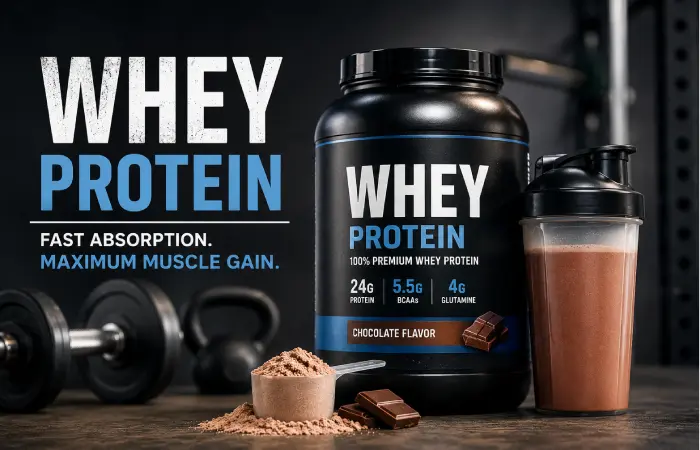
Whey is still considered king for muscle gain since it’s quick to break down, includes all 9 EAAs.
Advantages
- Fast absorption
- Rich in leucine
- Excellent post-workout
- Complete protein source
- Backed by decades of research
Types of Whey
| Type | Protein % | Best For |
| Whey Concentrate | 70–80% | Budget-friendly muscle gain |
| Whey Isolate | 90%+ | Lean muscle and lactose-sensitive users |
| Whey Hydrolysate | 90%+ | Fastest absorption and recovery |
Best for:
- Gym beginners
- Bodybuilders
- Athletes
- Strength training
Casein Protein
Unlike whey, casein is digested slowly over hours which allows for a continuous release of amino acids. Often body builders take casein just before going to bed, in order to take advantage of recovery benefits overnight.
Benefits
- Slow digestion
- Long-lasting amino acid release
- Helps reduce muscle breakdown
- Keeps you feeling full longer
Best Time to Take
- Before bedtime
- Between meals
- During long periods without food
If you’re considering amino acid supplements alongside protein powder, read our detailed BCAA vs EAA comparison to choose the right option.
Plant-Based Protein
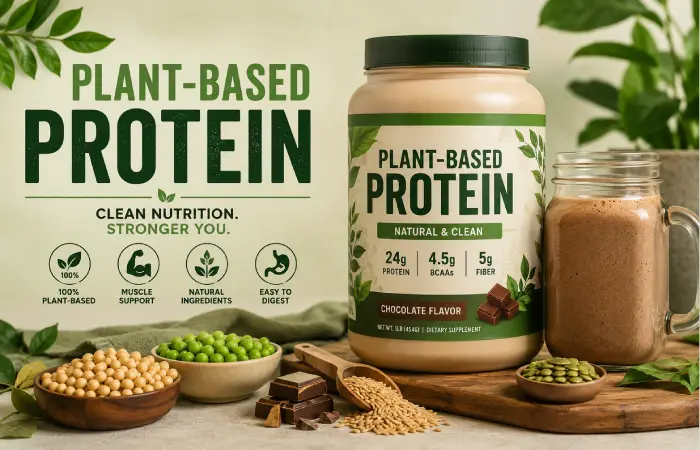
Plant protein have developed so much. Current formulations incorporate a mix of pea, rice, pumpkin and also hemp to give us a well rounded amino acid profile needed for growing muscles.
Benefits
- Dairy-free
- Vegan-friendly
- Easy digestion for many people
- Environmentally sustainable
Common Sources
| Protein Source | Protein Quality |
| Pea Protein | Excellent |
| Brown Rice Protein | Good |
| Soy Protein | Excellent |
| Hemp Protein | Moderate |
| Pumpkin Seed Protein | Good |
Even with high-quality blends of plant-based proteins which may naturally have a little lower levels of leucine than whey, you should be getting what you need if your total daily intake of protein is high enough.
Looking for clean nutrition? These natural muscle-building supplements can complement a high-quality protein powder without unnecessary additives.
How Much Protein Do You Need?
Each Day’s protein consumption has the best part for lean body. Protein powder can offer a few doses at any opportune second of your entire week, but the number of proteins that you are expending over the training sessions is considerably much more important when it comes to making progress toward your objectives. If you’re working with the sports dietician, he/she can advise your ideal protein requirements, considering all body attributes including body weight, degree of actual training, physical exertion degree and also exercise objectives.
Professional athletic dietician normally suggest that the professional athlete/ individual carrying out regular body-building or strenth preparing training may require between 1.6 to 2.2 grams of healthy protein every kilogram of their body-weight per day.
For people looking to burn extra body-weight whilst keeping lean muscle, increasing the number toward higher range can be very favorable.
Recommended Daily Protein Intake
| Goal | Protein Intake |
| General Health | 0.8 g/kg of body weight |
| Recreational Exercise | 1.2–1.6 g/kg |
| Muscle Gain | 1.6–2.2 g/kg |
| Fat Loss While Preserving Muscle | 2.0–2.4 g/kg |
Daily Protein Requirements by Body Weight
| Body Weight | Protein for Muscle Gain (1.6–2.2 g/kg) |
| 50 kg | 80–110 g |
| 60 kg | 96–132 g |
| 70 kg | 112–154 g |
| 80 kg | 128–176 g |
| 90 kg | 144–198 g |
| 100 kg | 160–220 g |
Should You Get Protein from Food or Supplements?
First, you want whole foods to be the source of protein. Because you get vitamins, minerals, fats, and other nutrients that your protein powder does not contain. Whole foods that are high in protein are;
- Chicken breast
- Eggs
- Fish
- Greek yogurt
- Cottage cheese
- Lean beef
- Tofu and tempeh
- Lentils and beans
But it isn’t always convenient to get your daily dose of protein from just your food – especially if your day is packed, or you have high-calorie demands. A premium protein powder is another easy way to boost your protein intake: One scoop generally offers 20-30 grams of protein, allowing you to easily add to what you are consuming, without cooking an entire meal.
Spread Your Protein Throughout the Day
Try not to get all of your protein at a single meal. Instead, consider consuming around 20-40 grams of high-quality protein in each of your meals or snacks (aim for 3-5 servings per day) – evidence suggests that doing this will optimize muscle protein synthesis and the recovery process following resistance training.
For example:
| Meal | Protein Target |
| Breakfast | 25–30 g |
| Lunch | 30–35 g |
| Post-Workout Shake | 20–30 g |
| Dinner | 30–35 g |
| Evening Snack (Optional) | 20–25 g |
Protein is only one part of recovery—discover the best post-workout supplements for recovery to maximize muscle repair after intense workouts.
However, as you should know, they are called supplements because of exactly that. The best protein powder for muscle gain will do the trick best when it accompanies a healthy meal plan, progressive resistance training, good sleep and smart recovery strategies. The single most important nutritional target is to get enough overall protein for the day, and you’ll find this so much more crucial than even proper nutrient timing or a particular product.
Choosing the Right Protein Powder
Protein powder may not all be the same; the label of a protein powder product can save you from unwanted filler.
Look for These Features
- At least 20–30 g protein per serving
- Complete amino acid profile
- Third-party tested for quality
- Minimal added sugars
- Transparent ingredient list
- Good mixability and taste
Comparison Table
| Feature | Whey | Casein | Plant Protein |
| Muscle Growth | ⭐⭐⭐⭐⭐ | ⭐⭐⭐⭐☆ | ⭐⭐⭐⭐☆ |
| Digestion Speed | Fast | Slow | Moderate |
| Best Time | Post-workout | Night | Anytime |
| Lactose-Free Options | Isolate | Limited | Yes |
| Vegan | No | No | Yes |
Pairing your protein shake with creatine for muscle growth may help improve strength, training performance, and lean muscle gains.
Who Should Choose Which?
| Goal | Best Choice |
| Fast recovery | Whey Isolate |
| Overnight recovery | Casein |
| Vegan muscle gain | Plant Blend |
| Budget | Whey Concentrate |
| Lean muscle | Whey Isolate |
2026 Protein Powder Comparison Snapshot
| Protein Type | Absorption | Beginner Rating | Muscle Gain | Cost |
| Whey Isolate | ⭐⭐⭐⭐⭐ | ⭐⭐⭐⭐⭐ | ⭐⭐⭐⭐⭐ | $$$ |
| Whey Concentrate | ⭐⭐⭐⭐☆ | ⭐⭐⭐⭐⭐ | ⭐⭐⭐⭐⭐ | $$ |
| Casein | ⭐⭐⭐☆☆ | ⭐⭐⭐⭐☆ | ⭐⭐⭐⭐☆ | $$$ |
| Plant Blend | ⭐⭐⭐⭐☆ | ⭐⭐⭐⭐☆ | ⭐⭐⭐⭐☆ | $$$ |
Common Problems and Solutions (Troubleshooting)
| Problem | Solution | Possible Cause |
| Stomach discomfort | Switch to whey isolate or plant protein | Lactose sensitivity |
| Not gaining muscle | Increase protein intake and follow progressive overload | Insufficient calories or protein |
| Protein clumps | Use a shaker bottle or blender | Poor mixing |
| Weight gain | Monitor total daily calories | Excess calorie intake |
| Slow recovery | Consume protein throughout the day | Low protein distribution |
Before starting any supplement routine, learn about common protein and muscle-building supplement side effects and how to use supplements safely.
Frequently Asked Questions
Is whey the best protein powder for muscle gain?
Most of the time for a healthy adult, yes, the optimal choice for many health conscious adults is whey protein. This is because whey contains very good levels of the amino acid Leucine, contains all amino acids (as it’s a complete protein), and breaks down very quickly.
Can beginners use protein powder?
Yes, it’s a way of supplementing their protein intake so that they are able to hit their protein target as they are having issues consuming enough whole foods.
Is plant protein as good as whey?
If your looking for good quality protein blended with plant protein (which could also be used for muscle gain when at the appropriate dosage), then yes plant protein works very effectively in providing an individual with good levels of protein to facilitate muscle growth as part of resistance training.
When to drink a protein shake?
Post work out is ideally when you would take a shake however there isn’t a “critical window” and most important is that you get adequate levels throughout the course of the day.
Can you replace meals with protein powder?
No, protein powder is only able to substitute whole foods.
Conclusion
Deciding on the best protein powder for muscle gain boils down to your dietary requirements, training aspirations, and your cash. Whey protein is still number one to get more or less everyone because it’s rich in beneficial amino acids and scientifically proven to enhance muscle mass. The good news is that casein works nicely to provide the body with a continuous source of protein as you recover and the best new vegan blends make a good, high-quality plant protein source.
Instead of all of your effort going towards supplements, the main components of muscle growth are the resistance training you undertake, getting in a good amount of food throughout the day, sleeping enough, and obtaining adequate amounts of daily protein intake.
Afiya Jafar is a fitness and wellness writer who focuses on making health, exercise, and healthy lifestyle information simple and practical. Her work covers workouts, fitness motivation, strength training, nutrition, weight management, stress management, mindfulness, and everyday wellness.
Read Full Bio of Afiya Jafar →
Sameena Begum reviews selected health, wellness, fitness, and digital content for clarity, factual presentation, consistency, and reader usefulness. Her review work helps maintain clear and responsible editorial standards across PhysicalFitt content.
Read Full Bio of Sameena Begum →
Dr. Khizrana Begum is a qualified medical professional with MBBS and MD qualifications and 5+ years of experience in the medical field. She works as a General Physician and Dermatologist, with expertise in general medicine, dermatology, preventive healthcare, and skin health.
Read Full Bio of Dr. Khizrana Begum →