
 Afiya Jafar
Fitness & Wellness Writer
Afiya Jafar is a fitness and wellness writer who focuses on making health, exercise, and healthy lifestyle information simple and practical.
Read Full Bio of Author →
Afiya Jafar
Fitness & Wellness Writer
Afiya Jafar is a fitness and wellness writer who focuses on making health, exercise, and healthy lifestyle information simple and practical.
Read Full Bio of Author →
 Sameena Begum
Health, Fitness & Digital Content Reviewer
Sameena reviews selected health, wellness, fitness, and digital content for clarity, factual presentation, and reader usefulness.
Read Full Bio of Reviewer →
Sameena Begum
Health, Fitness & Digital Content Reviewer
Sameena reviews selected health, wellness, fitness, and digital content for clarity, factual presentation, and reader usefulness.
Read Full Bio of Reviewer →
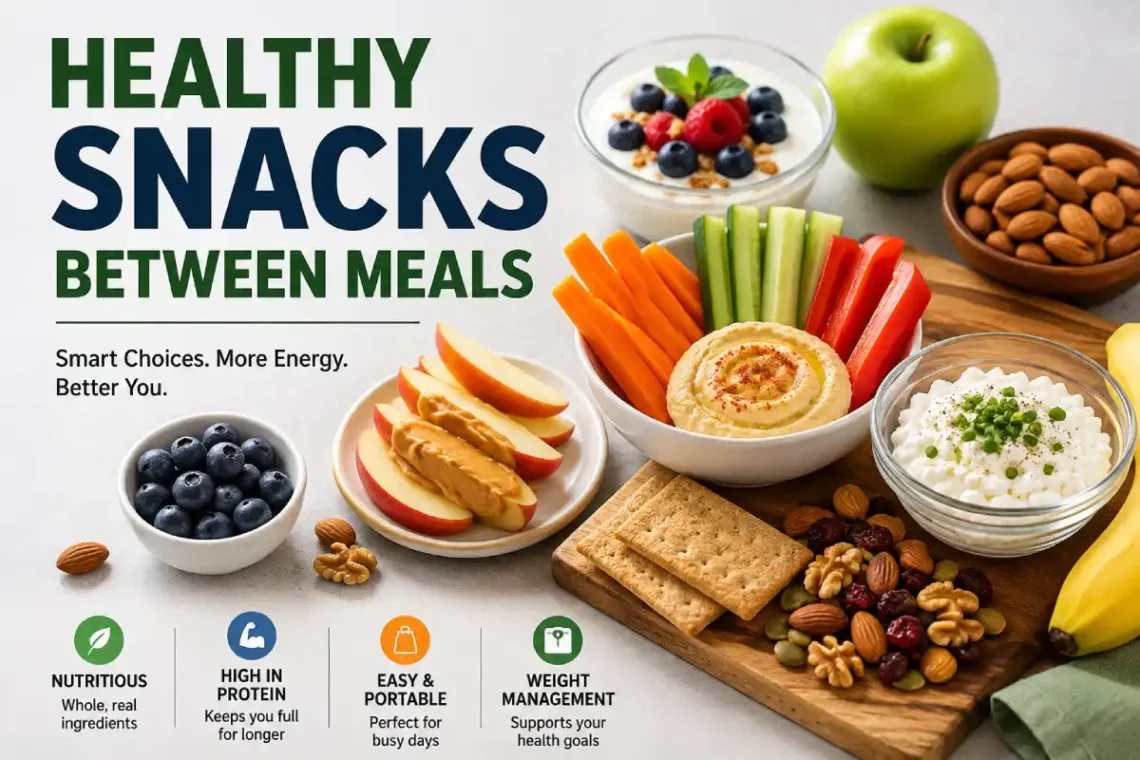
Healthful snacks at snacktime could certainly help to fend off your hunger, increase your energy levels, and curb the urge to arrive at the following meals with raging hunger. Nonetheless, snacking shouldn’t mean health-snacks – the quality, size and general nutritional balance for a snack are extremely important.
However, you really don’t need a complex healthy snack at all. Often a snack containing a portion of protein, a fiborous carbohydrate, fat and or some fruits will more than fill you while providing additional benefits to your overall dietary intake of nutrients.
The 2025–2030 Dietary Guidelines for Americans will continue to be built on a base of nutrient-dense foods that are rich in protein, dairy, vegetables, fruit, healthy fat, and grains. They will also recommend a specific amount of reducing intake of unhealthy fat, sodium, added sugar, and even the foods on our plate.
Healthy snacking works best when it is part of an overall routine built around nutritious easy healthy meals.
❝
This article is a part of
Healthy Eating Hub
Why Healthy Snacking Matters
Snacks work for you when you feel hungry and there are still some hours to have meals, or to have something after a session of workout.
A sensible snack may stave off serious hunger till your lunch or dinner; hence MedLinePlus advice including sources of protein (for some added longevity in our snacks) in the form of beans, nuts or low- fat dairy product; or even a few pieces of whole grain product will keep you fuller compared to the normal sugary, processed snacks.
But then you would rather not eat just for time’s sake as snacks. If you can perfectly live through lunch through dinner without getting too hungry, feel free to skip a snack.
What Makes a Snack Healthy?
Think about the simple formula:
Protein + Produce/Fiber + Optional Healthy Fat
Examples include:
- Greek yogurt + berries
- Apple + peanut butter
- Carrots + hummus
- Cottage cheese + fruit
- Boiled egg + whole-grain crackers
- Roasted chickpeas + cucumber
- Oats + milk + cinnamon
- Nuts + fresh fruit
Starting the day with a balanced meal and easy healthy breakfast ideas can help you stay satisfied until your next meal.
High-Protein Snack Ideas
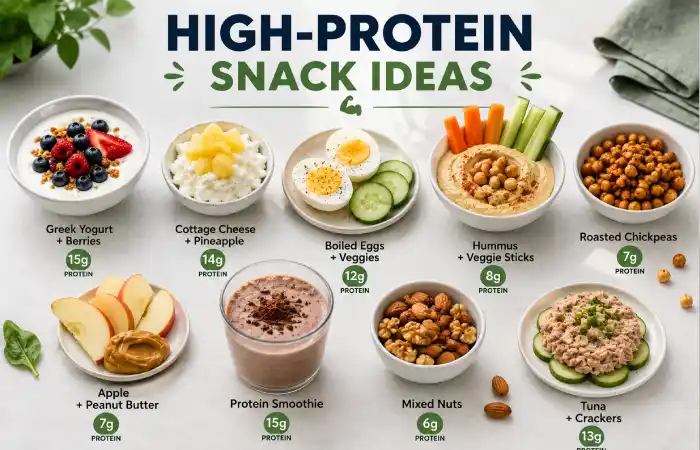
Protein can make a snack more satisfying, particularly when combined with fiber-rich foods.
| Best for | Snack | Why it works |
| Sweet cravings | Greek yogurt + berries | Protein + fruit |
| Afternoon hunger | Cottage cheese + fruit | Protein + natural sweetness |
| Low-prep snacking | Boiled egg + vegetables | Protein + volume |
| Savory cravings | Hummus + carrots/cucumber | Plant protein + fiber |
| Crunchy snack lovers | Roasted chickpeas | Protein + fiber |
| Longer-lasting snack | Apple + peanut butter | Fiber + protein + fat |
| More substantial hunger | Milk + oats + cinnamon | Protein + whole grains |
| Portable option | Nuts + fruit | Protein/fat + fiber |
Choose a nutritious lunch from these easy healthy lunch ideas to provide steady energy before reaching for an afternoon snack.
Another helpful approach to keep in mind is to keep protein as just one part of your snack. After all, some protein won’t likely curb hunger as well as a serving that provides a mixture of protein, fruit or veg and some fiber.
Portable Healthy Snacks
The healthiest snack is often the one you can actually prepare and carry with you. (MedlinePlus)
On the go for work, school, travel or during other busy days, try:
- Small number of no salt almonds, peanuts
- Small portable container filled with fresh fruit
- Such As an apple, orange or banana
- A container of roasted chickpeas
- Plain Greek yogurt kept chilled in a lunchbox
- Veggies and hummus You’re special healthy snack mix
- Graham crackers With cheese
- Homemade cup filled with fruit and yogurt banana, and nutt butter
- Air popped popcorn chips
Portable snack comparison
| Option | Convenience | Main consideration | Protein | Fiber |
| Whole fruit | Excellent | Pair with protein if hungry | Low | Moderate |
| Nuts | Excellent | Easy to overeat | Moderate | Moderate |
| Greek yogurt | Good | Needs refrigeration | High | Low–moderate |
| Roasted chickpeas | Excellent | Check added salt | Moderate | High |
| Hummus + vegetables | Good | Needs refrigeration | Moderate | High |
| Popcorn | Excellent | Choose minimally seasoned varieties | Low | Moderate |
After an afternoon snack, finish the day with balanced healthy dinner ideas that include protein and vegetables.
Packaged Foods – don’t make packaged foods “healthier” than you they may be the ingredient on the packaging saying, “natural,” protein,” “fitness,” etc. Instead always look the ingredient on a food packaging.
Snacks for Weight Loss
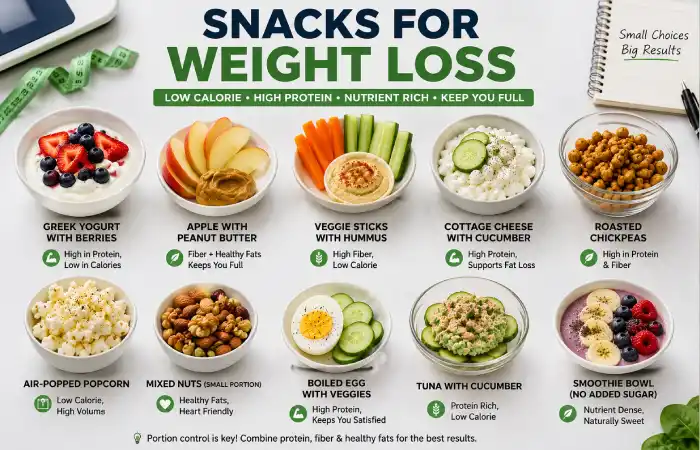
Snacks are not required to be in an ideal weight-loss diet plan however snacks can definitely do!
Total energy consumed still adds up. A snack is the right approach if it makes it easier to adhere to a diet that supports weight loss because you won’t experience intense hunger that can make unhealthy eating decisions a near certainty at the next food opportunity. Eating additional snacks daily when you really don’t have actually consume are simply stacking on energy numbers.
When aiming to drop some weight, ensure that snacks are loaded with an enormous quantity of nutrients in comparison to size.
Good choices include:
- Greek yogurt with berries – protein plus fruit.
- Apple with a small amount of peanut butter – fiber paired with fat and protein.
- Cucumber and carrot sticks with hummus – high-volume produce with a protein-containing dip.
- Boiled egg with vegetables – simple and filling.
- Air-popped popcorn – a high-volume option when lightly seasoned.
- Cottage cheese with fruit – a protein-rich sweet-and-savory combination.
- Roasted chickpeas – crunchy, portable, and fiber-rich.
- A small serving of nuts and fruit – convenient when portions are controlled.
Homemade vs. Packaged Snacks
If you’re trying to lose weight, smart snacking can complement easy healthy meals for weight loss without adding unnecessary calories.
| Feature | Homemade snack | Packaged protein snack |
| Ingredient control | Excellent | Depends on product |
| Convenience | Moderate | Excellent |
| Portion control | Easy if pre-portioned | Check serving size |
| Added sugar | Easy to minimize | Varies |
| Sodium | Easy to control | Can vary considerably |
| Cost | Often lower | Often higher |
| Best use | Everyday routine | Travel/emergency option |
Packaged snacks can absolutely work their way into a balanced eating plan. The trick? You need to look at the whole picture of nutrition, not just decide whether or not to buy an item on account of its being labeled “high-protein” or “low-cal.”
Portion Control Tips
Even healthy food can rack up significant calories if eaten in large quantities.
Protein-rich foods can make snacks more satisfying, and high-protein healthy meals can help you include more protein throughout your day.
Here are some practical approaches you can take:
- Work out a measure of nuts and seeds. For example when you’ve opened a large, family packet portion your out in to a little container you can pour it out from.
- Serve on a plate or in a bowl Serving snacks this way will give you a more visual sense of what you’re consuming than eating it straight from the packet.
- Pairings, not snacks Instead of a disparate trio of different snacks, enjoy just two that complement each other, such as fruit with yogurt or veg and hummus.
- Check pack sizesA single packet might contain multiple portions – be sure to look at the nutritional information to avoid mistaking a single portion as the entire pack.
- Ask yourself if you’re really hungry Habits, stress, Boredom, and availability can sometimes drive snacking instead of hunger.
- Make snacks visually accessible and healthy Having fresh produce, yogurt or prepared snack portions laid out and easily accessible makes them a healthier option when a munchie attack occurs.
The World Cancer Research Fund also advises taking notice of how much you snack, what you can read on packaged food labels and cutting down your snack time if possible.
FAQs
What’s the best snack between meals?
No. 1 “best” will mix your whole foods foods together- such as fruits, veggies , legumes and grains , protein , dairy , nuts and seeds ). 2 Best candidates might include Greek Yogurt and some berries, or an item of fruit and a handful of some nuts .
Should you snack for the purpose of loss and weight loss ?
Not always. A healthy, managed food consumption snack will control the between your hungry for better control that overconsume. If you have a greater deal about the snacking than the snack it self.
Do I need to snack?
Certain people actually need an between meal, some people not thus much it relies on your personal appetite level, the spacing among your food items, your spending of energy and how to manage yourself based around your objective. You can even skip snacking.
How many snacks should I eat?
There’s not a magic number, but if hunger becomes an issue Between meals it’s typically one or two. Portion control is key.
Healthy, portion-controlled snacking won’t hinder a healthy meal plan and if done smart you can increase satiety with the betweenmeal snacks and not end up eating to many calories daily.
What are some snacks that fill you up?
Choose between meal snacks that contain fiber and or protein, such as a healthy choice fruit and a couple of natural nuts, small portion of berries on greek or plain yogurt, vegetable sticks with an appropriate amount of healthy fat and dip for a more filling snack, a boiled egg, and cottage cheese.
Are protein bars good snacks?
In a pinch or when convenience reigns, some protein bars can be a helpful source of portable nutrients, but like any highly processed Food that marketed as “healthy food”, It’s essential to closely examine Nutrition labels for calories, protein, added sugars and sodium.
The Bottom Line
Smart snacking throughout the day does not have to be expensive or complicated or come pre packaged in the form of heavily manufactured foods. The optimal snacks generally include few ingredients and pair at least one of the following with good portion controls:
- Produce Protein Fiber
- Produce Whole grains healthy fat
Introduce a couple of tried and true combinations – yogurt with berries, fruit with nuts, hummus with veggies or eggs with whole-grain crackers – and then simply rotate them during the week. Finally, know that snacks are just a small component of a balanced eating plan! – with whole foods, reasonable portions and some yummy treats you truly love, is far easier to stick with long term than a strict list of “allowed” snacks.
Afiya Jafar is a fitness and wellness writer who focuses on making health, exercise, and healthy lifestyle information simple and practical. Her work covers workouts, fitness motivation, strength training, nutrition, weight management, stress management, mindfulness, and everyday wellness.
Read full bio of Afiya Jafar
Sameena reviews selected health, wellness, fitness, and digital content for clarity, factual presentation, and reader usefulness.
Read full bio of Sameena Begum