
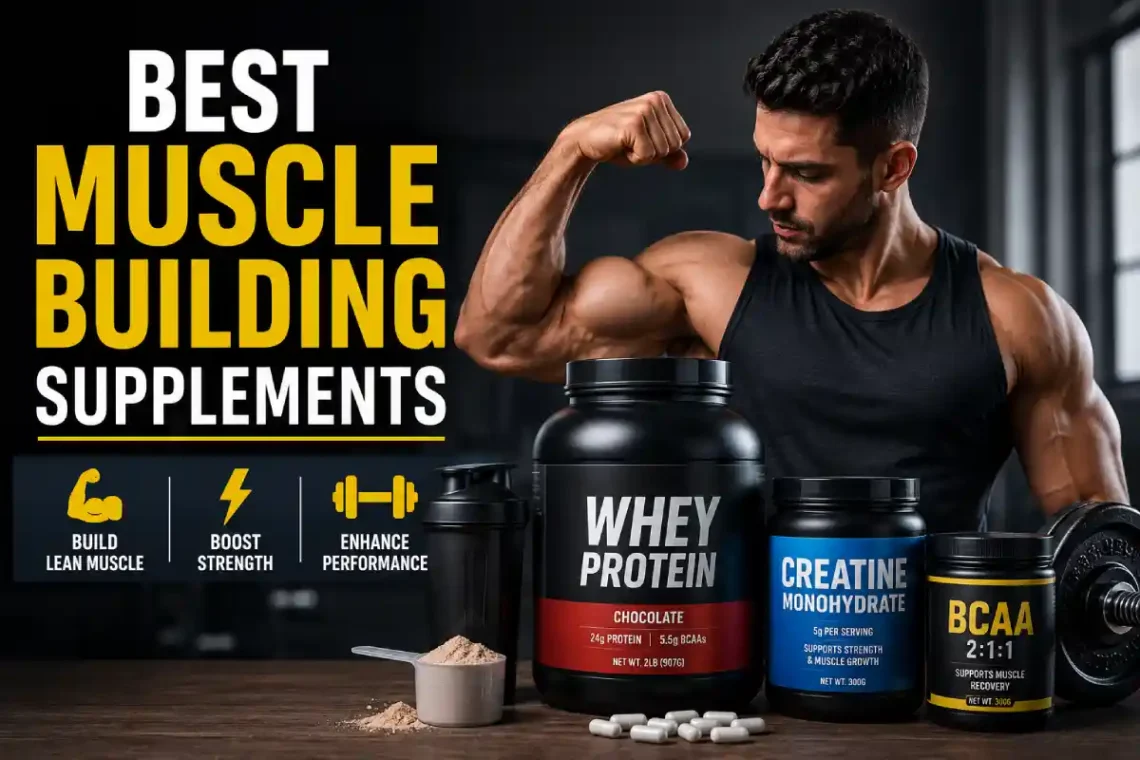
 Afiya Jafar
Fitness & Wellness Writer
Afiya Jafar is a fitness and wellness writer who focuses on making health, exercise, and healthy lifestyle information simple and practical.
Read Full Bio of Author →
Afiya Jafar
Fitness & Wellness Writer
Afiya Jafar is a fitness and wellness writer who focuses on making health, exercise, and healthy lifestyle information simple and practical.
Read Full Bio of Author →
 Sameena Begum
Health, Fitness & Digital Content Reviewer
Sameena reviews selected health, wellness, fitness, and digital content for clarity, factual presentation, and reader usefulness.
Read Full Bio of Reviewer →
Sameena Begum
Health, Fitness & Digital Content Reviewer
Sameena reviews selected health, wellness, fitness, and digital content for clarity, factual presentation, and reader usefulness.
Read Full Bio of Reviewer →
 Dr. Khizrana Begum
General Physician & Dermatologist
Dr. Khizrana Begum is a General Physician and Dermatologist with MBBS and MD qualifications and 5+ years of experience in the medical field.
Read Full Bio of Medical Reviewer →
Dr. Khizrana Begum
General Physician & Dermatologist
Dr. Khizrana Begum is a General Physician and Dermatologist with MBBS and MD qualifications and 5+ years of experience in the medical field.
Read Full Bio of Medical Reviewer →
How to build muscle does require more than just hitting the gym to train hard. In addition to progressive overload, diet, recovery and consistency, which are essential elements of the puzzle, there’s also the right muscle building supplements. Best Muscle Building Supplements can fill in any dietary shortcomings, improve your gym sessions, assist in your post workout routine and boost lean gains when used along a structured routine.
In 2026, sport supplement studies are still yielding consistent results suggesting a small selection of supplements really do help in building muscle.
In essence whey protein as well as creatine monohydrate continue to take top places as the best supported options, whereas other alternatives may be beneficial to your specific training goal, diet and requirements post workout. Find out what exactly these muscle building supplements are, how they are made to function and also which options have solid research behind them. This page will guide you through what to consider when choosing the right muscle building supplement for you.
❝
This article is a part of
Muscle Building Hub
What Are Muscle Building Supplements?
Muscle building supplements are basically nutritional substances which are intended to encourage the synthesis of muscle protein, optimize athletic efficiency, boost the overall strength of an individual and accelerate recuperation following resistance training.
What you must know these are not supposed to substitute a wholesome balanced diet and also a fitness program, rather they assist to supply those requirements more reliable in a health-conscious life.
The majority of the common bodybuilding supplements consist of in one or more associated with the subsequent classes:
- Protein supplements
- Performance enhancers
- Recovery supplements
- Vitamins and minerals
- Weight gain formulas
- Amino acid supplements
If you prefer a clean approach to fitness, these natural muscle-building supplements can help support performance without relying on synthetic ingredients.
How Muscle Growth Happens
In the following days, your body rebuilds these muscle fibers which cause them to become bigger and stronger.
Three primary factors drive muscle growth:
| Factor | Importance |
| Progressive resistance training | ★★★★★ |
| Adequate protein intake | ★★★★★ |
| Recovery and sleep | ★★★★★ |
Supplements enhance these processes but cannot replace them.
Supplements vs Whole Foods
Your primary foods will be whole foods. When it comes to feeding your muscles protein, fat, carbohydrates, fiber, minerals and nutrients, the answer can be found in whole foods.
Supplements are helpful when:
- You struggle to meet daily protein goals.
- You train intensely.
- You have dietary restrictions.
- You need convenient post-workout nutrition.
- Your recovery is limited by nutrient intake.
Comparison
| Whole Foods | Supplements |
| Rich in nutrients | Convenient |
| High satiety | Fast digestion |
| Better long-term nutrition | Easy to consume |
| Requires preparation | Ready to use |
Who Should Consider Muscle Building Supplements?
These supplements may benefit:
Beginners
Protein powders like whey protein can assist novice lifters in getting their daily requirements met with this essential macronutrient.
If your primary goal is building lean muscle, choosing the best protein powder for muscle gain can help you meet your daily protein needs more efficiently.
Intermediate Lifters
Three to five days per week might use supplements like creatine, protein, and those focused on recovery. A competitor usually will use more highly individualised supplementation based on the training amount of training load and the specific goal.
Advanced Athletes
When it’s for a client who has performance requirements or specific body composition demands the programming of supplements become that much more individualised to them.
Older Adults
For older adults with sarcopenia (muscle wasting associated with ageing) protein intake need to be higher, as does weight resistance training.
Common Types of Muscle Building Supplements
| Supplement Type | Primary Purpose |
| Whey Protein | Muscle repair |
| Creatine | Strength and power |
| Casein Protein | Overnight recovery |
| EAAs | Muscle protein synthesis |
| Beta-Alanine | Endurance |
| Citrulline Malate | Blood flow and workout performance |
| HMB | Muscle preservation |
| Mass Gainers | Extra calories |
Do Muscle Building Supplements Really Work?
Maybe a bit unfair to call it an entirely misleading truth. Many fitness myths are the complete opposite of reality. Some have elements of truth within them though, and this is the big myth I’m discussing today.
Supplementing alone doesn’t make you stronger.
If they’re going to give you results and truly add lean muscle, you MUST first have effective and appropriate training & nutrition in place.
What Research Shows in 2026
Recent sports nutrition research indicates:
- One of the most well researched and effective supplements to build muscle mass and increase strength, creatine monohydrate still stands the test.
- Protein supplementation to promote protein muscle synthesis, mainly in instances when the overall daily protein intake is lacking.
- Beta-alanine for improved high-intensity exercise.
- Citrulline malate can also increase your volume and decrease feelings of fatigue.
- Omega-3s can also have an influence in recovery as well as helping muscles at older ages.
The results can vary between people based on diet, intensity of your workouts and consistency.
Factors That Influence Supplement Effectiveness
- Training Quality
Supplements cannot compensate for poorly designed workouts.
Progressive overload remains the primary driver of muscle growth.
- Daily Protein Intake
Protein intake is one of the strongest predictors of muscle gain.
Most active individuals aiming to build muscle benefit from consuming adequate protein spread across the day.
- Sleep
Muscle recovery primarily occurs during sleep.
- Calorie Intake
Building muscle generally requires sufficient energy intake. If calorie intake is too low, muscle growth may be limited even with supplementation.
- Consistency
Supplements aren’t immediate and results will appear after weeks or months. Missed training days and a lack of consistent eating habits will minimize the impacts that they have.
2026 Evidence Comparison
| Supplement | Suitable for Beginners | Research Support | Best For |
| Whey Protein | Yes | Excellent | Muscle growth |
| Creatine | Yes | Excellent | Strength |
| Casein | Yes | Excellent | Recovery |
| Beta-Alanine | Yes | Good | Endurance |
| Citrulline Malate | Yes | Good | Workout performance |
| EAAs | Yes | Good | Recovery |
| HMB | Yes | Moderate | Muscle preservation |
Do You Need Supplements to Build Muscle?
No. A lot of people build muscle successfully on a good balanced diet and good old fashioned resistance training.
However, supplements can make it easier to:
- Meet protein requirements.
- Improve workout performance.
- Support recovery.
- Increase training consistency.
- Fill nutritional gaps.
They could prove useful, as well, within a good fitness regimen, when used appropriately.
How to Choose the Right Muscle Building Supplement
What is the best muscle building supplement? When selecting your preferred product there’s an endless variety available online each and every claiming to facilitate a swift rise. In reality the best muscle building product for you isn’t going to remain static because that all depends on your fitness aspirations, your training level, your food plan and your money.
I wouldn’t really go overboard purchasing supplements as initially go for products that are tried and true with reliable data for muscle growth, strength and healing. Supplements ought to enhance your fitness regime and food regime, no longer supersede it.
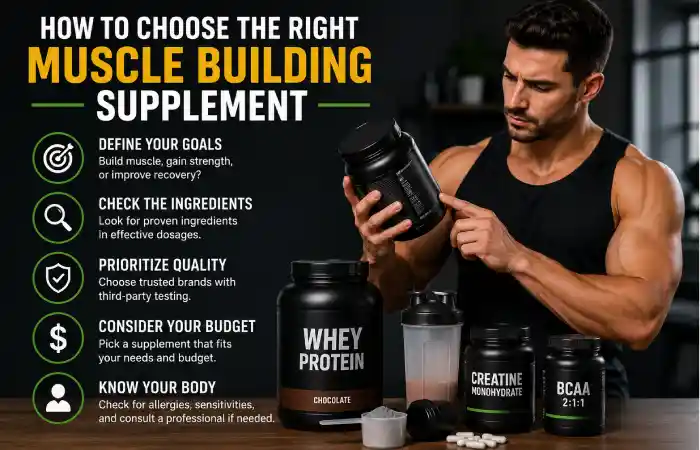
Define Your Fitness Goal First
You should really identify why you want to take a particular supplement before buying. Many supplements do one particular thing very well, and if your main reason to do so is not it, you can simply save money and hassle.
| Goal | Best Supplements |
| Build Lean Muscle | Whey Protein, Creatine Monohydrate |
| Increase Strength | Creatine Monohydrate, Beta-Alanine |
| Improve Recovery | Casein Protein, Omega-3, Magnesium |
| Gain Weight | Mass Gainer, Whey Protein |
| Enhance Workout Performance | Citrulline Malate, Caffeine |
| Preserve Muscle During Fat Loss | Whey Protein, HMB |
Consider Your Training Experience
Your experience level influences which supplements are most beneficial.
Beginners
If strength training is a brand new concept to you, the first most important step towards fast results are figuring out your eating and building a habit of hitting the gym regularly. In that case, you only need the most simple of supplements.
Recommended:
- Whey Protein
- Creatine Monohydrate
- Fish Oil (Optional)
Intermediate Lifters
As training intensity increases, performance and recovery become more important.
Recommended:
- Whey Protein
- Creatine Monohydrate
- Citrulline Malate
- Magnesium
- Omega-3
Advanced Athletes
As you advance and the volume and intensity of your training increases, you may need more, including a customized supplement stack.
Recommended:
- Whey Protein
- Creatine Monohydrate
- Casein Protein
- Beta-Alanine
- Citrulline Malate
- Electrolytes
- Omega-3
Evaluate the Ingredient Label
Be sure to check the supplement fact label prior to purchasing a product. You need to be able to read exactly what you are buying and how much.
Look For:
- Clinically studied ingredients
- Transparent dosage information
- Third-party testing (NSF Certified for Sport, Informed Sport, or USP)
- Minimal added sugars and artificial fillers
- Good Manufacturing Practices (GMP) certification
Check the Protein Quality
| Feature | Recommended |
| Protein Per Serving | 20–30 g |
| Complete Amino Acid Profile | Yes |
| Added Sugar | Low |
| Third-Party Tested | Yes |
| Easy Digestibility | Yes |
Whey isolate is good if you cannot tolerate lactose, while casein can be a good protein for the over night hours.
Match Supplements to Your Diet
Your eating pattern should guide your supplement choices.
| Diet Type | Suitable Supplements |
| High-Protein Diet | Creatine, Omega-3 |
| Vegetarian | Creatine, Protein Powder, Vitamin D (if needed) |
| Vegan | Plant-Based Protein, Creatine, Vitamin B12 (if recommended), Omega-3 from algae |
| Calorie Surplus | Whey Protein, Creatine |
| Calorie Deficit | Whey Protein, HMB |
Supplements should fill nutritional gaps rather than duplicate nutrients you’re already getting from food.
Consider Your Budget
Just because a supplement costs more doesn’t make it better. Invest your money in products with the greatest scientific proof before specialty ones.
| Supplement | Priority | Value for Money |
| Creatine Monohydrate | ⭐⭐⭐⭐⭐ | Excellent |
| Whey Protein | ⭐⭐⭐⭐⭐ | Excellent |
| Omega-3 | ⭐⭐⭐⭐☆ | Very Good |
| Magnesium | ⭐⭐⭐⭐☆ | Very Good |
| Beta-Alanine | ⭐⭐⭐⭐☆ | Good |
| Citrulline Malate | ⭐⭐⭐☆☆ | Moderate |
| HMB | ⭐⭐⭐☆☆ | Situational |
Watch Out for Marketing Claims
Many supplement advertisements exaggerate results. Be cautious of products that promise:
- “Gain 20 pounds of muscle in weeks.”
- “No exercise required.”
- “Instant anabolic effects.”
- “Scientifically proven secret formula.”
- “Miracle muscle builder.”
Real muscle growth takes time, consistent training, adequate nutrition, and patience.
Best Supplements for Muscle Growth
And what with all the things available now promising to get us bulked up, the amount can easily turn in to somewhat of an enormous list to pick out from. Thankfully, it really all boils down to just a handful of categories of muscle building supplements proven to produce the desired results on lean muscle, strength and recovery.
These best muscle building supplements are those backed by science, made by reputable brands, and most importantly, you’ll still need to ensure they compliment your current diet and resistance workout program.
Whey Protein – The Gold Standard for Muscle Growth
What Is Whey Protein?
The protein is also known as a fast absorbing, complete protein, it is actually produced from cow’s milk as a byproduct in cheese production. With 9 essential amino acids and especially rich in leucine amino acid which can have the highest stimulus value for supporting building up new protein in your body, whey protein is considered as a good alternative for individuals that are lacking protein from the normal diet.
Why It Works
Whey protein help speed up the process of recovery after lifting weights because it helps muscle tissue get all the essential amino acids for repair, a process which often requires breaking down the micro muscle fiber damaged from heavy lifting.
Benefits
- Promotes lean muscle growth
- Supports post-workout recovery
- Convenient way to increase daily protein intake
- Helps preserve muscle during calorie deficits
- Mixes easily into shakes, smoothies, or recipes
Recommended Intake
| Goal | Suggested Amount |
| Post-workout | 20–30 g |
| Daily protein top-up | 20–40 g per serving |
| Total daily protein | Aim to meet your individualized daily protein target through food plus supplements |
Best Time to Take It
- Within a couple of hours after training
- At breakfast if your morning meal is low in protein
- Between meals when needed to meet protein goals
Pros
- High-quality complete protein
- Fast absorption
- Rich in leucine
- Widely available
- Cost-effective
Cons
- Not suitable for people with milk allergies
- Some products contain added sugars or fillers
- Whey concentrate may not be ideal for lactose-sensitive individuals
Best For
- Beginners
- Strength athletes
- Bodybuilders
- Recreational gym-goers
- Older adults looking to maintain muscle mass
Whey Protein Buying Checklist
Choose a product that includes:
- At least 20–25 g protein per serving
- Minimal added sugar
- Transparent ingredient list
- Third-party testing
- High protein percentage per scoop
Avoid products with unnecessary proprietary blends or excessive artificial fillers.
Creatine Monohydrate – The Most Researched Muscle Supplement
In any one given supplement that has the strongest evidence for muscle strength and muscle building, creatine monohydrate is the supplement.
What Is Creatine?
Creatine is naturally occurring, it’s stored predominantly in the skeletal muscle, where it’s used to resynthesize ATP, our’s body main source of energy to fuel brief, maximal-effort exercises like weight lifting and sprinting. While you find this nutrient in things like red meat and fish, taking supplements with creatine increases muscle creatine levels further than what we would normally find with diet alone.
Among performance supplements, creatine for muscle growth is one of the most researched options for improving strength, power, and training performance.
How It Supports Muscle Growth
Creatine helps you:
- Perform more repetitions
- Lift heavier weights
- Recover between sets more efficiently
- Increase training volume over time
These training improvements can contribute to greater gains in lean muscle when paired with a consistent resistance training program.
Benefits
- Improves strength and power
- Supports lean muscle gains
- Enhances high-intensity exercise performance
- May aid recovery between workouts
- Backed by extensive scientific research
Recommended Intake
| Phase | Suggested Intake |
| Optional loading | 20 g/day (split into 4 doses) for 5–7 days |
| Maintenance | 3–5 g/day |
A loading phase is optional. Consistent daily use is sufficient for most people.
Best Time to Take It
The most important factor is daily consistency. Many people take creatine after training or with a meal for convenience.
Pros
- Excellent research support
- Affordable
- Easy to use
- Suitable for long-term supplementation in healthy adults
- Works well for beginners and experienced lifters
Cons
- Mild water retention may occur in some users
- Benefits develop over time rather than immediately
Best For
- Muscle growth
- Strength training
- Powerlifting
- CrossFit
- Team sports
- General fitness
Creatine Myths vs. Facts
| Myth | Fact |
| Creatine is a steroid | False. Creatine is not an anabolic steroid. |
| Creatine damages healthy kidneys | Current evidence does not support this in healthy individuals using recommended amounts. |
| Women shouldn’t take creatine | False. It can benefit women who perform resistance training. |
| Cycling creatine is required | No strong evidence suggests cycling is necessary for most users. |
Casein Protein – Slow and Steady Recovery
What Is Casein?
Casein is another milk-derived protein, but unlike whey, it digests slowly. This gradual release of amino acids makes it a popular option before bedtime or during long periods without food.
Why It Helps
Because it provides a sustained supply of amino acids, casein may help support overnight muscle recovery and reduce muscle protein breakdown.
Benefits
- Slow digestion
- Supports overnight recovery
- Helps maintain satiety
- Useful during long gaps between meals
Recommended Intake
| Time | Suggested Amount |
| Before bed | 20–40 g |
Pros
- Long-lasting amino acid delivery
- Complements whey protein
- Supports recovery during sleep
Cons
- Not ideal immediately after training if rapid digestion is preferred
- Not suitable for individuals with milk allergies
Best For
- Overnight recovery
- Muscle maintenance
- Individuals with long periods between meals
Whey vs. Casein Comparison
| Feature | Whey Protein | Casein Protein |
| Digestion Speed | Fast | Slow |
| Best Time | Post-workout | Before bed |
| Muscle Recovery | Excellent | Excellent |
| Satiety | Moderate | High |
| Muscle Growth Support | Excellent | Excellent |
Essential Amino Acids (EAAs)
What Are EAAs?
Essential amino acids are the nine amino acids that the body cannot produce on its own and must obtain through diet. They include leucine, isoleucine, valine, lysine, methionine, phenylalanine, threonine, tryptophan, and histidine.
While complete protein sources already contain EAAs, supplementation may be useful in certain situations, such as training while fasted or when dietary protein intake is limited.
Benefits
- Supports muscle protein synthesis
- May aid recovery
- Convenient during travel or long training sessions
- Helps meet amino acid needs when protein intake is low
Recommended Intake
| Goal | Suggested Amount |
| Before or after workouts | 8–15 g |
Best Time
- Around workouts
- Between meals if protein intake is inadequate
Pros
- Complete essential amino acid profile
- Easy to consume
- Supports recovery
Cons
- Often unnecessary if total daily protein intake is already sufficient
- Generally more expensive than whole protein sources
Best For
- Fasted training
- Individuals with low protein intake
- Endurance athletes with higher training volumes
BCAAs vs. EAAs
Many supplements still market branched-chain amino acids (BCAAs), but EAAs provide a more complete amino acid profile.
| Feature | BCAAs | EAAs |
| Contains Leucine | ✔ | ✔ |
| Complete Essential Amino Acid Profile | ✘ | ✔ |
| Supports Muscle Protein Synthesis | Moderate | High |
| Overall Value | Moderate | Higher |
For most people, complete proteins or EAAs are a more comprehensive choice than BCAAs alone.
Not sure which amino acid supplement is right for you? Read our detailed BCAA vs EAA comparison before making a decision.
2026 Evidence Summary
| Supplement | Overall Scientific Support | Muscle Growth | Strength | Recovery |
| Whey Protein | Very High | ⭐⭐⭐⭐⭐ | ⭐⭐⭐⭐☆ | ⭐⭐⭐⭐⭐ |
| Creatine Monohydrate | Very High | ⭐⭐⭐⭐⭐ | ⭐⭐⭐⭐⭐ | ⭐⭐⭐⭐☆ |
| Casein Protein | High | ⭐⭐⭐⭐☆ | ⭐⭐⭐☆☆ | ⭐⭐⭐⭐⭐ |
| EAAs | High | ⭐⭐⭐⭐☆ | ⭐⭐⭐☆☆ | ⭐⭐⭐⭐☆ |
Which of These Should Beginners Buy First?
If you’re just starting your muscle-building journey, prioritize supplements with the strongest evidence and the broadest benefits.
| Priority | Supplement | Why It Comes First |
| 1 | Creatine Monohydrate | Supports strength, power, and long-term muscle gains. |
| 2 | Whey Protein | Makes it easier to meet daily protein needs. |
| 3 | Casein Protein (Optional) | Useful if your evening meals are low in protein or you want overnight support. |
| 4 | EAAs (Situational) | Helpful when training fasted or if total protein intake is insufficient. |
Key Takeaway: Supplements are most effective when they complement—not replace—a balanced diet, progressive resistance training, adequate sleep, and consistent recovery habits.
Beta-Alanine – Improve High-Intensity Performance
Beta-alanine is a non-essential amino acid that helps increase muscle carnosine levels. Carnosine acts as a buffer against acid buildup during intense exercise, allowing you to perform more repetitions before fatigue sets in.
While beta-alanine doesn’t directly build muscle, it can improve training performance, leading to greater training volume over time—a key factor in muscle hypertrophy.
Benefits
- Delays muscle fatigue
- Improves muscular endurance
- Supports high-intensity training
- May increase workout volume
- Beneficial for HIIT and resistance training
Recommended Dosage
| Goal | Daily Dose |
| General Use | 3.2–6.4 g |
Split doses throughout the day may help reduce the harmless tingling sensation (paresthesia) that some users experience.
Best Time to Take
Unlike caffeine, timing is less important than consistent daily intake.
Pros
- Strong evidence for exercise performance
- Effective for repeated high-intensity efforts
- Can complement creatine supplementation
Cons
- Temporary tingling sensation in some users
- Benefits take several weeks of consistent use
Best For
- Intermediate and advanced lifters
- HIIT athletes
- CrossFit participants
- Sports involving repeated bursts of effort
Citrulline Malate – Support Blood Flow and Workout Quality
Citrulline malate is commonly included in pre-workout supplements because it helps increase nitric oxide production, improving blood flow and nutrient delivery to working muscles.
Some studies suggest it may reduce fatigue and improve exercise performance, particularly during high-volume resistance training.
Benefits
- May improve muscular endurance
- Supports better workout performance
- Promotes blood flow (“muscle pump”)
- May reduce post-exercise soreness
Recommended Dosage
| Goal | Suggested Amount |
| Pre-workout | 6–8 g, 30–60 minutes before training |
Pros
- Popular for pre-workout use
- May improve training volume
- Generally well tolerated
Cons
- Individual responses vary
- Benefits are less consistently supported than creatine
Best For
- Bodybuilders
- High-volume resistance training
- Individuals seeking improved workout endurance
HMB (β-Hydroxy β-Methylbutyrate) – Muscle Preservation
HMB is a metabolite of the amino acid leucine. Research suggests it may help reduce muscle protein breakdown, particularly in beginners, older adults, or during periods of intense training or calorie restriction.
For well-trained athletes consuming adequate protein, the added benefit may be smaller.
Benefits
- Helps reduce muscle breakdown
- May improve recovery
- Useful during calorie deficits
- May support muscle retention during inactivity
Recommended Dosage
| Goal | Suggested Intake |
| Daily | Around 3 g |
Pros
- Supports recovery
- Helpful during cutting phases
- May benefit older adults
Cons
- Less evidence for experienced lifters
- More expensive than protein or creatine
Best For
- Beginners
- Older adults
- Individuals dieting for fat loss
- Recovery-focused training
Mass Gainers – Convenient Calories for Hard Gainers
Mass gainers are calorie-dense powders containing protein, carbohydrates, and sometimes fats. They are designed for people who struggle to consume enough calories to support muscle growth.
They are not inherently superior to whole foods but can be a practical option for individuals with high calorie requirements.
Benefits
- Easy way to increase calorie intake
- Convenient post-workout option
- Supports weight gain when food intake is insufficient
Recommended Use
Consume between meals or after workouts when additional calories are needed.
Pros
- High-calorie serving
- Convenient
- Helps meet energy needs
Cons
- Some products contain excessive added sugars
- Can contribute to unwanted fat gain if calorie intake greatly exceeds needs
Best For
- Hard gainers
- Individuals with high energy expenditure
- Athletes in a muscle-building phase
What to Look for in a Mass Gainer
Choose products that provide:
- High-quality protein
- Complex carbohydrate sources
- Moderate sugar content
- Transparent ingredient labels
- Third-party quality testing
Electrolytes – Support Hydration and Performance
Electrolytes such as sodium, potassium, magnesium, and calcium play essential roles in muscle contraction, hydration, and nerve function.
While they don’t directly build muscle, maintaining proper hydration supports exercise performance and recovery, especially during long or intense training sessions.
Benefits
- Maintain fluid balance
- Support muscle contractions
- Reduce dehydration risk
- Aid recovery after prolonged sweating
Best For
- Long-duration workouts
- Training in hot climates
- Athletes with heavy sweat losses
2026 Muscle Building Supplement Comparison
| Supplement | Muscle Growth | Strength | Recovery | Workout Performance | Scientific Support | Beginner Friendly |
| Whey Protein | ⭐⭐⭐⭐⭐ | ⭐⭐⭐⭐☆ | ⭐⭐⭐⭐⭐ | ⭐⭐⭐☆☆ | Very High | ✔ |
| Creatine Monohydrate | ⭐⭐⭐⭐⭐ | ⭐⭐⭐⭐⭐ | ⭐⭐⭐⭐☆ | ⭐⭐⭐⭐⭐ | Very High | ✔ |
| Casein Protein | ⭐⭐⭐⭐☆ | ⭐⭐⭐☆☆ | ⭐⭐⭐⭐⭐ | ⭐⭐☆☆☆ | High | ✔ |
| EAAs | ⭐⭐⭐⭐☆ | ⭐⭐⭐☆☆ | ⭐⭐⭐⭐☆ | ⭐⭐⭐☆☆ | High | ✔ |
| Beta-Alanine | ⭐⭐⭐☆☆ | ⭐⭐⭐⭐☆ | ⭐⭐⭐☆☆ | ⭐⭐⭐⭐⭐ | High | ✔ |
| Citrulline Malate | ⭐⭐⭐☆☆ | ⭐⭐⭐☆☆ | ⭐⭐⭐☆☆ | ⭐⭐⭐⭐☆ | Moderate | ✔ |
| HMB | ⭐⭐⭐☆☆ | ⭐⭐⭐☆☆ | ⭐⭐⭐⭐☆ | ⭐⭐☆☆☆ | Moderate | ✔ |
| Mass Gainer | ⭐⭐⭐⭐☆* | ⭐⭐⭐☆☆ | ⭐⭐⭐☆☆ | ⭐⭐☆☆☆ | Moderate | ✔ |
| Electrolytes | ⭐☆☆☆☆ | ⭐☆☆☆☆ | ⭐⭐⭐⭐☆ | ⭐⭐⭐⭐☆ | High | ✔ |
*Primarily effective for individuals who need additional calories to achieve a calorie surplus.
Which Supplements Offer the Best Value?
If you’re on a limited budget, prioritize supplements with the strongest evidence.
| Priority | Supplement | Why It’s Worth It |
| 1 | Creatine Monohydrate | Exceptional research support, affordable, improves strength and muscle gains |
| 2 | Whey Protein | Convenient way to meet protein needs |
| 3 | Casein Protein | Useful for overnight recovery if dietary protein is low |
| 4 | Beta-Alanine | Helps improve high-intensity training performance |
| 5 | Citrulline Malate | May enhance workout quality and endurance |
| 6 | Electrolytes | Valuable for hydration during prolonged or intense sessions |
| 7 | HMB | Situational benefits, particularly during calorie restriction or in older adults |
| 8 | Mass Gainer | Useful only if you’re unable to consume enough calories through whole foods |
Sample Beginner Supplement Stack
| Time | Supplement | Purpose |
| Breakfast | Whey Protein (if needed) | Increase daily protein intake |
| Before Workout | Citrulline Malate (optional) | Support workout performance |
| Any Time Daily | Creatine Monohydrate | Improve strength and power |
| After Workout | Whey Protein | Support muscle recovery |
| Before Bed | Casein Protein (optional) | Overnight muscle recovery |
Reminder: A supplement stack should be tailored to your diet, training volume, health status, and goals. More supplements do not necessarily lead to better results.
Common Buying Mistakes to Avoid
Choosing supplements can be confusing, especially with bold marketing claims. Avoid these common mistakes:
- Buying supplements before establishing a consistent training routine.
- Ignoring total daily protein and calorie intake.
- Choosing products with proprietary blends that don’t disclose ingredient amounts.
- Believing “more expensive” always means “more effective.”
- Purchasing supplements from brands that lack third-party quality testing.
- Expecting rapid muscle growth without progressive resistance training and recovery.
Supplements for Recovery and Performance
Building muscle doesn’t end when you leave the gym. The real growth happens during recovery, when your body repairs muscle fibers damaged during resistance training. While protein and creatine often get the spotlight, several recovery-focused supplements can help optimize muscle repair, reduce fatigue, and support consistent training.
Important: Recovery supplements are most effective when combined with adequate sleep (7–9 hours), a balanced diet, hydration, and a well-structured workout program.
Why Recovery Matters for Muscle Growth
Every workout creates microscopic tears in your muscle fibers. During recovery, your body repairs these fibers, making them larger and stronger—a process known as muscle protein synthesis.
Poor recovery can lead to:
- Decreased workout performance
- Increased soreness
- Higher injury risk
- Training plateaus
- Reduced muscle growth
- Persistent fatigue
Think of recovery as the bridge between your workouts. Without it, even the best supplements can’t compensate for inconsistent progress.
Omega-3 Fatty Acids
What Are Omega-3s?
Omega-3 fatty acids, particularly EPA and DHA, are healthy fats commonly found in fatty fish such as salmon, sardines, and mackerel. Fish oil supplements provide a convenient way to increase omega-3 intake when dietary sources are limited.
Although omega-3s don’t directly stimulate muscle growth, they support overall health and may help improve recovery and muscle function.
Benefits
- Supports recovery after intense exercise
- Helps maintain joint health
- May reduce exercise-induced inflammation
- Supports heart and brain health
- May benefit older adults by supporting muscle function
Recommended Intake
| Goal | Suggested Daily Intake |
| General Health | 250–500 mg EPA + DHA |
| Active Individuals | 1–2 g EPA + DHA (consult a healthcare professional if needed) |
Best Time to Take
Take with a meal containing fat to enhance absorption.
Best For
- Strength athletes
- Endurance athletes
- Older adults
- Individuals with low fish intake
Vitamin D
Why Vitamin D Matters
Vitamin D supports bone health, muscle function, and immune health. Low vitamin D levels are relatively common, especially among people with limited sun exposure.
If a deficiency is confirmed by a healthcare professional, correcting it may support overall training capacity and muscle function.
Benefits
- Supports bone health
- Contributes to normal muscle function
- Supports immune health
- Important for long-term athletic performance
Recommended Intake
Daily needs vary depending on age, lifestyle, and blood levels. Supplementation should ideally be based on medical advice and, when appropriate, blood testing.
Food Sources
- Egg yolks
- Fatty fish
- Fortified dairy products
- Sunlight exposure
Best For
- Indoor gym-goers
- Older adults
- Individuals with limited sun exposure
Magnesium
Why Magnesium Is Important
Magnesium is involved in hundreds of biochemical processes, including energy production, muscle contraction, and nerve function.
Athletes who sweat heavily or have diets low in magnesium-rich foods may benefit from paying closer attention to their intake.
Benefits
- Supports muscle and nerve function
- Helps with energy metabolism
- Contributes to normal muscle contraction
- Supports recovery and sleep quality
Magnesium-Rich Foods
- Pumpkin seeds
- Almonds
- Spinach
- Cashews
- Black beans
Supplement Forms
| Form | Common Use |
| Magnesium Glycinate | Often chosen for good absorption and digestive tolerance |
| Magnesium Citrate | Commonly used but may have a mild laxative effect in some people |
| Magnesium Oxide | Lower absorption compared with other forms |
Zinc
Role in Muscle Health
Zinc is an essential mineral involved in protein synthesis, immune function, and tissue repair.
Most people who eat a balanced diet obtain adequate zinc, but athletes with restrictive diets may occasionally require additional attention.
Benefits
- Supports normal protein synthesis
- Contributes to immune function
- Helps tissue repair
- Supports overall recovery
Dietary Sources
- Beef
- Shellfish
- Pumpkin seeds
- Chickpeas
- Dairy products
Electrolytes
Hydration is often overlooked in muscle-building programs. During intense training, the body loses sodium and other electrolytes through sweat.
Replacing these minerals can help maintain hydration and support normal muscle function, particularly during prolonged workouts or hot weather.
Important Electrolytes
| Electrolyte | Primary Function |
| Sodium | Fluid balance and muscle contraction |
| Potassium | Nerve and muscle function |
| Magnesium | Muscle relaxation and energy production |
| Calcium | Muscle contraction and bone health |
Who Needs Electrolytes?
They are particularly helpful for:
- Long-duration training sessions
- High sweat rates
- Outdoor workouts in hot climates
- Multiple training sessions per day
For shorter gym workouts under an hour, water is often sufficient unless sweat losses are substantial.
Ashwagandha
What Is Ashwagandha?
Ashwagandha is an herbal supplement traditionally used in Ayurvedic medicine. Emerging research suggests it may help manage stress and support exercise performance in some individuals.
Potential Benefits
- May support recovery from training
- May help reduce perceived stress
- Could support strength gains when combined with resistance training
- May improve sleep quality in some individuals
Suggested Intake
Studies commonly use standardized extracts in doses ranging from 300–600 mg per day, though products vary.
Best For
- Individuals experiencing high training stress
- Busy professionals balancing work and fitness
- Athletes prioritizing recovery and sleep
Caffeine
A Performance Booster, Not a Muscle Builder
Caffeine doesn’t directly increase muscle mass, but it can improve workout quality by enhancing alertness and reducing perceived exertion.
Better workouts may contribute to greater long-term muscle gains.
Benefits
- Increases focus
- Improves workout intensity
- May increase power output
- Reduces perceived fatigue
Best Time to Take
Approximately 30–60 minutes before training, while considering your personal tolerance and avoiding late-day intake if it affects sleep.
Caution
Excessive caffeine intake may cause:
- Jitters
- Increased heart rate
- Digestive discomfort
- Difficulty sleeping
Sleep is essential for muscle recovery, so avoid sacrificing recovery for a temporary performance boost.
2026 Recovery Supplement Comparison
| Supplement | Recovery | Muscle Support | Overall Evidence | Best For |
| Omega-3 | ⭐⭐⭐⭐⭐ | ⭐⭐⭐⭐☆ | High | Recovery & Joint Health |
| Vitamin D | ⭐⭐⭐⭐☆ | ⭐⭐⭐⭐☆ | High (when deficient) | Bone & Muscle Function |
| Magnesium | ⭐⭐⭐⭐☆ | ⭐⭐⭐⭐☆ | High | Recovery & Sleep |
| Zinc | ⭐⭐⭐⭐☆ | ⭐⭐⭐☆☆ | Moderate–High | Tissue Repair |
| Electrolytes | ⭐⭐⭐⭐☆ | ⭐⭐☆☆☆ | High | Hydration |
| Ashwagandha | ⭐⭐⭐⭐☆ | ⭐⭐⭐☆☆ | Moderate | Stress Management |
| Caffeine | ⭐⭐⭐☆☆ | ⭐⭐⭐☆☆ | High | Workout Performance |
Recovery Supplement Stack
The ideal recovery stack depends on your training volume, diet, and individual needs. Rather than taking every available supplement, build a simple, evidence-based routine.
| Time | Supplement | Purpose |
| Breakfast | Omega-3 | General health and recovery support |
| With Meals | Vitamin D (if recommended) | Bone and muscle function |
| Throughout the Day | Electrolytes (as needed) | Hydration |
| Evening | Magnesium | Muscle function and relaxation |
| Before Bed | Ashwagandha (optional) | Stress management and recovery |
Signs You May Need to Focus More on Recovery
Recovery is about more than soreness. Consider evaluating your training and recovery plan if you notice:
- Persistent muscle soreness lasting several days
- Declining workout performance
- Poor sleep quality
- Frequent fatigue
- Difficulty progressing in strength
- Increased risk of minor injuries
- Feeling unmotivated to train
Before adding more supplements, review the fundamentals:
- Are you eating enough calories?
- Are you consuming adequate protein?
- Are you sleeping 7–9 hours most nights?
- Are you allowing enough rest between hard training sessions?
Addressing these areas often has a greater impact than adding another supplement.
How to Take Muscle Building Supplements
Choosing the right supplements is only part of the equation. Knowing when and how to take them can help you stay consistent and get the most out of your nutrition plan. While timing has some benefits, your overall daily intake of protein, calories, and key nutrients remains the biggest factor in muscle growth.
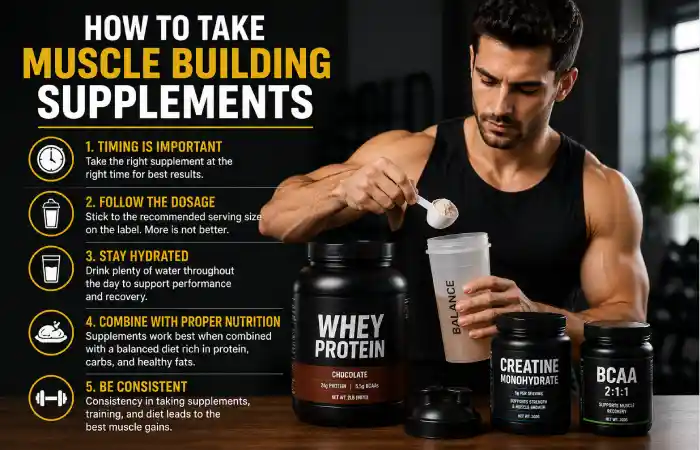
Do Supplement Timing Really Matter?
Many fitness influencers emphasize an “anabolic window” immediately after your workout. Current evidence suggests that while post-workout nutrition is beneficial, the total amount of nutrients you consume throughout the day has a greater impact on muscle growth.
Priority Order for Muscle Growth
| Priority | Importance |
| Progressive Strength Training | ⭐⭐⭐⭐⭐ |
| Daily Protein Intake | ⭐⭐⭐⭐⭐ |
| Total Daily Calories | ⭐⭐⭐⭐⭐ |
| Sleep & Recovery | ⭐⭐⭐⭐⭐ |
| Supplement Consistency | ⭐⭐⭐⭐☆ |
| Nutrient Timing | ⭐⭐⭐☆☆ |
Key Takeaway: Don’t stress if you can’t drink a protein shake immediately after your workout. Aim to distribute protein evenly across your meals and stay consistent.
Pre-Workout Supplements
A well-planned pre-workout routine can improve energy, endurance, and focus, helping you perform at your best.
Recommended Pre-Workout Supplements
| Supplement | Timing | Purpose |
| Caffeine | 30–60 minutes before | Increase alertness and workout intensity |
| Citrulline Malate | 30–60 minutes before | Support blood flow and endurance |
| Beta-Alanine | Daily (timing less important) | Improve muscular endurance over time |
| Water & Electrolytes | Before and during training | Maintain hydration |
Example Pre-Workout Routine
- 500–700 ml of water
- Optional coffee or caffeine supplement (if tolerated)
- Citrulline malate
- Light carbohydrate-rich snack if training after a long gap without eating
During Your Workout
For most strength-training sessions lasting 45–90 minutes, water is usually sufficient.
You may benefit from additional hydration or nutrition if you:
- Train longer than 90 minutes
- Perform multiple workouts per day
- Exercise in hot or humid environments
- Have high sweat losses
During-Workout Options
| Supplement | Best For |
| Water | Most workouts |
| Electrolytes | Heavy sweating |
| EAAs (optional) | Long sessions or fasted training |
| Carbohydrate sports drink | Endurance or extended training |
Post-Workout Nutrition
Your post-workout meal should focus on supporting recovery and replenishing nutrients.
Ideal Post-Workout Plate
- High-quality protein
- Carbohydrates to replenish energy
- Fluids to replace sweat losses
- Vegetables or fruit for micronutrients
Recovery is just as important as training, so explore the best post-workout supplements for recovery to support muscle repair and reduce fatigue.
Recommended Supplements
| Supplement | Suggested Use |
| Whey Protein | Convenient protein source if a meal isn’t available |
| Creatine Monohydrate | Daily consistency matters more than exact timing |
| Mass Gainer | For individuals needing extra calories to support weight gain |
Before Bed
Sleep is when much of your recovery and muscle repair occur.
Helpful Options
| Supplement | Purpose |
| Casein Protein | Slow-release protein overnight |
| Magnesium | Supports normal muscle function and relaxation |
| Ashwagandha (optional) | May help manage stress and support recovery |
Rest Day Supplement Schedule
Muscle growth continues on rest days, making consistency important.
| Supplement | Continue on Rest Days? |
| Creatine | ✔ Yes |
| Whey Protein | ✔ If needed to meet protein goals |
| Casein | ✔ Optional |
| Omega-3 | ✔ Yes |
| Vitamin D | ✔ As recommended |
| Magnesium | ✔ Yes |
| Zinc | ✔ If needed |
| Electrolytes | As needed based on activity and climate |
Sample Daily Supplement Schedule
| Time | Supplement | Goal |
| Breakfast | Omega-3 + Vitamin D (if recommended) | General health |
| Mid-Morning | Whey Protein (if needed) | Meet protein target |
| 30–60 Minutes Before Workout | Caffeine (optional) + Citrulline Malate | Performance |
| During Workout | Water or Electrolytes | Hydration |
| After Workout | Whey Protein + Creatine | Recovery |
| Evening | Magnesium | Recovery |
| Before Bed | Casein Protein (optional) | Overnight muscle support |
Beginner Muscle-Building Stack
If you’re new to supplements, keep it simple.
| Supplement | Why It’s Included |
| Whey Protein | Helps meet daily protein needs |
| Creatine Monohydrate | Supports strength and muscle gains |
| Omega-3 | Supports recovery and overall health |
This combination provides excellent value without unnecessary complexity.
Intermediate Stack
For individuals training 4–5 days per week:
- Whey Protein
- Creatine Monohydrate
- Omega-3
- Magnesium
- Citrulline Malate (optional)
- Vitamin D (if needed)
Advanced Stack
Advanced lifters may consider adding:
- Whey Protein
- Casein Protein
- Creatine Monohydrate
- Citrulline Malate
- Beta-Alanine
- Omega-3
- Magnesium
- Electrolytes (during demanding training)
- Caffeine (strategically, not excessively)
Remember, more supplements do not guarantee better results. Build your stack around your goals and recovery needs.
Supplements That Work Well Together
| Combination | Why It Works |
| Whey Protein + Creatine | Supports muscle recovery and strength |
| Citrulline Malate + Caffeine | Enhances workout performance and focus |
| Casein + Magnesium | Supports overnight recovery |
| Omega-3 + Vitamin D | Supports overall health and muscle function |
Troubleshooting Muscle-Building Plateaus
If you’re taking supplements but not seeing progress, the issue often lies elsewhere. Use this checklist before buying another product.
Problem: Not Gaining Muscle
Possible Causes
- Not eating enough calories
- Inadequate protein intake
- Inconsistent strength training
- Poor recovery
- Lack of progressive overload
Solutions
- Increase calorie intake gradually
- Prioritize protein-rich meals
- Track your workouts and aim to improve over time
- Get adequate sleep
- Stay consistent with your routine
Problem: Constant Muscle Soreness
Possible Causes
- Excessive training volume
- Poor sleep
- Inadequate hydration
- Insufficient recovery days
Solutions
- Schedule regular rest days
- Stay hydrated
- Consider recovery-focused supplements if appropriate
- Reduce training volume temporarily if needed
Problem: Low Energy During Workouts
Possible Causes
- Training on an empty stomach
- Low carbohydrate intake
- Dehydration
- Poor sleep
Solutions
- Eat a balanced meal before training
- Stay hydrated
- Use caffeine judiciously if appropriate
- Review your sleep habits
Problem: Digestive Discomfort
Possible Causes
- Lactose intolerance
- Large supplement servings
- Artificial sweeteners
Solutions
- Try whey isolate instead of concentrate if lactose is an issue
- Split servings into smaller amounts
- Choose products with simpler ingredient lists
Common Supplement Mistakes
Avoid these frequent errors:
- Buying every popular supplement instead of focusing on the basics.
- Ignoring whole-food nutrition.
- Expecting immediate muscle gains.
- Taking inconsistent doses.
- Overlooking hydration and sleep.
- Choosing products without third-party quality testing.
- Following influencer recommendations without considering scientific evidence.
Are Muscle Building Supplements Safe?
For most healthy adults, many of the most researched muscle-building supplements—such as whey protein and creatine monohydrate—have a strong safety profile when used as directed. However, supplements are not risk-free, and choosing high-quality products is just as important as choosing the right ingredients.
Remember that supplements are intended to supplement a healthy diet—not replace balanced meals, regular exercise, or adequate sleep.
How to Choose Safe Supplements
Since dietary supplement regulations vary by country, product quality can differ between brands.
Look for products that offer:
- Third-party testing
- Transparent ingredient labels
- Clearly stated dosages
- No proprietary blends hiding ingredient amounts
- Good manufacturing practices (GMP)
- Positive reputation and verified customer reviews
Trusted Third-Party Certifications
| Certification | Why It Matters |
| NSF Certified for Sport | Screens for banned substances and verifies label accuracy |
| Informed Sport | Commonly used by competitive athletes |
| USP Verified | Confirms quality and ingredient standards where applicable |
Possible Side Effects
Even well-researched supplements may cause mild side effects in some individuals.
| Supplement | Possible Side Effects |
| Whey Protein | Digestive discomfort in lactose-sensitive individuals |
| Creatine Monohydrate | Temporary water retention, mild stomach upset if taken in large doses |
| Beta-Alanine | Temporary tingling sensation (paresthesia) |
| Citrulline Malate | Mild digestive discomfort in some people |
| Caffeine | Increased heart rate, jitters, sleep disruption |
| Magnesium | Loose stools with certain forms or higher doses |
| Fish Oil | Fishy aftertaste or mild digestive upset |
Most side effects can be minimized by following recommended serving sizes and choosing products that match your individual tolerance.
Before adding any product to your routine, it’s important to understand the potential muscle-building supplement side effects and how to use supplements safely.
Who Should Be Extra Cautious?
Consult a healthcare professional before using supplements if you:
- Have kidney or liver disease
- Take blood-thinning medications
- Have uncontrolled high blood pressure
- Are pregnant or breastfeeding
- Have known food allergies
- Are under 18 years old without professional guidance
Supplements That Are Often Overhyped
Marketing can make certain products sound essential, even when evidence is limited.
Be Skeptical of Claims Like:
- “Gain 10 pounds of muscle in a month.”
- “Build muscle without exercise.”
- “Scientifically proven secret formula.”
- “Anabolic results without steroids.”
- “Instant muscle growth.”
No supplement can replace progressive resistance training, sufficient protein intake, and consistent recovery.
Evidence-Based Ranking (2026)
| Evidence Level | Supplement | Overall Rating |
| Excellent | Creatine Monohydrate | ⭐⭐⭐⭐⭐ |
| Excellent | Whey Protein | ⭐⭐⭐⭐⭐ |
| High | Casein Protein | ⭐⭐⭐⭐☆ |
| High | Omega-3 | ⭐⭐⭐⭐☆ |
| High | Magnesium | ⭐⭐⭐⭐☆ |
| High | Beta-Alanine | ⭐⭐⭐⭐☆ |
| Moderate | Citrulline Malate | ⭐⭐⭐☆☆ |
| Moderate | EAAs | ⭐⭐⭐☆☆ |
| Moderate | HMB | ⭐⭐⭐☆☆ |
| Situational | Mass Gainers | ⭐⭐⭐☆☆ |
Frequently Asked Questions
- What is the best muscle-building supplement for beginners?
Creatine monohydrate and whey protein are among the most evidence-supported choices. Creatine helps improve strength and training performance, while whey protein makes it easier to meet daily protein needs.
- Do I need supplements to build muscle?
No. Many people build muscle successfully through resistance training, adequate calorie intake, and sufficient protein from whole foods. Supplements are designed to complement—not replace—a healthy diet.
- Is creatine safe to take every day?
For healthy adults, research supports the safety of daily creatine monohydrate when used at recommended amounts. If you have a medical condition, consult your healthcare provider before use.
- Should I take protein on rest days?
Yes. Meeting your daily protein target is important on both training and rest days because muscle repair and growth continue during recovery.
- Which protein is better—whey or casein?
Whey protein digests quickly and is convenient after workouts, while casein digests more slowly and is often used before bedtime. Both can support muscle growth when total protein intake is adequate.
Conclusion
The best muscle-building supplements are those supported by high-quality scientific evidence and used alongside a balanced diet and progressive resistance training.
For most people, a simple approach is the most effective:
- Meet your daily protein needs.
- Train consistently with progressive overload.
- Prioritize sleep and recovery.
- Use creatine monohydrate and whey protein as foundational supplements if they fit your needs.
- Consider additional supplements such as beta-alanine, citrulline malate, omega-3s, or magnesium based on your goals and lifestyle.
Avoid chasing every new trend or heavily marketed product. Instead, invest in proven supplements, quality nutrition, and consistent training habits. Over time, these evidence-based practices will contribute far more to your progress than any single supplement.
Afiya Jafar is a fitness and wellness writer who focuses on making health, exercise, and healthy lifestyle information simple and practical. Her work covers workouts, fitness motivation, strength training, nutrition, weight management, stress management, mindfulness, and everyday wellness.
Read Full Bio of Afiya Jafar →
Sameena Begum reviews selected health, wellness, fitness, and digital content for clarity, factual presentation, consistency, and reader usefulness. Her review work helps maintain clear and responsible editorial standards across PhysicalFitt content.
Read Full Bio of Sameena Begum →
Dr. Khizrana Begum is a qualified medical professional with MBBS and MD qualifications and 5+ years of experience in the medical field. She works as a General Physician and Dermatologist, with expertise in general medicine, dermatology, preventive healthcare, and skin health.
Read Full Bio of Dr. Khizrana Begum →