
 Afiya Jafar
Fitness & Wellness Writer
Afiya Jafar is a fitness and wellness writer who focuses on making health, exercise, and healthy lifestyle information simple and practical.
Read Full Bio of Author →
Afiya Jafar
Fitness & Wellness Writer
Afiya Jafar is a fitness and wellness writer who focuses on making health, exercise, and healthy lifestyle information simple and practical.
Read Full Bio of Author →
 Sameena Begum
Health, Fitness & Digital Content Reviewer
Sameena reviews selected health, wellness, fitness, and digital content for clarity, factual presentation, and reader usefulness.
Read Full Bio of Reviewer →
Sameena Begum
Health, Fitness & Digital Content Reviewer
Sameena reviews selected health, wellness, fitness, and digital content for clarity, factual presentation, and reader usefulness.
Read Full Bio of Reviewer →
 Dr. Khizrana Begum
General Physician & Dermatologist
Dr. Khizrana Begum is a General Physician and Dermatologist with MBBS and MD qualifications and 5+ years of experience in the medical field.
Read Full Bio of Medical Reviewer →
Dr. Khizrana Begum
General Physician & Dermatologist
Dr. Khizrana Begum is a General Physician and Dermatologist with MBBS and MD qualifications and 5+ years of experience in the medical field.
Read Full Bio of Medical Reviewer →
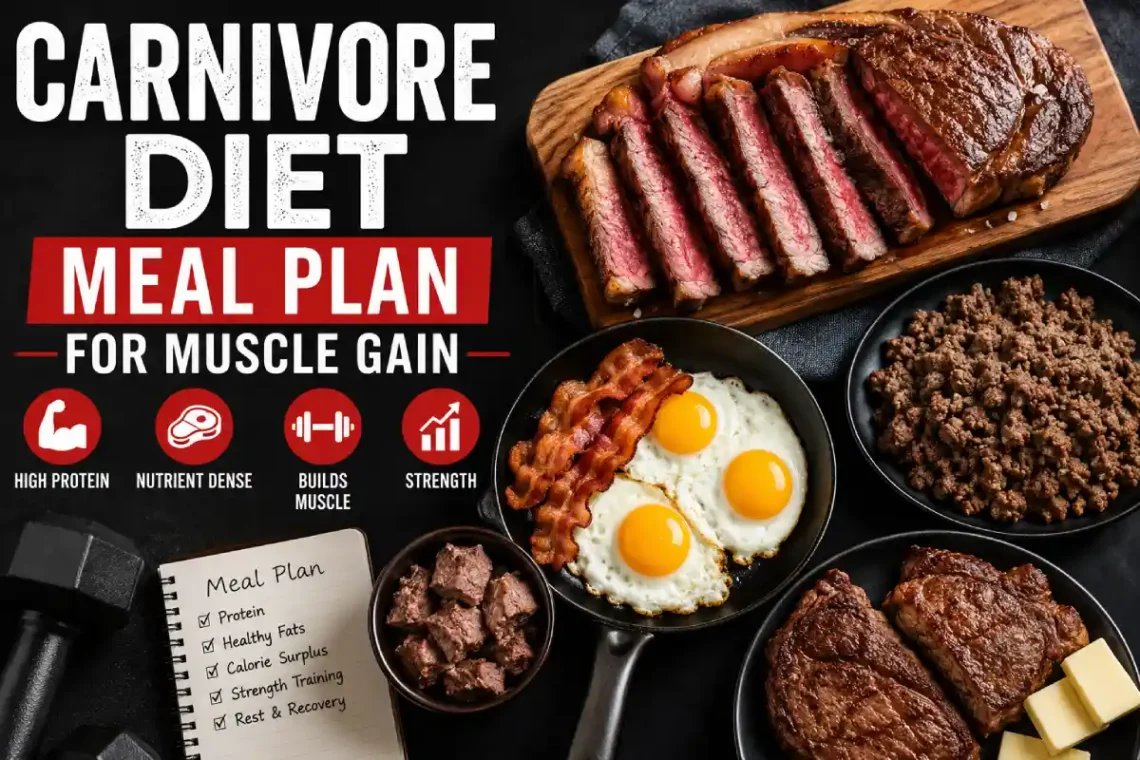
Finding the perfect Carnivore Diet Meal Plan for Muscle Gain – If you’re trying to find the perfect Carnivore Diet Meal Plan for Muscle Gain, you might be wondering if you can consume enough protein and calories by only eating animal-based foods to build lean muscle. The good news is that you absolutely can – but you need to set your meals up the right way. Carnivore bulking is all about high-quality protein, plenty of fat for energy, getting your reps in and consistent recovery.
Here’s how you can determine your calorie and protein needs, plan your meals around your training schedule, and how to recover to see maximum muscle gains.
❝
This article is a part of
Diet Plans Hub
Why the Carnivore Diet Can Support Muscle Growth
Muscle growth depends on three primary factors:
- Progressive overload during resistance training
- Adequate protein intake
- Calorie surplus
Animal products include all the complete protein sources which contain all nine necessary amino acids that include leucine which is arguably the single most effective amino acid for promoting muscle protein synthesis.
Additional benefits include:
- Highly bioavailable nutrients
- Complete amino acid profile
- Iron and vitamin B12
- Zinc
- Creatine (naturally found in red meat)
Comparison Table: Carnivore vs Traditional Bulking Diet
| Factor | Carnivore Diet | Traditional Bulking |
| Protein Quality | Excellent | Excellent |
| Carbohydrates | Very Low | Moderate to High |
| Satiety | High | Moderate |
| Meal Simplicity | Easy | Moderate |
| Processed Foods | Minimal | Often Higher |
| Recovery Nutrition | Protein + Fat | Protein + Carbs |
| Suitable for Muscle Gain | Yes | Yes |
Keep your meals enjoyable with these easy carnivore diet recipes that fit your muscle-building goals.
Calculating Protein Requirements
Protein intake is one of the most important aspects of muscle growth.
Recommended Daily Protein
| Goal | Protein Intake |
| Maintenance | 1.2–1.6 g/kg |
| Muscle Gain | 1.6–2.2 g/kg |
| Aggressive Bulking | 2.2–2.5 g/kg |
Example
80 kg athlete
- Minimum: 128 g protein
- Optimal: 160–176 g
- Upper range: 200 g
Excellent protein sources include:
- Ribeye steak
- Sirloin
- Ground beef
- Chicken thighs
- Eggs
- Salmon
- Sardines
- Lamb
Increasing Calories Effectively
Gain muscle, not fat, while eating for growth in carnivore. It’s not about just protein when you gain muscle, its about surplus calories too. Without surplus calories your body doesn’t build muscle very effectively, so you’re going to want some extra calories over maintenance.
Aim for 250-500 calorie surplus a day, which can lead to slow and steady muscle gains while avoiding too much fat.
Eat higher calorie, fattier meats rather than more lean protein to make increasing your caloric intake super simple on carnivore. Fat provides double the calorie value of protein, and so things like ribeye, short ribs, lamb chops, 80/20 ground beef, pork belly, eggs, butter, tallow, and dairy products (if you tolerate) will skyrocket your calories without forcing giant portions down. Instead of eating one to two massive meals of the day spread out, consume 3 to 5. The exact same can be achieved if you can consume a bite size high protein snack in between meals – like the protein in hard boiled eggs, steak bits, jerky or cheese.
Smart Ways to Increase Calories
| Why It Helps | Strategy |
| Adds more calories without increasing meal size significantly | Choose fattier cuts of beef |
| Increases healthy fat intake and enhances flavor | Cook with butter or beef tallow |
| Offers quality protein, beneficial fat, and key nutrients | Include whole eggs daily |
| Makes it easier to reach your calorie target | Eat an additional snack |
| Helps improve appetite and digestive comfort over time | Increase portion sizes gradually |
Monitor your progress too; no sense blindly increasing calories if the scales aren’t reflecting. You’re shooting to gain around 0.25–0.5kg/0.5–1lb per week. If for two to three weeks, despite training with regularity, the scales haven’t moved up one inch, just go ahead and increase your daily intake by an extra 200-300 kcal and go from there. Combining this eating approach with strength progressive training and getting to bed at a regular hour will produce the optimal conditions to gain muscle on carnivore diet.
Building a Bulking Menu
Sample Daily Carnivore Meal Plan
| Foods | Meal |
| 5 eggs, bacon, butter | Breakfast |
| 350 g ribeye steak | Lunch |
| Beef jerky and cheese | Snack |
| Ground beef with eggs | Dinner |
| Cottage cheese (optional) or boiled eggs | Before Bed |
Estimated Macros Total:
- Calories: 3,100–3,500
- Protein: 190–220 g
- Fat: 220–250 g
Alter components depending on your personal calorie focus and food volume.
Use our carnivore diet food list to choose high-quality protein and healthy fats that support muscle recovery.
Once you’ve established your muscle-building routine, explore our complete carnivore diet meal plan for long-term nutrition and meal planning.
Pre-Workout Nutrition Ideas

An adequate pre-workout food will fuel you with consistent energy.
Consumed within 1-2 hours of training:
Examples:
- Steak with eggs
- Burgers
- Beef liver (occasionally)
- Pattie, the ground beef ones.
- Salt bone broth.
Post-Workout Recovery Meals
High-quality protein after weight lifting. What is the most suitable high quality protein to have after a weight-training program on a low carb meal.
- Grilled steak
- Ground beef with eggs
- Chicken thighs
- Salmon
- Sardines
Many athletes take a whey protein isolate as long as it is compatible with their dietary preferences and digestive system.
Strength Training Considerations

Nutrition alone won’t build muscle without progressive training.
Focus on compound exercises:
- Squats
- Deadlifts
- Bench Press
- Overhead Press
- Pull-ups
- Rows
Recommended training frequency:
| Experience | Weekly Sessions |
| Beginner | 3 |
| Intermediate | 4 |
| Advanced | 5–6 |
Track your progress by increasing weight, repetitions, or training volume over time.
If this is your first experience with the diet, start with our carnivore diet for beginners guide before following this muscle-building plan.
If you’re new to the diet, begin with our 7-day carnivore diet meal plan before increasing calories for muscle growth.
Recovery and Sleep Optimization
Recovery is where muscle growth occurs.
Prioritize:
- 7–9 hours of sleep each night
- Rest days between intense sessions
- Adequate hydration
- Electrolyte balance
- Stress management
Consistent recovery helps improve performance, reduce injury risk, and support long-term progress.
Tracking Muscle Growth
Monitor more than just body weight.
Useful metrics include:
- Weekly body weight
- Strength improvements
- Progress photos
- Body measurements
- Training log
- Waist circumference
- Body fat percentage (if available)
Tracking multiple indicators provides a clearer picture of lean muscle gain than scale weight alone.
If your goal changes from building muscle to reducing body fat, switch to our carnivore diet weight loss meal plan.
2026 Comparison Table: Lean vs Fatty Carnivore Foods for Bulking
| Food | Protein (Approx.) | Calories (Approx.) | Best For |
| Chicken Breast | High | Lower | Lean muscle gain |
| Sirloin Steak | High | Moderate | Everyday meals |
| Ribeye Steak | High | High | Bulking |
| Ground Beef (80/20) | High | High | Calorie surplus |
| Eggs | Moderate | Moderate | Any meal |
| Salmon | High | Moderate | Recovery & omega-3 fats |
| Lamb Chops | High | High | Bulking calories |
Common Mistakes to Avoid
- Eating too little fat and calories
- Not consuming enough protein
- Skipping resistance training
- Ignoring hydration and electrolytes
- Expecting rapid muscle gain without consistent effort
- Neglecting sleep and recovery
- Failing to track progress
Troubleshooting
| Problem | Solution | Possible Cause |
| Not gaining weight | Increase portions of fatty meats | Calorie intake too low |
| Poor workout performance | Increase sodium, potassium, and fluids | Low electrolytes or hydration |
| Slow recovery | Meet protein targets and sleep 7–9 hours | Inadequate protein or sleep |
| Digestive discomfort | Increase fat intake gradually and allow time to adapt | Sudden dietary transition |
Conclusion
With appropriate calories and protein in tow, a Carnivore Diet Meal Plan for Muscle Gain along with a proper resistance training regimen, and good sleep hygiene practices can produce impressive muscle building results. Ensure you are getting whole animal based protein and eating a slight caloric surplus while assessing results by tracking strength, body measurements, and photographs- not just your weight scale alone.
Afiya Jafar is a fitness and wellness writer who focuses on making health, exercise, and healthy lifestyle information simple and practical. Her work covers workouts, fitness motivation, strength training, nutrition, weight management, stress management, mindfulness, and everyday wellness.
Read Full Bio of Afiya Jafar →
Sameena Begum reviews selected health, wellness, fitness, and digital content for clarity, factual presentation, consistency, and reader usefulness. Her review work helps maintain clear and responsible editorial standards across PhysicalFitt content.
Read Full Bio of Sameena Begum →
Dr. Khizrana Begum is a qualified medical professional with MBBS and MD qualifications and 5+ years of experience in the medical field. She works as a General Physician and Dermatologist, with expertise in general medicine, dermatology, preventive healthcare, and skin health.
Read Full Bio of Dr. Khizrana Begum →