
Last Updated: August 5, 2026
Protein has the power to create filling meals that are easier to make satisfying, maintain your muscles while being weight loss-friendly, hold you over until your next meal, and reach your nutritional goals, without relying on endless meals of the same old chicken and rice. It’s not about simply adding a scoop of protein – it’s about combining a quality protein source with veggies, fibrous carbs and beneficial fat.
Whether you are looking for the simplest breakfast ideas ever, how to pack healthy lunches to stay full at work, vegetarian recipes for satisfying high protein dinners, or high protein meal prep ideas, this helpful resource offers simple, real-life strategies that use your everyday foods to do the heavy lifting.
A fast and practical high-protein meal, for the most part, typically involves between 20-40 grams of protein but it really depends on the individual! This varies based on your calorie needs, overall daily protein requirements, quality of foods consumed and other goals your may have, beyond weight.
Why Protein Matters
In particular, eating enough protein – building blocks your body needs for repairing and maintaining tissue, and producing hormones, enzymes and other compounds – seems to be essential for a stable level of muscle – and your waist line.
According to one study of resistance training , just adding more protein can produce slight additional lean muscle benefits – as long as you’re supplementing exercise. And when it comes to feeling full, a survey of 25 studies of weight loss in obese patients showed an advantage of more high-protein diets when it comes to this too.
What makes a meal healthy—not just high-protein?
One common mistake we see: paying attention only to protein grams, and completely disregarding other types of food on your plate. A healthier recipe:
Protein + veggies/fruit + hi fiber carb + good fat
This plan gives you more than just protein. The myPlate protein foods include seafood; lean meat and poultry; eggs; beans, peas and lentils; and nuts, seeds, and soy products. This provides you with diversity from more than a single protein option.
Lean Protein Sources
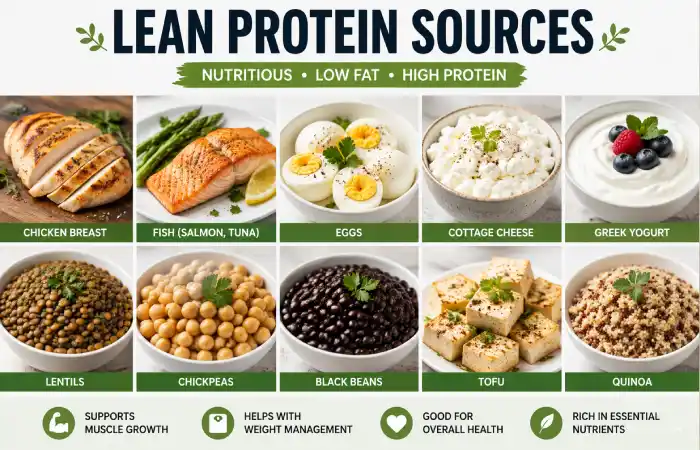
However, the best protein is also dependent on your budget, and cooking skills.
High-protein foods to keep in your kitchen
| Why it’s useful | Food | Meal-friendly use |
| Lean, versatile protein | Chicken breast | Bowls, wraps, salads |
| Protein plus beneficial fats in oily fish | Fish | Rice bowls, salads, curries |
| Convenient and versatile | Eggs | Breakfast, wraps, rice bowls |
| Easy high-protein option | Greek yogurt | Breakfast, snacks, sauces |
| Protein-rich dairy option | Cottage cheese | Bowls, toast, wraps |
| Versatile plant protein | Tofu | Stir-fries, curries, bowls |
| Protein-rich fermented soy food | Tempeh | Stir-fries, sandwiches |
| Protein plus fiber | Lentils | Dal, soups, bowls |
| Plant protein plus fiber | Chickpeas | Salads, curries, hummus |
| Affordable protein and fiber | Beans | Chilli, wraps, rice bowls |
| Soy protein and fiber | Edamame | Bowls, salads, snacks |
| Protein plus unsaturated fats | Nuts & seeds | Oats, yogurt, salads |
Diet is everything USDA recommends choosing from a wide range of proteins – along with fish, eggs and lean meats, you should also consider choosing from a variety that include dried beans, peas, and legumes; nuts, seeds; and soy.
Don’t choose the ‘leanest’ just because it’s lowest in fat If eating healthy is the big-picture goal For example, salmon is fattier than skinless chicken breast, but it’s a good source of omega-3 fatty acids.
USDA specifically recommends foods such as anchovies, trout and salmon because of their good fatty acids. Don’t give up all fat sources, just vary them.
High-Protein Meal Ideas
You don’t need Fancy Recipes to Cook up a protein-filled Meal. “The protein content from your meals gives you sustained energy to keep your mind sharp and helps in building and maintaining muscle.”
Greek Yogurt Protein Bowl:
– Plain Greek yogurt Mixed with berries, oats, and a few bits of nuts, chia seeds.
Ideal for: Breakfast/snack
What to’/what not to’ do: Add Higher Protein Content and Chia seeds if required.
Chicken and Brown rice Bowl:
Grilled chicken breast mixed with cooked brown rice, and stir fried veg, and dress it with yoghurt.
Ideal for: Lunch/ dinner
Travel friendly idea: Prepare many batches in bulk, it’s going to be time savior.
Egg and vegetable breakfast scramble wrap:
Cook scrambled eggs along with lots of vegetables (spinach, cucumber tomatoes, mushrooms, onions etc,). Stuff your filling in a whole-wheat Wrap with cottage cheese.
This dish will give you protein, with other vegetables and fibre content.
Ideal for: Breakfast.
Lentil and Quinoa bowl:
Mix the Cooked Lentils & quinoa along with cucumbers, tomatoes and leafy vegetables.
Dress it with an lemon-yoghurt Dressing.
What to’/what not to’ do: A must try to combine various types of protein rich plant based and fibrous ingredients for a filling Meal.
Ideal for: Vegans.
Tofu vegetablestir-fry:
Firm Tofu, broccoli, capsicum, mushrooms sauteed in some herbs and other available veg.
Serve it with Brown Rice or another Whole- Grain Source.
Best for: Vegans / vegetarian Meal Idea
Salmon Sweet potato plate:
Bake a salmon fillet, topit on roasted sweet potato mash and serve it along with a large quantity of greens.
Best for: Dinner
Chickpea & egg salad:
Cook 2/3rd boiled egg and mix it with the crushed chickpeas, add in tomato, cucumber, other greens.
Mix it with yoghurt or tahini dressing.
Best for: A quick Lunch .
Cottage Cheese Toast:
Whole Wheat Bread topped with cottage cheese, tomato, cucumber and various herbs.
Ideal for: Breakfast/ Lunch
Vegetarian Protein Options
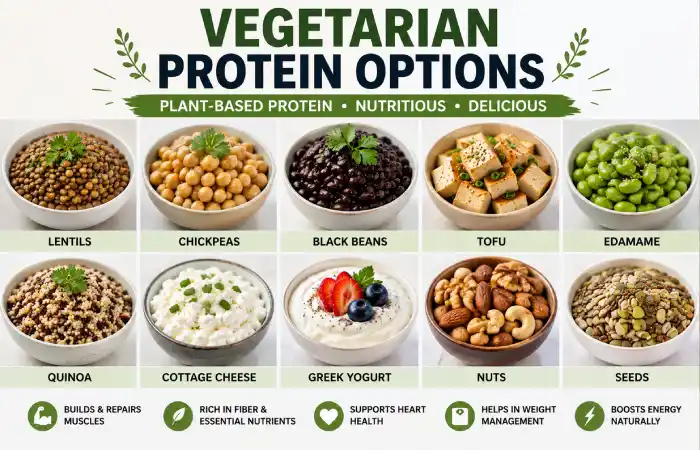
You don’t need to put meat on the table to create protein-packed healthy plates. Many excellent meatless, plant-based (including vegetarian, also lacto-ovo vegetarian, i.e. No meat, poultry, fish, seafood, but could eat dairy and eggs; and vegan i.e. Not eating any animal products) high-protein options exist, including:
- Eggs
- Greek Yogurt
- Cottage cheese
- Milk
- Tofu
- Tempeh
- Edamame
- Lentils
- Chick Peas
- Kidney Beans
- Black Beans peas
- Quinoa Nuts Seeds
How to build a vegetarian high-protein meal
Instead of thinking, “What can replace chicken?”, think:
Protein anchor + plant foods + whole grain + vegetables
Daily Protein Goals
Protein requirements are not identical for everyone. (USDA MyPlate)
The current adult RDA for protein is 0.8g per kg body weight per day. It’s a foundation, not a goalpost for every exerciser.
Research is starting to catch up about protein intake for those who exercise consistently. Based on a systematic review study (though there was no single clear ideal to target), protein intake of approximately 1.6g per kg body weight per day was associated with increased lean-mass gains in youth resistance-training participants.
Simple protein-target comparison
| Person/goal | Practical starting point |
| General adult baseline | ~0.8g/kg/day |
| Regularly active adult | ~1.2–1.6g/kg/day may be useful |
| Resistance training/muscle gain | Often around 1.2–1.6g/kg/day; individual needs vary |
| Older adults | Often require more attention to protein intake and distribution |
| Medical conditions | Ask a healthcare professional for an individualized target |
Example: A 70kg adult’s baseline RDA would be approximately:
70 × 0.8 = 56g protein/day
An individual who is consistently exercising might be aiming higher than this, depending on his or her sport, calories consumed, body composition, and physical-training goals. These figures shouldn’t serve as a strict dose. If you’re living with a kidney condition or another underlying illness, check in with your doctor before calculating the total protein for your body.
A simple way to distribute protein
Instead of trying to eat most of your protein at dinner, divide it across the day.
For example:
Breakfast: 20–25g
Lunch: 25–35g
Snack: 10–20g
Dinner: 25–35g
How to Make High-Protein Meals Healthier
A high-protein food doesn’t necessarily translate to a “healthy” meal. Although a dish contains an abundant portion of protein, it can also be high in calories or have a lot of sodium, added sugar, or saturated fat. The following healthy tweaks are simple:
Choose more often
- Lean poultry
- Fish
- Eggs
- Beans and lentils
- Tofu and tempeh
- Greek yogurt
- Nuts and seeds
- Vegetables
- Fruits
- Whole grains
Limit relying heavily on
- Processed meats
- Deep-fried protein foods
- Highly processed protein snacks
- Sugary protein desserts
- Large amounts of high-sodium sauces
Product Comparison: Whole Food vs Protein Powder
Protein supplements can be convenient, but they are not mandatory.
| Option | Best use | Limitation | Advantage |
| Whole-food protein | Everyday meals | Requires preparation | Provides additional nutrients and food variety |
| Greek yogurt | Breakfast/snacks | Dairy-based | Convenient and versatile |
| Tofu/tempeh | Vegetarian meals | Requires cooking/seasoning | Flexible plant protein |
| Protein powder | Convenience | Doesn’t replace a balanced meal | Easy to add to shakes/oats |
Best approach: Use whole foods as your foundation and supplements as a convenience tool when appropriate.
FAQ
What Counts as a High Protein Meal?
There’s no one magic number, but in practice 20+ grams of protein per serving is common, and larger meals may pack 30–40 grams and more. Your optimal needs are unique.
What’s the Healthiest High Protein Meal?
1 Begin with proteins -lean Chicken or any vegetarian – your vegetables, fiber-rich carbs and unsaturated fats: Chicken with a salad bowl, chicken and sweet potato, and lentil and quinoba, tofu Stir Fry.
Can high protein meals be for weight loss?
Yes, for sure.
More protein can help withsatietyand may preserve muscle masswhen accompanied by the right calorie goal andresistancetraining, of course.
The key isn’t just shoving huge amounts of any protein through your pie-hole – it takes more strategy than that if weight loss is your goal.
Best High protein vegetarian meal Ideas?
Try these: lentil bowls; tofu stir-fries;chickensalad; Egg & Cottage Cheese wrap;GreekYogurtbowl; Bean chili; and TEMeh Grain bowls.
Do I Need protein Powder to Eat enough Protein?
False. If you already consume other protein sources such as (meat, fish, eggs, milk, cheese, yogurt, yogurt-rich milk) Soybeans. Beans. Lentils. Nuts and seeds; Protein powder not essential .
How Much protein Per day?
Adult RDA of 0.8 g/kg/day generally holds true, although those that exercise vigorously on occasion may benefit from additional protein. Factors influencing these unique goals include body weight; level of physical activity; age; and health.
Final Takeaway
The most effective healthy, high-protein meal ideas go well beyond just taking the highest protein number to an meal. They also encompass a reasonable quantity of protein with vegetables, fiber-rich carbs, wholesome fatty foods, and healthy foods. Pick a single protein at each meal, take to change them out weekly, and tune the amounts based on your needs. You will typically realize that adherence and consistency result in greater achievement in the long run than obtaining the ”ideal” high-protein diet.