
 Afiya Jafar
Fitness & Wellness Writer
Afiya Jafar is a fitness and wellness writer who focuses on making health, exercise, and healthy lifestyle information simple and practical.
Read Full Bio of Author →
Afiya Jafar
Fitness & Wellness Writer
Afiya Jafar is a fitness and wellness writer who focuses on making health, exercise, and healthy lifestyle information simple and practical.
Read Full Bio of Author →
 Sameena Begum
Health, Fitness & Digital Content Reviewer
Sameena reviews selected health, wellness, fitness, and digital content for clarity, factual presentation, and reader usefulness.
Read Full Bio of Reviewer →
Sameena Begum
Health, Fitness & Digital Content Reviewer
Sameena reviews selected health, wellness, fitness, and digital content for clarity, factual presentation, and reader usefulness.
Read Full Bio of Reviewer →
 Dr. Khizrana Begum
General Physician & Dermatologist
Dr. Khizrana Begum is a General Physician and Dermatologist with MBBS and MD qualifications and 5+ years of experience in the medical field.
Read Full Bio of Medical Reviewer →
Dr. Khizrana Begum
General Physician & Dermatologist
Dr. Khizrana Begum is a General Physician and Dermatologist with MBBS and MD qualifications and 5+ years of experience in the medical field.
Read Full Bio of Medical Reviewer →
If you are looking for the best female weight loss diet you’ve probably seen a dozen different meal plans, fad diets, and advice all over the web. While a number of the programs that exist promise quick results by limiting or removing food groups altogether or cutting back dramatically on your food intake, these often don’t deliver long-term results and are not healthy. A female weight loss diet will center around forming good eating habits that offer nutrients to your body, along with a slight calorie deficit.
Women have unique hormonal shifts through their lives that affect their bodies and bodies differently from those of men and can be an factor to take into consideration when diet choices are made.
The female weight loss diet plan guide below will explore all you need to know on building and maintaining weight loss through proper nutrition, calories, food choices, meal plan creation and so much more.
❝
This article is a part of
Weight Loss Nutrition Hub
What Is a Female Weight Loss Diet?
A female weight loss diet is a balanced diet plan that assists women lose body fat, at the same time as keeping body mass, keeping a happy hormone range as well as being nutrition packed, full time. Rather than being just about consuming less, it has a whole lot regarding what sort of nutrients you really ought to be consuming and also the right sized food portion to choose.
The aim right here is to create a slight calorie deficit- burning slightly extra calories than you take in – without the concern regarding harming your body.
If you’re looking for a structured approach, follow our weight loss diet plan for women to build healthy eating habits and lose weight sustainably.
Key Principles of a Healthy Female Weight Loss Diet
A healthy diet consists of the following, for example:
- Adequate protein for maintaining muscle during weight loss
- Plenty of fruits and vegetables (half of your plate should contain veggies and fruits)
- Choose whole grains rather than white products
- Use healthy fats in small quantities
- Drink enough water per day
- Stay away from overly processed foods, sweets, and sugary drinks
- Watch your portion size instead of giving up the food you love
These habits make it easier to stay satisfied while reducing overall calorie intake.
How Is It Different from Generic Weight Loss Diets?
Many generic weight loss plans fail to account for women’s unique nutritional needs. Women typically have:
- Lower daily calorie requirements than men.
- A higher percentage of body fat.
- Changes in hormones that may affect your appetite and your metabolism.
- A rise in the requirement for iron in pre-menopause and a need for increased calcium and vitamin D to help maintain bone density.
- A diet that takes into account all these different factors and is tailored specifically for women.
A female-focused diet considers these factors instead of applying a one-size-fits-all approach.
Prefer traditional meals? Explore our Indian weight loss diet for women featuring balanced, home-cooked meal ideas.
Benefits Beyond Weight Loss
Following a balanced eating plan offers benefits that extend beyond the number on the scale.
| Benefit | How It Helps |
| Sustainable fat loss | Encourages gradual, maintainable weight loss rather than rapid regain. |
| Better energy levels | Stable blood sugar reduces energy crashes throughout the day. |
| Improved muscle preservation | Higher protein intake helps maintain lean body mass. |
| Better hormonal support | Nutrient-rich foods support normal hormone production and regulation. |
| Reduced cravings | Fiber and protein increase satiety, making overeating less likely. |
| Better heart health | Healthy fats and whole foods improve cardiovascular health. |
Characteristics of a Healthy Female Weight Loss Diet
| Feature | Healthy Diet | Fad Diet |
| Calories | Moderate deficit | Severe restriction |
| Protein | High | Often inadequate |
| Carbohydrates | Whole grains and fruits | Frequently eliminated |
| Fat | Healthy unsaturated fats | Often excessively restricted |
| Sustainability | Long-term | Difficult to maintain |
| Nutritional balance | High | Frequently lacking |
Signs Your Diet Is Working
Healthy progress isn’t measured only by body weight. Positive indicators include:
- Increased energy
- Better sleep quality
- Improved workout performance
- Reduced cravings
- Consistent hunger management
- Improved mood
- Gradual body fat reduction
- Better-fitting clothes
These improvements often appear before significant changes on the scale.
Women managing hormonal imbalance can benefit from our PCOS weight loss diet, designed to support healthy weight management.
Why Women’s Nutritional Needs Are Different
Weight loss may seem fairly straightforward, and there’s truth to the basics applying to everyone. However, men and women differ physically-particularly due to unique hormonal factors-that affect our bodies’ relationship with nutrients, exercise and restrictive dieting. Here’s a look at these differences to help optimize the approach for her:
Hormones Play a Major Role
Hormones are involved in managing your metabolism, your appetite, your energy and fat. Hormone levels of estrogen and progesterone fluctuate throughout the month and can have a huge impact on hunger and food cravings as well as water retention.
Let’s take a quick look:
- During the first half of the month (the follicular phase) many women report increased energy and even feeling like they can have a more productive workout.
- The area around ovulation you might find your appetite is fairly stable but you feel at your strongest.
- In the second half of the month (the luteal phase) you may find you are more likely to experience cravings and a greater appetite and the difficulty in controlling the portion sizes you are eating.
If you know the normal fluctuations you don’t have to despair at every craving. You can plan for it.
Women Naturally Have Lower Calorie Requirements
Compared with men of similar age and activity level, women generally have:
- Less lean muscle mass
- Smaller body size
- Lower resting metabolic rate
As a result, women’s calorie needs are typically lower, making portion quality even more important.
If reducing abdominal fat is your goal, read our guide on the best diet to lose belly fat for women.
| Activity Level | Estimated Daily Calories (Maintenance) | Estimated Weight Loss Calories* |
| Sedentary | 1,800–2,000 | 1,400–1,700 |
| Lightly Active | 2,000–2,200 | 1,600–1,900 |
| Moderately Active | 2,200–2,400 | 1,700–2,000 |
| Very Active | 2,400–2,700 | 1,900–2,300 |
Women Need Certain Nutrients in Higher Amounts
Some nutrients deserve special attention because of women’s physiological needs.
| Nutrient | Why It Matters | Good Food Sources |
| Protein | Maintains muscle during weight loss | Chicken, fish, eggs, Greek yogurt, tofu, lentils |
| Iron | Supports oxygen transport, especially before menopause | Lean meat, beans, spinach |
| Calcium | Bone strength | Dairy, fortified plant milk, yogurt |
| Vitamin D | Calcium absorption and immune health | Fatty fish, fortified foods, sunlight |
| Folate | Cell growth and reproductive health | Leafy greens, legumes |
| Fiber | Satiety and digestive health | Vegetables, fruits, oats, beans |
Age Changes Nutritional Needs
Women’s body’s and metabolisms shift naturally as time goes by.
In Your 20s and 30s
- Higher muscle-building potential.
- Greater calorie needs if physically active.
- Focus on building lifelong healthy habits.
In Your 40s
Hormonal shifts may begin, leading to:
- Slower metabolism
- Increased abdominal fat
- Reduced muscle mass
Increasing protein intake and resistance training becomes especially beneficial.
During Menopause
Lower estrogen levels can contribute to:
- Reduced muscle mass
- Increased visceral fat
- Lower calorie requirements
- Higher risk of osteoporosis
Prioritizing calcium, vitamin D, strength training, and adequate protein becomes even more important.
Need daily inspiration? Try these healthy weight loss meal ideas that are easy to prepare and nutrient-dense.
Why Crash Diets Affect Women More
Extremely low-calorie diets may lead to:
- Fatigue
- Muscle loss
- Nutrient deficiencies
- Hormonal disruption
- Slower metabolism
- Increased risk of regaining weight
A gradual approach supports both weight loss and overall health.
Daily Nutrition Targets for Weight Loss
The following ranges provide a practical starting point for many women pursuing healthy weight loss. Individual needs vary based on body size, activity level, and health status.
| Nutrient | Suggested Intake |
| Protein | 1.2–1.6 g per kg of body weight |
| Fiber | 25–35 g/day |
| Water | 2–3 liters/day (more if active) |
| Fruits & Vegetables | At least 5 servings/day |
| Healthy Fats | About 20–35% of daily calories |
Key Takeaways
Your body is much different from a man’s, due to fluctuating hormone levels, more fat storage, less muscle mass, unique nutrient requirements, and different life phases. A woman’s diet that successfully supports healthy weight loss involves selecting foods that provide an abundance of nutrients and eating protein and fiber in sufficient quantities, alongside a calorie deficit.
How Weight Loss Works for Women
The reality of how you shed weight This will stop you falling for diet myths, unsustainable programs, and unachievable goals. Although you can lose weight by using “fat burning” foods or a quick fix as is always advertised, in essence it boils down to having more calories out than in and eating high-quality foods, exercise and taking control of the many hormones that control our weight along with our sleep and our consistency with the plan.
In women things like the monthly cycle, aging, muscle mass, the levels of the stress hormone, and hormones as we age affect the speed in which weight is lost. This doesn’t stop you lose weight in the end, just know that things might not be as straightforward as the ad states.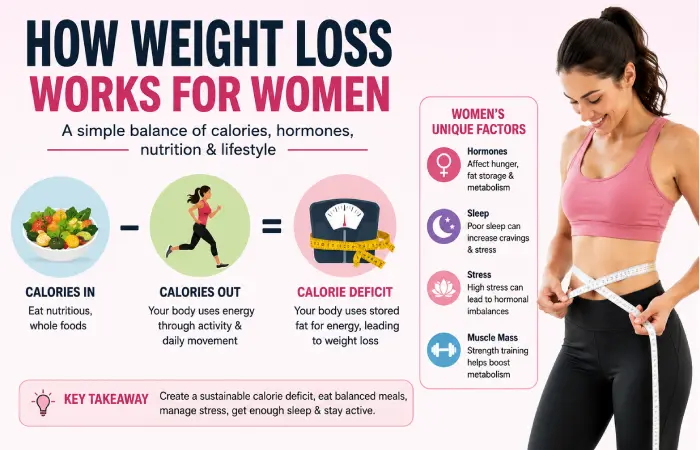
The Science Behind Weight Loss
In other words, for any activity that your body carries out (whether it be breathing, processing food, or a marathon), your body needs to have the energy from calories it receives from the foods you eat and drinks that you drink to get that job done. And you lose weight by eating a calorie deficiency that your body will be in for over a time that will allow you to shed off some weight.
There are three main ways your body burns calories:
| Component | Percentage of Daily Energy Expenditure | Description |
| Basal Metabolic Rate (BMR) | 60–70% | Calories burned to keep your body functioning at rest. |
| Physical Activity | 15–30% | Exercise and daily movement such as walking or household tasks. |
| Thermic Effect of Food (TEF) | 10% | Energy required to digest, absorb, and process food. |
Example:
If you burn about 2,100 calories daily and consume 1,700 calories daily, that creates a deficit of 400 calories each day. This, over time, will help with steady weight loss and also leave you with plenty of energy and muscle if you continue eating adequate protein.
Increasing protein intake can improve satiety—learn how with our high-protein diet for weight loss guide.
Why Slow Weight Loss Is More Effective
Many women hope to lose weight quickly, but rapid weight loss often results in:
- Muscle loss
- Increased hunger
- Fatigue
- Nutrient deficiencies
- Slower metabolism
- Weight regain after the diet ends
Health experts generally recommend aiming for:
| Weekly Goal | Recommended Rate |
| Healthy Weight Loss | 0.5–1 kg (1–2 lbs) per week |
This slower pace is more sustainable and helps preserve lean muscle mass.
Muscle Plays a Bigger Role Than You Think
Biggest mistake women make 2 One of the commonest errors a woman makes when on a diet is concentrating only on a low calorie deficit but forgetting the muscle tissue of her body. A muscle cell burns energy even at rest so if during your diet your body loses some muscle, your body’s resting metabolic rate is affected resulting in a much steeper learning curve to your body when trying to maintain weight long-term.
To minimize muscle loss:
- Eat enough protein.
- Include resistance or strength training 2–4 times per week.
- Avoid overly restrictive calorie deficits.
Benefits of Preserving Muscle
| Benefit | Why It Matters |
| Higher metabolism | Helps maintain calorie expenditure. |
| Improved strength | Makes daily activities and workouts easier. |
| Better body composition | Leads to a leaner appearance even if the scale changes slowly. |
| Better long-term weight maintenance | Reduces the likelihood of regaining lost weight. |
Hormones Influence Appetite and Fat Storage
Women’s hormones fluctuate throughout the month, which can affect:
- Hunger
- Food cravings
- Energy levels
- Water retention
- Exercise performance
These changes are normal and don’t necessarily indicate fat gain.
Menstrual Cycle and Nutrition
| Phase | Common Changes | Helpful Nutrition Tips |
| Menstrual | Lower energy | Prioritize iron-rich foods, hydration, and balanced meals. |
| Follicular | Increased energy | Great time for higher-intensity workouts and meal prep. |
| Ovulation | Peak performance | Continue high-protein meals and resistance training. |
| Luteal | Increased cravings | Increase fiber and protein, include healthy snacks, and avoid skipping meals. |
Planning meals around these natural changes can make healthy eating easier to maintain.
Sleep Is a Powerful Weight Loss Tool
Sleep is often overlooked, yet it plays a major role in appetite regulation and recovery.
Consistently getting insufficient sleep may:
- Increase hunger
- Reduce fullness signals
- Increase cravings for high-calorie foods
- Reduce exercise performance
- Make it harder to maintain healthy eating habits
Recommended Sleep Duration
| Age | Recommended Sleep |
| Adults | 7–9 hours per night |
Improving sleep quality can support better food choices and overall weight management.
Stress Can Slow Progress
Chronic stress doesn’t directly stop fat loss, but it can make healthy habits more difficult by:
- Increasing emotional eating
- Reducing motivation to exercise
- Disrupting sleep
- Encouraging cravings for high-sugar and high-fat foods
Helpful stress-management strategies include:
- Walking outdoors
- Yoga
- Meditation
- Journaling
- Deep breathing exercises
- Spending time with friends or family
Comparing Healthy vs Crash Diet Weight Loss
| Healthy Weight Loss | Crash Diet |
| Moderate calorie deficit | Extremely low calories |
| Preserves muscle | Significant muscle loss |
| Nutrient-rich foods | Nutrient deficiencies |
| Sustainable habits | Difficult to maintain |
| Gradual fat loss | Mostly water and muscle loss initially |
| Supports long-term success | High likelihood of weight regain |
Weight Loss Timeline: What to Expect
Progress varies, but many women experience changes like these when following a balanced eating plan and regular exercise routine.
| Time Frame | Typical Progress |
| Week 1 | Water weight changes, improved energy, reduced bloating |
| Weeks 2–4 | Initial fat loss, better appetite control |
| Months 2–3 | Noticeable body composition improvements, clothes fit differently |
| Months 4–6 | Greater fat loss, improved strength, healthier long-term habits |
Also, keep in mind that body weight is also naturally fluctuating by about 5 pounds due to your hydration level, hormone fluctuations, sodium intake, and what your body is digesting. Keeping up with your measurements and progress photos and energy levels helps to give a more complete look of progress.
Foods to Include in a Healthy Weight Loss Diet
There is no “one” magic weight-loss food. However, a good weight loss diet for women can be created using nutrient-rich, Whole Foods that give you all the essential vitamins, minerals, protein, fiber and healthy fat you need, all while leaving you feeling full.
Aim to fill most of your meals with minimally processed foods and include a balance of all three macronutrients—protein, carbohydrates, and fats.
Lean Protein Foods
Protein is one of the most important nutrients during weight loss because it helps:
- Preserve lean muscle
- Increase fullness
- Support recovery after exercise
- Reduce hunger between meals
Many experts recommend women aiming for approximately 1.2–1.6 g of protein per kilogram of body weight during weight loss, depending on activity level and individual needs.
Best Protein Sources
| Food | Protein (Approx.) | Key Benefits |
| Chicken breast (100 g) | 31 g | Lean, versatile, high-quality protein |
| Turkey breast | 29 g | Low in saturated fat |
| Eggs (2 large) | 12 g | Rich in protein and choline |
| Greek yogurt (170 g) | 17–20 g | Protein plus probiotics |
| Cottage cheese | 25–28 g | Slow-digesting protein |
| Salmon | 22 g | Protein and omega-3 fats |
| Tuna | 25 g | High protein, low calorie |
| Tofu | 15–18 g | Plant-based protein |
| Lentils | 18 g | Protein and fiber |
| Chickpeas | 15 g | Filling and nutrient-rich |
Tip: Include a protein source at every meal to improve satiety and support muscle maintenance.
High-Fiber Vegetables
Vegetables are naturally low in calories but high in fiber, vitamins, minerals, and antioxidants. Fiber slows digestion, helping you feel full longer and supporting digestive health.
Best Vegetables for Weight Loss
| Vegetable | Benefits |
| Broccoli | High fiber, vitamin C |
| Spinach | Iron, folate, low calorie |
| Cauliflower | Great substitute for refined grains |
| Bell peppers | Rich in vitamin C |
| Zucchini | Low calorie and versatile |
| Cucumber | Hydrating and refreshing |
| Brussels sprouts | High fiber and antioxidants |
| Green beans | Filling and nutrient-dense |
Aim to fill half of your plate with vegetables at lunch and dinner.
Fruits That Support Healthy Eating
Fruit provides natural sweetness along with fiber, vitamins, and antioxidants.
Contrary to common myths, whole fruits can absolutely be part of a healthy weight loss diet.
Best Fruits
| Fruit | Main Benefit |
| Apples | High fiber and filling |
| Berries | Low calorie, antioxidant-rich |
| Oranges | Vitamin C and hydration |
| Pears | Excellent fiber content |
| Kiwi | Vitamin C and potassium |
| Grapefruit | Low calorie and refreshing |
| Watermelon | Hydrating snack |
| Papaya | Supports digestion |
Choose whole fruits rather than fruit juices whenever possible.
Whole Grains
Whole grains provide sustained energy because they contain more fiber and nutrients than refined grains.
Healthy Grain Choices
| Whole Grain | Benefits |
| Oats | Excellent breakfast option, rich in beta-glucan fiber |
| Brown rice | More fiber than white rice |
| Quinoa | Complete plant protein |
| Barley | Supports digestive health |
| Millets | Nutrient-dense traditional grain |
| Whole wheat pasta | More filling than refined pasta |
Healthy Fats
These are essential for hormone production, brain health, and nutrient absorption. They also improve meal satisfaction.
Best Sources of Healthy Fat
| Food | Main Benefit |
| Avocados | Fiber and heart-healthy fats |
| Almonds | Healthy fats plus protein |
| Walnuts | Plant-based omega-3 fats |
| Chia seeds | Fiber and omega-3 |
| Flaxseeds | Supports heart health |
| Peanut butter (natural) | Healthy snack in moderation |
| Salmon | Healthy fat plus protein |
Because fats are calorie-dense, enjoy them in moderate portions.
Dairy and Dairy Alternatives
Low-fat or unsweetened dairy products provide protein and calcium, which are important for bone health and muscle function.
Good choices include:
- Greek yogurt
- Cottage cheese
- Low-fat milk
- Fortified soy milk
- Unsweetened almond milk (fortified)
Legumes and Plant-Based Proteins
Beans, lentils, and peas are rich in both protein and fiber, making them excellent foods for staying full.
Examples include:
- Kidney beans
- Black beans
- Chickpeas
- Green peas
- Lentils
These foods also pair well with whole grains for balanced vegetarian meals.
Healthy Snacks
Choosing nutrient-dense snacks can help manage hunger between meals.
| Healthy Snack | Why It’s a Good Choice |
| Apple with peanut butter | Fiber plus healthy fat |
| Greek yogurt with berries | Protein and antioxidants |
| Cottage cheese | High protein |
| Handful of almonds | Healthy fats and satiety |
| Boiled eggs | Convenient protein |
| Hummus with carrots | Fiber and protein |
| Roasted chickpeas | Crunchy, high-fiber snack |
Building the Perfect Weight Loss Plate
A simple visual approach can make meal planning easier.
| Plate Portion | Food Group |
| ½ Plate | Non-starchy vegetables |
| ¼ Plate | Lean protein |
| ¼ Plate | Whole grains or starchy vegetables |
| Side | Healthy fat or fruit |
This balanced plate naturally increases protein and fiber while helping control portions.
Key Takeaways
Healthy weight loss for women is built on consistent habits rather than restrictive dieting. Prioritizing lean protein, vegetables, fruits, whole grains, legumes, and healthy fats supports satiety, preserves muscle, and provides the nutrients needed for long-term success. Combined with a moderate calorie deficit, regular physical activity, adequate sleep, and stress management, these food choices create a sustainable foundation for lasting fat loss.
Foods to Limit or Avoid
A healthy female weight loss diet doesn’t require completely eliminating your favorite foods. Instead, it focuses on eating nutrient-dense foods most of the time while limiting foods that are high in calories but low in nutritional value.
The goal is balance—not perfection. Enjoying occasional treats can fit into a sustainable eating pattern as long as your overall diet supports your health and calorie goals.
Why Certain Foods Make Weight Loss More Difficult
Many highly processed foods are designed to be extremely palatable, making it easy to consume more calories before feeling full. They often contain combinations of refined carbohydrates, added sugars, unhealthy fats, and sodium while providing little protein or fiber.
These foods may:
- Increase hunger shortly after eating
- Cause rapid blood sugar fluctuations
- Add excess calories without improving fullness
- Make portion control more challenging
- Replace nutrient-rich foods in your diet
Choosing whole, minimally processed foods more often can help improve satiety and support consistent weight loss.
Sugar-Sweetened Beverages
Liquid calories are one of the easiest ways to exceed your daily calorie needs because they typically don’t provide the same feeling of fullness as solid foods.
Examples
- Regular soft drinks
- Sweetened iced tea
- Energy drinks
- Sweetened coffee beverages
- Packaged fruit drinks
- Milkshakes
Better Alternatives
- Water
- Sparkling water
- Lemon water
- Unsweetened tea
- Black coffee (or coffee with minimal added sugar)
- Infused water with fruit or herbs
Highly Processed Snack Foods
These foods are often high in refined flour, added fats, sodium, and artificial flavorings.
Examples include:
- Potato chips
- Cheese puffs
- Packaged crackers
- Instant noodles
- Flavored snack mixes
Instead, choose snacks that combine protein and fiber to help you stay satisfied.
Sugary Desserts
Desserts can fit into a healthy eating pattern occasionally, but frequent consumption may contribute to excess calorie intake.
Examples:
- Cakes
- Doughnuts
- Pastries
- Cookies
- Candy
- Ice cream
Healthier Sweet Options
- Fresh fruit
- Greek yogurt with berries
- Chia pudding
- Homemade oatmeal cookies (reduced sugar)
- Frozen banana slices
Refined Grains
Refined grains have had much of their fiber removed during processing, making them less filling than whole grains.
Limit
- White bread
- White rice (especially in large portions)
- Refined pasta
- Sweet breakfast cereals
- White flour baked goods
Choose More Often
| Refined Grain | Better Choice |
| White bread | Whole wheat bread |
| White rice | Brown rice or quinoa |
| Sugary cereal | Oats or unsweetened whole-grain cereal |
| Regular pasta | Whole wheat pasta |
| White flour tortillas | Whole wheat or corn tortillas |
Fast Food
Fast food is convenient but is often:
- High in calories
- High in sodium
- Rich in saturated fat
- Low in fiber
- Served in oversized portions
Rather than avoiding it completely, consider smarter choices such as:
- Grilled chicken instead of fried
- Salad with lean protein
- Smaller portion sizes
- Water instead of sugary drinks
- Fruit instead of fries when available
Deep-Fried Foods
Fried foods absorb additional oil during cooking, increasing their calorie content.
Examples:
- Fried chicken
- French fries
- Onion rings
- Fried snacks
- Fried pastries
Healthier cooking methods include:
- Baking
- Air frying
- Grilling
- Roasting
- Steaming
- Stir-frying with minimal oil
Alcohol
Alcohol provides calories while contributing few essential nutrients. It may also:
- Lower inhibitions around food choices
- Increase appetite for high-calorie snacks
- Disrupt sleep quality
- Slow recovery after exercise
If you choose to drink, moderation and mindful portion sizes are key.
Foods to Enjoy More Often vs Foods to Limit
| Eat More Often | Limit More Often |
| Vegetables | Sugary drinks |
| Fruits | Candy |
| Lean protein | Processed meats |
| Whole grains | Refined grains |
| Beans & lentils | Deep-fried foods |
| Greek yogurt | Sweetened yogurt |
| Nuts & seeds | Packaged snack foods |
| Healthy oils | Excess butter and shortening |
Hidden Sources of Calories
Many women eat nutritious meals but unknowingly consume extra calories through condiments, beverages, and snacks.
Common hidden calorie sources include:
| Food | Why It Adds Up |
| Flavored coffee drinks | Added sugar and cream |
| Salad dressings | Often high in oil and sugar |
| Mayonnaise | High in fat and calories |
| Cooking oil | Easy to overuse |
| Sugary sauces | Hidden sugar |
| Fruit juice | Less filling than whole fruit |
| Granola | Energy-dense portions |
Reading nutrition labels and measuring portions occasionally can improve awareness without requiring obsessive tracking.
Creating a Calorie Deficit Safely
Creating a calorie deficit is essential for weight loss, but the size of that deficit matters. A moderate, sustainable approach helps preserve muscle, maintain energy, and reduce the likelihood of regaining lost weight.
A common recommendation is to reduce intake by 300–500 calories per day, depending on your individual maintenance needs and guidance from a healthcare professional.
What Is a Calorie Deficit?
A calorie deficit occurs when your body uses more energy than you consume through food and beverages.
Simple Formula
Calories Burned > Calories Consumed = Calorie Deficit
Over time, your body draws on stored energy (including body fat) to meet this difference.
Step 1: Estimate Your Maintenance Calories
Maintenance calories vary based on:
- Age
- Height
- Weight
- Activity level
- Muscle mass
- Overall health
The table below provides general estimates for adult women.
| Activity Level | Approximate Maintenance Calories | Moderate Weight Loss Range |
| Sedentary | 1,800–2,000 | 1,400–1,700 |
| Lightly Active | 2,000–2,200 | 1,600–1,900 |
| Moderately Active | 2,200–2,400 | 1,700–2,000 |
| Very Active | 2,400–2,700 | 1,900–2,300 |
These figures are estimates. Individual needs differ based on body composition and lifestyle.
Step 2: Prioritize Protein
When calories decrease, eating enough protein becomes even more important.
Benefits include:
- Preserving muscle mass
- Increasing fullness
- Supporting exercise recovery
- Helping maintain metabolic rate
Daily Protein Targets
| Body Weight | Protein Goal (1.2–1.6 g/kg) |
| 55 kg | 66–88 g |
| 60 kg | 72–96 g |
| 70 kg | 84–112 g |
| 80 kg | 96–128 g |
| 90 kg | 108–144 g |
Distributing protein across meals may also support satiety throughout the day.
Step 3: Increase Fiber Intake
Fiber slows digestion and promotes fullness, making it easier to maintain a calorie deficit.
Aim for 25–35 grams per day from foods such as:
- Vegetables
- Fruits
- Beans
- Lentils
- Oats
- Whole grains
- Chia seeds
- Flaxseeds
High-Fiber Food Comparison
| Food | Fiber (Approx.) |
| Chia seeds (2 tbsp) | 10 g |
| Black beans (1 cup) | 15 g |
| Oats (1 cup cooked) | 4 g |
| Apple (medium) | 4–5 g |
| Broccoli (1 cup) | 5 g |
| Pear | 6 g |
| Lentils (1 cup cooked) | 15 g |
Step 4: Practice Portion Control
Healthy foods can still contribute excess calories if portions become too large.
Easy Portion Guide
| Food | Practical Portion |
| Protein | Palm-sized serving |
| Vegetables | Two handfuls |
| Whole grains | One cupped hand |
| Healthy fats | Thumb-sized portion |
| Nuts | Small handful |
This visual method works well when eating at home or dining out.
Step 5: Stay Hydrated
Thirst is sometimes mistaken for hunger. Drinking enough water also supports digestion and exercise performance.
Daily Fluid Goal
| Lifestyle | Suggested Intake |
| Most women | Around 2–3 liters/day |
| Active women or hot climates | More, depending on sweat losses |
Water, herbal teas, and other unsweetened beverages can all contribute to hydration.
Step 6: Plan Your Meals
Meal planning can make healthy choices easier and reduce the temptation to rely on convenience foods.
Weekly Meal Planning Checklist
Plan meals before grocery shopping
Include protein in every meal
Buy seasonal vegetables and fruit
Prepare healthy snacks in advance
Cook extra portions for busy days
Keep frozen vegetables available for quick meals
Step 7: Be Physically Active
Nutrition has the biggest impact on creating a calorie deficit, but physical activity supports:
- Additional calorie expenditure
- Muscle preservation
- Improved cardiovascular health
- Better mood
- Increased strength and mobility
A balanced routine may include:
- Strength training
- Walking
- Cycling
- Swimming
- Yoga
- Moderate cardio
Common Weight Loss Plateaus
Most women experience periods where progress slows or temporarily stops. A plateau doesn’t necessarily mean your diet has stopped working.
Possible reasons include:
| Cause | Potential Solution |
| Water retention | Continue healthy habits and monitor trends over several weeks. |
| Eating larger portions over time | Revisit portion sizes and meal planning. |
| Reduced physical activity | Increase daily movement or review your exercise routine. |
| Muscle gain | Track body measurements and clothing fit in addition to scale weight. |
| Inconsistent sleep | Aim for a regular sleep schedule. |
| High stress | Include stress-management strategies such as walking, yoga, or mindfulness. |
Troubleshooting Your Female Weight Loss Diet
Even with a well-planned diet, challenges can arise. Here’s how to address some of the most common issues.
| Problem | Possible Cause | What to Try |
| Constant hunger | Low protein or fiber | Add lean protein and vegetables to meals. |
| Low energy | Eating too little | Review calorie intake and include balanced carbohydrates. |
| Evening cravings | Skipping meals | Eat regular meals and include protein-rich snacks if needed. |
| Slow progress | Unrealistic expectations | Focus on long-term trends, not daily scale changes. |
| Digestive discomfort | Sudden increase in fiber | Increase fiber gradually and drink enough water. |
Key Takeaways
A sustainable female weight loss diet is built on moderation rather than restriction. Limiting highly processed foods, sugary beverages, and excess portions can make it easier to maintain a healthy calorie deficit without eliminating entire food groups. Pairing these habits with adequate protein, fiber, hydration, and regular physical activity creates a practical foundation for steady, long-term fat loss.
Sample Female Weight Loss Meal Plan
One of the biggest challenges women face is knowing what to eat each day. A structured meal plan removes guesswork, helps control portions, and makes it easier to stay consistent with your calorie goals.
The following sample meal plan is designed around whole, nutrient-dense foods with an emphasis on lean protein, high-fiber carbohydrates, healthy fats, and plenty of vegetables. It is intended as a general example—not a one-size-fits-all prescription. Individual calorie and nutrient needs vary depending on age, body size, activity level, and health conditions.
What Makes This Meal Plan Effective?
A balanced female weight loss meal plan should:
- Include protein at every meal.
- Provide fiber from fruits, vegetables, legumes, and whole grains.
- Include healthy fats in moderate amounts.
- Limit added sugars and highly processed foods.
- Be easy to prepare and maintain long-term.
Daily Nutrition Goals
| Nutrient | General Target* |
| Protein | 80–120 g |
| Fiber | 25–35 g |
| Water | 2–3 liters |
| Vegetables | 3–5 servings |
| Fruits | 2–3 servings |
*Targets vary based on body weight and activity level.
7-Day Female Weight Loss Meal Plan
Day 1
| Meal | Menu |
| Breakfast | Greek yogurt, mixed berries, oats, chia seeds |
| Morning Snack | Apple with a small handful of almonds |
| Lunch | Grilled chicken, quinoa, steamed broccoli |
| Evening Snack | Cottage cheese with cucumber slices |
| Dinner | Baked salmon, roasted vegetables, brown rice |
2
| Meal | Menu |
| Breakfast | Vegetable omelet with whole wheat toast |
| Morning Snack | Orange |
| Lunch | Lentil soup with mixed salad |
| Evening Snack | Greek yogurt |
| Dinner | Grilled turkey breast with roasted sweet potato and green beans |
3
| Meal | Menu |
| Breakfast | Overnight oats with chia seeds and blueberries |
| Morning Snack | Boiled eggs |
| Lunch | Grilled fish with brown rice and spinach |
| Evening Snack | Pear |
| Dinner | Stir-fried tofu with vegetables and quinoa |
4
| Meal | Menu |
| Breakfast | Smoothie with spinach, banana, protein-rich yogurt, and flaxseed |
| Morning Snack | Mixed nuts |
| Lunch | Chickpea salad with olive oil dressing |
| Evening Snack | Carrot sticks with hummus |
| Dinner | Grilled chicken with mixed vegetables |
5
| Meal | Menu |
| Breakfast | Cottage cheese with berries |
| Morning Snack | Kiwi |
| Lunch | Turkey wrap in a whole wheat tortilla with salad |
| Roasted chickpeas | |
| Dinner | Grilled shrimp with quinoa and asparagus |
6
| Meal | Menu |
| Breakfast | Oatmeal topped with walnuts and sliced banana |
| Morning Snack | Greek yogurt |
| Lunch | Brown rice, grilled chicken, mixed vegetables |
| Evening Snack | Apple |
7
| Meal | Menu |
| Breakfast | Scrambled eggs with avocado and whole grain toast |
| Morning Snack | Fresh berries |
| Lunch | Grilled salmon salad with olive oil dressing |
| Evening Snack | Cottage cheese |
Healthy Grocery Shopping List
Planning your grocery shopping before the week begins can help reduce impulse purchases and ensure you always have nutritious ingredients on hand.
Protein
- Chicken breast
- Turkey breast
- Eggs
- Salmon
- Tuna
- Shrimp
- Greek yogurt
- Cottage cheese
- Tofu
- Lentils
- Chickpeas
- Black beans
Vegetables
- Spinach
- Broccoli
- Cauliflower
- Bell peppers
- Cucumbers
- Tomatoes
- Zucchini
- Green beans
- Carrots
- Mushrooms
- Lettuce
- Asparagus
Fruits
- Apples
- Pears
- Bananas
- Blueberries
- Strawberries
- Kiwi
- Oranges
- Grapefruit
Whole Grains
- Oats
- Brown rice
- Quinoa
- Whole wheat bread
- Whole wheat pasta
- Barley
- Millets
Healthy Fats
- Olive oil
- Avocados
- Almonds
- Walnuts
- Chia seeds
- Flaxseeds
- Natural peanut butter
Meal Prep Tips for Busy Women
Meal preparation saves time and makes healthy eating easier during busy weeks.
Weekend Meal Prep Checklist
Grill several portions of chicken or tofu.
Cook a batch of brown rice or quinoa.
Chop vegetables in advance.
Portion healthy snacks into containers.
Prepare overnight oats.
Wash fruits before storing.
Freeze individual meal portions for busy days.
Smart Portion Control Guide
You don’t need to weigh every meal forever. Visual portion control can be a practical long-term strategy.
| Food Group | Portion Guide |
| Lean protein | Palm of your hand |
| Vegetables | Two fists |
| Whole grains | One cupped hand |
| Healthy fats | Thumb-sized portion |
| Fruit | One medium piece or one cup |
Vegetarian Female Weight Loss Meal Ideas
Women following vegetarian eating patterns can still achieve adequate protein and maintain a calorie deficit by choosing a variety of plant-based foods.
| Meal | Example |
| Breakfast | Greek yogurt with berries and oats |
| Lunch | Lentil and quinoa salad |
| Snack | Cottage cheese with cucumber |
| Dinner | Tofu stir-fry with vegetables |
| Dessert | Fresh fruit |
Exercise and Nutrition for Better Results
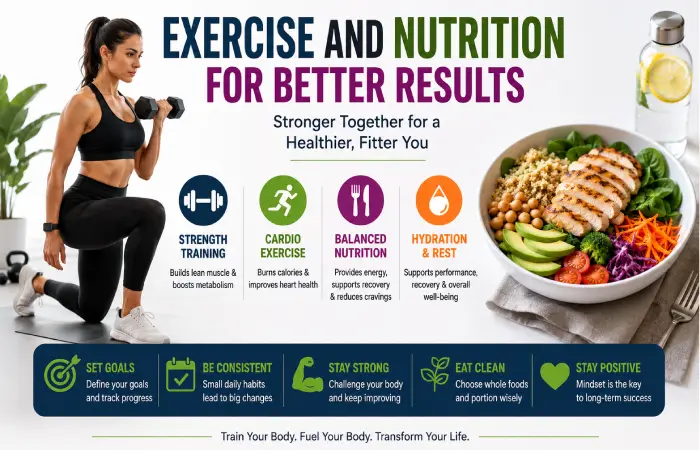
Nutrition is the foundation of weight loss, but combining healthy eating with regular exercise provides additional benefits for body composition, strength, cardiovascular health, and long-term weight maintenance.
Rather than trying to “burn off” every calorie through exercise, aim to build an active lifestyle that supports your nutrition plan.
Why Exercise Matters
Regular physical activity can:
- Increase daily calorie expenditure.
- Preserve lean muscle during weight loss.
- Improve insulin sensitivity.
- Support heart health.
- Improve mood and reduce stress.
- Increase strength and mobility.
- Enhance long-term weight maintenance.
Best Types of Exercise for Women
- Strength Training
Strength training helps preserve and build lean muscle, which supports metabolism and functional fitness.
Examples include:
- Squats
- Lunges
- Deadlifts
- Push-ups
- Dumbbell rows
- Resistance band exercises
Suggested Frequency
2–4 sessions per week
- Walking
Walking is beginner-friendly, accessible, and easy to incorporate into daily life.
Benefits include:
- Burns calories
- Supports cardiovascular health
- Low impact on joints
- Improves mental wellbeing
Aim for 7,000–10,000 daily steps if appropriate for your fitness level.
- Cardio Exercise
Moderate-intensity cardio complements strength training.
Examples:
- Cycling
- Swimming
- Jogging
- Rowing
- Dancing
- Elliptical training
Weekly Goal
150–300 minutes of moderate-intensity aerobic activity, or the equivalent amount of vigorous activity, is commonly recommended for adults.
- Flexibility and Mobility
Include activities such as:
- Yoga
- Pilates
- Stretching
These support recovery, posture, flexibility, and overall movement quality.
Weekly Exercise Plan
| Day | Workout |
| Monday | Strength training (Upper Body) + Walk |
| Tuesday | Moderate cardio |
| Wednesday | Strength training (Lower Body) |
| Thursday | Yoga or Mobility |
| Friday | Full-body strength training |
| Saturday | Long walk or cycling |
| Sunday | Active recovery |
Pre-Workout Nutrition
Eating before exercise can provide energy and improve performance.
Good Pre-Workout Meals
| Food | Why It Works |
| Oats with fruit | Sustained carbohydrates |
| Greek yogurt with berries | Protein and carbohydrates |
| Banana with peanut butter | Quick energy plus healthy fat |
| Whole grain toast with eggs | Balanced meal |
Aim to eat a balanced meal 2–3 hours before exercise, or a lighter snack 30–60 minutes beforehand, depending on comfort and workout intensity.
Post-Workout Nutrition
After exercise, focus on replenishing energy stores and supporting muscle recovery.
Great Recovery Meals
| Food | Benefits |
| Chicken with rice | Protein plus carbohydrates |
| Greek yogurt with fruit | Convenient recovery option |
| Cottage cheese | High-quality protein |
| Salmon with vegetables | Protein and healthy fats |
| Tofu stir-fry | Plant-based recovery meal |
Including protein after resistance training can support muscle repair as part of your total daily protein intake.
Hydration During Exercise
Hydration supports performance, recovery, and temperature regulation.
Tips
- Drink water throughout the day rather than only during workouts.
- Increase fluid intake during hot weather or longer training sessions.
- Replace fluids lost through heavy sweating.
Nutrition Timing: Does It Matter?
Meal timing is less important than overall daily nutrition, but spacing meals throughout the day may help some women manage hunger and maintain energy.
A practical approach is to:
- Eat protein at each meal.
- Include vegetables with lunch and dinner.
- Choose balanced snacks when needed.
- Avoid long periods without eating if it leads to overeating later.
Consistency over weeks and months has a greater impact than perfect meal timing.
Comparing Exercise Types
| Exercise | Burns Calories | Builds Muscle | Beginner Friendly | Best For |
| Walking | ⭐⭐⭐ | ⭐ | ⭐⭐⭐⭐⭐ | Daily activity |
| Strength Training | ⭐⭐⭐ | ⭐⭐⭐⭐⭐ | ⭐⭐⭐⭐ | Fat loss and muscle preservation |
| Cycling | ⭐⭐⭐⭐ | ⭐⭐ | ⭐⭐⭐⭐ | Cardio fitness |
| Swimming | ⭐⭐⭐⭐ | ⭐⭐⭐ | ⭐⭐⭐ | Low-impact full-body exercise |
| Yoga | ⭐⭐ | ⭐⭐ | ⭐⭐⭐⭐⭐ | Flexibility and stress management |
| HIIT | ⭐⭐⭐⭐⭐ | ⭐⭐⭐ | ⭐⭐ | Time-efficient conditioning |
Lifestyle Habits That Support Weight Loss
Nutrition and exercise work best when combined with healthy daily habits.
| Habit | Benefit |
| Sleep 7–9 hours | Supports appetite regulation and recovery |
| Manage stress | Helps reduce emotional eating |
| Plan meals | Improves consistency |
| Stay hydrated | Supports overall health and exercise performance |
| Monitor progress | Encourages long-term adherence |
| Be patient | Sustainable habits lead to lasting results |
Key Takeaways
A successful female weight loss diet is easier to follow when paired with a structured meal plan, regular grocery shopping, and simple meal preparation. Combining balanced nutrition with strength training, cardiovascular exercise, adequate hydration, quality sleep, and stress management creates a sustainable lifestyle that supports gradual fat loss while preserving muscle and overall health.
Common Weight Loss Diet Mistakes
Even with the best intentions, many women unknowingly adopt habits that slow progress or make weight loss difficult to maintain. Recognizing these common mistakes can help you build healthier routines and avoid unnecessary frustration.
Cutting Calories Too Much
One of the most common misconceptions is that eating as little as possible leads to faster weight loss. While a calorie deficit is necessary, an excessively restrictive diet can:
- Increase fatigue
- Reduce workout performance
- Make it harder to meet nutrient needs
- Increase hunger and cravings
- Contribute to muscle loss
A moderate calorie deficit paired with balanced meals is generally more sustainable than extreme restriction.
Not Eating Enough Protein
Protein plays an essential role in preserving lean muscle during weight loss. Without enough protein, you may feel hungrier and recover more slowly after exercise.
High-Protein Food Comparison
| Food | Protein |
| Chicken Breast (100 g) | 31 g |
| Turkey Breast (100 g) | 29 g |
| Salmon (100 g) | 22 g |
| Greek Yogurt (170 g) | 17–20 g |
| Cottage Cheese (1 cup) | 25–28 g |
| Tofu (100 g) | 15–18 g |
| Lentils (1 cup cooked) | 18 g |
| Eggs (2 large) | 12 g |
Skipping Meals
Skipping meals may seem like an easy way to reduce calories, but it can leave some people overly hungry later in the day, making overeating more likely.
Instead:
- Eat balanced meals at regular intervals.
- Include protein and fiber to improve fullness.
- Keep nutritious snacks available if long gaps between meals lead to excessive hunger.
Drinking Your Calories
Many beverages contribute significant calories without providing much satiety.
Common Examples
- Sugary coffee drinks
- Soft drinks
- Sweetened fruit beverages
- Milkshakes
- Energy drinks
- Sweetened teas
Choosing water, sparkling water, or unsweetened beverages more often can reduce unnecessary calorie intake.
Relying Only on Cardio
Cardiovascular exercise supports heart health and burns calories, but strength training is equally important for maintaining muscle while losing fat.
The most effective long-term routine generally combines:
- Resistance training
- Cardiovascular exercise
- Daily movement (walking, taking stairs, household activities)
Ignoring Sleep
Poor sleep can influence appetite, recovery, and food choices.
Aim for 7–9 hours of quality sleep each night to support overall health and weight-management efforts.
Expecting Overnight Results
Healthy weight loss is gradual. Daily fluctuations in body weight due to hydration, sodium intake, digestion, and hormonal changes are normal.
Instead of focusing only on the scale, also monitor:
- Waist measurements
- Clothing fit
- Progress photos
- Energy levels
- Strength improvements
- Consistency with healthy habits
Following Fad Diets
Highly restrictive diets may promise rapid results but are often difficult to maintain and may not provide balanced nutrition.
Healthy Eating vs. Fad Dieting
| Sustainable Habits | Fad Diets |
| Balanced nutrition | Eliminates entire food groups |
| Moderate calorie deficit | Severe restriction |
| Flexible meal planning | Rigid rules |
| Long-term lifestyle | Short-term challenge |
| Supports muscle | Often increases muscle loss |
Frequently Asked Questions
What is the best female weight loss diet?
There isn’t a single diet that works for everyone. Most women benefit from a balanced eating pattern that includes lean protein, vegetables, fruits, whole grains, legumes, healthy fats, and an appropriate calorie intake for their goals. The best diet is one that is nutritionally adequate and sustainable over the long term.
How many calories should a woman eat to lose weight?
Calorie needs depend on age, body size, activity level, and health status. Many women lose weight with a moderate calorie deficit from their maintenance intake, but individual requirements vary. A registered dietitian can help determine personalized targets.
How much protein should women eat for weight loss?
Many active women aiming for weight loss benefit from consuming approximately 1.2–1.6 grams of protein per kilogram of body weight each day, though individual needs vary.
Can women lose weight without exercise?
Yes. Weight loss is primarily influenced by achieving a calorie deficit through nutrition. However, exercise provides additional benefits such as preserving muscle, improving cardiovascular health, enhancing fitness, and supporting long-term weight maintenance.
Which foods help with weight loss?
Foods that support fullness and provide high nutritional value include:
- Lean protein
- Vegetables
- Fruits
- Whole grains
- Beans
- Lentils
- Greek yogurt
- Nuts and seeds (in moderation)
Should women avoid carbohydrates?
No. Carbohydrates are an important energy source. Choosing high-fiber options such as oats, brown rice, quinoa, legumes, fruits, and vegetables is generally more beneficial than relying on refined carbohydrates.
Is intermittent fasting suitable for women?
Some women find intermittent fasting helpful, while others do not. Factors such as lifestyle, medical conditions, pregnancy, breastfeeding, or certain medications may influence whether it is appropriate. Consulting a healthcare professional is recommended before making significant dietary changes.
How long does healthy weight loss take?
A gradual rate of 0.5–1 kg per week is commonly recommended. Individual progress depends on starting weight, activity level, nutrition, sleep, stress, and overall consistency.
What is the best breakfast for weight loss?
A balanced breakfast typically combines protein, fiber, and healthy carbohydrates.
Examples include:
- Greek yogurt with berries and oats
- Vegetable omelet with whole-grain toast
- Oatmeal with nuts and fruit
- Cottage cheese with fresh fruit
Can I eat rice while trying to lose weight?
Yes. Rice can fit into a healthy eating plan when portions are appropriate and meals include vegetables and a source of lean protein. Brown rice and other whole grains provide additional fiber.
Is snacking bad for weight loss?
Not necessarily. Nutritious snacks such as fruit with nuts, Greek yogurt, boiled eggs, or vegetables with hummus can help manage hunger between meals.
Why is my weight fluctuating daily?
Daily changes in body weight are normal and may reflect differences in:
- Hydration
- Sodium intake
- Hormonal fluctuations
- Digestive contents
- Glycogen storage
Monitoring longer-term trends is generally more meaningful than focusing on day-to-day changes.
Conclusion
Following a healthy female weight loss diet is about much more than reducing calories. Long-term success comes from building sustainable habits that nourish your body while supporting gradual fat loss.
Prioritizing lean protein, vegetables, fruits, whole grains, legumes, and healthy fats helps improve satiety and provides the nutrients needed for overall health. Pairing these food choices with regular strength training, cardiovascular exercise, quality sleep, stress management, and consistent meal planning creates a balanced lifestyle that is easier to maintain over time.
Remember that progress is rarely perfectly linear. Hormonal changes, hydration, and daily routines can all influence body weight in the short term. Focus on consistency rather than perfection, celebrate non-scale victories such as increased strength or improved energy, and choose habits you can realistically maintain for years—not just weeks.
Healthy weight loss is ultimately about supporting your wellbeing while developing an enjoyable and sustainable relationship with food.
Afiya Jafar is a fitness and wellness writer who focuses on making health, exercise, and healthy lifestyle information simple and practical. Her work covers workouts, fitness motivation, strength training, nutrition, weight management, stress management, mindfulness, and everyday wellness.
Read Full Bio of Afiya Jafar →
Sameena Begum reviews selected health, wellness, fitness, and digital content for clarity, factual presentation, consistency, and reader usefulness. Her review work helps maintain clear and responsible editorial standards across PhysicalFitt content.
Read Full Bio of Sameena Begum →
Dr. Khizrana Begum is a qualified medical professional with MBBS and MD qualifications and 5+ years of experience in the medical field. She works as a General Physician and Dermatologist, with expertise in general medicine, dermatology, preventive healthcare, and skin health.
Read Full Bio of Dr. Khizrana Begum →