
 Afiya Jafar
Fitness & Wellness Writer
Afiya Jafar is a fitness and wellness writer who focuses on making health, exercise, and healthy lifestyle information simple and practical.
Read Full Bio of Author →
Afiya Jafar
Fitness & Wellness Writer
Afiya Jafar is a fitness and wellness writer who focuses on making health, exercise, and healthy lifestyle information simple and practical.
Read Full Bio of Author →
 Sameena Begum
Health, Fitness & Digital Content Reviewer
Sameena reviews selected health, wellness, fitness, and digital content for clarity, factual presentation, and reader usefulness.
Read Full Bio of Reviewer →
Sameena Begum
Health, Fitness & Digital Content Reviewer
Sameena reviews selected health, wellness, fitness, and digital content for clarity, factual presentation, and reader usefulness.
Read Full Bio of Reviewer →
 Dr. Khizrana Begum
General Physician & Dermatologist
Dr. Khizrana Begum is a General Physician and Dermatologist with MBBS and MD qualifications and 5+ years of experience in the medical field.
Read Full Bio of Medical Reviewer →
Dr. Khizrana Begum
General Physician & Dermatologist
Dr. Khizrana Begum is a General Physician and Dermatologist with MBBS and MD qualifications and 5+ years of experience in the medical field.
Read Full Bio of Medical Reviewer →
A PCOS diet is an extremely useful approach to tackle symptoms of polycystic ovary syndrome (PCOS) and enhance insulin sensitivity, promote healthy hormonal function, and lose weight sustainably. Study evidence for 2025-2026 continues to prove that even just 5 to 10% loss of your body weight can enhance ovulation, regular menstrual cycles, and metabolic function among women affected with PCOS.
Instead of restrictive dieting, specialists encourage a more all-natural diet comprising of whole ingredients which are low in calories as well as loaded with wholesome carbs, lean protein and healthy and balanced fat to encourage long lasting fat loss.
Here are precisely what to eat as well as just what to avoid along with just how to establish the ideal diet plan strategy.
❝
This article is a part of
Weight Loss Nutrition Hub
How PCOS Affects Weight
Polycystic Ovarian Syndrome (PCOS) – The Most Common Hormonal Disease in the World Between 6-13% of women of reproductive age have PCOS, and they are at increased risk of insulin resistance-which leads the body to overproduce insulin (the hormone that leads you to store more fat, increases hunger and makes it harder to lose weight).
Additional factors include:
- Hormonal imbalance
- Chronic low-grade inflammation
- Increased androgen levels
- Poor sleep quality
- Stress-related cortisol elevation
Common Challenges
| Factor | Effect on Weight |
| Insulin Resistance | Increased fat storage |
| High Androgens | Reduced muscle gain, more belly fat |
| Poor Sleep | Increased hunger hormones |
| Stress | Emotional eating |
| Inflammation | Slower metabolism |
Foods to Include
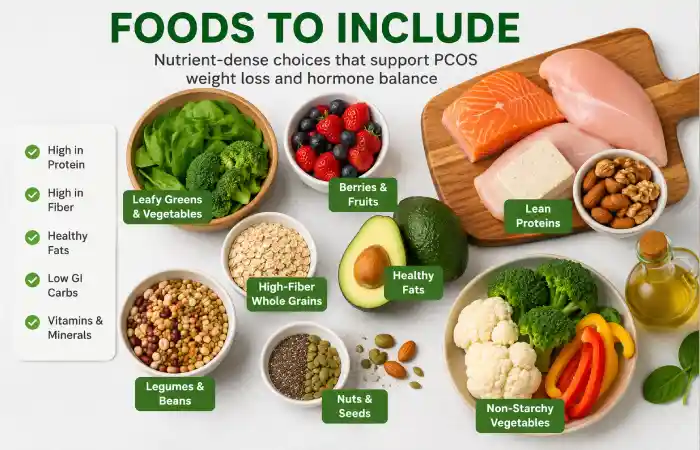
Eat Nutrient-Dense Meals Help keep you satisfied, eat more healthy foods so you may become more sensitive to insulin. (CDC)
Best Foods for PCOS
| Examples | Food Group | Benefits |
| Chicken, fish, eggs, tofu | Lean Protein | Supports muscle and satiety |
| Oats, beans, lentils | High-Fiber Foods | Slows digestion and stabilizes blood sugar |
| Olive oil, avocado, nuts | Healthy Fats | Supports hormone production |
| Brown rice, quinoa, sweet potato | Low-GI Carbs | Reduces blood sugar spikes |
| Spinach, broccoli, cauliflower | Vegetables | High nutrients, low calories |
| Berries, apples, pears | Fruits | Rich in antioxidants and fiber |
Other options aside from an unlimited all you can eat half plate of non-starchy vegetables also involve an additional quarter plate of small grains and an additional quarter plate of small proteins.
Foods to Limit
Some foods may worsen insulin resistance and inflammation when consumed frequently.
| Food | Why Limit It |
| Sugary drinks | Rapid blood sugar spikes |
| White bread | High glycemic index |
| Candy | Excess added sugar |
| Processed snacks | High sodium and unhealthy fats |
| Fried foods | Increase inflammation |
| Pastries | Refined flour and sugar |
Healthier swaps:
| Choose | Instead of |
| Sparkling water with lemon | Soda |
| Brown rice or quinoa | White rice |
| Roasted chickpeas | Chips |
| Greek yogurt with berries | Ice cream |
| Homemade oat energy bites | Cookies |
Protein and Fiber
Protein and fiber can also be combined to reduce hunger and maintain stable blood sugar.
Daily Targets
| Nutrient | Recommended Goal |
| Protein | 20–30 g per meal |
| Fiber | 25–35 g per day |
| Water | 2–3 liters daily |
High-Protein Foods
- Eggs
- Greek yogurt
- Cottage cheese
- Salmon
- Chicken breast
- Lentils
- Edamame
- Tofu
High-Fiber Foods
- Chia seeds
- Flaxseeds
- Oats
- Apples
- Berries
- Broccoli
- Beans
- Pears
Adding both protein and fiber into your meals – for instance, opting for a serving of Greek yogurt with fruit or some grilled chicken with veggies – can promote satiety and control cravings. (ACOG)
Sample Meal Plan
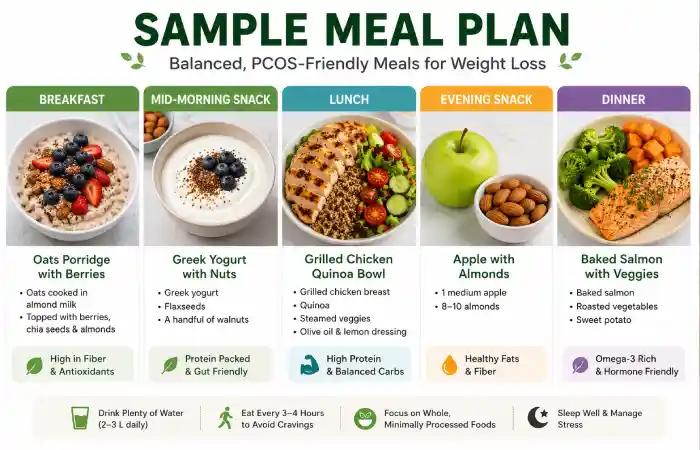
| Example | Meal |
| Greek yogurt, berries, chia seeds | Breakfast |
| Apple with almond butter | Snack |
| Grilled chicken, quinoa, broccoli | Lunch |
| Cottage cheese and cucumber | Snack |
| Baked salmon, roasted vegetables, sweet potato | Dinner |
| Plain yogurt with cinnamon | Dessert |
Weekly Meal Planning Tips
- Batch-cook proteins.
- Prepare vegetables in advance.
- Freeze healthy meals for busy days.
- Keep healthy snacks readily available.
- Read nutrition labels to avoid added sugars.
Lifestyle Tips
A good lifestyle goes with a diet.
Daily to do:
- 7 000 – 10 000 steps
- strength training 2-4 times per week
- 7-9 hours sleep
- stress management (meditation or yoga)
- stay hydrated
Weight Loss Comparison
| Long-Term Sustainability | Strategy | Short-Term Results |
| Very Low | Crash Diet | High |
| Excellent | Balanced PCOS Diet | Moderate |
| High | High-Protein Diet | Good |
| Excellent | Mediterranean-Style Diet | Excellent |
2026 Research Snapshot
| Finding | Evidence |
| This level of weight loss is often sufficient to improve the regularity of your cycles and increase insulin sensitivity in most PCOS sufferers. | Endocrine and reproductive health guidelines – consistently recommend. |
| Eating more protein preserves muscle mass when losing weight. | Nutrition research – to 2025-2026 |
| Fiber-rich diets improve satiety and blood glucose control. | Dietary fiber and metabolic health |
| Diet and exercise combination outdoes diet alone. | Lifestyle interventions |
Product Comparison
| Product Type | Pros | Best For | Considerations |
| Whey Protein Isolate | High-quality protein | Higher protein intake | Not suitable for dairy intolerance |
| Plant Protein Powder | Dairy-free | Vegan diets | Check for added sugars |
| Psyllium Husk | Supports fullness | Extra fiber | Increase water intake |
| Glass Meal Prep Containers | Durable and reusable | Portion control | Higher upfront cost |
Troubleshooting
| Problem | Possible Solution |
| Constant hunger | Increase protein and fiber at meals |
| Weight plateau | Review portion sizes and physical activity |
| Sugar cravings | Include healthy snacks with protein |
| Low energy | Avoid skipping meals and prioritize sleep |
| Difficulty meal prepping | Cook in batches once or twice a week |
Frequently Asked Questions
What is the most successful diet to help me lose weight with PCOS?
The most successful diet plan for PCOS will contain a high amount of whole grains, proteins and complex carbs and it is essential to work on a plan customized for your personal needs, to help you succeed.
Can I lose weight naturally with PCOS?
Yes, you will certainly lose weight with PCOS naturally; your metabolism might be more slowed down compared to a person without the disorder and also the weight loss might take a while to see a lot of difference; but it can still be very successful through consistent eating and also exercise program.
Will intermittent fasting help PCOS?
For an individual fasting may result in an advantage. Nevertheless, for an additional an adverse result could outcome. Consult along with your health care provider relating to the fast of type in case you are carrying a chronic illness, taking remedies,or if you’re preparing being expectant.
What foods to limit?
Avoid drinks with added sugar, foods made from refined grains, and processed snack and sweet foods with added sugar and salt, as well as fried foods.
How much protein to consume?
Aiming for about 20-30 grams of protein in a day can work for many adults – more depending on your weight, the level of activity you get each day, and other personal health circumstances.
Conclusion
It is not about changing the number of pounds on your body but taking control of your PCOS in the long-term with balanced hormones, built up insulin sensitivity, increased energy, and improved overall health. Throw out those unsustainable fad diet plans and start fueling your body with lean proteins, fiber, good fats, low glycemic index carbohydrates, exercise, stress relief, sleep, and healthy living practices; life with PCOS will be so much easier.
The outcome won’t be an overnight miracle, but even 5-10% of your starting body weight loss will impact your metabolic health and cycle significantly. These changes are usually less dramatic and thus have a more significant effect in the long term. While I hope this provides you with an excellent starting point, individualize this PCOS Weight Loss Diet plan to fit your own life and needs and consult a medical professional or registered dietitian if you require further assistance.
Afiya Jafar is a fitness and wellness writer who focuses on making health, exercise, and healthy lifestyle information simple and practical. Her work covers workouts, fitness motivation, strength training, nutrition, weight management, stress management, mindfulness, and everyday wellness.
Read Full Bio of Afiya Jafar →
Sameena Begum reviews selected health, wellness, fitness, and digital content for clarity, factual presentation, consistency, and reader usefulness. Her review work helps maintain clear and responsible editorial standards across PhysicalFitt content.
Read Full Bio of Sameena Begum →
Dr. Khizrana Begum is a qualified medical professional with MBBS and MD qualifications and 5+ years of experience in the medical field. She works as a General Physician and Dermatologist, with expertise in general medicine, dermatology, preventive healthcare, and skin health.
Read Full Bio of Dr. Khizrana Begum →