
Last Updated: July 3, 2026
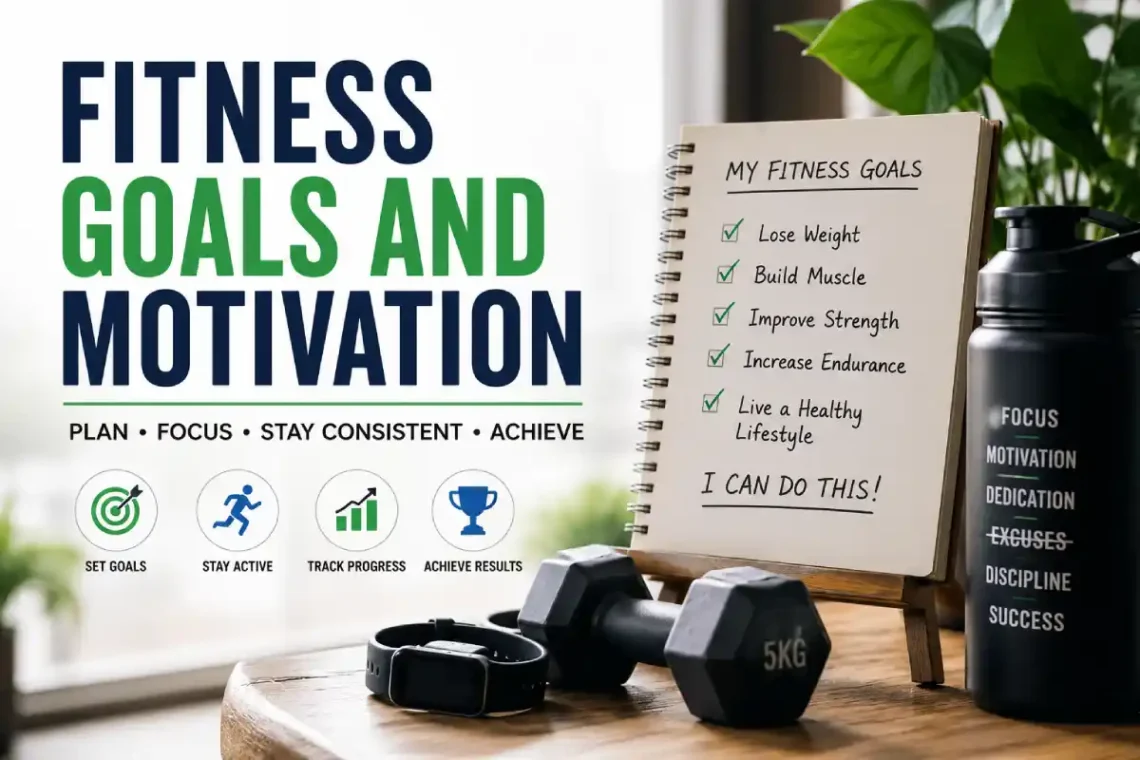
Whether your goal is to lose weight, build muscle, improve endurance, or simply become healthier, Fitness Goals and Motivation are the foundation of long-term success. Many people start exercising with enthusiasm but lose motivation after only a few weeks because they lack a clear plan.
The good news is that motivation doesn’t have to rely on willpower alone. By setting realistic goals, tracking your progress, and building sustainable habits, you can stay committed even when motivation naturally fluctuates. This guide explains exactly how to create meaningful fitness goals, measure success, and maintain momentum throughout your fitness journey.
Why Goals Matter
Goals provide direction, structure, and measurable progress. Without a clear destination, workouts often become inconsistent, making it difficult to see results.
Benefits of setting fitness goals include:
- Better workout consistency
- Increased motivation
- Easier progress tracking
- Higher confidence
- Improved accountability
- Greater long-term success
Studies continue to show that people who write down specific goals and regularly monitor progress are more likely to stick with exercise routines compared to those with vague intentions.
Comparison Table: Exercising With Goals vs Without Goals
| Factor | With Clear Goals | Without Goals |
| Workout consistency | High | Often inconsistent |
| Motivation | Sustainable | Short-lived |
| Progress tracking | Easy | Difficult |
| Confidence | Builds over time | Often decreases |
| Results | More predictable | Random |
| Long-term adherence | Strong | Low |
SMART Fitness Goals
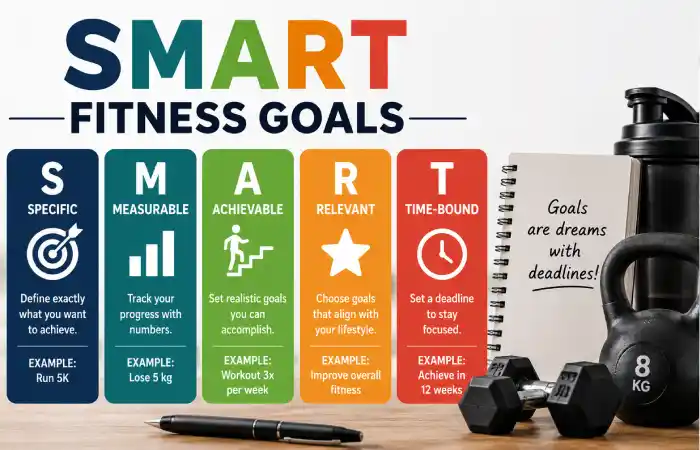
Setting SMART Fitness Goals is one of the most effective ways to stay focused, measure progress, and maintain motivation throughout your fitness journey. Instead of creating vague goals like “I want to get fit,” the SMART framework helps you establish clear, realistic objectives that are easier to achieve and track. Whether you’re a beginner or an experienced fitness enthusiast, SMART goals provide a structured roadmap that turns your aspirations into actionable steps.
SMART stands for Specific, Measurable, Achievable, Relevant, and Time-bound. Each element ensures your goal is practical and aligned with your lifestyle, making it more likely that you’ll stay committed even when motivation fluctuates.
| SMART Principle | What It Means | Example |
| Specific | Clearly define what you want to achieve. | “Walk 8,000 steps every day.” |
| Measurable | Track your progress using numbers or milestones. | “Lose 5 kg in 12 weeks.” |
| Achievable | Set a realistic goal based on your current fitness level. | “Strength train three times per week.” |
| Relevant | Ensure the goal supports your overall health and fitness priorities. | “Improve cardiovascular fitness to complete a 5K run.” |
| Time-bound | Set a deadline to create accountability. | “Complete my goal within three months.” |
Why SMART Goals Work
SMART goals eliminate uncertainty by giving you a clear direction. They help you stay motivated because every workout contributes to a measurable outcome. Instead of wondering if you’re making progress, you’ll have concrete milestones to celebrate along the way.
Some of the key benefits include:
- Provides a clear roadmap for your fitness journey.
- Makes it easier to monitor progress and identify improvements.
- Increases motivation through achievable milestones.
- Reduces the risk of setting unrealistic expectations.
- Encourages consistency and long-term habit formation.
- Helps you adjust your plan based on real results.
Example: Turning a Vague Goal into a SMART Goal
Here’s how a general fitness goal can be transformed into a SMART goal:
| Vague Goal | SMART Goal |
| “I want to lose weight.” | “I will lose 5 kg in 12 weeks by strength training four days a week, walking at least 8,000 steps daily, and maintaining a balanced calorie-controlled diet.” |
| “I want to get stronger.” | “I will increase my squat weight by 15% within 10 weeks by following a progressive strength training program three times per week.” |
Tips for Creating Effective SMART Fitness Goals
To get the best results, keep these practical tips in mind:
- Focus on one primary fitness goal at a time to avoid feeling overwhelmed.
- Break large goals into smaller weekly or monthly milestones.
- Track your workouts using a fitness app, journal, or smartwatch.
- Review your progress every two to four weeks and make adjustments if needed.
- Celebrate small achievements to stay motivated throughout your journey.
SMART Fitness Goals transform wishful thinking into a practical action plan. By setting goals that are specific, measurable, achievable, relevant, and time-bound, you’ll build confidence, stay accountable, and create sustainable habits that lead to long-term fitness success.
Short-Term Goals
Short-term goals create quick wins that build confidence and motivation.
Examples include:
- Complete three workouts this week
- Drink more water daily
- Walk 10,000 steps five days this week
- Improve push-ups from 10 to 20
- Sleep at least seven hours nightly
Small achievements reinforce positive habits and keep you engaged.
Long-Term Goals
Long-term goals represent the bigger outcome you’re working toward.
Examples include:
- Lose 20 kg
- Complete a half marathon
- Gain 5 kg of muscle
- Reduce body fat percentage
- Improve overall strength
- Maintain healthy blood pressure
Break large goals into smaller milestones to make them feel more manageable.
Goal Timeline Example
| Time Frame | Goal Example |
| 1 Week | Complete 4 workouts |
| 1 Month | Lose 2 kg |
| 3 Months | Improve strength by 20% |
| 6 Months | Complete first 10K run |
| 12 Months | Maintain healthy lifestyle |
Tracking Goal Progress
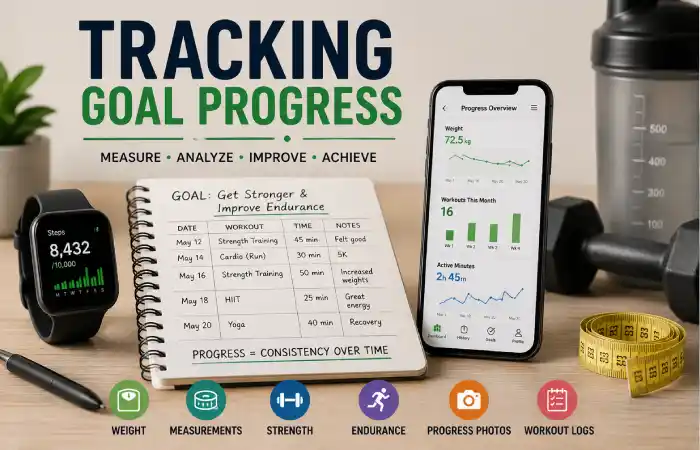
Tracking helps you identify what works and where adjustments are needed.
Popular tracking methods include:
- Workout journals
- Mobile fitness apps
- Smartwatches
- Progress photos
- Body measurements
- Strength logs
- Weekly weigh-ins
Rather than relying on the scale alone, monitor multiple indicators such as energy levels, endurance, strength, and consistency.
Progress Tracking Comparison
| Tracking Method | Best For | Frequency |
| Scale weight | Weight loss | Weekly |
| Progress photos | Body composition | Monthly |
| Measurements | Fat loss | Monthly |
| Workout log | Strength gains | Every workout |
| Fitness apps | Habit tracking | Daily |
| Smartwatch | Activity monitoring | Continuous |
Adjusting Goals Over Time
Fitness is not a straight path. Life changes, schedules shift, and progress naturally slows at times.
You may need to adjust your goals when:
- You’ve achieved your current target.
- Your priorities change.
- You’re recovering from injury.
- Progress stalls for several weeks.
- Your schedule becomes busier.
Adjusting a goal isn’t failure—it’s part of maintaining a sustainable fitness journey.
Focus on consistent improvement rather than perfection.
2026 Fitness Goal Tracking Tools Comparison
| Tool | Best For | Pros | Cons |
| Workout Journal | Beginners | Simple, affordable | Manual tracking |
| Fitness Apps | Habit tracking | Reminders, analytics | Some premium features |
| Smartwatch | Activity monitoring | Real-time metrics | Higher cost |
| Spreadsheet | Detailed analysis | Fully customizable | Time-consuming |
| Personal Coach | Accountability | Expert guidance | Most expensive |
Troubleshooting Common Goal-Setting Challenges
| Problem | Solution |
| Lost motivation | Revisit your “why” and celebrate small wins |
| Busy schedule | Shorten workouts instead of skipping them |
| No visible progress | Track measurements and strength, not just weight |
| Unrealistic expectations | Break goals into smaller milestones |
| Workout boredom | Try new exercises or training styles |
Frequently Asked Questions
How many fitness goals should I have at one time?
Focus on one primary goal with two or three supporting habits. Too many goals at once can reduce consistency.
How long does it take to build a fitness habit?
Research suggests that habit formation varies by individual and behavior, but many people establish consistent exercise routines over several weeks to a few months with regular practice.
What should I do if I miss workouts?
Resume your routine as soon as possible. Missing one or two workouts won’t significantly affect long-term progress if you remain consistent afterward.
Are SMART goals effective for weight loss?
Yes. SMART goals help create realistic, measurable objectives, making it easier to monitor progress and stay motivated.
Is motivation more important than discipline?
Motivation helps you start, but discipline and consistent habits are what sustain long-term fitness success.
Conclusion
Achieving lasting fitness success isn’t about staying motivated every single day—it’s about creating a clear plan and building habits you can maintain over time. By setting SMART fitness goals, balancing short-term milestones with long-term objectives, and consistently tracking your progress, you’ll be better equipped to overcome setbacks and stay committed to your health journey.
Remember that progress looks different for everyone. Some weeks you’ll see measurable improvements, while other times the biggest achievement is simply showing up and staying consistent. Celebrate small wins, adjust your goals as your fitness level and lifestyle evolve, and focus on building sustainable habits rather than chasing quick results.
Whether you’re aiming to lose weight, build muscle, improve endurance, or simply live a healthier life, well-defined fitness goals combined with a positive mindset will keep you moving forward. Start with one achievable goal today, track your progress regularly, and let each milestone motivate you toward the next. Consistency—not perfection—is the key to long-term fitness success.