

 Afiya Jafar
Fitness & Wellness Writer
Afiya Jafar is a fitness and wellness writer who focuses on making health, exercise, and healthy lifestyle information simple and practical.
Read Full Bio of Author →
Afiya Jafar
Fitness & Wellness Writer
Afiya Jafar is a fitness and wellness writer who focuses on making health, exercise, and healthy lifestyle information simple and practical.
Read Full Bio of Author →
 Sameena Begum
Health, Fitness & Digital Content Reviewer
Sameena reviews selected health, wellness, fitness, and digital content for clarity, factual presentation, and reader usefulness.
Read Full Bio of Reviewer →
Sameena Begum
Health, Fitness & Digital Content Reviewer
Sameena reviews selected health, wellness, fitness, and digital content for clarity, factual presentation, and reader usefulness.
Read Full Bio of Reviewer →
 Dr. Khizrana Begum
General Physician & Dermatologist
Dr. Khizrana Begum is a General Physician and Dermatologist with MBBS and MD qualifications and 5+ years of experience in the medical field.
Read Full Bio of Medical Reviewer →
Dr. Khizrana Begum
General Physician & Dermatologist
Dr. Khizrana Begum is a General Physician and Dermatologist with MBBS and MD qualifications and 5+ years of experience in the medical field.
Read Full Bio of Medical Reviewer →
Beginning your fitness program is one of the most enjoyable experiences of your life, however it’s typically the most difficult of the many to stay up with it. Have you wondered how you might keep your exercise up by making going to the gym fun, and you happen to be in the company of others like you. Studies continue to come back demonstrating that inspiration, like that of most individuals and animals, ebbs and flows, which clarifies why truly motivated people go through greater workouts through routines, routines and achievable goals, rather than with sheer willpower alone.
Regardless of where you are inside your workout plan – just beginning, or possibly resuming training following years away – here are a few methods proven to enable you to continue your workout commitment.
❝
This article is a part of
Gym Hub
Why Motivation Fades
One would like to feel driven always – however that’s not just how humans’ mind works.
Common reasons include:
- Unrealistic expectations
- Slow visible results
- Busy schedules
- Lack of routine
- Workout boredom
- Overtraining
- Poor sleep
- Comparing yourself to others
Research in behavioral psychology suggests that habits become more reliable than motivation because they reduce the need to make daily decisions.
For a broader understanding of building long-term consistency, explore our complete gym motivation guide with proven strategies for every fitness level.
Common Motivation Killers
| Problem | Solution |
| No clear goal | Set measurable goals |
| Skipping workouts | Schedule workouts like appointments |
| No progress tracking | Record workouts weekly |
| Gym anxiety | Start with beginner routines |
| Bored workouts | Change exercises every 6–8 weeks |
Setting Realistic Fitness Goals
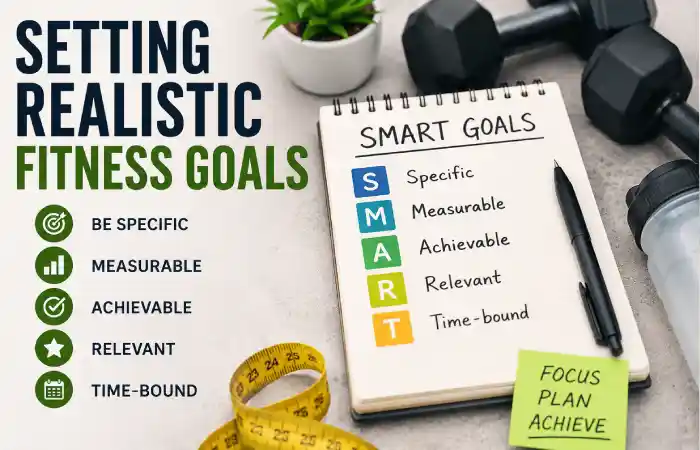
One of the biggest reasons people quit is setting impossible expectations.
Instead of saying:
“I’ll lose 20 kg in one month.”
Try:
- Train 3 times a week
- Walk 8,000 steps a day
- Increase squat weight by 5 kg per month
- Do 12 workouts this month
On days when you need an extra push, read these motivational gym quotes to boost your mindset before heading to the gym.
SMART Goal Example
| Goal Type | Example |
| Specific | Attend the gym Monday, Wednesday, Friday |
| Measurable | Finish 12 workouts monthly |
| Achievable | 45-minute sessions |
| Relevant | Improve overall health |
| Time-bound | Within 30 days |
Staying motivated becomes much easier when you set realistic fitness goals and track your progress consistently.
Creating a Workout Schedule
It is probably the simplest way to remain on the path towards being healthy. Rather than you needing to choose what your will exercise or not, your schedule will outline precisely what you’ll be performing as well as when you’ll certainly perform it. In essence, your workouts are programmed in to your week instead of an activity that might occasionally occur.
Plan your work out periods at a time of day that match your energy and also your own way of living. A few individuals operate best in the mornings, while a few choose exercising within the evenings. What ever plan, it requires to be sustainable throughout the entire week. Beginning by doing three or four sessions weekly and slowly raise it.
How to Build a Sustainable Workout Schedule
Structure your week to ensure you are including some strength training, cardio, and rest. Never do work on the same muscle groups back-to-back. Try and factor in at least one or two full rest days each week and consider putting workout sessions in your online calendar so you’ll get a notification.
Short and Sweet For beginners, keep each workout reasonable.
A 30-45-minute session done regularly will do much more for you in the long run than attempting an hour-long session you won’t do consistently.
Sample Beginner Weekly Workout Schedule
| Duration | Day | Workout |
| 45 Minutes | Monday | Full-Body Strength Training |
| 30 Minutes | Tuesday | Brisk Walk or Light Cardio |
| 45 Minutes | Wednesday | Upper Body Workout |
| 20–30 Minutes | Thursday | Rest or Mobility Exercises |
| 45 Minutes | Friday | Lower Body Workout |
| 30–40 Minutes | Saturday | Cardio or HIIT Session |
| 20–30 Minutes | Sunday | Stretching, Yoga, or Complete Rest |
If you’re just starting your fitness journey, our gym motivation for beginners guide will help you build confidence and create a sustainable workout routine.
Tips to Stay Consistent with Your Schedule
- View exercise as if it were a scheduled commitment.
- Have alternative home workout available if days are exceptionally hectic, or the weather deteriorates.
- Update as needed every few weeks according to workout development, as well as the existing schedule.
Reinforce these habits with our practical gym motivation tips to overcome common obstacles and stay committed to your workouts.
Building Daily Fitness Habits
Making it to the gym daily is simpler when working out becomes a routine instead of an event you’ll contemplate each day. Motivation ebbs and flows but a consistent habit will push you to do the necessary actions, whether you feel you don’t have the energy or your schedule’s too busy. When you practice simple behaviors repeatedly, your fitness efforts seem natural and easy.
Simple Ways to Build Daily Fitness Habits
Ease into your new workout plan by linking it to something you’re already accustomed to – like jumping into your exercise after morning coffee, or getting a session in immediately after clocking out. Prep your bag the night before – sneakers, gym clothes, water bottle, towel, whatever you’ll need – and set your gear out in your home so there’s only one extra step when it’s time for your sweat session. Schedule your workouts on your calendar like any other important meeting, and don’t move them unless absolutely necessary.
Start with short, frequent workouts of 20-30 minutes and try to workout 4 times a week. Consistency of workout is more important than workout sessions as it is a part of forming a habit. You may get help from workout apps or planners to stay committed and to trace progress.
Acknowting small accomplishments and keeping a log of completed workouts encourages you to maintain this healthy behavior. If you skip an exercise session, don’t throw in the towel – hop back into your schedule tomorrow. It’s not about perfection in exercise, it’s about persistence.
Simple Daily Fitness Habits That Stick
| Why It Works | Habit |
| Reduces morning stress and excuses | Pack your gym bag the night before |
| Treats exercise like an important appointment | Schedule workouts in your calendar |
| Makes it easier to begin each session | Start with a 5-minute warm-up |
| Creates a positive workout mindset | Prepare a workout playlist |
| Reinforces consistency and motivation | Track every completed workout |
| Builds a predictable routine | Follow the same workout time each day |
| Encourages long-term commitment | Celebrate weekly milestones |
Finding an Accountability Partner
Exercise holds more meaning to someone if there’s an anticipation of seeing them at the facility.
Good accountability partners include:
- Friends
- Family
- Coworkers
- Personal trainers
- Online fitness communities
You can also join group fitness classes for added motivation.
Tracking Your Progress
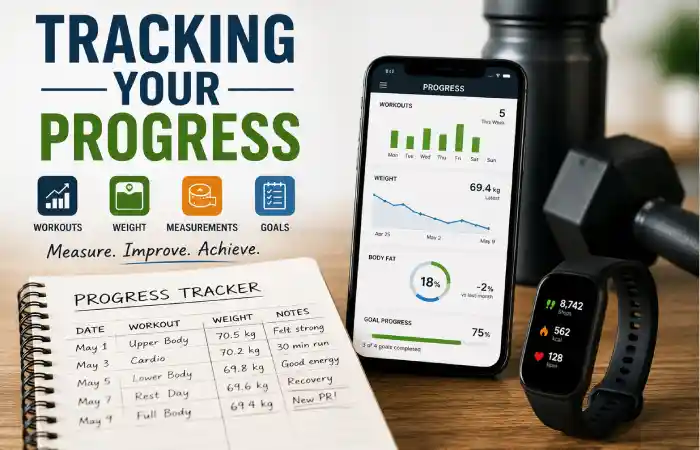
Progress isn’t only measured by the scale.
Track improvements like:
- Strength gains
- Workout consistency
- Body measurements
- Energy levels
- Endurance
- Mood
- Sleep quality
Progress Tracking Comparison
| Tracking Method | Best For |
| Workout Journal | Strength Progress |
| Fitness App | Daily consistency |
| Smartwatch | Heart rate & activity |
| Photos | Body composition |
| Measurements | Fat loss |
| Weight Scale | Long-term trends |
Rewarding Yourself
Positive reinforcement encourages long-term consistency.
Healthy rewards include:
- New gym clothes
- Workout shoes
- Massage
- Healthy restaurant meal
- Fitness gadgets
- Rest day after reaching milestones
Avoid using junk food as your primary reward.
Motivation vs Discipline
| Motivation | Discipline |
| Emotional | Habit-based |
| Temporary | Long-lasting |
| Depends on mood | Depends on routine |
| Hard to maintain | Easier over time |
The goal isn’t to feel motivated every day.
The goal is to keep showing up.
Lasting consistency comes from understanding motivation vs. discipline and learning why discipline keeps you moving even when motivation fades.
2026 Research Snapshot
Recent behavioral research continues to reinforce several key findings:
| Habit Strategy | Estimated Impact on Workout Consistency |
| Fixed workout schedule | High |
| Progress tracking | High |
| Accountability partner | Moderate to High |
| Reward system | Moderate |
| Goal setting | High |
| Preparing gym bag the night before | Moderate |
Recommended Fitness Tools
| Tool | Benefits | Best For |
| Fitness Tracker | Monitor activity and heart rate | Beginners |
| Workout App | Structured workout plans | Home & Gym |
| Smart Scale | Track body composition | Weight-loss goals |
| Habit Tracker | Daily streaks | Building consistency |
Conclusion
Staying fired up to work out has zero to do with the word “motivated” or the word “inspiration”. It involves systems. Making it part of your routine – establishing goals, having a program, tracking progress, building habits and knowing your motivation might fade, use external motivation and reward yourself wisely can help you to continue pushing yourself.
Little by little, your efforts can accumulate over time and form part of healthy habits.
Be willing to have less than perfect workouts and know that all of your efforts will bring you closer to your ultimate goal.
Afiya Jafar is a fitness and wellness writer who focuses on making health, exercise, and healthy lifestyle information simple and practical. Her work covers workouts, fitness motivation, strength training, nutrition, weight management, stress management, mindfulness, and everyday wellness.
Read Full Bio of Afiya Jafar →
Sameena Begum reviews selected health, wellness, fitness, and digital content for clarity, factual presentation, consistency, and reader usefulness. Her review work helps maintain clear and responsible editorial standards across PhysicalFitt content.
Read Full Bio of Sameena Begum →
Dr. Khizrana Begum is a qualified medical professional with MBBS and MD qualifications and 5+ years of experience in the medical field. She works as a General Physician and Dermatologist, with expertise in general medicine, dermatology, preventive healthcare, and skin health.
Read Full Bio of Dr. Khizrana Begum →