

Last Updated: August 27, 2026
Preventive health is about taking action before a health problem becomes serious. Instead of waiting for symptoms, preventive health combines regular checkups, appropriate screenings, vaccinations, nutritious eating, physical activity, adequate sleep, stress management, and other healthy behaviors to reduce risk and identify problems early. Preventive care is not simply about visiting a doctor once a year—it is an ongoing approach to protecting long-term health.
Government health guidance identifies checkups, screenings, vaccines, lifestyle counseling, and risk-factor assessment as important components of preventive care.
What Is Preventive Health?
Preventive health includes actions designed to prevent disease, detect health problems early, and reduce the impact of existing conditions.
It generally operates at three levels:
- Primary prevention: reducing the chance of disease developing, such as exercising, eating well, avoiding tobacco, and getting recommended vaccines.
- Secondary prevention: detecting problems early through screenings such as blood pressure, cholesterol, diabetes, or cancer screening when appropriate.
- Tertiary prevention: helping people with an existing condition prevent complications and maintain better health.
Preventive health should be personalized. Age, sex, family history, lifestyle, previous test results, medications, and individual risk factors can all influence which preventive services are appropriate.
Why Preventive Health Matters
Many health conditions can develop without obvious symptoms. High blood pressure, elevated blood glucose, and abnormal cholesterol, for example, may remain unnoticed until they contribute to a larger health problem.
Routine preventive care creates opportunities to identify risk factors earlier and discuss practical changes with a healthcare professional. The CDC notes that routine preventive care, including blood-pressure checks and cancer screenings, can help people detect problems early.
2026 Preventive Health Data Snapshot
| Prevention factor | Current evidence/data |
| Adults sleeping less than 7 hours | 30.5% of U.S. adults in 2024 |
| Recommended moderate activity | 150–300 min/week |
| Muscle-strengthening | 2+ days/week |
| Adult vaccination | Recommendations vary by age and risk |
The CDC reported in 2026 that 30.5% of U.S. adults averaged fewer than seven hours of sleep in 2024. WHO recommends 150–300 minutes of moderate aerobic activity weekly for adults, alongside muscle-strengthening activity on at least two days.
Regular Health Checkups

A preventive checkup gives you an opportunity to review your overall health even when you feel well.
Depending on your circumstances, a healthcare professional may review:
- Blood pressure
- Weight and body measurements
- Family and personal medical history
- Lifestyle habits
- Medications and supplements
- Mental health
- Vaccination status
- Appropriate laboratory tests or screenings
There is no universal rule that everyone needs the same tests every year. Your healthcare provider should determine the appropriate schedule based on your risk profile.
Preventive Screenings
Screenings are different from diagnostic tests. Screening generally looks for disease in people who do not have symptoms, while diagnostic testing investigates a symptom or abnormal finding.
Potential preventive screenings can include assessments for:
- High blood pressure
- Diabetes risk
- Abnormal cholesterol
- Certain cancers
- Mental health concerns
- Oral health problems
- Other conditions based on age and individual risk
Avoid ordering a large collection of tests simply because they are marketed as a “full-body checkup.” More testing is not automatically better. The most useful screening is one supported by clinical evidence and appropriate for the individual.
Healthy Eating for Prevention
Nutrition is one of the most accessible forms of preventive health.
Build meals around vegetables, fruits, whole grains or other high-fiber carbohydrates, legumes, nuts and seeds, and appropriate protein sources. Limit excessive intake of highly processed foods, added sugars, sodium, and unhealthy fats.
A practical approach is to focus on overall dietary patterns rather than individual “superfoods.”
For example, instead of trying to eliminate an entire food group, gradually increase vegetables, choose higher-fiber carbohydrates, include adequate protein, and make water the primary beverage.
Physical Activity and Disease Prevention
Regular physical activity supports cardiovascular fitness, metabolic health, muscle strength, bone health, and mental well-being.
For adults aged 18–64, WHO recommends at least 150 minutes of moderate-intensity aerobic activity per week, or 75 minutes of vigorous activity, with additional benefits possible at higher levels. Muscle-strengthening activities are recommended on at least two days per week.
You do not need an expensive gym membership. Walking, cycling, dancing, home workouts, sports, and active transportation can all contribute to your weekly activity.
Sleep and Preventive Health
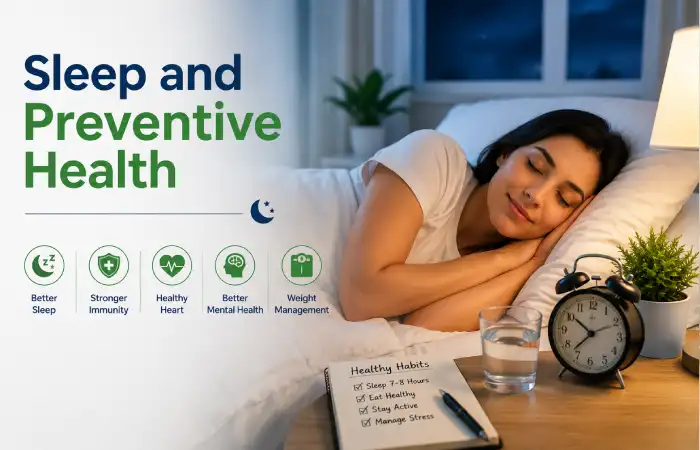
Sleep is often overlooked when people discuss disease prevention.
Consistently inadequate sleep can affect energy, concentration, mood, and overall health. The 2026 CDC analysis found that nearly one in three U.S. adults reported an average sleep duration below seven hours.
Create a consistent sleep and wake schedule, reduce stimulating activities close to bedtime, keep your sleeping environment comfortable, and discuss persistent sleep problems with a healthcare professional.
Stress Management
Chronic stress can make healthy behaviors harder to maintain and may affect sleep, eating patterns, physical activity, and mental well-being.
Preventive stress management does not require eliminating every stressful situation. Instead, develop reliable ways to manage it.
Walking, exercise, breathing exercises, mindfulness, hobbies, social connection, adequate sleep, and professional mental-health support when needed can all form part of a prevention strategy.
Vaccination and Preventive Care
Vaccination is one of the most established forms of disease prevention.
Recommended vaccines depend on factors such as age, previous vaccination, pregnancy, occupation, travel, and medical risk. For example, the current CDC adult schedule includes vaccines such as influenza, Tdap/Td, HPV, hepatitis, pneumococcal, and others depending on individual circumstances.
For readers in India, vaccination decisions should be based on current recommendations from qualified healthcare professionals and relevant Indian public-health guidance rather than automatically following another country’s schedule.
How to Create a Preventive Health Routine
A preventive health routine works best when it is simple enough to maintain.
Daily: prioritize nutritious meals, movement, hydration, sleep, and stress-management habits.
Weekly: work toward your physical-activity target and review whether your routine is realistic.
Periodically: schedule appropriate medical, dental, vision, and other preventive appointments.
Annually or as recommended: review vaccinations, screening needs, family-history changes, medications, and major lifestyle risks with your healthcare provider.
A useful prevention calendar can include the appointment date, screening performed, result, recommended follow-up, and next due date. This makes preventive care easier to manage rather than relying on memory.
Preventive Health: What to Track
| Area | What to monitor |
| Lifestyle | Nutrition, activity, sleep, tobacco/alcohol exposure |
| Clinical | Blood pressure and other clinician-recommended measurements |
| Screening | Age- and risk-appropriate tests |
| Vaccination | Missing or upcoming doses |
| Mental health | Stress, mood, sleep quality |
| Follow-up | Abnormal results and recommended appointments |
Preventive Health Products: What Is Actually Useful?
Commercial health products can support prevention, but they should supplement—not replace—professional healthcare.
| Product/category | Potential use | Limitation |
| Home blood-pressure monitor | Tracking blood pressure | Does not diagnose every condition |
| Fitness tracker | Activity and sleep trends | Consumer measurements may not be clinically equivalent |
| Digital health reminders | Appointments and medication/vaccine reminders | Depends on accurate information |
| Home test kits | Convenience for selected tests | Results may require professional confirmation |
The best purchase is usually the one that solves a specific health-monitoring need rather than a device with the largest number of features.
Final Takeaway
Preventive health is less about pursuing perfect health and more about staying ahead of avoidable risks. Regular checkups, appropriate screenings, vaccination, nutritious food, physical activity, sufficient sleep, and effective stress management create a practical foundation for long-term health.
The most important step is to turn prevention into a routine rather than something you think about only when you become sick.