
Last Updated: September 8, 2026
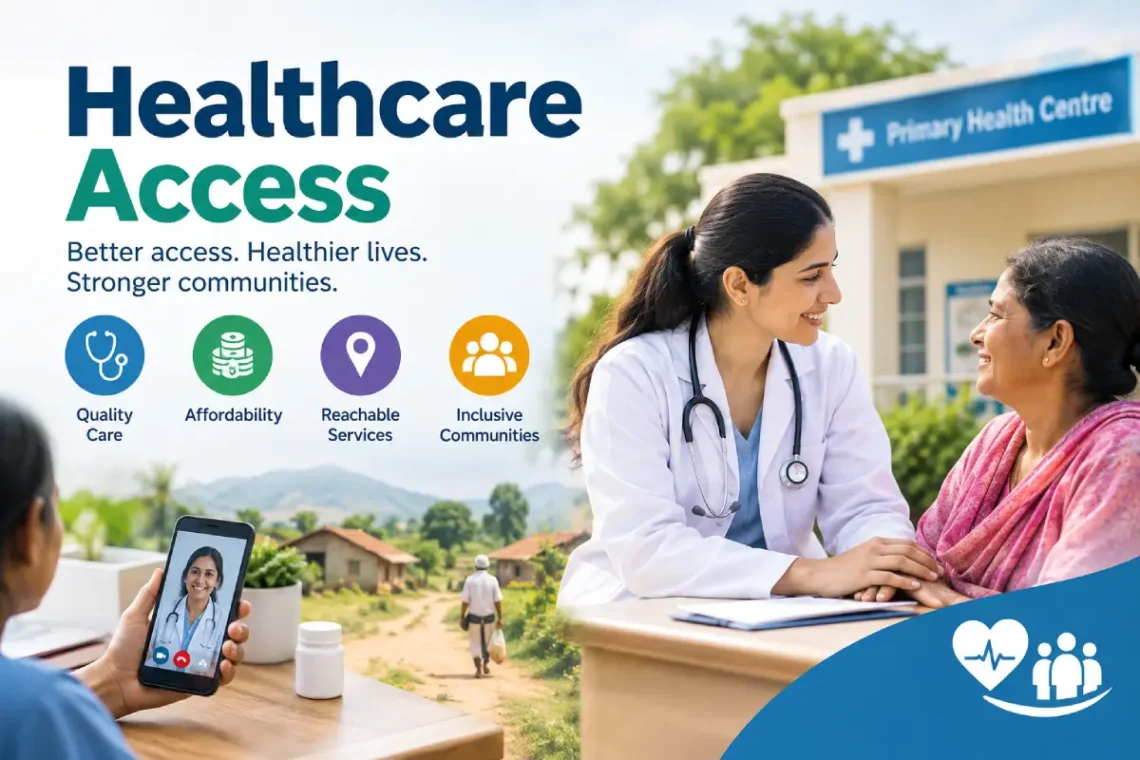
What is means to be able to access services. Having the means (appropriate services, location, time, finance and form/appropriateness) to access health services. It is more than proximity to a hospital or doctor; a set of barriers, including affordable pricing, transport access, adequate supply of providers, health literacy and acceptability of services, needs to be overcome.
In 2026, it is considered to be a public health issue.
There has been clear progress in India in terms of utilisation of public health services, insurance, primary care and digital health, but inequity between areas, socio-economic status and between genders persists.
What Is Healthcare Access?
Health access refers to having access to quality preventive care and diagnostic, therapeutic, restorative and supporting health services as and when needed in an efficient way.
A frequently adopted definition by someone, describes access as timely utilization of personal healthcare services for achieving optimal health.
Factors that generally lead to a good access to health care are:
- Availability: Facilities (hospitals/clinics/docs/drugs) are within reach?
- Affordability: Are doctors/medications/drugs affordable to people?
- Accessibility: Can patients reach facility and services physically?
- Acceptability: The facility and services provided by it are socially/culturally acceptable?
- Quality: services safe/effective/patient-centered?
- Approachability: People are informed of where and how to access care?
This is why health insurance does not assure good access.
Importance of Healthcare Access
If healthcare is made available early it will lead to the prevention, earliest detection, prompt treatment. In case patients visits the healthcare professional even before it gets severe then it could even more simple or less costlier treatment possible for any condition.
Healthcare access can help people:
- Receive preventive screenings and vaccinations.
- Detect diseases earlier.
- Manage chronic conditions.
- Access mental-health and behavioural-health services.
- Receive maternal and child healthcare.
- Reduce avoidable emergency visits.
- Maintain better quality of life.
The Rural Health Information Hub notes that access is associated with disease prevention, diagnosis and treatment, quality of life and avoidance of preventable deaths.
Barriers to Healthcare
Healthcare access can be affected by financial, geographic, social and technological barriers.
Common barriers include:
| Barrier | How It Affects Access |
| High treatment costs | Patients may delay or avoid care |
| Lack of insurance | Increases financial risk |
| Provider shortages | Makes appointments difficult to obtain |
| Transportation | Creates problems reaching facilities |
| Long waiting times | Delays diagnosis and treatment |
| Low health literacy | Makes healthcare systems difficult to navigate |
| Language barriers | Can affect communication |
| Disability | Facilities or services may be inaccessible |
| Digital divide | Limits access to telehealth |
| Stigma | Can discourage people from seeking care |
Cost remains a major concern. The U.S. Healthy People 2030 review notes that out-of-pocket costs can lead people to delay or forgo needed healthcare.
Healthcare Access in Rural Areas
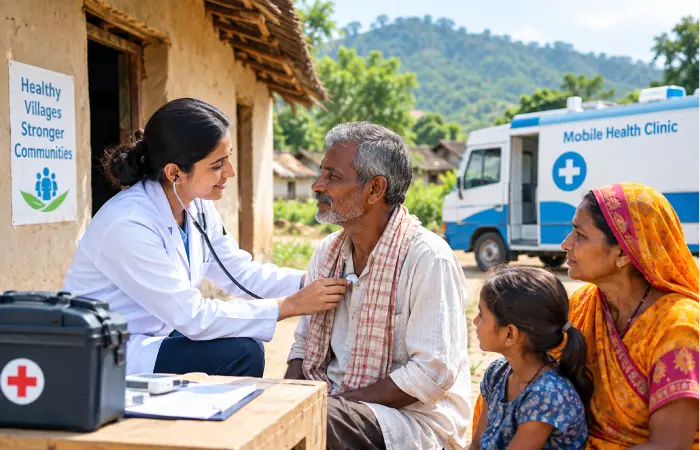
The barriers could be geographic, financial, or workforce-related for rural populations.
Patients might need to travel long distances to visit a specialist physician, and if there aren’t enough physicians and healthcare personnel readily available, getting an appointment may be even more difficult. Transportation could present additional obstacles, particularly for the elderly and chronic disease patients.
As of September 2024, 66.33% of Primary Care Health Professional Shortage Areas are located in rural communities according to the Rural Health Information Hub.
India faces its own rural-access challenges. A review of digital-health interventions in India identified distance, transportation, service availability, affordability and other socioeconomic factors as important contributors to unequal primary-care access.
Affordable Healthcare
Affordable healthcare means more than low consultation fees. Patients must also consider diagnostic tests, medicines, hospitalisation, transportation and follow-up treatment.
India’s latest NSO health findings provide encouraging evidence. The 2026 government release reported a zero median outpatient expenditure at public health facilities and median out-of-pocket expenditure of ₹1,100 in more than half of hospitalisation cases at public facilities.
Government-funded health coverage is another important component. As of August 2026, more than 45.5 crore Ayushman Cards had been issued under AB-PMJAY, while more than 38,466 public and private hospitals were empanelled.
For consumers, the practical question is not simply “Is healthcare cheap?” but:
What will I pay from my own pocket, what does my coverage include, and where can I receive care?
Access to Primary Care
It is the main point of entry into the system and encompasses routine consultations, preventive care and screening, health education and management of the common acute and chronic conditions.
Good primary care may decrease demand for services at hospitals and allows for early detection of problems.
India’s Ayushman Arogya Mandirs are an important part of this approach. By August 2026, more than 1.86 lakh Ayushman Arogya Mandirs were reported as functional, providing 12 free services and recording more than 540 crore cumulative visits.
Digital Healthcare and Access
Digital healthcare can reduce some geographic barriers by connecting patients with clinicians remotely.
Useful technologies include:
- Teleconsultations
- Mobile health applications
- Electronic health records
- Remote patient monitoring
- Digital appointment systems
- Online diagnostic reports
- Digital health IDs
A 2024 peer-reviewed analysis on Indian digital health interventions stated that remote medical and health applications and telemedicine were the types of digital health systems being employed to increase access to primary health services for the vulnerable.
The Ayushman Bharat Digital Mission, to create an ABHA or account which links health records among participants in the health system. Not only will all of our digital healthcare not create equal, poor internet accessibility, high cost of devices, lack of digital literacy and worry over privacy can cause digital exclusion.
Healthcare Access for Vulnerable Communities
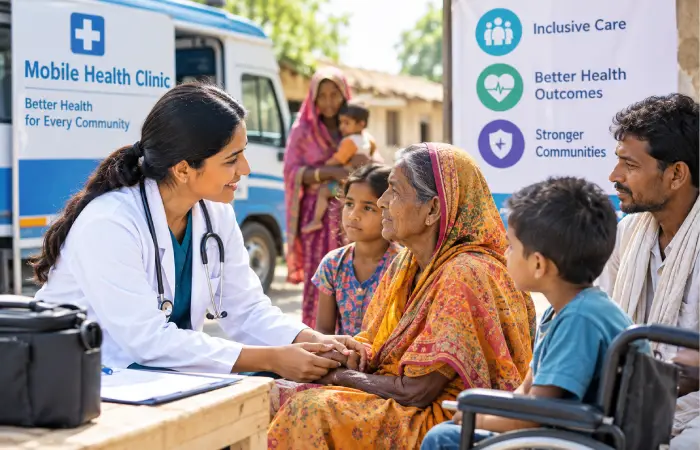
Some populations experience several access barriers at the same time.
These may include:
- Low-income households
- Older adults
- People with disabilities
- Rural and remote communities
- Children
- Pregnant women
- People experiencing homelessness
- People with limited health literacy
- People facing language or cultural barriers
A healthcare system becomes more equitable when services are designed around the needs of these groups rather than assuming everyone has the same resources.
Improving Healthcare Access
Improving access requires action at several levels.
- Expand primary care
More accessible community-based primary care can bring basic services closer to patients.
- Strengthen healthcare workforce
Recruitment, retention and appropriate distribution of healthcare professionals are essential, particularly in underserved areas.
- Reduce financial barriers
Insurance, public financing, affordable medicines and transparent pricing can reduce the likelihood that patients delay treatment.
- Improve transportation
Mobile clinics, community-based services and transportation support can help people who live far from healthcare facilities.
- Use digital healthcare carefully
Telehealth can connect patients with clinicians, but digital programmes should also address connectivity, accessibility and health literacy.
- Improve health literacy
Patients should be able to understand symptoms, treatment options, preventive services, costs and where to seek appropriate care.
Future of Healthcare Accessibility
The use of digital care in combination with physical care will grow in relevance and scope for healthcare access.
Telemedicine, interoperable health records, Al-enabled clinical aids and also remote monitoring and mobile diagnostics will serve to increase access to healthcare. The implementation of technology should however always serve to augment, rather than substitute for the use of existing health infrastructure at the local level.
India already has a rapidly scaling digital health ecosystem where digital health records and health-data exchange are supported through an ABDM infrastructure, and telemedicine initiatives are helping to bring expert doctors beyond large metros. (WHO)
The goal should not simply be more technology. It should be better access, better outcomes and fewer barriers.
Conclusion
Access to healthcare will lay at the core of the future more equitable and healthier society. It includes access not just to doctors and hospitals, but also to finance and healthcare services appropriately located and effective, competent staff, and efficient, qualitative health services.
The future access to care can rely on efficient health local facilities combined with appropriate technology, affordability and services tailored around patients’ needs and wishes. By minimizing the economic, spatial and socio-environmental obstacles it will make more possible for patients to get quality health services at the appropriate moment, without being affected by geographic distance nor the health service price.