
Last Updated: July 30, 2026
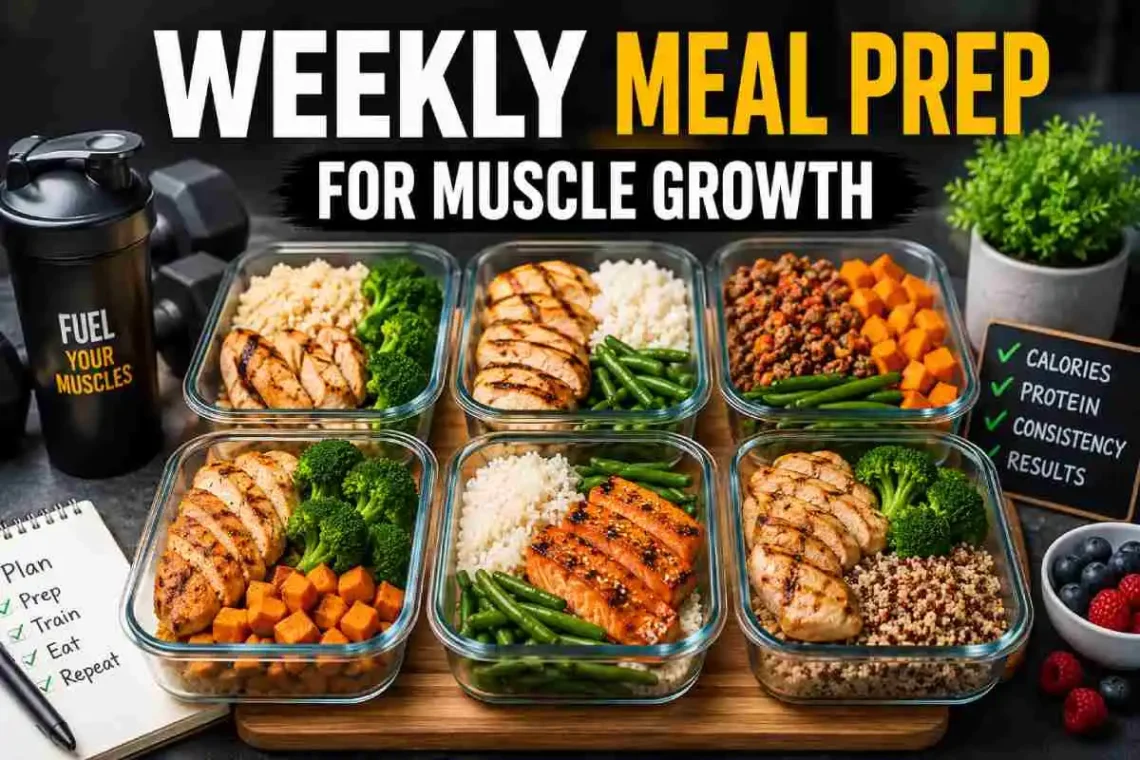
One of the easiest ways to make sure you’re consistently hitting your calories and protein goals and also taking out all of the mental effort of weeknight eating is Weekly Meal Prep for Muscle Growth. If you’re a beginner looking to gain some clean muscle, an expert wanting to fine-tune recovery and make sure all of your meals are working towards muscle growth, having a weekly prep in place can be highly effective.
The evidence on muscle gain is always coming back the same: resistance training, appropriate calorie intake, and enough protein over the course of the week will build muscle. On average, a generally accepted recommendation for muscle protein synthesis, based on numerous studies is between 1.6-2.2 g per kg of body weight per day.
Benefits of Weekly Meal Prep for Muscle Gain
Meal prep offers several advantages beyond convenience.
Adequate Protein Intake
You have no excuse to not reach your daily protein goals. It is less likely that you miss out on crucial micronutrients needed for your muscle recovery if you are eating the correct meals at the correct time of the day.
More Control of your Calorie Intake
You need to eat at a surplus to build muscle. Having pre-prepared meals will keep your calorie intake stable through out the entire week.
Better Workout recovery
Proper recovery nutrition will include complex carbohydrates and protein, helping to replenish glycogen storage, and build muscle.
Saves Time and Money
Many successful meal preppers spend only 2–3 hours weekly preparing meals instead of cooking multiple times per day.
Essential Foods for a Muscle-Building Meal Plan
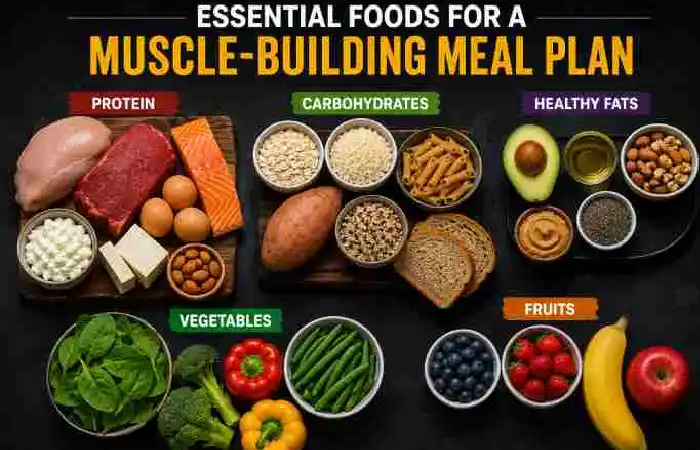
A effective meal plan to building muscle is centered around the selection of nutrient rich foods that contain the adequate levels of protein, carbs, healthy fats, vitamins and minerals required for muscles to be built and recover efficiently. In fact, while weight training serves as a stimulus for muscle growth, it is nutrition that will provide the necessary building blocks for muscles to recover and grow larger.
High-Quality Protein Sources
Some of the best muscle-building protein sources that you can eat:
- Greek yogurt
- Cottage cheese
- Tofu and tempeh
- Turkey
- Lentils and beans
- Protein powder
- Chicken breast
- Lean beef
- Salmon and tuna
- Eggs and egg whites
These sources are loaded with the amino acids wanted to build muscle, explicitly leucine which is a key driver of muscle protein production.
Complex Carbohydrates for Energy
It sounds as though carbs get a poor press but they are crucial for fuelling your training and helping you regain from it.
You can use carbohydrates as an energy source to help fuel your workout as well. Without taking in carbs before you train you are actually using your muscle tissue to give you a sufficient supply of energy to help you fuel your workout.
Some good carbohydrate sources:
- brown rice
- white rice
- oats
- sweet potatoes
- whole-grain bread
- whole-wheat pasta
- quinoa
- bananas
- apples
- berries
- carrots
- peas
Using carbs in your meal preparation is crucial for continuing to work out at a high intensity and refueling glycogen stores post workout.
Healthy Fats as Hormone Precursors
The diet needs to include healthy fats. Not only are they necessary to produce other hormones which are necessary for muscle tissue such as testosterone, but they also help in transferring and absorbing other necessary nutrients. Some healthy fat sources:
- Avocados
- Olive oil
- Almonds
- Walnuts
- Peanut butter
- Chia seeds
- Flaxseeds
- Oily fish such as salmon
The intake of healthy fats need to be spread throughout the day in measured quantities, don’t allow it to take over valuable protein and carbs.
Vegetables and Micronutrients
When you are on a diet intended for muscle building you need to ensure that it isn’t just the protein and calories you need.
They provide you with vitamins and minerals as well as anti-oxidants and fiber, which aid in the recovery process and digestion as well as immune function.
Top vegetables for meal prep include:
- Broccoli
- Spinach
- Kale
- Bell peppers
- Green beans
- Asparagus
- Brussels sprouts
Muscle-Building Food Comparison
| Food | Main Benefit | Protein (per 100g) |
| Chicken Breast | Lean protein source | 31g |
| Lean Beef | Protein plus iron | 26g |
| Salmon | Protein and omega-3 fats | 25g |
| Eggs | Complete protein | 13g |
| Greek Yogurt | Protein and probiotics | 10g |
| Oats | Energy-rich carbohydrate | 17g |
| Sweet Potato | Recovery-supporting carbs | 2g |
| Quinoa | Carbs with additional protein | 4g |
Building Balanced Meal Prep Containers
For each meal-prep container, aim for:
- 40–50% complex carbohydrates
- 25–35% lean protein
- 15–25% healthy fats
- A generous serving of vegetables
By using this balanced approach, you should be able to enhance muscle growth, workout endurance, muscle recovery and health all while simultaneously reaching your daily caloric and protein targets.
The muscle constructing staples you will get on the list below will make the first steps near a balanced diet to advantage you build lean muscle.
How to Calculate Protein Needs for Meal Prep
Protein wants vary by body weight and activity flat.
Protein Formula
Examples
| Body Weight | Daily Protein Goal |
| 60kg | 96–132g |
| 70kg | 112–154g |
| 80kg | 128–176g |
| 90kg | 144–198g |
For optimal muscle growth, divide protein intake across 4–6 meals daily.
Sample 7-Day Muscle Gain Meal Prep Schedule
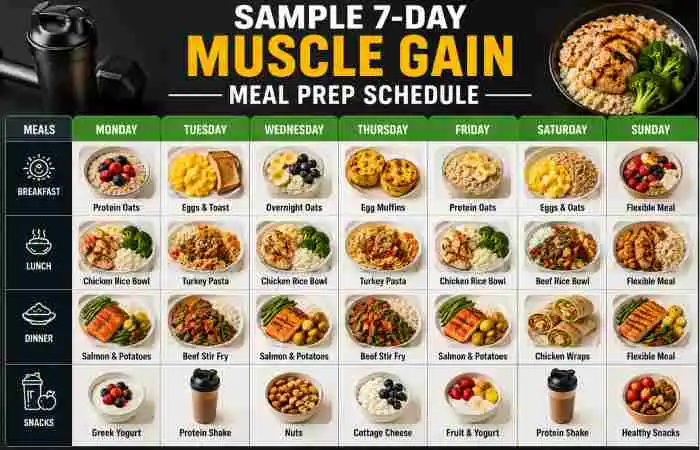
Weekly Overview
| Day | Breakfast | Lunch | Dinner | Snacks |
| Monday | Protein Oats | Chicken Rice Bowl | Salmon & Potatoes | Greek Yogurt |
| Tuesday | Eggs & Toast | Turkey Pasta | Beef Stir Fry | Protein Shake |
| Wednesday | Overnight Oats | Chicken Rice Bowl | Salmon & Potatoes | Nuts |
| Thursday | Egg Muffins | Turkey Pasta | Beef Stir Fry | Cottage Cheese |
| Friday | Protein Oats | Chicken Rice Bowl | Salmon & Potatoes | Fruit & Yogurt |
| Saturday | Eggs & Oats | Beef Rice Bowl | Chicken Wraps | Protein Shake |
| Sunday | Flexible Meal | Meal Prep Day | Flexible Meal | Healthy Snacks |
Best Meal Prep Equipment Comparison (2026)
| Product Type | Benefit | Recommended Use |
| Glass Containers | Durable and microwave-safe | Daily meal storage |
| Rice Cooker | Saves time | Bulk carb preparation |
| Air Fryer | Faster cooking | Lean protein meals |
| Food Scale | Accurate tracking | Macro counting |
| Blender | Smoothies | Post-workout nutrition intake |
Meal Prep Mistakes That Slow Muscle Growth
Undereating calorie-wise.
Majority focuses on protein and neglect their total calories.
Not eating protein consistently throughout the day.
Protein needs to be spread out, not concentrated into one meal.
Not eating carbs.
Carbs are used for fueling workouts, and then also for recovery.
Making too many different meals to eat.
Successful meal prepping means rotating several main dishes, not thirty different recipes.
Not storing food correctly.
If foods aren’t stored correctly they can become worse over time and waste.
Troubleshooting Common Muscle-Gain Meal Prep Problems
| Problem | Solution |
| Not gaining weight | Increase calories by 250–300/day |
| Constant hunger | Add healthy fats |
| Poor recovery | Increase protein intake |
| Bored of meals | Change seasonings and sauces |
| Running out of food | Prep extra freezer meals |
Conclusion
With a balanced meal prep plan, muscle building is no longer a guessing game when it comes to nutrition. When you incorporate a protein focus, slight calorie surplus and some cooking ahead of time, muscle building is happening each and every week while you also get to save a great amount of time and money. Muscle building occurs as a result of doing it each and every week, not the occasional day when you do it perfectly.