
Last Updated: September 11, 2026
Most people dive head first into a fitness routine with huge motivation, and find after a few weeks they just can’t quite keep up the exercise regime. If you’re asking yourself how to make exercise a consistent part of your lifestyle, then you are in the right place. The evidence and knowledge offitness experts proves time and time again that consistency beats occasional workouts every single time, and study after study shows physical activity results in health improvements over and above infrequent burst of intensive exercise.
And staying consistent doesn’t require more self-control than you actually possess-in fact, to make it stick you need systems, and they don’t take incredible effort to create; here’s how to do them:
Why Consistency Matters More Than Intensity
The most common error beginner commits-they attempt too much too soon.
In most cases, a starter would begin with six workouts in a week, high intensity cardio and disciplined programs-and just within one month would end up burning out. All fitness professionals will say it that consistency rather than sporadic intensive exercises will always pave the way for a greater progress in the future-as long as we are consistently performing moderate workouts, the muscle, cardio system, and metabolism will adapt.
Consistency vs Intensity Comparison
| Factor | Consistent Exercise | Intense Sporadic Exercise |
| Sustainability | High | Low |
| Injury Risk | Lower | Higher |
| Motivation | Easier to maintain | Often fluctuates |
| Long-Term Results | Excellent | Inconsistent |
| Habit Formation | Strong | Weak |
The goal isn’t perfection. The goal is showing up repeatedly.
Setting Realistic Fitness Goals
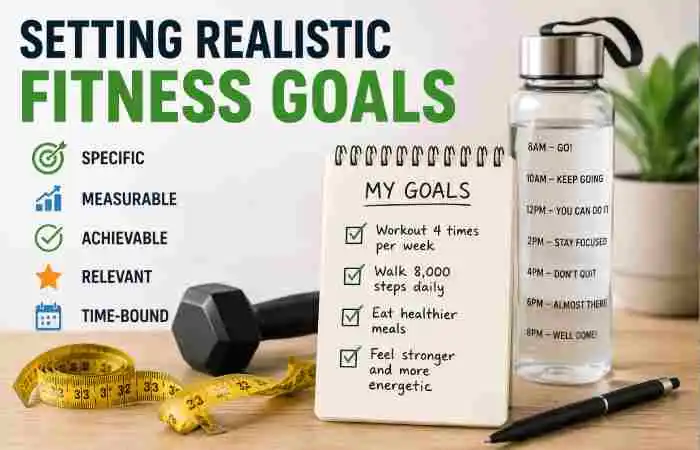
Probably one of the largest deterrent to exercise consistency is having your goals too big from the outset. While high-spirits are wonderful and necessary, a completely unrealistic expectation can result in disappointment, burning out and giving up altogether. Havingrealistic exercise goals sets you up for confidence, ongoing motivation, and habits that are here to stay.
Instead of aiming for outcomes (like lose 20lbs or develop a ‘swimsuit body’) we’re going to aim for goals that are within our control. Focus on process goals instead of outcome goals, these can often prove much more successful as they focus on behavior instead of results that may not appear for many months.
Use the SMART Goal Framework
The SMART system is a well-tested technique for defining your fitness goals:
| SMART Element | What It Means | Example |
| Specific | Clearly define the goal | Walk 30 minutes daily |
| Measurable | Track your progress | Complete 4 workouts weekly |
| Achievable | Set realistic expectations | Start with 3 workout days |
| Relevant | Align with your lifestyle | Home workouts for busy schedules |
| Time-Bound | Set a deadline | Maintain routine for 8 weeks |
Start Small and Build Momentum
All you have to do is exercise two or three times a week and you’ll be on your way to the positive results of exercise-you’ll gain a sense of success with small victories, and that’ll be less daunting as you increase your activity.
Let me give you some easy beginner goals:
- I think it is an idea to walk a lot every day. So I will walk 8,000 steps per day.
- I also want to do strength training. I will do this three times every week.
- In the morning I will stretch for 10 minutes.
- On weekdays I will exercise for least 20 minutes.
If I achieve these goals every day I will feel good, about myself and exercise will become a habit for me. Achieving these smaller exercise goals consistently builds confidence. Reinforces healthy exercise habits.
Focus on Progress, Not Perfection
No fitness journey goes exactly as planned! There will be weeks where you’re on point, and there will be weeks where you aren’t – and that’s completely fine. Think progress rather than perfection. One skipped workout doesn’t make it a lost cause, you simply move on to your next scheduled session.
A beneficial thought process is to trackconsistency, not performance. You’ll make leaps and bounds by completing 3 moderate workouts per week for six months rather than taking on 30 workouts per week which you find it impossible to adhere to.
Review and Adjust Goals Regularly
Your fitness goals will need to change as you become more fit. Once per month, take a look at how you are progressing and adjust accordingly to your availability, your recovery and performance.
Ask yourself:
- Am I consistently meeting my current goals?
- Do I need more challenge or more recovery?
- Are my goals still aligned with my lifestyle?
- What obstacles are preventing consistency?
Building a Sustainable Exercise Routine
| Day | Activity |
| Monday | 30-Minute Walk |
| Tuesday | Strength Training |
| Wednesday | Rest or Stretching |
| Thursday | Strength Training |
| Friday | Walking |
| Saturday | Active Recreation |
| Sunday | Recovery |
This schedule provides enough activity while allowing recovery.
Key Principles
- Keep workouts manageable
- Schedule sessions in advance
- Exercise at the same time daily
- Allow flexibility when life gets busy
Tracking Workout Progress Effectively
Tracking progress increases accountability and motivation.
Studies have revealed that self-monitoring behavior has a greater potential for persistence and stability in long-term.
Best Tracking Methods
| Method | Benefits |
| Fitness Apps | Automated tracking |
| Workout Journal | Detailed notes |
| Calendar Checkmarks | Simple visual progress |
| Smart Watches | Activity monitoring |
| Habit Trackers | Consistency measurement |
Metrics Worth Tracking
- Workout frequency
- Daily steps
- Strength improvements
- Exercise duration
- Energy levels
Avoid obsessing over the scale alone.
Create Habit Triggers That Make Exercise Automatic
Habit formation experts recommend attaching exercise to existing routines.
Examples:
- Walk immediately after lunch
- Stretch after brushing your teeth
- Exercise after work before sitting down
These triggers reduce decision fatigue and improve adherence.
Popular Habit Stacking Examples
| Existing Habit | New Exercise Habit |
| Morning Coffee | 10-Minute Walk |
| Lunch Break | Quick Workout |
| Watching TV | Mobility Exercises |
| After Work | Gym Session |
The easier the habit feels, the more likely you’ll repeat it.
Overcoming Missed Workout Days
Everyone misses workouts.
What matters is how quickly you return.
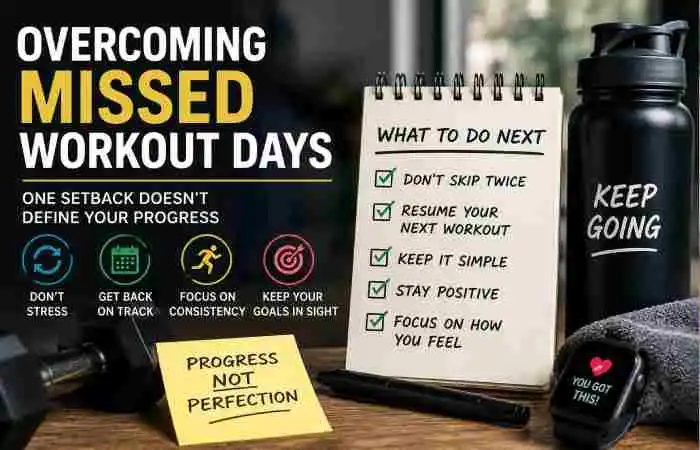
“Never Miss Twice” rule, a frequently used technique by high performing individuals, applies to the majority of them. Missing one workout is fine. But consecutive missed workouts have a compounding effect.
What To Do After Missing A Workout
- Avoid guilt.
- Resume your next scheduled session.
- Don’t try to “make up” missed workouts.
- Focus on consistency over perfection.
Progress depends on months of effort, not one missed day.
Recommended Tools to Improve Exercise Consistency
Fitness Tracking App Comparison
| Tool | Best For | Free Version |
| MyFitnessPal | Nutrition Tracking | Yes |
| Strong | Strength Training | Yes |
| Fitbod | Workout Planning | Limited |
| Garmin Connect | Cardio Tracking | Yes |
| Google Fit | General Activity | Yes |
These tools can provide reminders, tracking, and accountability.
Troubleshooting Common Consistency Problems
Problem: No Motivation
Solution: Focus on routine rather than motivation. Schedule workouts in advance.
Problem: Lack of Time
Solution: Use 15-20 minute workouts. Short sessions still provide benefits.
Problem: Burnout
Solution: Reduce intensity and prioritize recovery.
Problem: Boredom
Solution: Alternate between walking, strength training, cycling, and mobility work.
Conclusion
Sticking to exercise is really important for getting in shape. The people who get results over time are not always the most excited or good at sports. They are the ones who make exercise a normal part of their life set goals they can really achieve watch how they are doing and just keep at it.
Remember that doing something regularly is better than doing something hard sometimes. If you work out a bit all the time you will probably get better results than if you try to do too much and then stop. Start with steps do not get impatient and try to make exercise a habit that you can keep up for a long time not just a few weeks. Exercise like this can be something you do, for years.