
Last Updated: June 19, 2026
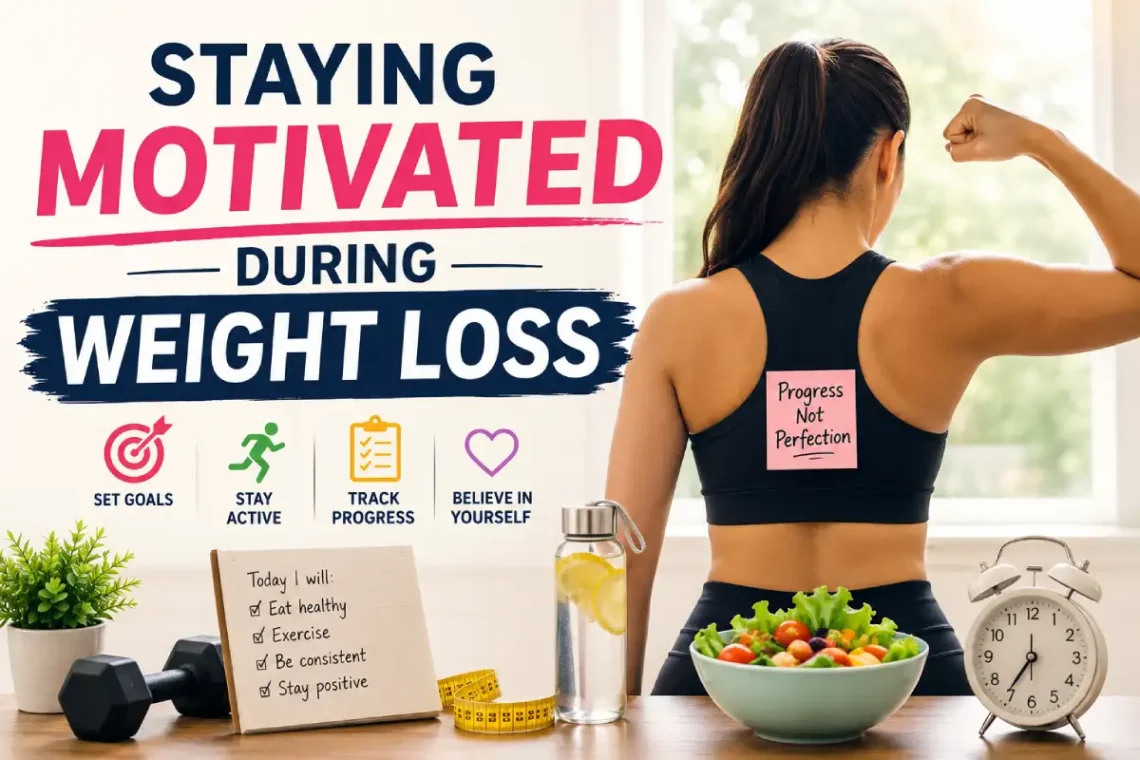
Staying motivated during weight loss is one of the biggest challenges beginners face. While diet plans and workout routines are easy to start, maintaining consistency over weeks or months requires a deeper understanding of motivation, behavior, and progress tracking.
This guide breaks down proven strategies, backed by 2026 fitness trends and behavioral science, to help you stay consistent and achieve long-term results.
Understanding Weight Loss Motivation
Weight loss motivation is not a constant state—it operates more like a fluctuating behavioral driver influenced by psychology, environment, and progress feedback. Most beginners assume motivation should always be high, but in practice, it naturally declines after the initial excitement phase. Understanding how motivation actually works allows you to build systems that sustain consistency even when motivation drops.
The Science Behind Motivation
Motivation in weight loss is primarily driven by three psychological mechanisms:
- Dopamine-driven reward system: Anticipation of results (fat loss, better appearance) triggers action
- Behavioral reinforcement: Repeating actions that show visible progress
- Identity-based habits: Aligning actions with a self-image (e.g., “I am a healthy person”)
Recent behavioral studies in 2026 highlight that individuals who shift from outcome-based thinking (“I want to lose 10 kg”) to identity-based thinking (“I am someone who eats healthy”) show significantly higher long-term adherence.
Types of Weight Loss Motivation
Understanding the different types of motivation helps you identify what drives your behavior:
| Type | Definition | Example | Long-Term Effectiveness |
| Intrinsic Motivation | Driven by internal satisfaction | Feeling energetic, improving health | High |
| Extrinsic Motivation | Driven by external rewards | Compliments, appearance changes | Moderate |
| Habit-Based Motivation | Driven by routine and consistency | Daily workouts without thinking | Very High |
Key Insight: Habit-based motivation is the most reliable because it removes the need for constant decision-making.
Why Motivation Drops After a Few Weeks
Most people experience a drop in motivation within 2–4 weeks. This happens due to:
- Lack of immediate visible results
- Repetitive routines leading to boredom
- Unrealistic expectations from rapid transformations
- Mental fatigue from strict dieting
This phase is often called the “motivation dip”, and it’s where most people quit. Structuring your plan to survive this phase is critical.
The Habit Loop Framework (2026 Behavior Model)
A widely used framework in fitness psychology is the habit loop, which consists of:
- Cue – Trigger (e.g., morning alarm)
- Routine – Action (workout or meal prep)
- Reward – Benefit (feeling good, tracking progress)
When repeated consistently, this loop automates behavior, reducing reliance on motivation.
Practical Strategies to Build Motivation That Lasts
To make motivation sustainable, focus on systems rather than feelings:
- Set small, achievable daily targets instead of big goals
- Track progress visually (photos, measurements, apps)
- Attach workouts to existing habits (e.g., after brushing teeth)
- Reduce friction (prepare gym clothes in advance)
Motivation vs Discipline: What Actually Works?
| Factor | Motivation | Discipline |
| Reliability | Low | High |
| Duration | Short-term | Long-term |
| Dependency | Emotional state | Structured habits |
Conclusion: Motivation helps you start, but discipline and systems ensure you continue.
Expert Takeaway
Weight loss motivation should not be treated as the primary driver of success. Instead, it should be viewed as an initial catalyst. Long-term results depend on building repeatable systems, reinforcing habits, and aligning actions with identity.
This shift—from chasing motivation to building structure—is what separates temporary results from lasting transformation.
How to Stay Focused on Long-Term Results

Short-term thinking is the biggest motivation killer.
Practical Strategies
- Set process goals (e.g., 5 workouts/week)
- Track non-scale victories (energy, strength, sleep)
- Avoid daily weighing obsession
Long-Term vs Short-Term Thinking
| Focus Type | Outcome |
| Short-term (weight loss only) | Frustration, inconsistency |
| Long-term (lifestyle change) | Sustainable success |
Expert Tip
Think in 90-day cycles instead of weekly results. This aligns with body adaptation timelines.
Dealing With Weight Loss Plateaus
Plateaus are not failure—they are biological adaptation.
Why Plateaus Happen
- Metabolism adapts
- Reduced calorie burn
- Muscle gain masking fat loss
Solutions That Work
| Strategy | Effectiveness |
| Increase protein intake | High |
| Add resistance training | Very High |
| Adjust calories slightly | Moderate |
| Improve sleep quality | High |
Troubleshooting Checklist
- Are you tracking calories accurately?
- Has your activity level dropped?
- Are you sleeping at least 7 hours?
Reward Systems That Encourage Progress
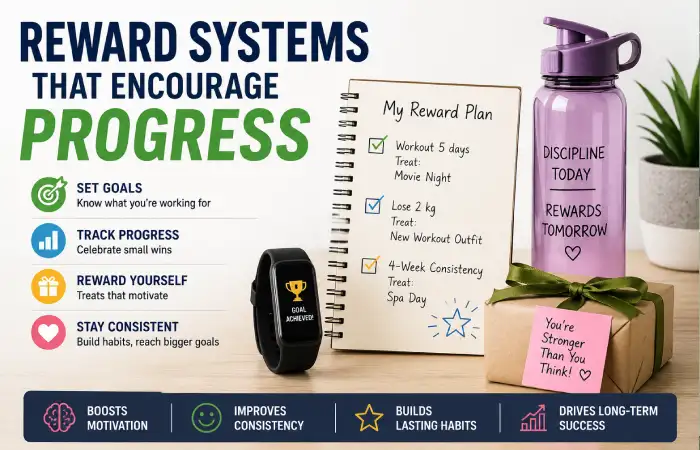
Reward systems are a critical component of staying consistent during weight loss. They work by reinforcing positive behavior through psychological feedback loops, making it easier to repeat actions like exercising, eating healthy, and tracking progress. In 2026, behavioral fitness research shows that structured reward systems can improve adherence rates by 30–40%, especially for beginners.
Why Reward Systems Work
At a neurological level, rewards trigger dopamine release, which strengthens the connection between action and satisfaction. When your brain associates workouts or healthy eating with a reward, it becomes more likely to repeat that behavior.
Without rewards, weight loss often feels like delayed gratification—which reduces consistency.
Types of Reward Systems
Not all rewards are equally effective. The best systems combine short-term satisfaction with long-term motivation.
| Reward Type | Description | Example | Effectiveness |
| Immediate Rewards | Given right after an action | Watching a show after workout | Moderate |
| Milestone Rewards | Based on progress checkpoints | New clothes after losing 3kg | High |
| Habit Rewards | Linked to consistency | 7-day streak celebration | Very High |
| Identity Rewards | Reinforces self-image | “I’m someone who trains daily” | Highest |
2026 Trend: Gamification in Fitness
Modern fitness platforms increasingly use gamification mechanics to enhance motivation:
- Streak tracking (daily consistency)
- Achievement badges
- Leaderboards and challenges
- Progress visualization dashboards
These elements convert routine actions into engaging experiences, reducing dropout rates significantly.
How to Build an Effective Reward System
To maximize results, your reward system should follow a structured framework:
- Tie Rewards to Behavior, Not Just Results
Avoid rewarding only weight loss outcomes. Instead:
- Reward completing workouts
- Reward hitting calorie targets
- Reward consistency streaks
This ensures motivation even when the scale doesn’t move.
- Use Tiered Rewards
| Level | Trigger | Reward Example |
| Daily | Completed workout | Relaxation time |
| Weekly | 5+ workouts | Favorite meal |
| Monthly | Visible progress | New fitness gear |
Tiered systems create continuous motivation at different stages.
- Avoid Counterproductive Rewards
Some rewards can sabotage progress:
- Junk food as a reward (creates unhealthy associations)
- Skipping workouts as a “treat”
- Over-rewarding small actions
Instead, focus on rewards that support your identity and goals.
Digital vs Manual Reward Tracking (2026 Comparison)
| Method | Features | Best For |
| Fitness Apps | Automated tracking, reminders, streaks | Tech-savvy users |
| Wearables | Real-time feedback, activity data | Data-driven users |
| Journals | Reflection, mindfulness | Beginners |
Key Insight: Users who track rewards and progress digitally are significantly more consistent due to real-time feedback loops.
Troubleshooting: When Rewards Stop Working
If your motivation drops despite rewards, check:
- Are rewards too easy to earn? (reduce frequency)
- Are they meaningful to you? (personalize them)
- Are you tracking consistently? (use visual tools)
- Has the routine become repetitive? (add variety)
Adjusting your reward structure periodically is essential to maintain effectiveness.
Maintaining Motivation After Reaching Goals
Most people regain weight because they stop the system that helped them succeed.
Transition Strategy
- Shift from fat loss to maintenance calories
- Keep workout routine consistent
- Redefine goals (strength, endurance)
Post-Goal Framework
| Phase | Focus |
| Initial | Maintain habits |
| Mid | Improve performance |
| Long-term | Lifestyle integration |
Best Tools to Stay Motivated (2026 Comparison)
| Tool Type | Example Features | Best For |
| Fitness Apps | Calorie tracking, habit logs | Beginners |
| Wearables | Step tracking, heart rate | Data-driven users |
| Coaching Programs | Personalized plans | Accountability |
Key Insight
Users who track progress digitally are 2.7x more likely to stay consistent.
Common Mistakes That Kill Motivation
- Expecting fast results
- Comparing with others
- Over-restrictive diets
- Skipping rest and recovery
FAQ Section
How long does motivation last in weight loss?
Motivation is temporary. Systems and habits ensure long-term consistency.
What is the best way to stay consistent?
Focus on small daily actions rather than outcomes.
Why do I lose motivation after 2 weeks?
Initial excitement fades. This is where structured routines matter.
Are fitness apps necessary?
Not mandatory, but highly effective for tracking and accountability.
Final Takeaway
Staying motivated during weight loss is less about willpower and more about systems, tracking, and mindset shifts. When you focus on sustainable habits instead of temporary motivation, long-term success becomes predictable.