
Last Updated: August 19, 2026
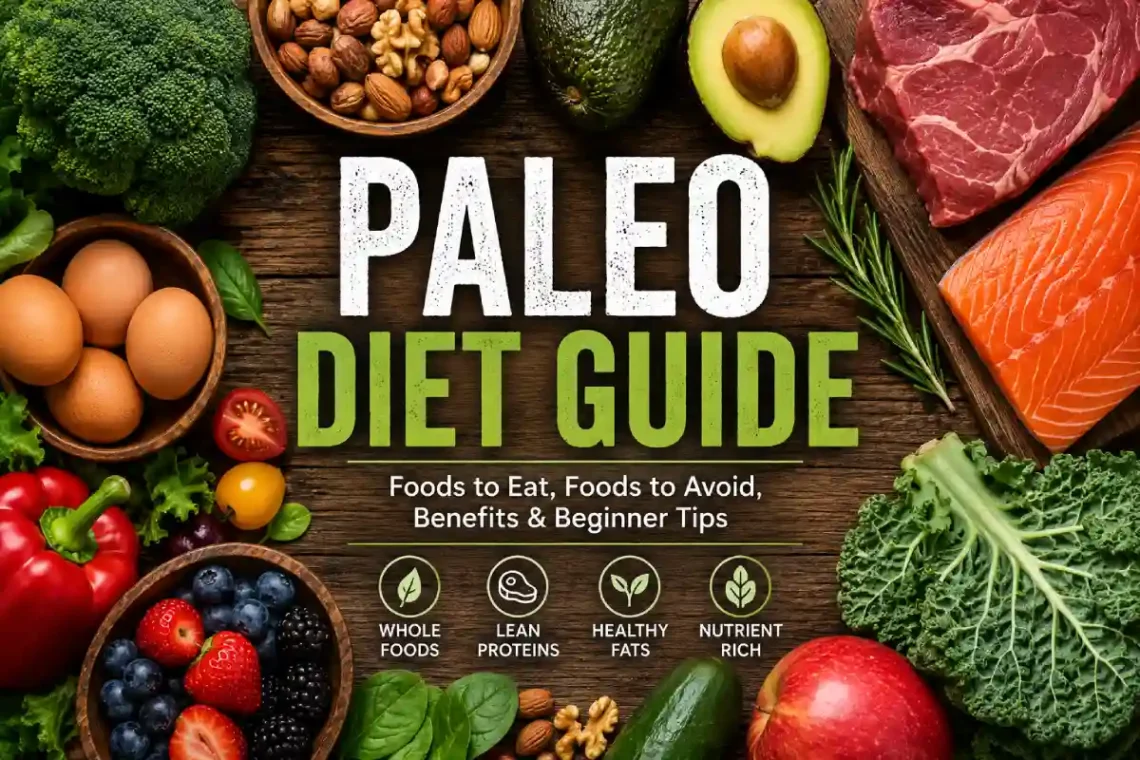
For a Paleo Diet Guide that is beyond a food list; the most important thing to be familiar with about it, are both the upsides and downsides. The diet favors simple, nutrient rich foods that include meats, seafood, eggs, vegetables, fruits, nuts and seeds, and chosen healthy fats, but shuns dairy, grains, legumes and processed foods. The guide breaks down, not only how the diet operates, but exactly how you should adhere to it.
What Is the Paleo Diet?
Paleo (short for Paleolithic diet), is a eating style modeled on possible foods consumed prior to agriculture. Typically, the Paleolithic age spans from approximately 2.5 million up to just shy of 10,000 years ago. The Paleo diet as it exists today not so much seeks to mimic pre-historic food on a one to one basis as it prioritizes wholesome, unprocessed foods and excludes foods that are primarily available due to agricultural advancements and large scale food production techniques.
A Paleo plate may, for instance, look like a piece of grilled chicken or fish with some roasted vegetables, an avocado, berries, or nuts on the side.
Some of foods excluded from this diet include many processed foods, snacks, sweets, bread, pasta and many dairy products. It also doesn’t quite hurt to know that there’s no single Paleo bible, as some paleoists embrace such foods as potatoes, full-fat dairy and minimal amounts of honey, while other versions would absolutely not.
What Does Current Research Say?
A 2026 systematic review and meta-analysis. 19 rcts and 12 pros were included. Cardiometabolic biomarkers that significantly improved during the randomized trials were body weight, bmi, fasting insulin, total cholesterol, LDL cholesterol, triglycerides and diastolic blood pressure. But researchers do need long term studies in this population.
| Research finding | Result reported in 2026 review |
| Randomized controlled trials | 19 |
| Prospective cohort studies | 12 |
| Body weight | −1.74 kg average difference |
| BMI | −1.12 kg/m² |
| Diastolic blood pressure | −3.28 mmHg |
| Fasting insulin | −1.01 |
| Total cholesterol | −0.15 |
| LDL cholesterol | −0.24 |
| Triglycerides | −0.16 |
Note above are the pooled weighted mean differences as reported by the 2026 systematic review; take no expectation that results are definitive or guaranteed on an individual basis.
Evidence snapshot:
Cardiometabolic markers ↓ → short-term evidence is promising → long-term certainty remains limited.
Foods Allowed
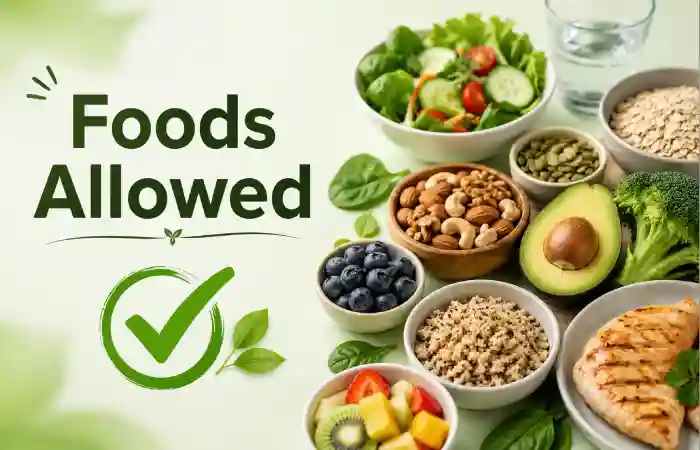
A paleo diet, by definition, is based on whole, unprocessed foods. Eating your Paleo meals around specific food types helps prevent over-reliance on one type of Paleo food.
| Food group | Beginner priority | Paleo-friendly examples |
| Meat | High | Beef, chicken, turkey, lamb, pork |
| Seafood | High | Salmon, sardines, tuna, shrimp |
| Eggs | High | Whole eggs |
| Vegetables | High | Broccoli, spinach, peppers, carrots, cauliflower |
| Fruits | Moderate | Berries, apples, oranges, bananas |
| Nuts & seeds | Moderate | Almonds, walnuts, chia, pumpkin seeds |
| Healthy fats | High | Avocado, olive oil, olives |
| Tubers | Depends on version | Sweet potatoes, yams, cassava |
Mayo Clinic lists fruits, vegetables, nuts, seeds, eggs, lean meats, fish, and certain oils among the foods commonly included in Paleo diets.
For someone starting out, a simple formula works well:
Protein + vegetables + fruit or a suitable tuber + healthy fat
In example, grilled salmon with roasted broccoli, sweet potato, and avocado is something that is going to be a hell lot more sustainable then trying to cook an extremely complicated Paleo recipe out of a book every night.
Paleo Food Choices vs. Common Alternatives
| Instead of | Choose |
| Sugary breakfast cereal | Eggs + berries |
| Bread sandwich | Lettuce or vegetable-based bowl |
| Potato chips | Nuts or fresh vegetables |
| Sweetened yogurt | Berries + nuts |
| Processed meat snacks | Eggs, seafood, or minimally processed meat |
| Sugary dessert | Fresh fruit or a small amount of approved natural sweetener |
These substitutions also make Paleo more practical for everyday eating.
Foods to Avoid
For The Strictest Paleo Most restrictive Paleo plans don’t just portion things more sparingly but eliminate entire food groups. The following are commonly cut:
- Wheat, rice, oats, barley, pasta, bread, and any other type of grain
- Beans, lentils, peanuts, chickpeas, and any other legume
- Milk, cheese, yogurt, and most traditional dairy products
- Candies, sweets, sugary beverages, and any addition of sugar
- Highly processed foods from a package
- Most any refined vegetable oil
- Artificial sweeteners (in strictest renditions)
- Alcohol (in strictest renditions)
Benefits and Limitations

Part of the appeal to Paleo is that it automatically eliminates a good number of foods with high calories and that fall under “ultra-processed” eating. Switching out snack food such as cookies or potato chips for nuts, fruit, fish, seafood, eggs, veggies, and meat which isn’t processed too much, leads to an overall increase in healthiness.
Potential Benefits
May assist with weight management: Short-term studies as well as a 2026 meta-analysis have noted Paleo can decrease body weight and BMI.
May have some cardiometabolic benefits: Weight loss has been accompanied by some reports of favorable changes in lipid profiles (triglycerides and cholesterol), fasting insulin, and blood pressure.
Focuses on nutrient-rich foods: The meal plan prioritizes fruits, vegetables, seafood, eggs, nuts and seeds, as well as the leanest possible protein foods with minimal processing.
Limits consumption of ultra-processed foods: This one may be among the more practical benefits. The latest U.S. Dietary Guidelines for 2025-2030 reflect much the same priority in emphasizing whole foods, with reduced consumption of highly processed foods, added sugars and refined carbohydrates.
Limitations
My main reservation with the Paleolithic diet is that it eliminates significant food groups with useful nutrients.
Whole grains, nuts and legumes will provide a good source of fiber and other nutrients whereas dairy sources will offer calcium, vitamin D, protein and many other micronutrients. As UC Davis notes, “Elimination of such food groups could exacerbate the risks of inadequate intakes of fiber, calcium, vitamin D, iodine, iron, and several B-vitamins”.
Problems of cost and convenience also exist. High-quality meats and seafood are often expensive as are fruits and vegetables; you have to plan ahead much more to get all the food required from scratch.
There is another, and crucial, point: Paleo is not healthy just because it is Paleo. An excess of meat (especially fatty red meats), nut products or calorific Paleo desserts can contribute to an overall poor diet.
The U.S. Dietary Guidelines to be presented in 2025-2030 advocate a diet based on a varied pattern of intake of vegetables, fruit, whole grains, nuts/seeds, lean protein foods/meats/seafood/legumes, dairy/fortified/high protein foods, oils and healthy fats.
Beginner Tips
It is normally simpler to start with many small, sensible adjustments rather than stopping everything all at once.
Clear out processed foods first – Remove the sweet drinks, candy, packets of chips as well as significantly processed foods prior to concerning on the Paleo way of life to be immaculate.
Establish meals based around protein – Maintain eggs, poultry, fish, lean red meat, or another type of healthy protein accessible as well as ready for rapidly prepared meals.
Include a lot more vegetables – When you clear out grains as well as sugars, do not fill a substantial part of your dish just with meat. Instead, fill it up with a bunch of vibrant veggies.
Keep dishes easy – You do not need to discover challenging Paleo dishes when you are beginning out. Try fruits and eggs for morning meal, poultry as well as vegetables for lunch, as well as salmon, sweet potato as well as greens for supper.
Check out nutrient deficiencies – You’ll need other resources of calcium and vitamin D if you drop dairy products, for instance. When you reduce grains as well as legumes, purposefully add to vegetables, fruit, nuts, seeds and also grains.
Read ingredient labels – Food that might appear “healthy” on packaging can still have additional sugar, white flour, as well as other food.
Do not seek perfection – A healthy and balanced way of life that is lasting is better than trying to make as few mistakes as feasible.
Quick Troubleshooting Guide
| Problem | Practical solution |
| Constant hunger | Increase vegetables, protein, and appropriate healthy fats |
| Low energy | Review total calorie and carbohydrate intake |
| Constipation | Increase fiber-rich vegetables, fruit, nuts, seeds, and fluids |
| Expensive grocery bills | Use seasonal produce, eggs, frozen seafood, and economical cuts of meat |
| Missing dairy | Use appropriate calcium-rich non-dairy foods |
| Difficulty eating out | Choose grilled protein, vegetables, salads, and simple ingredients |
Individuals that are suffering with a variety of conditions like kidney disease, have protein restrictions, a digestive disorder or other health issue should review drastic changes in diet with an expert physician and or dietitian. The Cleveland Clinic says it best when they mention that “This diet might be dangerous for people with some health conditions and protein restrictions.”
FAQs
Is the Paleo diet a good way to lose weight?
Short term use of the Paleo diet could potentially result in weight loss especially when it replaces high-calorie processed foods. The 2026 systematic review shows a significant decrease in weight and BMI across the studies analyzed within the systematic review.
Is rice allowed on Paleo?
Under most conventional forms of the Paleo diet grains such as rice are not permitted. Some modern variants of the Paleo diet can also allow certain grains which are gluten free depending on the strictness or the form you are following of Paleo diet.
Are potatoes allowed on Paleo?
This also depends on the diet’s specifications. White potatoes aren’t allowed in very strict Paleo diets, although modern Paleo interpretations may have a very loose approach allowing them. Sweet potatoes are generally accepted.
Is dairy allowed on Paleo?
Dairy products were not part of most conventional Paleo diet approaches, however modern versions do permit some full fat, but low-refined ingredients).
Is Paleo a good diet in the long run?
There is still not much of evidence on the long term on the Paleo diet but it is understood to provide good cardiometabolic health in the short term although removing whole foods could put gaps in you diet if not planned properly.
What is the common mistake people make when starting Paleo?
Probably restricting too much what you eat when the way is to substitute food items which were to be avoided with different fruit, vegetables, protein, sea-food eggs, seeds and nuts.
Final Takeaway
A user-friendly Paleo Diet Guide shouldn’t be dogmatic. The most prominent aspect (and potentially beneficial aspect) is the focus on unprocessed foods and exclusion of added sugars and highly refined products. Despite studies like an extensive systematic review set to publish in 2026 looking at possible weight and cardiometabolic benefits, we cannot confidently assert that Paleo is better than every other healthy diet template.
For the beginner, a Paleo diet plan is best seen as an all-food, “whole food only” diet-not a diet where healthy foods are outright forbidden and nothing taken in its place.
In addition, an effort needs to be made for vegetables, fruit, animal protein and seafood, nuts and seeds, and eggs-along with monitoring fiber and intake of calcium, vitamin D, and iodine. Overall dietary diversity also matters: and this doesn’t particularly relate well with traditional Paleo trends.