
 Afiya Jafar
Fitness & Wellness Writer
Afiya Jafar is a fitness and wellness writer who focuses on making health, exercise, and healthy lifestyle information simple and practical.
Read Full Bio of Author →
Afiya Jafar
Fitness & Wellness Writer
Afiya Jafar is a fitness and wellness writer who focuses on making health, exercise, and healthy lifestyle information simple and practical.
Read Full Bio of Author →
 Sameena Begum
Health, Fitness & Digital Content Reviewer
Sameena reviews selected health, wellness, fitness, and digital content for clarity, factual presentation, and reader usefulness.
Read Full Bio of Reviewer →
Sameena Begum
Health, Fitness & Digital Content Reviewer
Sameena reviews selected health, wellness, fitness, and digital content for clarity, factual presentation, and reader usefulness.
Read Full Bio of Reviewer →
 Dr. Khizrana Begum
General Physician & Dermatologist
Dr. Khizrana Begum is a General Physician and Dermatologist with MBBS and MD qualifications and 5+ years of experience in the medical field.
Read Full Bio of Medical Reviewer →
Dr. Khizrana Begum
General Physician & Dermatologist
Dr. Khizrana Begum is a General Physician and Dermatologist with MBBS and MD qualifications and 5+ years of experience in the medical field.
Read Full Bio of Medical Reviewer →
Weight loss is about developing healthy behaviors that can lead to an enduringly manageable weight. In 2020 research published out to 2026 still indicate that the best weight loss approach revolves around habits such as daily physical movement, eating food with scheduled preparation, a good night’s sleep, and staying hydrated as well as reducing the level of your stress. Rather than seek short term remedies with some type of “get skinny quick” protocol, start looking for routines you can follow every single day. Consistent use of even tiny steps will likely give you a better return than drastic dieting.
❝
This article is a part of
Weight Loss Motivation Hub
Healthy Lifestyle Habits vs Quick Fixes (2026)
| Healthy Habit | Long-Term Benefit | Sustainability |
| Daily walking | High | Excellent |
| Meal planning | High | Excellent |
| Drinking water regularly | Moderate-High | Excellent |
| Sleeping 7–9 hours | High | Excellent |
| Managing stress | High | Excellent |
| Crash dieting | Low | Poor |
Healthy habits are easier to maintain when you follow a complete weight loss motivation guide with practical strategies for long-term success.
Daily Movement
One of the most sustainable habits to create is moving your body daily- it doesn’t have to include membership in a gym. Research continues to demonstrate that simply becoming more active each day leads to increased calorie burning, better insulin sensitivity, healthier hearts, and increased energy.
Examples include:
- Walking after meals
- Taking stairs
- Gardening
- Cycling
- Home workouts
- Stretching
- Playing with children
- Standing during work breaks
Aim for:
- 150–300 minutes of moderate activity weekly
- Muscle-strengthening exercises at least twice per week
Beginner Tip
Instead of jumping into intense workouts, increase your daily step count gradually.
Meal Planning
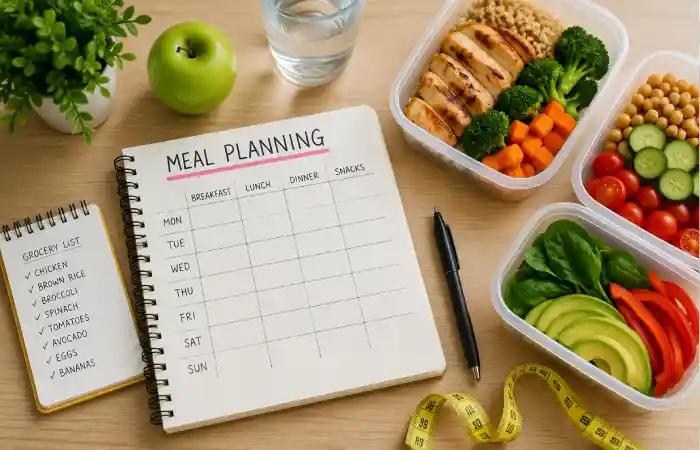
One of the most effective healthy habits to support weight loss is to meal plan. Meal planning is the most effective healthy habit to support your weight loss efforts because it allows you to have control of what you are eating on a daily basis. Pre-planning meals makes it harder for you to call in for fast food, or eat meals on the go, and skip meals during the day because you have busy or tired and simply cannot be bother.
It allows you to also better control the portion size and portion nutrition of what you eat, which is essential in keeping you feeling full for longer periods of time.
Your diet to lose weight needs to be balanced and it contains lean protein, fiber, whole carbohydrates, as well as good fats, and most important all the wonderful vegetables you can use to add nutrition and volume. It will save you money, help reduce your food waste, and also help keep the day to day decision-making stress at a bay.
Tips for Successful Meal Planning
- Plan out all of your meals for the week ahead and do all your grocery shopping.
- Stick to the plan to eliminate impulse buying.
- Cook a few larger amounts of things to use in various meals-such as grilled chicken, lentils, brown rice, roasted veggies.
- Always keep healthy snacks in accessible places such as fruit, nuts, yogurt, hard boiled eggs.
- Portion out meals into food prep containers for easy lunches or quick meals for dinner.
- Incorporate colorful produce as well-for a diverse array of nutrients.
- Allow for small treats so you’re sustainable!
Common Meal Planning Mistakes to Avoid
- Not eating meals – this can cause us to overeat later on.
- Snacking on “just in case” unhealthy snacks.
- Over-portioning when we are eating.
- Eating the same thing for every meal, resulting in boredom.
- Forgetting protein and fibre in every meal.
Don’t overthink meal prep – it doesn’t even have to be all your meals and snacks for it to contribute towards your healthy habits and reduce calories from snacking to aid effective, non-restrictive weight loss. Meal and snack prep Portioning up a handful of your favorite meals or snacks can make a huge difference in building healthier eating habits.
Building healthy habits starts with setting realistic weight loss goals that match your lifestyle and fitness level.
Hydration
Many people confuse thirst with hunger.
Proper hydration helps:
- Reduce unnecessary snacking
- Improve exercise performance
- Support digestion
- Maintain energy
- Improve satiety before meals
Daily Hydration Guide
| Activity Level | Water Intake |
| Low activity | 2–2.5 L |
| Moderate | 2.5–3 L |
| High activity | 3–4 L |
Reading real weight loss success stories can inspire you to stay consistent with your healthy habits.
Tips:
- Carry a reusable bottle
- Drink before meals
- Add lemon or cucumber for flavor
- Monitor urine color as a hydration indicator
Sleep
Sleep is often overlooked during weight loss.
Poor sleep can affect your production of appetite hormones so you seek comfort foods with high calorie count and want energy needed to train hard. (WHO)
Adults should aim for:
- 7–9 hours of quality sleep each night
Sleep better by:
- Sticking to a set bedtime
- Putting devices away before bed
- Making your room cool and dark
- Not eating a large meal late in the day
- Cutting back on afternoon caffeine
Lasting habits are easier to develop when you cultivate a positive weight loss mindset that keeps you focused through challenges.
Stress Management
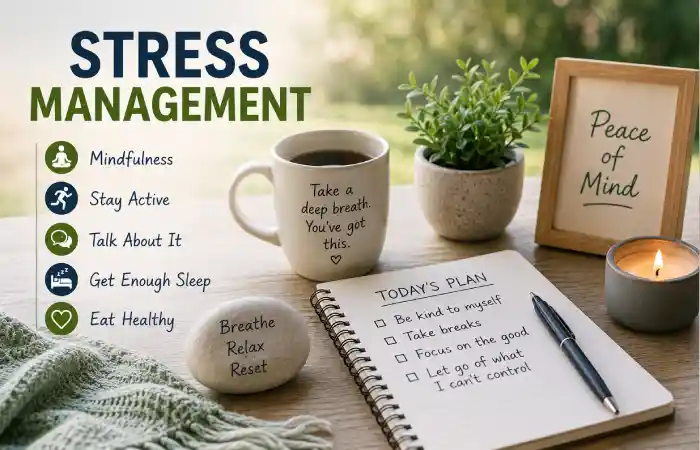
Chronic stress can lead to emotional eating, reduced motivation, and disrupted sleep.
Healthy stress management techniques include:
- Meditation
- Deep breathing
- Yoga
- Journaling
- Nature walks
- Talking with supportive friends
- Listening to relaxing music
Using a weight loss journal helps you track daily habits, meals, workouts, and overall progress.
Even 10–15 minutes of relaxation daily can improve consistency with healthy habits.
Consistency Over Perfection
One bad meal won’t undo months of health, just like one healthy meal won’t do that in a day. Weight loss takes repetition – eating well over and over again for months – it’s not about being perfect one time or a couple of times.
Focus on:
- Progress over perfection
- Small daily improvements
- Realistic goals
- Flexible eating
- Sustainable exercise routines
Missing one workout isn’t failure. Simply continue with your next planned session.
2026 Research Snapshot
| Lifestyle Habit | Estimated Impact on Sustainable Weight Management* |
| Consistent daily movement | Very High |
| Regular meal planning | High |
| Sleeping 7–9 hours | High |
| Drinking adequate water | Moderate to High |
| Stress reduction practices | Moderate |
| Extreme dieting | Low (poor long-term adherence) |
*2026 consensus of recommendations based on major public health guidance and systematic reviews on lifestyle to manage weight. (CDC)
Recommended Products Comparison
| Product | Benefits | Best For |
| Reusable water bottle | Encourages regular water intake | Hydration |
| Meal prep containers | Portion control and convenience | Planning |
| Fitness tracker | Monitors steps, workouts, and sleep | Activity |
| Digital food scale | Supports accurate serving sizes | Portion awareness |
| Smartwatch | Integrates movement and health metrics | Lifestyle tracking |
If your progress slows despite consistent habits, learn how to overcome a weight loss plateau with effective strategies.
Conclusion
The Key To The Success Is A healthy lifestyle Weight loss can take some time and many have tried yo dieting and challenge for a limited period of time. Instead,try some healthy habits to incorporate in your daily routine for lasting results: Exercise daily Eat balanced and meal plan Stay hydrated Rest and sleep Manage your stress Strive for consistency
Just keep in mind that not everything great is achieved at the speed of light. Sometimes it’s a slow, steady progression through the development of simple habits that will make the most significant difference over time. Focus on choosing 1-2 habits that make sense to you and will easily integrate into your week. Develop a sustainable lifestyle for yourself and your healthy living habits will feel easy and you’ll even be able to enjoy the fruits of your labor for years to come.
Afiya Jafar is a fitness and wellness writer who focuses on making health, exercise, and healthy lifestyle information simple and practical. Her work covers workouts, fitness motivation, strength training, nutrition, weight management, stress management, mindfulness, and everyday wellness.
Read Full Bio of Afiya Jafar →
Sameena Begum reviews selected health, wellness, fitness, and digital content for clarity, factual presentation, consistency, and reader usefulness. Her review work helps maintain clear and responsible editorial standards across PhysicalFitt content.
Read Full Bio of Sameena Begum →
Dr. Khizrana Begum is a qualified medical professional with MBBS and MD qualifications and 5+ years of experience in the medical field. She works as a General Physician and Dermatologist, with expertise in general medicine, dermatology, preventive healthcare, and skin health.
Read Full Bio of Dr. Khizrana Begum →