
 Afiya Jafar
Fitness & Wellness Writer
Afiya Jafar is a fitness and wellness writer who focuses on making health, exercise, and healthy lifestyle information simple and practical.
Read Full Bio of Author →
Afiya Jafar
Fitness & Wellness Writer
Afiya Jafar is a fitness and wellness writer who focuses on making health, exercise, and healthy lifestyle information simple and practical.
Read Full Bio of Author →
 Sameena Begum
Health, Fitness & Digital Content Reviewer
Sameena reviews selected health, wellness, fitness, and digital content for clarity, factual presentation, and reader usefulness.
Read Full Bio of Reviewer →
Sameena Begum
Health, Fitness & Digital Content Reviewer
Sameena reviews selected health, wellness, fitness, and digital content for clarity, factual presentation, and reader usefulness.
Read Full Bio of Reviewer →
 Dr. Khizrana Begum
General Physician & Dermatologist
Dr. Khizrana Begum is a General Physician and Dermatologist with MBBS and MD qualifications and 5+ years of experience in the medical field.
Read Full Bio of Medical Reviewer →
Dr. Khizrana Begum
General Physician & Dermatologist
Dr. Khizrana Begum is a General Physician and Dermatologist with MBBS and MD qualifications and 5+ years of experience in the medical field.
Read Full Bio of Medical Reviewer →
The carnivore diet gained increasing interest again in 2026 for those individuals wanting quick weight loss, improved metabolic health, reduced inflammation, and improved digestion. Although the basic idea can seem very simple, the execution behind setting up the diet appropriately for your individual needs and long-term success is more than just a list of approved and disallowed foods.
We will explain in the below comprehensive beginner guide how to setup your own carnivore diet meal plan for success and discuss your options along with tips that are often overlooked. If you want to lose fat, gain muscle, or fix your metabolic problems with this diet plan then we explain the strategy for doing it.
❝
This article is a part of
Diet Plans Hub
Understanding the Carnivore Diet Approach
The carnivore diet or zero carb diet can be nothing else than animal based food and relies on higher intake of animal fat with moderate amount of animal protein. Removing grains, fruits, vegetables, nuts, seeds, legumes etc from one’s diet. Food in carnivore diet – Meat, fish, eggs, dairy, butter, animal fat and oil.
Knowing which foods are allowed is essential, so review the complete carnivore diet food list before planning your meals.
Core Principles of the Carnivore Diet
Elimination of Carbohydrates
Carbohydrate intake is effectively reduced to zero. This forces the body to:
- Deplete glycogen stores
- Increase fat oxidation
- Keep blood sugar levels steady
Animal-Based Nutrient Density
Prioritizes foods which are:
- Rich in complete proteins
- High in bioavailable vitamins and minerals (B12, iron, zinc)
- Naturally free from anti-nutrients found in plants
Fat as the Primary Energy Source
Dietary fat becomes the dominant energy driver. That’s the rationale behind foods like ribeye, fish, and eggs rather than lean cuts of meat.
Simplicity and Dietary Compliance
One of the biggest advantages is operational simplicity:
- No calorie tracking required (for most users)
- Minimal meal prep complexity
- Reduced decision fatigue
How the Body Adapts (Metabolic Shift)
When transitioning to a carnivore diet meal plan, the body undergoes a metabolic adaptation phase:
| What Happens | Phase | Duration |
| Stored carbs are used up | Glycogen depletion | 1–3 days |
| Body shifts to burning fat | Fat adaptation | 4–14 days |
| Improved energy consistency | Energy stabilization | 2–4 weeks |
While this transitional phase, many beginners will go through temporary signs and symptoms like cravings and fatigue. Typically they are caused more so by electrolyte balance issues then the diet.
Carnivore vs Other Diet Approaches
| Feature | Carnivore Diet | Paleo Diet | Keto Diet |
| Carbs | 0g | Moderate | Low (20–50g) |
| Food Variety | Very limited | High | Moderate |
| Plant Foods | None | Allowed | Limited |
| Primary Fuel | Fat | Mixed | Fat |
| Simplicity | Very high | Low | Medium |
Key Insight:
It offers the ultimate control over a person’s diet and complete elimination, which can help significantly in finding and removing the causes of inflammation and food sensitivity.
Who Typically Benefits from This Approach
According to 2026 trends and user data, the carnivore diet is favored by individuals who:
- have blood sugar sensitivity and insulin resistance
- battle with chronic gastrointestinal issues
- seek swift weight reduction without the complicated rules of other diets
- prefer structured, rule-based eating systems
Limitations to Consider
It works for a lot of people, but it’s not ideal:
- Narrowed variety: Depending too little on varied foods over time might affect the diet’s long-term feasibility
- Restricted nutrient variety: Consuming mainly meat will require that the individual focus on increasing their intake of certain essential minerals, such as potassium, sodium and magnesium
- Strict dietary limitations: Transitioning onto the diet could involve a difficult adjustment period in which one could experience withdrawal-like symptoms (e.g. Nausea and vomiting)
Practical Takeaway
The carnivore diet isn’t primarily focused on food variety but metabolic optimization and stability. Success depends on:
- Choosing the right fat-to-protein balance
- Maintaining electrolyte stability
- Following a structured eating pattern
For most novices out there, getting to grips with the principles beforehand is absolutely paramount prior to entering any discussion about dietary preparation and planning.
Foods That Form the Foundation of a Carnivore Meal Plan
Your carnivore diet meal plan relies on just a handful of nutrient-rich, animal-based foods. In fact, the diet inherently cuts out a lot of “bad” foods but, your selection of animal foods can impact results and satiety by influencing fat content, variety and, even more, quality. I’ll outline those below, prioritize them, and explain how to build your plate using 2026 standard carnivore principles.
-
Red Meat: The Core of the Diet
The core of most carnivore diets comes from red meat for its preferred fat to protein balance and full spectrum of essential nutrients.
Best Choices:
- Ribeye steak (fat content = super satiating)
- Ground beef (cheapest most versatile of the lot!)
- Striploin, brisket, chuck roast
- Lamb (fat and nutrition delivered!)
Why It Matters:
- Rich in iron, zinc, and vitamin B12
- Provides complete amino acid profile
- Naturally supports energy via fat content
Expert Insight (2026):
The bulk of nutrients of the vast majority of successfully carnivore-dieters comes in the form of fatty cuts of beef.
-
Fish and Seafood: Omega-3 Support
I also eat fish for all of the micro nutrients and fatty acids that it contains that cannot otherwise be found from land animal meats.
Benefits:
- Supports heart and brain health
- Improves fat balance (omega-3 vs omega-6 ratio)
-
Eggs: Nutritional Efficiency
Eggs are a really good and also inexpensive food for many a carnivore.
Why Include Eggs:
- Balanced fat and protein
- High in choline (brain function)
- Easy to prepare and digest
Usage Tip:
- Combine eggs with fatty meats to improve satiety
-
Animal Fats: The Primary Energy Source
Fat is not optional—it is the main fuel source in a carnivore diet meal plan.
Key Fat Sources:
- Butter
- Ghee
- Beef tallow
- Lamb fat trimmings
Function:
- Provides sustained energy
- Prevents fatigue and cravings
- Supports hormone regulation
Important Note:
Undereating fat is one of the most common beginner mistakes and often leads to low energy levels.
Add variety to your routine with these easy carnivore diet recipes that are quick to prepare.
-
Organ Meats (Optional but Highly Recommended)
Organ meats are considered nutritional powerhouses within the carnivore framework.
Examples:
- Liver (vitamin A, iron)
- Kidney (B vitamins)
- Heart (CoQ10)
How to Use:
- 1–2 servings per week is sufficient
- Mix with ground beef for better taste
-
Dairy (Conditional Category)
Dairy is not strictly required and should be used based on individual tolerance.
Allowed (if tolerated):
- Butter (widely accepted)
- Hard cheeses
- Heavy cream
Potential Issues:
- Can slow fat loss
- May trigger inflammation in sensitive individuals
2026 Food Comparison Table
| Food Category | Satiety Level | Best For | Nutrient Density |
| Ribeye steak | Very High | Energy + fat intake | High |
| Ground beef | High | Daily meals | High |
| Salmon | Medium | Omega-3 balance | High |
| Eggs | Medium | Convenience | Very High |
| Liver | High | Micronutrients | Extremely High |
What to Avoid Completely
What NOT to do:
- Vegetables,
- Fruits,
- Grains,
- Sugar and process foods,
- Seed oils (sunflower oil, soy oil, canola oil)
Structuring Daily Meals for Different Goals
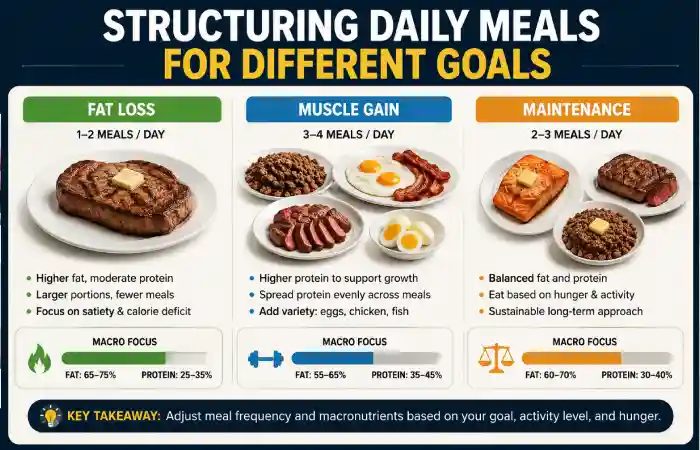
There’s no single carnivore diet meal plan for success, because, even with the same food options (only animal-based ingredients), meal frequency, the size of portions, and fat-to-protein balance will vary greatly, depending on your goals. Your main priority –fat burning, lean muscle growth, or maintenance – will guide you on how much fat to have with protein on the carnivore diet.
In this part, I’ll explain you exactly how you can organize the carnivore day into a specific meal breakdown, following the best advice of 2026 and actual followings patterns on the carnivore diet.
-
Fat Loss: Optimizing for Energy Deficit and Satiety
In case of fat loss goal, you can create a calorie deficit naturally without any tracking, thanks to the rich-fat, extremely filling meals you will be eating.
Daily Structure:
- 1–2 meals per day (often aligned with intermittent fasting)
- Focus on fatty cuts to reduce hunger
- Avoid frequent snacking
Example Day:
- Meal 1 (Lunch): Ribeye steak + salt
- Meal 2 (Dinner): Ground beef + butter
Macro Target (Approx.):
| Metric | Range |
| Fat | 65–75% |
| Protein | 25–35% |
Key Strategy:
- Eat until full, not stuffed
- Prioritize fat to prevent cravings
-
Muscle Gain: Increasing Protein and Meal Frequency
For growth and strength we increase protein and meal frequency in order to encourage repair and growth.
Daily Structure:
- 3–4 meals per day
- Include protein-rich foods at each meal
- Add eggs and dairy (if tolerated) for extra calories
Example Day:
- Breakfast: Eggs + bacon
- Lunch: Chicken thighs
- Snack: Boiled eggs or sardines
- Dinner: Steak + eggs
Macro Target (Approx.):
| Metric | Range |
| Fat | 55–65% |
| Protein | 35–45% |
Key Strategy:
- Distribute protein evenly across meals
- Avoid excessive fat that displaces protein intake
Active individuals should consider this carnivore diet meal plan for muscle gain to support recovery and strength.
-
Maintenance: Balanced and Sustainable Eating
Maintenance focuses on stability and long-term adherence, without aggressive fat loss or surplus.
Daily Structure:
- 2–3 meals per day
- Moderate fat-to-protein balance
- Flexible timing based on hunger cues
Example Day:
- Meal 1: Ground beef + eggs
- Meal 2: Salmon + butter
- Meal 3: Steak
Macro Target (Approx.):
| Metric | Range |
| Fat | 60–70% |
| Protein | 30–40% |
2026 Comparative Meal Structuring Overview
| Goal | Fat Priority | Meals/Day | Protein Priority | Difficulty Level |
| Fat Loss | High | 1–2 | Moderate | Medium |
| Muscle Gain | Moderate | 3–4 | High | High |
| Maintenance | Balanced | 2–3 | Balanced | Low |
Meal Timing and Frequency Insights
- Intermittent Fasting (16:8) is commonly used for fat loss
- Even protein distribution improves muscle synthesis
- Flexible timing works best for long-term adherence
Important:
Meal timing is secondary to total intake and macronutrient balance.
Portion Control Without Tracking
Carnivore diets typically avoid strict calorie counting. Instead, portion control is guided by:
- Hunger signals
- Energy levels
- Body composition changes
Visual Guide:
- Fat loss → Smaller portions, higher fat density
- Muscle gain → Larger portions, more protein volume
- Maintenance → Moderate portions, consistent intake
Common Structuring Mistakes
- Too Much Protein (Fat Loss Phase)
- Leads to low energy and increased hunger
- Too Little Protein (Muscle Gain Phase)
- Limits muscle development
- Undereating Overall
- Causes fatigue, poor adaptation
- Overcomplicating Meal Timing
- Reduces adherence
Weekly Planning and Meal Preparation Strategies
Keeping yourself on a carnivore meal plan isn’t about willpower or motivation as much it is about having the right system. Planning and cooking all of your meals for the week helps reduce decision-making fatigue, minimizes your opportunities to stray off your plan, and ensures that your daily fat and protein intake hits the mark. Here, I am providing a consistent, step-by-step plan that works for a full carnivore week.
-
The Weekly Planning Framework
A structured plan starts with predictability and repetition, not variety.
Step-by-Step Planning Process:
- Select 2–3 primary protein sources (e.g., beef, eggs, fish)
- Choose cooking methods (grill, pan, oven, air fryer)
- Assign meals for each day (repeat where possible)
- Estimate quantity based on your goal (fat loss vs muscle gain)
Example Weekly Structure:
| Day | Main Protein | Cooking Method | Secondary Option |
| Monday | Ribeye | Pan-seared | Eggs |
| Tuesday | Ground beef | Skillet | Butter |
| Wednesday | Chicken thighs | Oven | Eggs |
| Thursday | Salmon | Air fryer | Ghee |
| Friday | Lamb chops | Grill | Eggs |
| Saturday | Mixed meats | Batch cook | — |
| Sunday | Leftovers | Reheat | Bone broth |
A structured week-long carnivore meal schedule can help reduce decision fatigue and keep you on track.
Batch Cooking for Efficiency
Batch cooking is the most effective way to maintain adherence.
What to Batch Cook:
- Ground beef (1–2 kg at once)
- Steak (pre-cooked or partially cooked)
- Boiled eggs (6–12 at a time)
Storage Guidelines:
- Refrigerate for up to 3–4 days
- Freeze portions for longer storage
- Use airtight containers to retain freshness
Time Efficiency Insight (2026):
| Method | Best Use Case | Time Saved/Week |
| Daily cooking | Maximum freshness | 0% |
| Batch cooking | Busy schedules | 40–60% |
| Mixed approach | Balanced routine | 30% |
Smart Shopping Strategy
Efficient planning begins with buying the right foods in the right quantities.
Weekly Shopping List (Baseline):
- 2–4 kg beef (mix of cuts)
- 12–24 eggs
- 500g–1 kg fish
- Butter or ghee
- Optional: organ meats
Cost Optimization Tips:
- Buy in bulk from local butchers
- Choose ground beef for budget efficiency
- Rotate premium cuts (like ribeye) sparingly
-
Prepping for Different Goals
Your weekly prep volume and food choices should align with your goal.
Fat Loss:
- Fewer meals, higher fat cuts
- Smaller total quantity
Muscle Gain:
- Larger portions
- More protein variety (eggs, chicken, fish)
Maintenance:
- Moderate quantity
- Balanced rotation
-
Quick-Access Foods for Busy Days
Even with planning, you need backup options to avoid falling off track.
Keep Ready:
- Boiled eggs
- Canned fish (sardines, tuna)
- Pre-cooked ground beef
- Beef jerky (no sugar added)
-
Meal Prep Workflow (Practical System)
Weekly Routine Example:
- Day 1 (Prep Day):
- Cook bulk ground beef
- Boil eggs
- Prepare 2–3 steak portions
- Midweek (Quick Refresh):
- Cook fresh fish or chicken
- Refill essentials
- Weekend (Flexible):
- Use leftovers or cook fresh meals
Common Planning Mistakes
Overcomplicating Meals
→ Leads to burnout and inconsistency
Not Cooking Enough Food
→ Increases temptation to deviate
Ignoring Fat Intake
→ Results in low energy and cravings
Lack of Backup Options
→ Causes missed meals or poor choices
Practical Takeaway
A sustainable carnivore diet meal plan depends on repeatable systems, not variety. The most effective approach is:
- Plan once per week
- Cook in bulk
- Keep meals simple
- Maintain backup food options
But when your surroundings is optimally designed, compliance comes without any mental effort or decision-making!
Adjusting Protein and Fat Intake
Macronutrient ratio Results on carnivore meal plan is the amount to which you optimise both of protein and fat.
You can do this without ever worrying about calorie counting!
The majority of poor performing or struggling dieters often fail simply due to incorrect optimisation between fat and protein – especially on the few first days.
-
The Role of Protein vs Fat
Protein (Structural Nutrient):
- Supports muscle repair and growth
- Maintains metabolic function
- Highly satiating
Fat (Primary Energy Source):
- Fuels daily activity
- Supports hormone production
- Prevents energy crashes and cravings
Key Principle:
Protein builds the body; fat fuels it.
Ideal Macronutrient Ratios (2026 Guidelines)
| Goal | Fat Intake | Outcome Focus | Protein Intake |
| Fat Loss | 65–75% | Satiety + calorie control | 25–35% |
| Muscle Gain | 55–65% | Muscle growth + recovery | 35–45% |
| Maintenance | 60–70% | Energy stability | 30–40% |
However, these are not rules, but rather starting points that can be adjusted based on your response.
How to Adjust Intake in Practice
Instead of focusing on numbers and exact macros, you make tweaks via the choices you make about your food and quantity.
Increase intake of:
- Choose fattier cuts
- Add butter, or tallow
- Include salmon
To Increase Protein Intake:
- Add leaner meats
- Increase portion sizes
- Include eggs more frequently
Fat-to-Protein Ratio in Common Foods
| Protein Level | Food | Fat Level | Best Use |
| Moderate | Ribeye steak | High | Energy + fat intake |
| Balanced | Ground beef (80/20) | Balanced | Daily meals |
| High | Chicken breast | Low | Muscle gain phase |
| Moderate | Salmon | Medium-High | Omega-3 balance |
| Medium | Eggs | Medium | Flexible addition |
Signs Your Ratio Needs Adjustment
Too Much Protein (Not Enough Fat):
- Low energy or fatigue
- Increased hunger
- Difficulty staying full
Too Much Fat (Low Protein):
- Sluggish digestion
- Reduced appetite for meals
- Difficulty maintaining muscle
Balanced Intake Indicators:
- Stable energy throughout the day
- Reduced cravings
- Consistent performance and recovery
The “Fat Lever” Strategy
A widely used carnivore approach in 2026 is the fat lever method, where fat intake is adjusted based on your goal:
- Increase fat → reduce hunger, support fat loss
- Decrease fat slightly → allow body fat utilization
- Maintain moderate fat → sustain energy
This method eliminates the need for strict calorie counting while still controlling outcomes.
Transition Phase Adjustments (First 2–4 Weeks)
During adaptation:
- Increase fat intake initially to avoid fatigue
- Avoid going too lean too early
- Gradually fine-tune based on energy levels
Important:
Early underconsumption of fat is a primary cause of “keto flu”-like symptoms.
Common Mistakes to Avoid
Eating Too Lean Too Soon
→ Leads to energy crashes
Overeating Protein for Fat Loss
→ Can stall progress
Ignoring Body Feedback
→ Slows adaptation
Applying One Ratio Long-Term Without Adjustment
→ Limits results
Practical Takeaway
Optimizing a carnivore diet meal plan requires dynamic adjustment, not fixed rules. Focus on:
- Using fat as your primary energy source
- Adjusting protein based on activity and goals
- Monitoring hunger, energy, and performance
Balanced consumption makes the body’s supply level steady, suppresses any cravings, encourages progress, which increases the ease of maintaining the diet over a longer period of time.
Managing Hunger, Cravings, and Energy Levels
An essential benefit to following a high qualitycarnivorediet meal plan – when it’s done right is that it provides automatic hunger and blood sugar stabilization. Even so, the first 2-3 weeks of transitioning into carnivore are when most newbies have the widest fluctuations with hunger and energy.
These aren’t random. This will be because of an imbalance of your macronutrients, electrolyte imbalance or an incomplete shift in metabolism.
Understanding Hunger on a Carnivore Diet
Hunger signals on carnivore differ from high-carb diets. Instead of frequent spikes, appetite becomes less frequent but more pronounced.
What Changes:
- Reduced meal frequency (often 2 meals/day)
- Longer satiety after high-fat meals
- Lower “snacking urge”
Why It Happens:
- Stable blood sugar levels
- Increased fat intake slows digestion
- Protein enhances satiety hormones
Stabilizing Energy Levels
Energy fluctuations are one of the most reported early challenges.
Causes of Low Energy:
- Insufficient fat intake
- Low sodium levels
- Incomplete fat adaptation
Solutions:
- Increase dietary fat immediately
- Add 3,000–5,000 mg sodium daily
- Stay hydrated consistently
- Reduce physical intensity during adaptation
Hunger vs Cravings: How to Differentiate
| Indicator | Craving | True Hunger |
| Onset | Sudden | Gradual |
| Food Preference | Specific (sugar, carbs) | Any meat |
| Persistence | Temporary | Sustained |
| Solution | Electrolytes or distraction | Full meal |
Key Insight:
If meat sounds unappealing, it is likely a craving—not true hunger.
Common Mistakes That Increase Hunger
Eating Too Lean
→ Leads to constant hunger and fatigue
Skipping Meals Too Early
→ Causes energy crashes during adaptation
Ignoring Electrolytes
→ Triggers cravings and headaches
Undereating Overall
→ Slows metabolism and reduces adherence
Practical Hunger Management Framework
If You Feel Hungry:
Eat a full carnivore meal (do not snack lightly)
If You Feel Cravings:
Add salt or drink water
Wait 15–20 minutes
If Energy Drops:
Increase fat intake immediately
Check electrolyte intake
Practical Takeaway
For the carnivore diet meal plan to work efficiently in fighting your hunger and cravings, it needs a lot more than will-power. It mainly requires a perfectly fine-tuned intake of electrolytes and fats, in a structured manner.
- Hunger becomes predictable and controlled
- Cravings diminish significantly
- Energy stabilizes throughout the day
Hydration and Electrolyte Considerations

Hydration in a carnivore meal plan. It is on a carnivore diet plan looks really different compared to a mixed diet plan. This interplay means electrolytes are just as essential as your water intake! Skipping electrolyte balancing, specifically at the beginning, contributes to the headaches, dizziness, and fatigue all carnivore diet beginners feel when experiencing what’s known as the “keto flu.”:
Why Hydration Needs Change on Carnivore
On a carb-based diet, glycogen stores retain water. When carbs are eliminated:
- Glycogen depletion releases stored water
- Sodium excretion increases
- Overall fluid turnover accelerates
Result: You lose both water and essential minerals, not just fluids.
Core Electrolytes You Must Manage
Electrolytes regulate nerve function, muscle contraction, hydration status, and energy production. On carnivore, three minerals require active attention:
| Risk if Low | Electrolyte | Function |
| Fatigue, headaches, dizziness | Sodium | Fluid balance, nerve signaling |
| Weakness, cramps | Potassium | Muscle contraction, heart function |
| Poor sleep, muscle tightness | Magnesium | Sleep, recovery, muscle relaxation |
Hydration Mistakes Beginners Make
Drinking Too Much Plain Water
→ Dilutes sodium levels and worsens fatigue
Avoiding Salt Due to Old Guidelines
→ Leads to rapid electrolyte depletion
Ignoring Early Symptoms
→ Small imbalances become larger adaptation issues
Relying Only on Supplements
→ Whole food sources (meat, broth) should remain primary
New to this way of eating? Start with our carnivore diet for beginners guide before creating your meal plan.
Electrolytes and Energy Connection
Electrolyte balance directly affects energy levels:
- Proper sodium intake supports stable blood pressure and alertness
- Adequate magnesium improves sleep quality → better recovery
- Balanced potassium supports muscle function and endurance
Key Insight:
Many “low energy” complaints on carnivore are not calorie-related—they are electrolyte-related.
Simple Daily Hydration Framework
Morning:
- Water + pinch of salt
Meals:
- Salt food to taste
Midday (if needed):
- Bone broth or salted water
Evening:
- Optional magnesium support (if sleep is affected)
Practical Takeaway
- Energy levels remain stable
- Cravings decrease
- Adaptation symptoms are minimized
For beginners, the rule is straightforward: prioritize salt, hydrate intelligently, and respond to your body’s signals rather than following generic water intake rules.
Common Challenges During the First Month
The first 30 days of a carnivore diet plan are what the body experiences as a metabolic adjustment stage where it begins utilizing fat rather than glucose for energy. Although much of the commonly seen effects-less hunger, more brain fog, etcetera-can be felt only once your body has had a chance to adapt, there are generally a few temporary hurdles you can anticipate in the first few weeks.
The things you may experience during your first 30 days on a carnivore plan, though potentially uncomfortable, are completely normal, preventable, and usually only temporary.
The “Keto Flu” Phase (Days 3–10)
What it is:
A cluster of symptoms caused by rapid carbohydrate withdrawal and electrolyte loss.
Common Symptoms:
- Headaches
- Fatigue
- Brain fog
- Dizziness
Root Cause:
- Sodium and fluid depletion
- Glycogen loss
- Early-stage fat adaptation
Fix:
- Increase sodium intake (3,000–5,000 mg/day)
- Stay hydrated with electrolytes
- Avoid aggressive fasting during this phase
Digestive Adjustments
Switching to an all-animal diet alters digestive patterns.
What You May Experience:
- Diarrhea (common in early days)
- Constipation (in some individuals)
- Bloating or discomfort
Why It occur:
- Gut microbiome adaptation
- Increased fat intake
- Removal of fiber
Solutions:
- Gradually increase fat intake
- Choose easily digestible meats (eggs, ground beef)
- Stay hydrated and maintain electrolytes
Energy Fluctuations
Energy is often inconsistent during the first 2–3 weeks.
Symptoms:
- Midday fatigue
- Reduced workout performance
- Low motivation
Cause:
- Incomplete fat adaptation
- Low electrolyte levels
- Undereating fat
Strong Cravings for Carbs and Sugar
Cravings are typically strongest during the first 7–14 days.
Triggers:
- Habitual eating patterns
- Dopamine withdrawal from sugar
- Low calorie or fat intake
Management:
- Eat until fully satisfied (do not restrict early)
- Add more fat to meals
- Use salt or bone broth to reduce cravings
Changes in Bowel Frequency
This is one of the most misunderstood aspects.
What’s Normal:
- Less frequent bowel movements
- Reduced stool volume
Why:
- Higher nutrient absorption from animal foods
- Lower waste production (no fiber residue)
When to Act:
- Only if discomfort or persistent constipation occurs
Sleep Disturbances
Some individuals report temporary sleep disruption.
Possible Issues:
- Difficulty falling asleep
- Waking during the night
Social and Practical Challenges
Beyond physiology, lifestyle friction is common.
Examples:
- Limited food options when eating out
- Social pressure or skepticism
- Meal monotony
Undereating (Most Common Beginner Mistake)
Many beginners unintentionally eat too little.
Why It Happens:
- High satiety from protein
- Fear of fat intake
Consequences:
- Fatigue
- Cravings
- Slower adaptation
Fix:
- Prioritize adequate fat intake
- Eat until fully satisfied
- Avoid calorie restriction in the first month
Temporary Performance Drop
Athletic performance may decline initially.
Reason:
- Muscles adapting to fat as a primary fuel source
Expectation:
- Strength and endurance typically recover after 3–4 weeks
Adjustment:
- Lower training volume
- Focus on recovery
Adaptation Timeline Overview
| Phase | What to Expect | Timeframe |
| Initial Shock | Carb withdrawal, hunger changes | Days 1–3 |
| Keto Flu | Fatigue, headaches, cravings | Days 3–10 |
| Adaptation | Improved energy, reduced cravings | Weeks 2–3 |
| Stabilization | Consistent energy, better performance | Weeks 3–4 |
Practical Takeaway
- Electrolyte imbalance
- Insufficient fat intake
- Premature restriction
When these variables are addressed:
- Symptoms reduce significantly
- Energy stabilizes
- Adherence becomes easier
Sample Meal Plan Templates
Beginner (Week 1)
| Meal | Food |
| Breakfast | Eggs + butter |
| Lunch | Ground beef |
| Dinner | Ribeye steak |
Fat Loss Plan
| Meal | Food |
| Lunch | Steak + salt |
| Dinner | Salmon + butter |
Muscle Gain Plan
| Meal | Food |
| Breakfast | Eggs + bacon |
| Lunch | Chicken thighs |
| Dinner | Beef + eggs |
Product Comparisons (2026 Essentials)
| Product Type | Option 1 | Best For | Option 2 |
| Cooking Fat | Butter | High-heat cooking | Beef Tallow |
| Protein | Fresh meat | Convenience | Freeze-dried meat |
| Electrolytes | Salt | Beginners | Electrolyte mix |
Troubleshooting Section
Issue: No Weight Loss
Reduce dairy
Increase fasting window
Track calorie intake indirectly
If fat loss is your goal, try this carnivore diet weight loss meal plan designed for calorie control and high satiety.
Issue: Low Energy
Increase fat intake
Add electrolytes
Issue: Constipation
Increase hydration
Add magnesium
Conclusion
There’s few more simple but more highly effective of all plans for a reason. The meal plan on this particular diet relies far more on electrolyte management, Fat consumption, and regularity when it comes to success than it does on food variety in the coming years. This is where that meal plan plan gets put into action for the novice beginner:
-
- Stick to meals which are very uncomplicated
- Focus on your Fat and its consumptiomn
- Take care of your Electrolytes and levels
- Adhere to this specific structure throughout
Afiya Jafar is a fitness and wellness writer who focuses on making health, exercise, and healthy lifestyle information simple and practical. Her work covers workouts, fitness motivation, strength training, nutrition, weight management, stress management, mindfulness, and everyday wellness.
Read Full Bio of Afiya Jafar →
Sameena Begum reviews selected health, wellness, fitness, and digital content for clarity, factual presentation, consistency, and reader usefulness. Her review work helps maintain clear and responsible editorial standards across PhysicalFitt content.
Read Full Bio of Sameena Begum →
Dr. Khizrana Begum is a qualified medical professional with MBBS and MD qualifications and 5+ years of experience in the medical field. She works as a General Physician and Dermatologist, with expertise in general medicine, dermatology, preventive healthcare, and skin health.
Read Full Bio of Dr. Khizrana Begum →