
 Afiya Jafar
Fitness & Wellness Writer
Afiya Jafar is a fitness and wellness writer who focuses on making health, exercise, and healthy lifestyle information simple and practical.
Read Full Bio of Author →
Afiya Jafar
Fitness & Wellness Writer
Afiya Jafar is a fitness and wellness writer who focuses on making health, exercise, and healthy lifestyle information simple and practical.
Read Full Bio of Author →
 Sameena Begum
Health, Fitness & Digital Content Reviewer
Sameena reviews selected health, wellness, fitness, and digital content for clarity, factual presentation, and reader usefulness.
Read Full Bio of Reviewer →
Sameena Begum
Health, Fitness & Digital Content Reviewer
Sameena reviews selected health, wellness, fitness, and digital content for clarity, factual presentation, and reader usefulness.
Read Full Bio of Reviewer →
 Dr. Khizrana Begum
General Physician & Dermatologist
Dr. Khizrana Begum is a General Physician and Dermatologist with MBBS and MD qualifications and 5+ years of experience in the medical field.
Read Full Bio of Medical Reviewer →
Dr. Khizrana Begum
General Physician & Dermatologist
Dr. Khizrana Begum is a General Physician and Dermatologist with MBBS and MD qualifications and 5+ years of experience in the medical field.
Read Full Bio of Medical Reviewer →
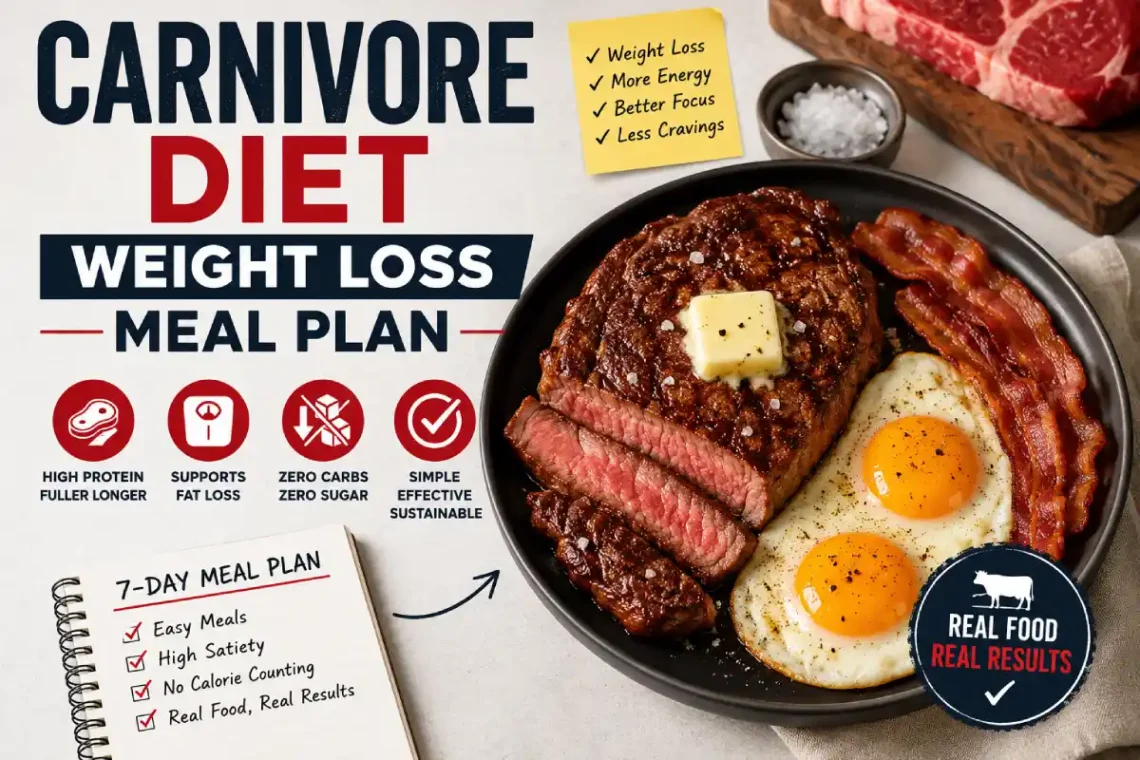
A carnivore diet weight loss meal plan makes it much easier to eat healthily and has many benefits for losing weight by naturally reducing overall caloric consumption by focusing on nutrient-dense and satiety-inducing animal-based food sources. You no longer need to calculate your daily intake, but the Carnivore diet relies on satiating meat, seafood, eggs and fat to lower your appetite for you to reduce and sustainably lose fat. Combined with realistic meal times, hydration and reasonable expectations, this method can work well for those seeking an easy entry point to the Carnivore Diet to enhance your physique.
Stay motivated with these easy carnivore diet recipes that make healthy eating enjoyable.
In this article, I will delve into the details of the reasons for carnivore for weight loss, meal preparation tips, common errors to prevent, techniques for plateauing and developing good long-term practices.
❝
This article is a part of
Diet Plans Hub
Why Carnivore May Support Fat Loss
Many people shed pounds on the carnivore diet as a natural appetite suppressor and simplified approach to food. It’s thought to be beneficial due to:
- Protein is vital for preserving muscle while burning fat
- Animal foods promote satiation and discourage snacking
- Cutting processed foods can result in consuming fewer calories
- Consistent blood sugar can help decrease cravings
- Limited choices can ease decision fatigue
Don’t forget calories will determine weight loss and you might have slightly different results than others.
Once you’ve achieved your fat-loss goal, switch to our carnivore diet meal plan for muscle gain to support lean muscle development.
Comparison: Standard Diet vs Carnivore for Weight Loss
| Factor | Standard Diet | Carnivore Diet |
| Hunger Levels | Moderate to High | Often Lower |
| Food Variety | High | Limited |
| Protein Intake | Moderate | High |
| Processed Foods | Common | Minimal |
| Meal Simplicity | Moderate | High |
| Satiety | Moderate | High |
Use our carnivore diet food list to choose nutrient-dense foods that support healthy weight loss.
Meal Timing for Appetite Control
It’s really open when you eat as long as you do a carnivore diet, but many people do best doing one less, larger meals that satisfied.
General tips:
- Eat when genuinely hungry rather than by the clock.
- Prioritize protein at each meal.
- Avoid unnecessary grazing.
- Drink water consistently throughout the day.
- Include enough dietary fat to stay satisfied.
Sample Daily Schedule
| Time | Meal |
| 8:00 AM | Eggs with ground beef |
| 1:00 PM | Ribeye steak |
| 7:00 PM | Salmon with butter |
High-Satiety Meal Examples
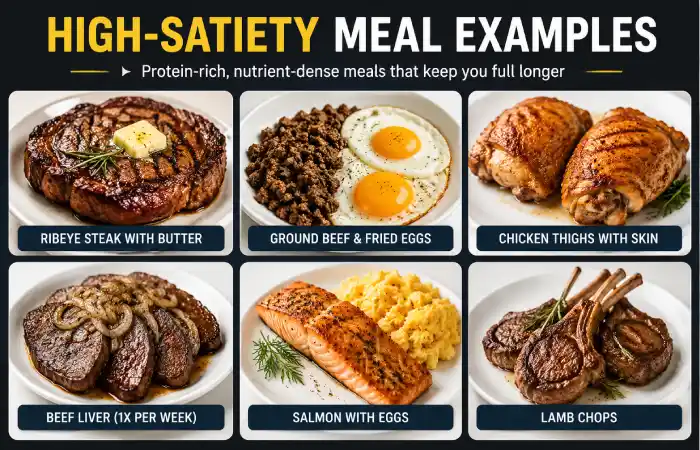
Lean on high-protein, healthy-fat meals between mealtimes.
Examples include:
- Ribeye steak with butter
- Ground beef and fried eggs
- Chicken thighs with skin
- Beef liver once weekly
- Salmon with eggs
- Lamb chops
- Slow-cooked beef brisket
Satiety Ranking
| Meal | Protein | Satiety |
| Ribeye Steak | High | ★★★★★ |
| Ground Beef + Eggs | High | ★★★★★ |
| Chicken Breast | Moderate | ★★★★☆ |
| Salmon | High | ★★★★☆ |
| Pork Chops | Moderate | ★★★★☆ |
Portion Strategies Without Calorie Counting
Many carnivore followers avoid strict calorie tracking by using practical portion strategies.
Helpful guidelines include:
- Fill the plate primarily with protein.
- Eat slowly until comfortably satisfied.
- Avoid eating simply out of boredom.
- Choose fattier cuts if hunger returns quickly.
- Increase lean protein if fat loss slows.
A simple rule is to let hunger and fullness guide meal size while maintaining consistent eating habits.
Breaking Through Weight Loss Stalls
Weight loss plateaus are common after several weeks.
Common causes include:
- Eating larger portions over time
- Reduced daily activity
- Poor sleep quality
- Chronic stress
- Inconsistent meal timing
Ways to Restart Progress
- Increase daily walking.
- Prioritize resistance training.
- Improve sleep consistency.
- Stay hydrated.
- Review portion sizes.
- Avoid frequent “cheat meals.”
Weekly Fat-Loss Menu
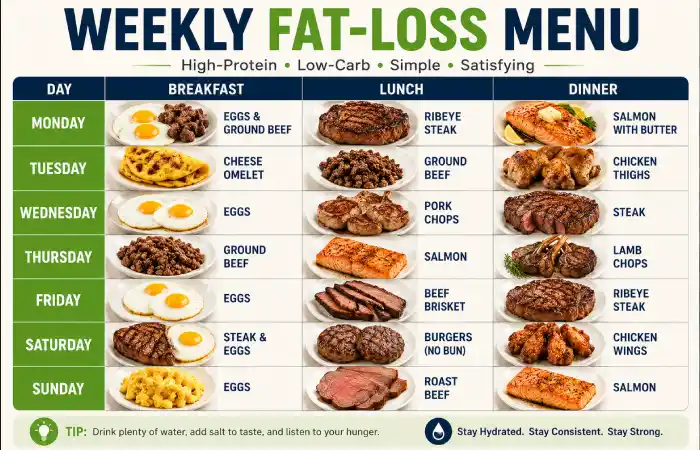
| Day | Breakfast | Lunch | Dinner |
| Monday | Eggs & Beef | Ribeye | Salmon |
| Tuesday | Omelet | Ground Beef | Chicken Thighs |
| Wednesday | Eggs | Pork Chops | Steak |
| Thursday | Ground Beef | Salmon | Lamb |
| Friday | Eggs | Brisket | Ribeye |
| Saturday | Steak & Eggs | Burgers (no bun) | Chicken Wings |
| Sunday | Eggs | Roast Beef | Salmon |
If you’re just getting started, begin with our 7-day carnivore diet meal plan before following this weight loss strategy.
Measuring Body Composition Changes
The scale tells only part of the story.
Track progress using multiple methods:
- Weekly body weight
- Waist circumference
- Progress photos
- Strength improvements
- Clothing fit
- Body fat measurements (if available)
Progress Tracking Comparison
| Method | Accuracy | Ease |
| Body Weight | Medium | Excellent |
| Waist Measurement | High | Excellent |
| Progress Photos | High | Easy |
| Body Fat Scan | Very High | Moderate |
| Strength Tracking | Medium | Excellent |
New to this lifestyle? Read our carnivore diet for beginners guide before starting your weight loss journey.
Long-Term Weight Management
Maintaining weight loss requires sustainable habits rather than short-term perfection.
Focus on:
- Consistent protein intake
- Regular strength training
- Walking daily
- Quality sleep
- Stress management
- Periodic progress reviews
- Flexibility for social occasions
True, sustained results only come with habits that you can stick to- not impossible guidelines that you have to be super strict to follow.
Troubleshooting Common Problems
| Problem | Possible Cause | Solution |
| Constant Hunger | Too little protein or fat | Increase meal satisfaction |
| Fat Loss Plateau | Portion creep | Reassess serving sizes |
| Low Energy | Poor hydration | Increase fluids and electrolytes |
| Digestive Changes | Rapid diet transition | Introduce changes gradually |
| Cravings | Habit-based eating | Plan satisfying meals |
FAQ
Can I lose weight on carnivore without tracking calories?
Calorie deficit is what determines loss. You can naturally eat less if you are getting full off high- protein meals.
How much protein should I be eating?
You need a quality protein source for each meal. How much that is really depends on size of the individual, the level of activity and the end result wanted.
Does this involve exercise?
Diet makes a huge difference in body fat percentage, but combining exercise with this eating style ( especially strength) is the best way to keep as much lean muscle as possible while you are trying to shed the fat.
How long do I have to stick with it before I can see something?
It can take a couple weeks but true, significant changes in the way the fat comes off can take several months.
Can I stick with it forever?
Some people can some people dont but this is what would eventually happen in one extreme or the other: Eventually if you do not feel well (not a normal diet adaptation thing but more the real deal) then you will need to incorporate a less restrictive way of eating or adjust the way that you are eating and I recommend speaking with someone to assess if you need some outside assistance on your eating habits.
Conclusion
The carnivore diet weight loss meal plan is fairly straightforward for people that wish to keep things very basic, with focus on protein, fat as well as nutrient thick food. By filling up on fulfilling, protein and fat filled food, consuming based on hunger, continuing to be moistened as well as staying active a lot of individuals discover it simple to manage cravings as well as steadily drop weight. Of training course, this can just take you thus far, so long term outcomes are attained through persistence and not magic diet pills.
Once you’ve reached your weight loss goal, transition to our complete carnivore diet meal plan for long-term maintenance and balanced nutrition.
As you continue, it’s not just the number on the scale you have to be worried about: take an eye on body measurements, stamina, power levels as well as just how your outfits suit.
Should you find you have plateaued, slight changes in portion dimensions, activity and also healing can assist you start losing fat once again. All in all, you need to go with what’s most appropriate for your body and also way of life. For that reason, it’s advisable to consult a doctor prior to you starting any kind of major nutritional changes. After a while, the carnivore diet plan might end up being one element of a long-lasting fat loss strategy.
Afiya Jafar is a fitness and wellness writer who focuses on making health, exercise, and healthy lifestyle information simple and practical. Her work covers workouts, fitness motivation, strength training, nutrition, weight management, stress management, mindfulness, and everyday wellness.
Read Full Bio of Afiya Jafar →
Sameena Begum reviews selected health, wellness, fitness, and digital content for clarity, factual presentation, consistency, and reader usefulness. Her review work helps maintain clear and responsible editorial standards across PhysicalFitt content.
Read Full Bio of Sameena Begum →
Dr. Khizrana Begum is a qualified medical professional with MBBS and MD qualifications and 5+ years of experience in the medical field. She works as a General Physician and Dermatologist, with expertise in general medicine, dermatology, preventive healthcare, and skin health.
Read Full Bio of Dr. Khizrana Begum →