
 Afiya Jafar
Fitness & Wellness Writer
Afiya Jafar is a fitness and wellness writer who focuses on making health, exercise, and healthy lifestyle information simple and practical.
Read Full Bio of Author →
Afiya Jafar
Fitness & Wellness Writer
Afiya Jafar is a fitness and wellness writer who focuses on making health, exercise, and healthy lifestyle information simple and practical.
Read Full Bio of Author →
 Sameena Begum
Health, Fitness & Digital Content Reviewer
Sameena reviews selected health, wellness, fitness, and digital content for clarity, factual presentation, and reader usefulness.
Read Full Bio of Reviewer →
Sameena Begum
Health, Fitness & Digital Content Reviewer
Sameena reviews selected health, wellness, fitness, and digital content for clarity, factual presentation, and reader usefulness.
Read Full Bio of Reviewer →
 Dr. Khizrana Begum
General Physician & Dermatologist
Dr. Khizrana Begum is a General Physician and Dermatologist with MBBS and MD qualifications and 5+ years of experience in the medical field.
Read Full Bio of Medical Reviewer →
Dr. Khizrana Begum
General Physician & Dermatologist
Dr. Khizrana Begum is a General Physician and Dermatologist with MBBS and MD qualifications and 5+ years of experience in the medical field.
Read Full Bio of Medical Reviewer →
A health expert breaks down why you should eat well in 2026 – even if your cooking skills are awful There’s one myth many women’s magazine eaters hold dear: that healthy meals equal hours spent in the kitchen slaving over complex recipes. It may be more convenient to whip up a pizza or order takeout, but with a bit of practice, smart shopping and basic meal prepping – and as health experts suggest for the rest of 2026 – we’re going to break down how anyone can have a healthy – and delicious – dinner in under 30 minutes.
Whether you’re a busy professional, a college student who’s finally gotten sick of their meal plan, a new parent still learning the ropes, or someone starting your health journey for the first time, here’s your complete guide to how to eat well – and easy – even if your cooking skills are less Martha Stewart and more microwave operator.
❝
This article is a part of
Healthy Eating Hub
What Are Easy Healthy Meals?
Easy healthy meals are quick and simple recipes using nutrient dense ingredients which supply balanced amount of proteins, healthy fats, complex carbs, fiber, vitamins and minerals while consuming minimum preparation as well as cooking time.
Start your day with nutritious easy healthy breakfast ideas that are simple to prepare and keep you satisfied.
As oppose to refined commercial processed foods, healthy meals use whole, or less processed, nutrients that fuel the body without a variety of unhealthy fats, sugar, or sodium.
There is nothing that dictates a healthy meal be expensive, difficult, or requiring an exotic ingredient. You’ll be using a variety of foods, some of which might already be in your kitchen and will help prepare your healthy meal: eggs, vegetables, beans, rice, oats, yogurt, chicken, fish, fruit, nuts and whole grains.
Characteristics of Easy Healthy Meals
The best healthy meals typically include:
- High-quality protein
- Plenty of vegetables
- Whole grains
- Healthy fats
- Natural fibre
- Minimal processed ingredients
- Simple cooking methods
- Balanced portions (WHO)
Comparison: Healthy Meal vs Processed Meal
| Feature | Healthy Meal | Highly Processed Meal |
| Protein | Lean chicken, beans, fish, eggs | Processed meats |
| Carbohydrates | Brown rice, oats, quinoa | Refined white flour |
| Fat | Olive oil, avocado, nuts | Trans fats, hydrogenated oils |
| Fibre | High | Very low |
| Vitamins | Naturally rich | Often limited |
| Added Sugar | Low | Usually high |
| Sodium | Moderate | High |
| Satiety | Long-lasting | Short-lived |
For midday meals, choose balanced easy healthy lunch ideas that combine protein, vegetables, and filling carbohydrates.
Why Are Easy Healthy Meals Important?
Preparing meals at home gives you greater control over:
- Ingredient quality
- Portion sizes
- Cooking methods
- Salt intake
- Sugar intake
- Calorie intake
Benefits of Eating Healthy Every Day
Healthy eating doesn’t necessarily mean eating with perfection and with the fear of consuming unhealthy food . It can mean having a nutrition of diet with healthier food choices and incorporating variety for many long and wonderful years to come. Various public health bodies published many reports stating the evidence of an eating of the healthiest pattern on decreased risk of chronic disease.
- Provides Long-Lasting Energy
Balanced meals made with proteins, healthier fats, and full body carbohydrates are slowly released, unlike the sugary food that lead to instant spike.
End your day with healthy dinner ideas that are flavorful, satisfying, and easy to fit into a balanced diet.
It will lead to fewer swings in energy, helping us to avoid any dips in concentration throughout day.
- Supports Healthy Weight Management
Many people feel fullness with some of these food types compared to any processed ones, thanks to them being high in fiber content and with proteins, which increase feel of fullness and prevent snacking on the wrong things.
- Improves Heart Health
Heart-friendly eating patterns often include:
- Vegetables
- Fruits
- Whole grains
- Beans
- Olive oil
- Fatty fish
- Nuts
- Seeds
- Strengthens the Immune System
Important nutrients include:
- Vitamin C
- Vitamin A
- Zinc
- Selenium
- Vitamin D (where appropriate)
- Iron
- Improves Digestive Health
Dietary fibre helps:
- Support regular digestion
- Feed beneficial gut bacteria
- Promote satiety
- Support healthy cholesterol levels
Excellent fibre sources include:
- Oats
- Lentils
- Beans
- Apples
- Pears
- Vegetables
- Whole grains
- Supports Brain Function
Examples include:
- Salmon
- Walnuts
- Eggs
- Blueberries
- Spinach
- Encourages Healthy Ageing
If you get hungry between meals, healthy snacks between meals can help control cravings and prevent overeating later.
Eating well while young is beneficial for our bones and muscles, and keeps many health issues away when we are old.
Consistent nutrition also supports healthy skin, hair, and overall vitality.
2026 Comparison Table: Benefits of Balanced Eating
| Health Area | Regular Balanced Meals | Frequent Processed Meals |
| Energy | Stable | Frequent highs and lows |
| Hunger | Better controlled | Returns quickly |
| Fibre Intake | High | Low |
| Protein Quality | Better | Often lower quality |
| Micronutrients | Rich | Limited |
| Long-Term Health | Supports overall wellness | May contribute to nutrient gaps |
If your goal is weight management, focus on easy healthy meals for weight loss that provide plenty of protein, fiber, and nutrients.
Daily Healthy Eating Checklist
Try to include these habits every day:
- Half your plate vegetables
- Eat a quality protein source
- Choose whole grains where possible
- Include healthy fats
- Stay hydrated
- Eat fruit daily
- Limit sugary drinks
- Cook more meals at home
How to Build a Balanced Healthy Meal
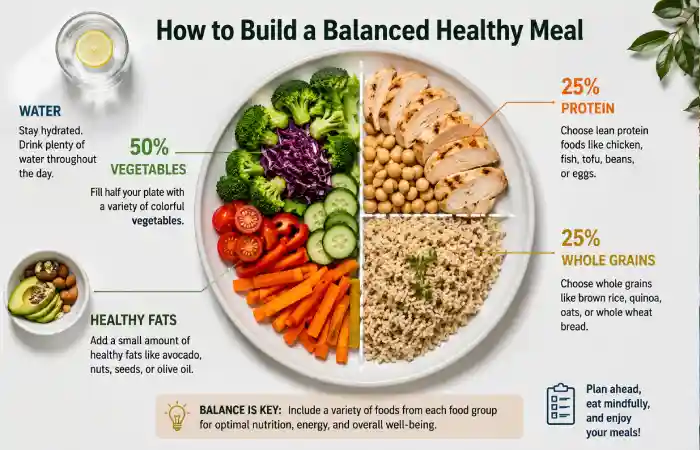
Eating a healthier diet doesn’t need to be as difficult as calorie counting because instead of individual building blocks you will find yourself thinking about each building block of your meal in addition to its calorie count.
Instead of limiting yourself, try to fill your plates with nutrient dense food in correct amount.
The Healthy Plate Method
A practical guideline is to divide your plate as follows:
- 50% Non-starchy vegetables
- 25% Lean protein
- 25% Whole grains or other complex carbohydrates
- Add a small serving of healthy fats
- Include water or another unsweetened beverage
This approach naturally increases fibre and protein while helping manage portion sizes.
Balanced Plate Example
| Plate Section | Foods |
| 50% Vegetables | Broccoli, spinach, carrots, peppers, salad |
| 25% Protein | Chicken, tofu, fish, eggs, lentils |
| 25% Whole Grains | Brown rice, quinoa, oats, whole-wheat pasta |
| Healthy Fat | Olive oil, avocado, nuts, seeds |
Adding high-protein healthy meals to your routine can make meals more filling while supporting muscle maintenance and recovery.
Step 1: Choose a Protein
Protein supports muscle maintenance and helps you feel full after meals.
Good protein sources include:
| Animal Protein | Plant Protein |
| Chicken breast | Lentils |
| Eggs | Chickpeas |
| Salmon | Black beans |
| Greek yoghurt | Tofu |
| Cottage cheese | Tempeh |
| Turkey | Edamame |
Aim to include a source of protein in every main meal.
Step 2: Add Colourful Vegetables
Vegetables are packed with vitamins, minerals, fibre, and antioxidants while being naturally low in calories.
Try to “eat the rainbow” by choosing vegetables of different colours throughout the week.
Examples include:
- Spinach
- Kale
- Broccoli
- Tomatoes
- Bell peppers
- Carrots
- Beetroot
- Cauliflower
- Green beans
- Mushrooms
Frozen vegetables can be a good choice as they are handy, cheap and full of nutritional content.
Step 3: Choose Smart Carbohydrates
Carbohydrates provide energy, but the type you choose matters.
Better Choices
- Brown rice
- Oats
- Sweet potatoes
- Whole-wheat bread
- Quinoa
- Barley
- Whole-grain pasta
These foods provide more fibre and nutrients than refined grains.
Step 4: Include Healthy Fats
Healthy fats improve flavour, support nutrient absorption, and contribute to heart health when consumed in appropriate amounts.
Examples include:
- Olive oil
- Avocados
- Almonds
- Walnuts
- Pumpkin seeds
- Chia seeds
- Flaxseed
Because fats are calorie-dense, use moderate portions.
Step 5: Stay Hydrated
Not to downplay, water are important for temperature, regulation, your mood and even how easily you digest food! Try drinking water on a consistent daily basis throughout the day, as much water as your body dictates. Based on how much you move, where you live and what your body craves. In case plain water bore’s you then, “Spice it up”. You can add the slice of a lemon, cucumber, a sprig of freshmint etc. To your drink and add flavour without a single gram of sugar!!
Meal Building Example
| Meal | Balanced Components |
| Breakfast | Oatmeal, Greek yoghurt, blueberries, almonds |
| Lunch | Grilled chicken, brown rice, mixed vegetables |
| Dinner | Baked salmon, sweet potato, broccoli |
| Snack | Apple with peanut butter |
Key Takeaways
Creating simple healthy meal recipes is very easy for just about anyone. The concept of simply including a good portion of lean protein, loads of healthy colorful vegetables, a decent serving of some fiber to your meals, plus some good fats will surely work as a starter to help you with the process. This article is just a starting point to inspire you as to how to shop smarter and be better prepared with planning yummy healthy and delicious recipes.
Essential Ingredients for Healthy Cooking
Perhaps the biggest secret to easy healthy meals done repeatedly – just have a good kitchen filled with healthy ingredients that you will use for meal prepping that week. Having a pantry with a healthy foundation will have you avoiding take-away and convenience meals in no time. It will enable you to come up with countless meal ideas using these staples in different combinations and will eventually save you time, money and waste.
Healthy Pantry Essentials
Whole Grains
Whole grains provide slow-releasing energy, dietary fibre, and essential vitamins.
Good options include:
- Brown rice
- Oats
- Quinoa
- Whole-wheat pasta
- Whole-grain bread
- Barley
- Wholemeal wraps
Lean Protein Sources
Protein supports muscle maintenance, recovery, and satiety.
Choose foods such as:
- Chicken breast
- Turkey
- Eggs
- Salmon
- Tuna
- Greek yoghurt
- Cottage cheese
- Tofu
- Tempeh
- Lentils
- Chickpeas
- Black beans
Healthy Fats
Healthy fats help absorb fat-soluble vitamins and contribute to heart health.
Keep these on hand:
- Extra virgin olive oil
- Avocados
- Almonds
- Walnuts
- Pistachios
- Chia seeds
- Flaxseeds
- Pumpkin seeds
- Natural peanut butter
Fresh Produce
Aim for a variety of colourful fruits and vegetables.
Examples include:
- Spinach
- Broccoli
- Carrots
- Tomatoes
- Bell peppers
- Cucumbers
- Apples
- Bananas
- Oranges
- Blueberries
Frozen Foods
Frozen fruits and veggies also are another affordable, long-lasting and nutrient rich option.
Top your daily intake with:
- Frozen berries
- Frozen mixed veggies
- Frozen spinach
- Frozen peas
- Frozen edamame
Herbs and Spices
Seasonings add flavour without excessive salt or sugar.
Popular choices include:
- Garlic powder
- Onion powder
- Black pepper
- Paprika
- Turmeric
- Cumin
- Italian herbs
- Oregano
- Cinnamon
- Ginger
Healthy Pantry Checklist
| Category | Recommended Foods |
| Protein | Eggs, chicken, tofu, beans, Greek yoghurt |
| Whole Grains | Oats, brown rice, quinoa, whole-wheat pasta |
| Healthy Fats | Olive oil, avocado, nuts, seeds |
| Vegetables | Fresh and frozen varieties |
| Fruit | Apples, berries, bananas, oranges |
| Seasonings | Herbs, garlic, pepper, turmeric |
Easy Healthy Meal Ideas for Every Time of Day
Getting a healthy meal to the table isn’t about complex recipes. The highest-nutrient food is made from everyday, inexpensive healthy ingredients that you can whip up in under 30 minutes.
Healthy Breakfast Ideas
Breakfast provides an opportunity to fuel your body after an overnight fast.
Option 1: Overnight Oats
Ingredients:
- Oats
- Greek yoghurt
- Milk
- Chia seeds
- Mixed berries
Preparation time: 5 minutes
Option 2: Vegetable Omelette
Ingredients:
- Eggs
- Spinach
- Tomatoes
- Mushrooms
- Whole-grain toast
Preparation time: 10 minutes
Option 3: Smoothie Bowl
Blend:
- Banana
- Frozen berries
- Greek yoghurt
- Spinach
- Oats
Top with:
- Nuts
- Seeds
- Fresh fruit
Healthy Lunch Ideas
Lunch should provide sustained energy without leaving you sluggish.
Grilled Chicken Power Bowl
Ingredients:
- Grilled chicken
- Brown rice
- Broccoli
- Avocado
- Cherry tomatoes
- Olive oil dressing
Mediterranean Chickpea Salad
Ingredients:
- Chickpeas
- Cucumber
- Tomato
- Red onion
- Feta cheese
- Olive oil
- Lemon juice
Turkey Whole-Grain Wrap
Filled with:
- Turkey breast
- Lettuce
- Tomato
- Hummus
- Whole-wheat tortilla
Healthy Dinner Ideas
Dinner doesn’t need to be complicated.
Baked Salmon with Vegetables
Serve with:
- Broccoli
- Sweet potato
- Green beans
Cooking time:
Approximately 25 minutes
Chicken Stir Fry
Ingredients:
- Chicken breast
- Mixed vegetables
- Brown rice
- Garlic
- Ginger
- Low-sodium soy sauce
Ready in 20 minutes.
Lentil Curry
Serve with:
- Brown rice
- Quinoa
- Wholemeal naan
Excellent vegetarian option packed with protein and fibre.
Healthy Snack Ideas
Healthy snacks help maintain energy between meals.
Good choices include:
- Apple and peanut butter
- Cottage cheese
- Greek yoghurt
- Hard-boiled eggs
- Mixed nuts
- Roasted chickpeas
- Carrot sticks with hummus
- Edamame
Healthy Smoothies
Smoothies are ideal for busy mornings.
Green Smoothie
Blend:
- Spinach
- Banana
- Greek yoghurt
- Almond milk
- Chia seeds
Protein Smoothie
Blend:
- Milk
- Oats
- Peanut butter
- Banana
- Protein powder (optional)
One-Pan Healthy Meals
These minimise washing up.
Ideas include:
- Chicken and vegetables
- Salmon with asparagus
- Roasted tofu and broccoli
- Sweet potato and black bean bake
High-Protein Meal Ideas
Protein-rich meals support satiety and muscle maintenance.
| Meal | Approximate Protein |
| Chicken rice bowl | 35 g |
| Salmon with vegetables | 32 g |
| Greek yoghurt breakfast | 24 g |
| Lentil curry | 20 g |
| Turkey wrap | 28 g |
Vegetarian Healthy Meals
Vegetarian meals can be rich in protein when planned well.
Examples:
- Chickpea curry
- Lentil soup
- Tofu stir fry
- Black bean tacos
- Vegetable quinoa bowl
Family-Friendly Healthy Meals
It costs less cash and takes fewer mins to cook something yummy for all than different dishes, so if everybody in your home desires the exact same point, cook a heap.
Ideas include:
- Homemade tacos
- Baked chicken with vegetables
- Turkey chilli
- Whole-wheat pasta with lean meat sauce
- Homemade vegetable pizza on wholemeal bases
2026 Comparison Table: Meal Preparation Time
| Meal | Preparation | Cooking | Total Time |
| Overnight oats | 5 min | 0 min | 5 min |
| Vegetable omelette | 5 min | 5 min | 10 min |
| Chicken stir fry | 10 min | 10 min | 20 min |
| Salmon dinner | 10 min | 20 min | 30 min |
| Lentil curry | 15 min | 25 min | 40 min |
Meal Prep Tips to Save Time
One of the best tricks for maintaining a healthy lifestyle long term.
Save some time and prep some food or even your entire meal for days instead of cooking and shopping every day.
Benefits of Meal Prep
Meal prepping can help you:
- Save time
- Reduce food waste
- Control portions
- Spend less on takeaway food
- Lower grocery costs
- Reduce weekday stress
Step 1: Plan Your Week
Choose meals before shopping.
Example:
| Day | Lunch | Dinner |
| Monday | Chicken salad | Salmon |
| Tuesday | Turkey wrap | Stir fry |
| Wednesday | Lentil soup | Chicken bowl |
| Thursday | Chickpea salad | Turkey chilli |
| Friday | Leftovers | Homemade tacos |
Step 2: Shop With a List
A food list can curb spur-of-the-moment purchases while helping you remember healthy things to add to your cart.
Step 3: Batch Cook
Prepare larger quantities of:
- Brown rice
- Quinoa
- Chicken breast
- Roasted vegetables
- Soups
- Chilli
- Curry
Store portions for later in the week.
Step 4: Use Quality Storage Containers
Glass containers are ideal because they:
- Last longer
- Resist stains
- Are microwave-safe
- Keep food fresh
Step 5: Prep Ingredients Instead of Full Meals
Put these food ideas individually in your shopping cart and take their best from this one, not the entire house.
Examples:
- Wash vegetables
- Chop fruit
- Cook grains
- Grill chicken
- Prepare sauces
Mix and match throughout the week.
Healthy Meal Prep Workflow
- Plan meals.
- Check pantry.
- Shop efficiently.
- Wash produce.
- Cook proteins.
- Cook grains.
- Roast vegetables.
- Portion meals.
- Refrigerate or freeze.
- Reheat as needed.
2026 Comparison Table: Meal Prep vs Daily Cooking
| Factor | Meal Prep | Cooking Daily |
| Weekly Time | Lower overall | Higher overall |
| Food Waste | Lower | Higher |
| Grocery Planning | Easier | Harder |
| Portion Control | Better | Less consistent |
| Healthy Choices | More consistent | Easier to skip |
Recommended Kitchen Tools
| Product | Best For | Benefits |
| Air Fryer | Quick meals | Uses less oil |
| Rice Cooker | Grains | Hands-free cooking |
| Slow Cooker | Batch cooking | Minimal effort |
| Instant Pot | Fast family meals | Multi-functional |
| Blender | Smoothies | Quick breakfasts |
| Glass Meal Prep Containers | Storage | Durable and reusable |
| Digital Kitchen Scale | Portion accuracy | Helpful for meal planning |
Common Healthy Eating Mistakes
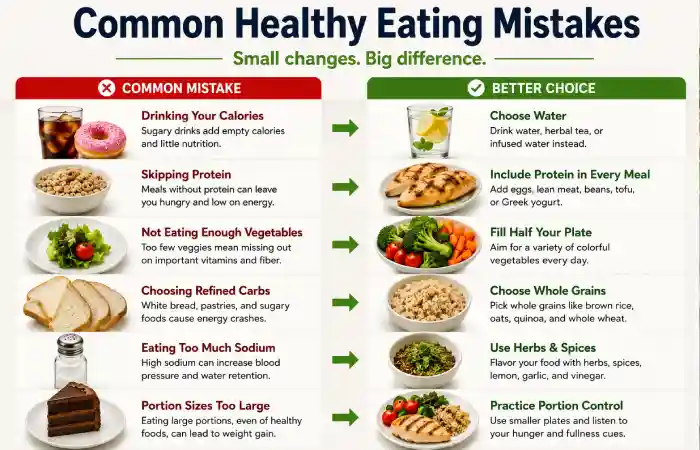
It’s amazing how people can just take one small step in the wrong direction and really bring down the health level of a meal, or make their commitment to healthy eating that much harder. Being mindful of a lot of these patterns can make it easier to have habits for life.
-
Skipping Protein
Protein serves a massive role in building muscle mass, satisfaction (fullness) and repair, not to mention the lack of food to your system causes it to go into shut down and begin your process of storing and hunger soon after meals.
Better choices include:
- Eggs
- Greek yoghurt
- Chicken breast
- Fish
- Tofu
- Lentils
- Chickpeas
- Cottage cheese
Tip: Aim to include a quality protein source in every main meal.
-
Eating Too Few Vegetables
Vegetables provide vitamins, minerals, antioxidants, and fibre while being naturally low in calories.
Simple ways to eat more vegetables:
- Add spinach to smoothies.
- Include a side salad with lunch.
- Roast mixed vegetables for dinner.
- Snack on carrots, cucumbers, or bell peppers.
- Add vegetables to soups and pasta sauces.
-
Choosing Refined Carbohydrates Too Often
Refined grains digest quickly and may not keep you full for long.
| Choose More Often | Limit More Often |
| Brown rice | White rice |
| Wholemeal bread | White bread |
| Oats | Sugary cereals |
| Quinoa | Refined pasta |
| Sweet potato | Chips |
Whole grains generally provide more fibre and micronutrients than refined alternatives.
-
Drinking Calories Instead of Eating Them
Many drinks contain significant amounts of added sugar.
Examples include:
- Soft drinks
- Sweetened coffees
- Energy drinks
- Flavoured milk beverages
- Sugar-sweetened fruit drinks
Better options include:
- Water
- Sparkling water
- Herbal tea
- Black coffee (if appropriate)
- Unsweetened tea
-
Ignoring Portion Sizes
Even nutritious foods can contribute excess calories if eaten in very large portions.
Practical Portion Guide
| Food | Suggested Portion |
| Lean protein | Palm-sized |
| Vegetables | Half the plate |
| Whole grains | One cupped hand |
| Nuts | Small handful |
| Healthy oils | 1–2 teaspoons |
-
Depending Too Much on “Healthy” Processed Foods
Some foods marketed as healthy can still contain:
- Added sugars
- High sodium
- Refined oils
- Artificial additives
Always check the nutrition label and ingredient list rather than relying solely on front-of-package claims.
-
Not Drinking Enough Water
Hydration supports digestion, physical performance, and normal body functions.
Tips to increase water intake:
- Carry a reusable water bottle.
- Drink water with every meal.
- Flavour water with lemon or cucumber.
- Eat water-rich foods such as watermelon, cucumber, and oranges.
Healthy Eating Mistakes Comparison
| Healthy Habit | Common Mistake |
| Whole foods | Ultra-processed foods |
| Balanced meals | Skipping meals |
| Home cooking | Frequent takeaway |
| Water | Sugary drinks |
| Portion awareness | Oversized servings |
| Meal planning | Last-minute choices |
How to Eat Healthy on a Budget
Healthy eating doesn’t have to be expensive. With thoughtful planning and smart shopping, you can enjoy nutritious meals while keeping grocery costs under control.
Buy Seasonal Produce
Seasonal fruits and vegetables are often:
- More affordable
- Fresher
- Better tasting
If fresh produce is costly, frozen vegetables and fruits are excellent alternatives.
Choose Affordable Protein Sources
Budget-friendly proteins include:
- Eggs
- Lentils
- Chickpeas
- Beans
- Tinned tuna
- Peanut butter
- Tofu
- Cottage cheese
These foods provide excellent nutrition without the higher cost of some meat and seafood.
Buy in Bulk
Purchasing pantry staples in larger quantities can reduce the cost per serving.
Examples:
- Oats
- Brown rice
- Dried beans
- Lentils
- Wholemeal pasta
- Frozen vegetables
Plan Meals Around Sales
Before shopping:
- Check supermarket offers.
- Plan meals using discounted ingredients.
- Freeze leftovers to reduce waste.
Cook at Home More Often
Preparing meals at home is usually more economical than ordering takeaway and gives you greater control over ingredients and portion sizes.
Budget Comparison
| Meal | Approximate Cost per Serving | Nutrition |
| Homemade vegetable stir-fry | Low | High |
| Lentil soup | Low | High |
| Chicken rice bowl | Moderate | High |
| Fast-food meal | Moderate to High | Often lower in fibre and higher in sodium |
| Frozen homemade meal | Low | High |
Money-Saving Shopping Tips
- Never shop when hungry.
- Make a grocery list.
- Compare unit prices.
- Buy store-brand products when appropriate.
- Reduce food waste by using leftovers creatively.
- Freeze ingredients before they spoil.
Troubleshooting Healthy Eating Challenges
Everyone encounters obstacles. The key is finding practical solutions rather than striving for perfection.
“I Don’t Have Time to Cook”
Solutions
- Meal prep once or twice a week.
- Use frozen vegetables.
- Buy pre-washed salad mixes.
- Choose one-pan meals.
- Use an air fryer or pressure cooker.
“Healthy Food Is Boring”
Healthy food becomes enjoyable with variety.
Try:
- New herbs and spices
- Homemade sauces
- Different cooking methods
- International cuisines
- Seasonal ingredients
“My Family Doesn’t Like Healthy Food”
Start with small changes:
- Add vegetables to familiar dishes.
- Replace refined grains gradually.
- Involve children in cooking.
- Offer colourful fruit platters.
- Focus on flavour rather than restriction.
“I’m Always Hungry”
Increase foods rich in:
- Protein
- Fibre
- Vegetables
- Healthy fats
These nutrients help improve fullness and satisfaction.
“Healthy Food Costs Too Much”
Remember:
- Frozen vegetables are nutritious.
- Beans and lentils are inexpensive.
- Oats are affordable.
- Eggs provide excellent value.
- Buying in bulk can reduce costs.
“I Don’t Know What to Cook”
Create a simple rotation of favourite meals.
Example:
- Monday – Chicken stir-fry
- Tuesday – Lentil curry
- Wednesday – Salmon with vegetables
- Thursday – Turkey chilli
- Friday – Homemade tacos
- Saturday – Vegetable pasta
- Sunday – Meal prep
Frequently Asked Questions
What are easy healthy meals?
Easy healthy meals are simple recipes made with whole or minimally processed ingredients that provide a balanced combination of protein, vegetables, whole grains, and healthy fats.
What is the healthiest meal to eat every day?
There is no single healthiest meal. Aim for balanced meals that include lean protein, vegetables, whole grains, healthy fats, and plenty of variety throughout the week.
Can healthy meals be prepared in under 30 minutes?
Yes. Many meals such as stir-fries, salads, omelettes, grain bowls, and baked fish can be prepared in 30 minutes or less.
Are frozen vegetables healthy?
Yes. Frozen vegetables are typically frozen soon after harvesting, helping preserve many nutrients while offering convenience and affordability.
How can beginners start eating healthy?
Begin by:
- Cooking at home more often.
- Eating more vegetables.
- Choosing whole grains.
- Including protein in every meal.
- Drinking more water.
Is meal prepping worth it?
Meal prep can save time, reduce food waste, support portion control, and make healthy eating more consistent during busy weeks.
What foods should always be in a healthy kitchen?
A practical healthy kitchen includes:
- Eggs
- Oats
- Brown rice
- Beans
- Lentils
- Greek yoghurt
- Frozen vegetables
- Olive oil
- Nuts
- Seasonal fruit
What are healthy snacks?
Examples include:
- Fruit
- Nuts
- Greek yoghurt
- Hummus with vegetables
- Cottage cheese
- Boiled eggs
Can easy healthy meals help with weight management?
Balanced meals rich in protein and fibre can support satiety and make it easier to maintain a healthy eating pattern when combined with regular physical activity.
How much water should I drink each day?
Individual hydration needs vary depending on age, activity level, climate, and health status. Drinking water regularly and responding to thirst are practical habits for most people.
Which cooking method is healthiest?
Methods such as steaming, baking, grilling, roasting, air frying (with minimal oil), and stir-frying using small amounts of healthy oil generally help retain nutrients while limiting added fat.
What are the best healthy carbohydrates?
Nutritious carbohydrate choices include oats, quinoa, brown rice, sweet potatoes, barley, legumes, and wholemeal bread.
Final Thoughts
Eating well means more than perfection, expensive food, and tons of kitchen time. A lifestyle-driven change to make healthy eating easier, realistic and lasting is small steps. If you keep simple healthy pantry staple ingredients handy, plan your meals out beforehand and keep your plates balanced, you can actually whip up and store simple healthy meals. Some more recent improvements I’ve made for easier healthier eating: more veggies for any recipe.
Keep in mind that healthy food isn’t a destination at all but is definitely a journey. Don’t get too caught up in a never ending perfect meal, but consider progress, balance and having fun along the way. Each nutrient rich meal just bring you another step closer to your good health.
Afiya Jafar is a fitness and wellness writer who focuses on making health, exercise, and healthy lifestyle information simple and practical. Her work covers workouts, fitness motivation, strength training, nutrition, weight management, stress management, mindfulness, and everyday wellness.
Read Full Bio of Afiya Jafar →
Sameena Begum reviews selected health, wellness, fitness, and digital content for clarity, factual presentation, consistency, and reader usefulness. Her review work helps maintain clear and responsible editorial standards across PhysicalFitt content.
Read Full Bio of Sameena Begum →
Dr. Khizrana Begum is a qualified medical professional with MBBS and MD qualifications and 5+ years of experience in the medical field. She works as a General Physician and Dermatologist, with expertise in general medicine, dermatology, preventive healthcare, and skin health.
Read Full Bio of Dr. Khizrana Begum →