
 Afiya Jafar
Fitness & Wellness Writer
Afiya Jafar is a fitness and wellness writer who focuses on making health, exercise, and healthy lifestyle information simple and practical.
Read Full Bio of Author →
Afiya Jafar
Fitness & Wellness Writer
Afiya Jafar is a fitness and wellness writer who focuses on making health, exercise, and healthy lifestyle information simple and practical.
Read Full Bio of Author →
 Sameena Begum
Health, Fitness & Digital Content Reviewer
Sameena reviews selected health, wellness, fitness, and digital content for clarity, factual presentation, and reader usefulness.
Read Full Bio of Reviewer →
Sameena Begum
Health, Fitness & Digital Content Reviewer
Sameena reviews selected health, wellness, fitness, and digital content for clarity, factual presentation, and reader usefulness.
Read Full Bio of Reviewer →
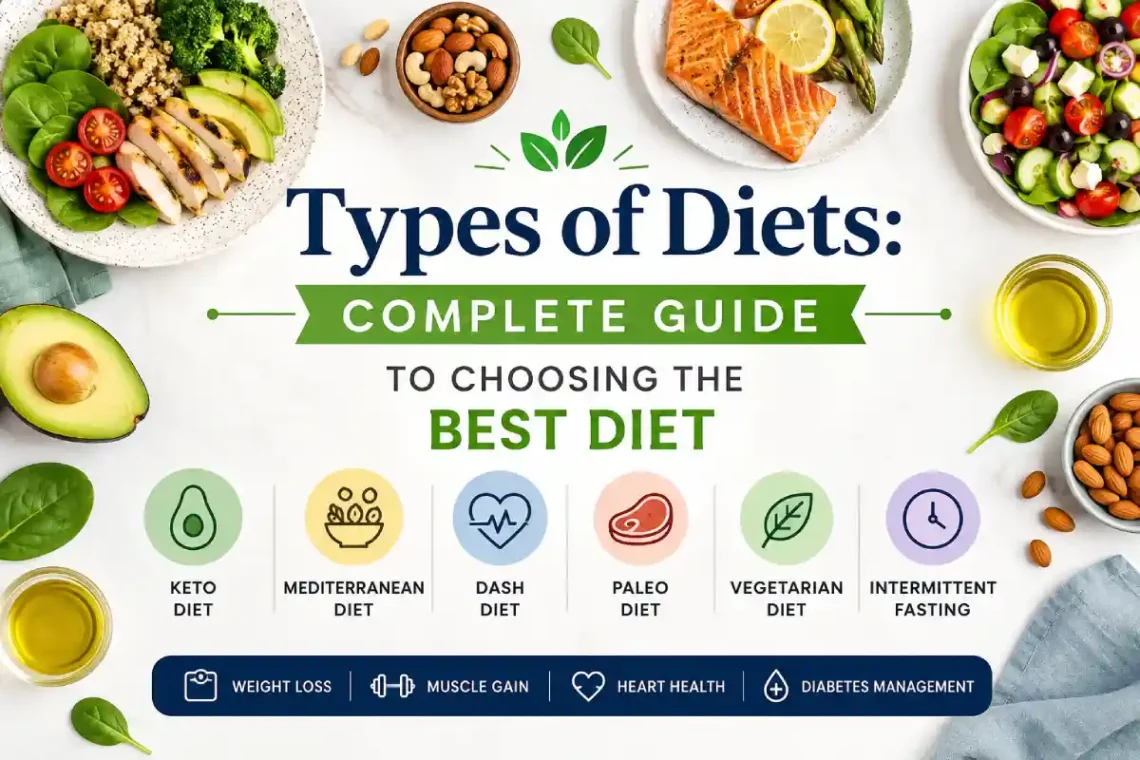
If you’ve looked up diets before, it’s likely you’ve come across nearly limitless ways of eating that promise better health, more weight loss, greater energy, or better fitness. The issue is that a diet that makes one person thrive may be inconvenient-and maybe even impossible or unhealthy- for another person to follow.
By 2026, nutrition advice focuses on the quality of what and how you eat overall rather than blindly chasing diets with the latest trend, the World Health Organization calls it a healthy diet based on 4 simple tenants, adequacy, balance, moderation, and diversity but notes needs will vary for factors including activity, age, and culture.
Here you won’t find a prescription for the best way to eat, but information about a variety of popular eating patterns and what you need to know about adopting one long-term.
Note: This guide is for information purposes and not as personalized health or diet advice. If you have any of the following conditions – including Diabetes, heart conditions, kidney failure, kidney disease, eating disorder, pregnant, any chronic medical conditions, please talk to a knowledgeable healthcare provider before making any dietary changes.
❝
This article is a part of
Special Diets Hub
For readers interested in a balanced, plant-forward eating pattern, the Mediterranean diet approach emphasizes vegetables, fruits, whole grains, legumes, nuts, healthy fats, and moderate amounts of fish and dairy.
What Are Diet Types?
A diet type is a specific eating pattern identified by certain guidelines on foods eaten, the times at which these are eaten, macronutrients, the types of foods eaten or frequencies of foods eating.
Some diets primarily change what you eat. Others change how much carbohydrate, fat, or protein you consume. Still others focus on when you eat, such as intermittent fasting.
A first key difference is that no diet necessarily has the purpose of a one-time or short-term effort of weight loss. You may be looking to adopt a way of life, such as a vegetarian lifestyle or a Mediterranean way of eating; other diets may provide more support, such as from a coach or prepared meals.
When you consider different lifestyles or commercial diet plans, think also about their safety, as well as whether they are effective and sustainable long-term Healthline does this by differentiating between the quality of a healthy lifestyle from a commercial diet.
The simplest way to categorize diets
| Typical example | Diet category | Main focus |
| Keto, low-carb, high-protein | Macronutrient-focused | Changes protein, carbs or fat |
| Vegan, vegetarian, paleo | Food-group-focused | Adds or removes specific food groups |
| Mediterranean, DASH | Dietary-pattern-focused | Overall food quality and balance |
| Intermittent fasting | Timing-focused | Changes when you eat |
| Weight-loss or muscle-building diet | Goal-focused | Designed around a specific outcome |
Those looking for a low-carbohydrate approach may consider keto diet, a dietary pattern that significantly reduces carbohydrate intake while emphasizing fat and moderate protein.
Why Choosing the Right Diet Matters
The right eating pattern should do more than produce a quick result on the scale.
It should help you:
- Meet your nutritional needs.
- Support your specific health or fitness goal.
- Fit your food preferences and culture.
- Work with your schedule.
- Be financially realistic.
- Be sustainable over months and years.
- Avoid unnecessary restriction.
- Support an enjoyable relationship with food.
The WHO’s 2026 healthy-diet guidance emphasizes variety, minimally processed and unprocessed foods, nutritional adequacy, balance and moderation.
Why “the best diet” is usually the wrong question
A better question is:
“Which eating pattern best fits my goal, nutritional needs and lifestyle?”
There is no universal diet winner.
For people prioritizing heart health and blood-pressure-friendly eating, the DASH diet approach focuses on vegetables, fruits, whole grains, legumes, nuts, low-fat dairy, and lower sodium intake.
Understanding Nutritional Needs
Before choosing a diet, understand what your body actually needs.
The major nutritional categories include:
Protein
Protein can aid muscle maintenance and growth, and is involved in countless bodily functions.
Those who have an exercise regimen can often exceed average protein guidelines – set by the base requirement for most sedentary adults. Historically, training individuals fall within the sports-nutrition recommendations typically 1.4 to 2.0 grams of protein/kg/day, determined by your individual training level and other factors.
The future 2025-2030 Dietary Guidelines for Americans has, for the first time, focused on a specific category; Protein – as one of five groups essential for a healthy diet.
Carbohydrates
Carbohydrates are important sources of energy, particularly for active people.
Rather than automatically treating carbohydrates as unhealthy, consider their source:
Better choices include:
- Oats
- Whole grains
- Beans
- Lentils
- Fruits
- Vegetables
- Potatoes and other minimally processed starchy foods
Dietary fat
Fat is essential for cell function and helps the body absorb certain fat-soluble vitamins.
The quality of fat matters. Unsaturated fats from foods such as nuts, seeds, fish, avocado and plant oils are generally preferable to high amounts of saturated and trans fats.
Fiber
Fiber supports digestive health and can help improve fullness and overall dietary quality.
Useful sources include:
- Beans
- Lentils
- Vegetables
- Fruits
- Whole grains
- Nuts
- Seeds
Micronutrients
Vitamins and minerals is another reason extreme diet plans need a good dose of cautiousness. Eliminating of a number of foods categories without replacing those in foodstuff such as the nutrients that includes calcium, vitamin D, iron, iodine and or perhaps vitamin B12.
Another whole-food-focused option is the Paleo diet, which emphasizes foods such as vegetables, fruits, seafood, eggs, meat, nuts, and seeds while limiting many processed foods, grains, and legumes.
Most Popular Types of Diets
The table below gives a quick overview before we examine each approach.
| Diet | Main principle | Main challenge | Potential advantage |
| Low-carb | Reduce carbohydrate intake | Can become overly restrictive | May simplify carbohydrate control |
| High-protein | Prioritize protein-rich foods | Excessive protein isn’t automatically better | Useful for satiety and muscle support |
| Mediterranean | Mostly plant-forward, minimally processed foods | Requires regular access to varied foods | Strong overall health profile |
| DASH | Heart- and blood-pressure-focused pattern | Sodium reduction may take planning | Strong cardiovascular rationale |
| Keto | Very low carbohydrate, high fat | Highly restrictive and difficult for some | Can produce rapid initial weight changes |
| Paleo | Emphasizes minimally processed foods and excludes several modern foods | Excludes nutritious foods such as legumes and grains | Encourages whole foods |
| Vegetarian | Avoids meat, often includes eggs/dairy | Requires attention to nutrient adequacy | Plant-rich eating |
| Vegan | Excludes animal products | B12 and other nutrients require planning | Strong plant-food emphasis |
| Intermittent fasting | Restricts eating windows | May not suit everyone | Simple structure for some people |
| Flexitarian | Mostly plant-based with occasional animal foods | Less standardized | Flexible and practical |
For those who prefer an entirely plant-based eating pattern, a vegan diet excludes animal-derived foods and instead centers meals around vegetables, fruits, legumes, soy foods, whole grains, nuts, and seeds.
Low-Carb Diets Explained
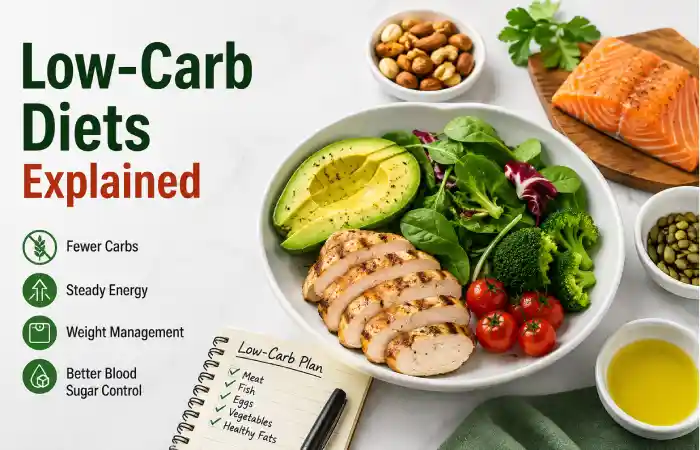
Low-carb diets reduce carbohydrate intake compared with a conventional eating pattern.
However, low-carb doesn’t automatically mean keto.
A low-carb diet may still contain:
- Vegetables
- Fruit
- Beans in moderate amounts
- Dairy
- Nuts and seeds
- Protein-rich foods
- Healthy fats
The amount of carbohydrate varies considerably between low-carb approaches.
Potential benefits
Depending on food quality and overall calorie intake, a lower-carbohydrate approach may help some people:
- Manage appetite
- Reduce intake of refined carbohydrates
- Improve dietary structure
- Manage blood glucose
- Lose weight
Potential drawbacks
High in carbs can lack sufficient nutrients if people decide to substitute all vegetables, pulses and whole-grains with vast amounts of processed meats, butter or any food saturated with fat.
Better approach – to first eliminate refined carbohydrates as opposed to having a ‘no carbs whatsoever’ policy
A vegetarian diet is another plant-rich option, although the exact foods included can vary depending on the type, with some versions allowing dairy, eggs, or both.
High-Protein Diets
A high-protein diet prioritizes protein-rich foods such as:
- Eggs
- Fish
- Chicken
- Greek yogurt
- Cottage cheese
- Milk
- Soy foods
- Beans
- Lentils
- Peas
- Lean meats
For active individuals, adequate protein is often an important factor for muscle repair and adaptation.
High-protein diet for weight lossProtein may be helpful with promoting fullness, thus easier for some individuals to stay in a calorie deficit.
However, “high protein” does nottrump calorie balance.
An all-protein based diet could still come from too many calories.
High-protein diet for muscle gainIt takes more than protein for muscle gain.
Building muscle properly usually involves:
Resistance training + sufficient protein + sufficient calories + sufficient carbohydrates + sufficient recovery
Most exercises’ protein recommendation tends to range between 1.4-2.0 grams per kilograms of body weight, however the specific range differs among individuals.
Mediterranean Diet
The Mediterranean diet is better understood as a dietary pattern and lifestyle than a rigid meal plan.
It emphasizes:
- Vegetables
- Fruits
- Whole grains
- Beans and legumes
- Nuts and seeds
- Olive oil
- Fish
- Moderate amounts of dairy, poultry and eggs
- Limited red and processed meat
- Minimally processed foods
The American Heart Association states that a Mediterranean eating style would eat mostly vegetables, fruits, whole grains, beans and other legumes, and would avoid adding fats and sugars, and also reduce highly processed items and starches and saturated fats.
Why it stands out in 2026
Consistently, one of the approaches the most evidence supports for health on a general level is the Mediterranean pattern. It was rated a 5.0/5 and a “Best Overall” based on a 2026 Forbes Health expert review.
Mediterranean diet food hierarchy
Eat most:
Fruits, vegetables, legumes, whole-grains, nuts, seeds and plant-derived oils.
Eat moderately:
Fish, seafood, eggs, yogurt and poultry.
Eat least:
Sweet-stuff, red-meat, processed meat, and more processed foods.
A 2025 review in American journal of clinical nutrition called attention to the continued scientific and historical relevance of the Mediterranean diet pattern.
DASH Diet
DASH stands for Dietary Approaches to Stop Hypertension.
Unlike many popular diets, DASH was developed specifically around cardiovascular and blood-pressure health.
It emphasizes:
- Vegetables
- Fruits
- Whole grains
- Low-fat or fat-free dairy
- Fish
- Poultry
- Beans
- Nuts
- Seeds
- Vegetable oils
It limits foods high in saturated fat, added sugars and sodium.
DASH sodium targets
| Approach | Daily sodium |
| Standard DASH target | ≤2,300 mg |
| Lower-sodium DASH | ≤1,500 mg |
NHLBI states that reducing sodium to 1,500 mg can lower blood pressure even further than 2,300 mg in appropriate populations.
DASH and blood pressure
What participants learn People who completed the DASH-Sodium study learned that they got lower blood pressure when they ate a low-sodium meal plan, and did even better with both a low-sodium meal plan and the DASH diet.
Who would benefit: Anyone looking for an easier and healthier heart diet – particularly a someone who knows he or she needs to get their blood pressure down but not know where to start.
Ketogenic (Keto) Diet
The ketogenic diet is a very-low-carbohydrate, high-fat, moderate-protein eating pattern designed to encourage nutritional ketosis.
Common keto foods include:
- Eggs
- Fish
- Meat
- Cheese
- Avocado
- Nuts
- Seeds
- Low-carbohydrate vegetables
- Oils and fats
Foods commonly limited include:
- Bread
- Rice
- Pasta
- Sugary foods
- Many grains
- Many high-carbohydrate fruits
- Legumes in significant amounts
Keto versus low-carb
This is not exactly a substitute for each other.
People may be following a diet with a lower carbohydrate intake while not necessarily in the ketogenic stage or state. To have an actual ketogenic diet you must restrict your carbs significantly enough that you begin producing ketones.
Some diets that are marketed as “Keto” actually resemble a less restricted low-carb diet, according to Forbes Health.
Benefits of keto
Keto could actually help in some cases to aid substantial short term weight loss, especially if calories total would be reduced.
Drawbacks of Keto
Strict restrictions may make it tricky to obtain foods high in fiber, like whole grains, beans and many fruits.
These foods might also prove very challenging to keep when it comes to social events and real-life scenarios. Keep in mind that those on insulin or who are dealing with certain health problems should not begin these sorts of diet plans without first speaking to a trained health provider.
Paleo Diet
The paleo diet is influenced heavily by dietary selections of our distant ancestors, prior to the development of farming.
It typically emphasizes:
- Meat
- Fish
- Eggs
- Vegetables
- Fruits
- Nuts
- Seeds
It generally excludes:
- Grains
- Legumes
- Most dairy
- Refined sugar
- Highly processed foods
Vegetarian and Vegan Diets
Plant-based eating can range from flexible plant-forward eating to completely vegan diets.
Vegetarian diet
Vegetarians generally avoid meat, poultry and seafood but may eat eggs and/or dairy depending on the type.
| Type | Meat | Dairy | Fish | Eggs |
| Lacto-ovo vegetarian | No | Yes | No | Yes |
| Lacto vegetarian | No | Yes | No | No |
| Ovo vegetarian | No | No | No | Yes |
| Vegan | No | No | No | No |
Vegan diet
A vegan diet excludes animal-derived foods and focuses entirely on plant foods.
Common foods include:
- Beans
- Lentils
- Soy
- Tofu
- Tempeh
- Vegetables
- Fruit
- Whole grains
- Nuts
- Seeds
Intermittent Fasting as a Dietary Approach
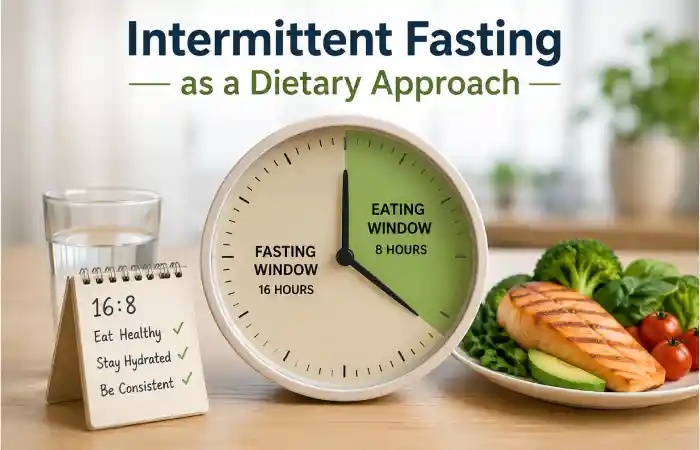
Intermittent fasting focuses primarily on when you eat, rather than exactly which foods you eat.
Common ways include:
- 16:8: restricts the eating window to an 8 hour period for two and a bit meals and may incorporate another, leaving the fast for approximately 16 hours and includes the sleeping part of each day.
- 14:10: a softer type of time-restricted eating
- 5:2: limits calorie intake significantly to 2 days a week with no or minimal restrictions on the other five days.
- Alternative day strategies: alternating normal eating and restricted/ fasting days.
How intermittent fasting may work
For some people, restricting eating hours reduces opportunities for snacking and therefore lowers overall calorie intake.
The important distinction is that fasting isn’t magic. Food quality, calorie intake, protein, fiber and overall nutrition still matter.
Who should be cautious?
Intermittent fasting isn’t appropriate for everyone.
People who are pregnant or breastfeeding, those with certain medical conditions, people taking medications that can cause low blood sugar, and individuals with a history of eating disorders should seek individualized professional advice before attempting fasting.
Diets for Weight Loss
For weight loss, the most important question isn’t:
“Which diet burns the most fat?”
It’s:
“Which nutritionally adequate approach can help me maintain an appropriate calorie deficit without becoming miserable or excessively restrictive?”
Mayo Clinic notes that different diet programs can produce weight loss compared with no program, while differences between individual diets may be relatively small.
Strong candidates for weight management
| Approach | Weight-loss potential | Sustainability | Key consideration |
| Mediterranean | High | High | Focuses on food quality |
| DASH | High | High | Excellent overall dietary structure |
| High-protein | High | Moderate–High | Helps support fullness |
| Low-carb | High | Moderate | Choose quality carbs |
| Keto | High initially | Low–Moderate | More restrictive |
| Vegetarian | Moderate–High | High | Watch protein and micronutrients |
| Vegan | Moderate–High | Moderate–High | Requires planning |
| Intermittent fasting | Moderate–High | Variable | Eating window must fit lifestyle |
The weight-loss formula
A sustainable plan generally includes:
Healthy amounts of food + Protein + Fiber rich food + resistance/activity + Sleep + Habits
No particular eating system negates the need for habits.
Diets for Muscle Gain
If your primary goal is muscle gain, don’t choose a diet simply because it is popular for weight loss.
Muscle-building nutrition requires adequate energy and protein.
Priorities
- Eat calories enough for training and recovering.
- Eat enough protein.
- Eat carbs in the name of having energy for trainings.
- Eat some fruits and vegetables.
- Eat some healthy dietery fat.
- Workouts strength training on a regular basis.
- Sleep and restore well.
A common protein consumption suggestion ranges from 1.4-2.0 g per kg per day for athletic people who are training.
Best diet types for muscle gain
A Mediterranean-style, high-protein, vegetarian or omnivorous eating pattern can all support muscle growth.
The key isn’t the label.
It’s whether the diet provides enough total energy, protein and nutrients to support training.
Diets for Heart Health
For cardiovascular health, dietary quality is more important than following an extreme macro split.
Strong options include:
- Mediterranean-style eating
- DASH
- Plant-forward diets
- Vegetarian diets
- Flexitarian approaches
Heart-health comparison
| Pattern | Plant foods | Fiber potential | Sodium emphasis | Saturated-fat emphasis |
| Mediterranean | High | High | Moderate | Moderate–High |
| DASH | High | High | High | High |
| Vegetarian | High | High | Depends on foods | Depends on foods |
| Vegan | Very high | High | Depends on foods | Usually lower if whole-food based |
| Keto | Variable | Variable | Usually not central | Requires careful attention |
WHO’s 2026 guidance also emphasizes limiting sodium, unhealthy fats and highly processed foods while increasing dietary diversity.
Diets for Diabetes Management
There is no one ‘diabetes diet that is right for everyone.
A “diabetes-friendly diet should tend to focus on”:
- Non starchy vegetables
- High fiber food sources
- Adequate portion sizes
- Protein sources
- Healthy fats
- Minimally processed foods
- Reduced intake of added sugars
- Individualised carbohydrate intake
Important distinction
Understanding diabetes management isn’t solely about managing carbohydrates in food. It involves much more. Amount of carbohydrates carbohydrate type medication type and dose activity level body mass number of and individual preferences.
It’s always good for an individual on insulin or oral medications that cause low blood sugars (hypoglycemic medications), such as sulfonylureas, to consult with their provider about major dietary changes as significant changes to eating can impact glucose and need for medication.
How to Choose the Right Diet for Your Lifestyle
Choosing a diet becomes easier when you reverse the process.
Don’t start with:
“Which diet is trending?”
Start with:
“What do I need this diet to accomplish?”
Step 1: Define your primary goal
Choose one primary objective:
- Weight loss
- Muscle gain
- Better blood pressure
- Better blood glucose management
- General health
- Plant-based eating
- Improved food quality
Step 2: Identify your non-negotiables
Ask yourself:
- Do I eat meat?
- Do I enjoy dairy?
- Can I cook regularly?
- What is my food budget?
- How often do I eat outside?
- Do I need quick meals?
- Can I realistically follow a restricted eating window?
Step 3: Test sustainability
Before committing to a diet, imagine following it for six months.
If the thought sounds impossible, it’s probably not the right long-term approach.
Step 4: Check nutritional adequacy
Look for:
- Adequate protein
- Fiber
- Fruits and vegetables
- Healthy fats
- Whole-food carbohydrate sources where appropriate
- Necessary vitamins and minerals
Step 5: Consider cultural fit
A diet doesn’t have to contain expensive imported foods to be healthy.
For example, an Indian-style diet can incorporate many Mediterranean- or DASH-compatible principles using foods such as:
- Dal
- Chana
- Rajma
- Vegetables
- Fruit
- Curd
- Whole grains
- Nuts and seeds
- Fish or lean protein if desired
The underlying principles matter more than copying another country’s menu exactly.
2026 Diet Comparison: Which Type Fits Which Goal?
Use this as a starting point—not a medical prescription.
| Why | Goal | Diet types worth considering |
| Strong emphasis on whole foods and dietary quality | Overall health | Mediterranean, DASH, plant-forward |
| Strong focus on vegetables, fiber and healthier fats | Heart health | DASH, Mediterranean, plant-forward |
| Specifically designed around hypertension | Blood-pressure management | DASH |
| Multiple approaches can support calorie control | Weight loss | Mediterranean, high-protein, low-carb, DASH |
| Supports training and recovery | Muscle gain | High-protein + balanced diet |
| Flexible plant-food emphasis | Plant-based lifestyle | Vegetarian, vegan, flexitarian |
| Can support metabolic goals when individualized | Diabetes management | Mediterranean, carefully planned low-carb, DASH-style |
| Fewer rigid restrictions | Simple eating | Mediterranean/flexitarian |
| Very-low-carb structure | Maximum carbohydrate restriction | Keto |
| Allows occasional animal foods | Flexible transition | Flexitarian |
2026 evidence snapshot
The latest guidance reinforces a common theme:
Overall diet quality and a country’s sustainable food supply-not the name of a diet-are the most important aspects to consider.
WHO has updated their healthy-diet guidance and it came out in January 2026 that states that healthy diets should be sufficient, balanced, diverse, moderate and minimally processed foods.
In January 2026, ADA standards list the Meditterean style and the low carbohydrate diets as approaches supported by evidence for the prevention of and nutrition care of diabetes.
Updated 2026 DASH guidance from the NHLBI continues to support the recommendation of various vegetables, fruits, whole grains, low fat dairy, fish, poultry, beans and nuts; saturated fat and sodium are kept as lows.
Common Diet Mistakes to Avoid
- Choosing a diet because it is trending
Popularity isn’t proof of suitability.
- Eliminating foods without replacing nutrients
Removing grains, dairy, meat or other food groups requires planning.
- Focusing only on calories
Calories matter for body weight, but food quality matters for nutritional adequacy and health.
- Eating too little protein
This can be particularly problematic for people who exercise or are trying to preserve muscle during weight loss.
- Ignoring fiber
Extreme restriction of fruits, vegetables, legumes and whole grains can make fiber intake unnecessarily difficult.
- Treating “healthy” foods as unlimited
Foods can be nutritious and still contribute substantial calories.
- Assuming keto means healthy
A low-carbohydrate label doesn’t automatically guarantee good food quality.
- Assuming vegan means nutritionally complete
Plant-based eating still requires attention to nutrients such as B12.
- Expecting instant results
A diet should be judged over months, not by a few days of scale changes.
- Ignoring lifestyle compatibility
The healthiest theoretical diet is useless if you cannot realistically follow it.
Troubleshooting: What If Your Diet Isn’t Working?
“I’m following the diet but not losing weight.”
Review:
- Portion sizes
- Liquid calories
- Snacks
- Weekend eating
- Restaurant meals
- Activity level
- Sleep
- Consistency
Don’t immediately switch to a more restrictive diet.
“I’m constantly hungry.”
Check whether your meals contain enough:
- Protein
- Fiber
- Vegetables
- Whole-food carbohydrates
- Healthy fats
A diet that leaves you chronically hungry may be poorly designed for you.
“I’m tired after changing diets.”
Very restrictive calorie intake, inadequate carbohydrate intake, poor meal timing, dehydration or nutrient deficiencies can contribute.
If persistent fatigue develops, speak with a healthcare professional.
“I’m exercising but not building muscle.”
Check your:
- Total calorie intake
- Protein intake
- Training progression
- Recovery
- Sleep
- Consistency
Simply eating more protein won’t compensate for ineffective resistance training or inadequate recovery.
“I can’t stick to my diet.”
This may be a diet-fit problem rather than a motivation problem.
Try making the plan less restrictive.
A sustainable eating pattern that you follow consistently can be more useful than a theoretically perfect plan that you abandon after two weeks.
Product and Meal-Planning Comparison
For the commercial-investigation side of the search intent, readers may also compare products and services that make different diet types easier to follow.
Rather than choosing products based on marketing claims, compare them using these criteria:
| Product/service type | Best for | What to compare | Red flags |
| Meal-planning app | People who need structure | Recipes, customization, tracking | Unrealistic calorie targets |
| Food scale | Portion awareness | Accuracy, readability, durability | Obsessive tracking |
| Protein-rich food products | Muscle-focused diets | Protein per serving, ingredients, price | Excessive added sugar |
| Low-sodium packaged foods | DASH-style eating | Sodium per serving | “Healthy” branding without label review |
| Plant-based convenience foods | Vegetarian/vegan diets | Protein, fiber, sodium, saturated fat | Highly processed products used as the entire diet |
| Meal-delivery service | Busy schedules | Ingredients, customization, cost | Expensive recurring commitments |
| Nutrition coaching | Personalized support | Credentials and methodology | Guaranteed-result claims |
Practical Example: Building a Balanced Plate
You don’t necessarily need a branded diet to improve your eating pattern.
A simple meal framework could include:
½ plate: vegetables and/or fruit
¼ plate: protein
¼ plate: whole-food carbohydrate
Plus: a reasonable portion of healthy fat
Examples:
Vegetarian
Dal + brown rice + mixed vegetables + curd + salad
Non-vegetarian
Grilled fish + potatoes or whole grains + vegetables + yogurt
Vegan
Tofu + lentils + vegetables + whole grain + nuts or seeds
This framework can be adapted to Mediterranean, DASH, vegetarian, flexitarian and many other dietary patterns.
Frequently Asked Questions About Types of Diets
What are the main types of diets?
They can also take many different forms -macro led diets like low carb and high protein, food group focused diets like Mediterranean and DASH or goals focused diets like keto and paleo, and can also be vegetarian, vegan, flexitarian and or intermittent fasting.
Which diet is the healthiest?
There’s a lot of overlap among diet patterns that promote health. They focus on plant-focused, less processed foods with evidence for long-term health in larger population studies and large individual studies. It may still be individual.
Which is the best diet for losing weight?
The ideal diet will be one that you love the taste of while generating appropriate calorie deficits, with balanced nutrients and decent amounts of protein. For many of us, diets like the Mediterranean or the very lower calorie, high carb diet work, and even the high protein, plant based ones.
Is a low-carb diet the same as keto?
Keto’s definition comes from the 6 months that you would undertake this diet, specifically targeting a higher concentration in your blood and making more ketones, which the majority of low carb diet plans would aim to limit.
Low carb can therefore be more vaguely understood as merely comprising a less carbohydrate packed diet plan that would ordinarily be consume, which implies in the standard low carb meal plan is typically around one third more less that which we would ordinarily be eating.
Is keto better than a Mediterranean diet?
No. Each has a role but generally speaking Mediterranean patterns of eating generally promote well-being across the board. Though they differ drastically, if they allow certain preferences, even in this form the choice may be quite suitable, according to medical experts.
What diet is best for muscle gain?
Your body utilizes calories and enough protein to facilitate muscle growing after 3 to 7 days when it comes down to it. Those calories include everything from energy and macronutrients to basic things you put into the body on your journey toward better health.
What is the best diet for heart health?
DASH (Dietary approaches to Stop Hypertension) and foods that contain lowcholestroland low fat, since the DASH would be good for eatings rich in fruits, vegetables, low fat dairy products and nuts because the food would contain all the nutrients required for a healthy functioning heart, then also the food would also benefit people as a complete package as it would serve the needs of many different people.
Can I eat enough protein on a vegetarian diet?
Sure, if your diet includes foods like dairy products, eggs, lentils, beans and nuts. There are various types of protein sources, whether vegan, low-carb, Paleo, keto, etc and each will have unique ingredients to assist you on your diet. So the list is almost endless if we don’t count any number of other food sources out there in the food market or grocery store.
Are all vegan diets inherently healthy?
Not necessarily, it all depends on the overall pattern of eating and that should comprise fruits, vegetables and whole grains along with other natural foods for well being. Other wise, even though a diet may be lacking from non-animal-sourced products and is healthy. Many vegan options are more natural foods then others but that’s where they differ.
Is it safe for anyone to adopt intermittent fasting protocols for a limited duration?
According to health organizations like health.cleveland.org, there are a number of individuals that can safely engage in intermittent fasting such as, overweight or obese participants, pregnant women, patients taking medical remedies to maintain adequate weight. It might not be for diabetics and those at risk, etc, for these individuals a special arrangement needs to made which can suit them.
For how much time Should someone really follow the diet they plan on following?
If the aim is to improve one’s health to the optimum possible, some type of dietary overhaul need to be implemented and sustained for rest of one’s life if one desires optimal health conditions or the benefits from a particular diet they adopt and for all. A restriction of a diet can be made on and for no longer than 3 to 12 weeks depending on the intent.
Is it possible for these various types of diets to coexist as components rather than being mutually exclusive?
Certain dietetic frameworks are adaptable, in that, at least in terms of dietary guidelines and goals, several can co-exist within a single nutritional plan. What does each particular pattern include in general in terms of a healthy eating style, we may find these similarities that offer hope to dietary options among peoples.
The Bottom Line: Choosing Among the Types of Diets
The Take Home Message: No diet reigns supreme. The most successful diet is the one that fuels you according to your body’s needs, accommodates your goals, aligns with your lifestyle, traditions and budget and is a healthy dietary approach that is sustainable long-term.
Mediterranean and DASH-based dietary patterns are excellent to incorporate when you don’t have a specific condition and the main goal is to enhance overall wellness because they are filled with vegetables, fruits, whole grains, legumes, nuts, healthy oils and are based on the consumption of minimally-processed foods.
Muscle gain-wise: don’t obsess on any particular diet plan, but rather concern yourself with consuming sufficient calories and sufficient amounts of protein for building muscle combined with consistent resistance training.
For weight loss: The objective is a sustainable caloric deficit and not the most restrictive diet you can endure in the short term. Focus on the quality of foods consumed, adequate protein and fiber intake.
Cardiovascular health and Diabetes: While there are diets recommended in the Guidelines-based on evidence, these should be individualized and customized to a healthcare setting along with a healthcare professional.
And finally the simplest one don’t adopt a Diet in the pursuit of rapid and unsustainable weight loss.
Follow the eating pattern with which you can sustain and nourish yourself.
Afiya Jafar is a fitness and wellness writer who focuses on making health, exercise, and healthy lifestyle information simple and practical. Her work covers workouts, fitness motivation, strength training, nutrition, weight management, stress management, mindfulness, and everyday wellness.
Read full bio of Afiya Jafar
Sameena reviews selected health, wellness, fitness, and digital content for clarity, factual presentation, and reader usefulness.
Read full bio of Sameena Begum