
 Afiya Jafar
Fitness & Wellness Writer
Afiya Jafar is a fitness and wellness writer who focuses on making health, exercise, and healthy lifestyle information simple and practical.
Read Full Bio of Author →
Afiya Jafar
Fitness & Wellness Writer
Afiya Jafar is a fitness and wellness writer who focuses on making health, exercise, and healthy lifestyle information simple and practical.
Read Full Bio of Author →
 Sameena Begum
Health, Fitness & Digital Content Reviewer
Sameena reviews selected health, wellness, fitness, and digital content for clarity, factual presentation, and reader usefulness.
Read Full Bio of Reviewer →
Sameena Begum
Health, Fitness & Digital Content Reviewer
Sameena reviews selected health, wellness, fitness, and digital content for clarity, factual presentation, and reader usefulness.
Read Full Bio of Reviewer →
 Dr. Khizrana Begum
General Physician & Dermatologist
Dr. Khizrana Begum is a General Physician and Dermatologist with MBBS and MD qualifications and 5+ years of experience in the medical field.
Read Full Bio of Medical Reviewer →
Dr. Khizrana Begum
General Physician & Dermatologist
Dr. Khizrana Begum is a General Physician and Dermatologist with MBBS and MD qualifications and 5+ years of experience in the medical field.
Read Full Bio of Medical Reviewer →
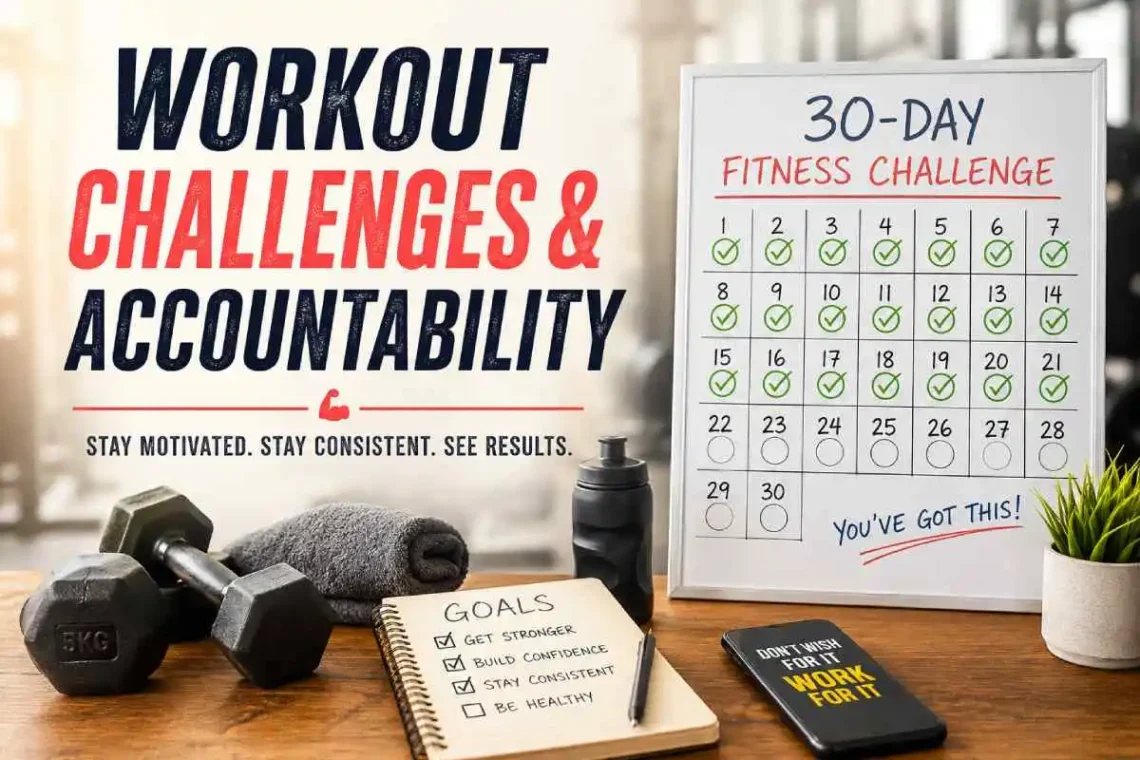
Workout success almost never comes from finding the “right” plan. Most of us actually already know what workouts we should be doing. The difficulty is sticking with the workouts long enough to see any results. Workout Challenges & Accountability help achieve this.
Based on the research and the fitness industry, the trend continues: accountability partners, workout challenges, progress tracking, and fitness groups can dramatically boost workout consistency when training alone doesn’t cut it. This guide explains how to use challenges and accountability to reach lasting success.
❝
This article is a part of
Workout Motivation Hub
Why Workout Challenges Work
We use motivation for exercise. The issue is that motivation goes up and down.
Workout challenges build a system so that you keep moving even when motivation disappears.
Benefits include:
- Clear goals
- Daily structure
- Progress tracking
- Friendly competition
- Community support
- Habit formation
Current research and reports within the fitness industry demonstrate how gamification, streak tracking and accountability systems increase workout consistency.
Comparison Table: Popular Fitness Accountability Methods in 2026
| Cost | Accountability Method | Difficulty |
| Free | Workout Partner | Easy |
| Free | Fitness Challenges | Easy |
| Low | Accountability Apps | Easy |
| High | Personal Trainer | Moderate |
| Free | Fitness Communities | Easy |
| Free | Printable Trackers | Very Easy |
| Free | Social Media Challenges | Easy |
30-Day Workout Challenge Ideas
A 30 day challenge is ideal, enough time to get the habit going, but not at all overwhelming!
A beginners 30 day challenge:
1st week:
Walk 20 mins everyday
2nd week:
Introduce 2 days of strength training
3rd week:
Walk 30 mins everyday
4th week:
Train 4 times this week
Strength Challenge
- 20 squats daily
- 10 pushups daily
- 30-second plank daily
Increase repetitions each week.
Walking Challenge
- 8,000 steps per day
- Progress to 10,000 steps
Mobility Challenge
- 10 minutes stretching daily
- Focus on consistency over intensity
Workout adherence is still one of the most effective techniques, and this method of programs based on challenge is one of the best that there is.
Best Fitness Accountability Tips
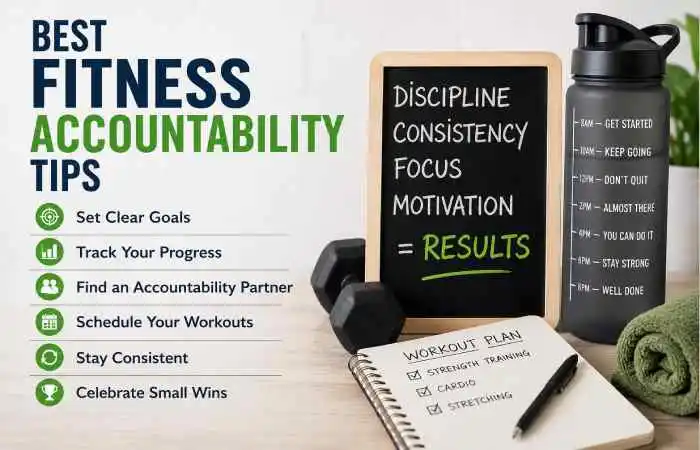
- Schedule Workouts Like Appointments
Treat exercise as a non-negotiable calendar event.
- Track Every Workout
People who monitor progress are more likely to stay consistent.
Track:
- Workouts completed
- Weight lifted
- Steps walked
- Weekly activity minutes
- Set Process Goals
Instead of:
Lose 20 pounds
Use:
Complete 4 workouts weekly
Process goals are easier to control and sustain.
- Celebrate Small Wins
Every completed workout is progress.
Reward consistency rather than perfection.
- Create Backup Plans
Missed workouts are inevitable.
Successful exercisers always have:
- Home workout alternatives
- Short workout options
- Recovery day activities
They suggest that the emphasis be on being flexible instead of perfect to maintain a long term commitment.
How to Find a Workout Partner
There is tremendous benefit to be had in working with a workout partner. Accountability has been documented in research studies, and is reported by fitness coaching professionals as being the most significant contributor to building and sustaining exercise over the long term. An workout partner is the provider of support, motivation, and accountability.
Why a Workout Partner Helps
Exercising with a buddy gives you responsibility. Another person looking to you to be there for a session makes you less likely to skip it. A workout partner can also:
- Make it fun and engaging
- Offer encouragement when it gets tough
- Allow progress tracking and celebrate achievements
- Maintain consistency and discipline
- Create healthy competition that boosts performance
Where to Find a Workout Partner
There are several places to connect with people who share similar fitness goals:
| Location | Benefits |
| Local Gym | Meet people with similar workout interests |
| Running or Cycling Clubs | Get active in a fitness group setting |
| Workplace Wellness Programs | Take part in a fitness initiative with colleagues sharing a similar schedule |
| Social Media Fitness Groups | Link with a fitness group of likeminded people in your local area |
| Friends and Family | Build accountability with someone you already know |
| Community Centers | Participate in group fitness activities |
Qualities to Look For in a Workout Partner
Your fellow gym goer may not always be the best accountability partner for you. Seek out someone who:
- Is also aiming for similar goals
- Is reliable and consistently on time
- Has a positive attitude
- Is encouraging rather than critical
- Has similar availabilities with their schedule
- Is committed to lifelong healthy habits
Tips for Building a Successful Workout Partnership
To get the most out of your partnership:
- Set clear fitness goals together.
- Agree on workout days and times.
- Track progress regularly.
- Discuss the expectations openely.
- Acknowledge successful goals and achievements.
- Be understanding when schedule needs to change.
Alternatives if You Can’t Find a Workout Partner
Even without an exercise buddy in the flesh, the following accountability methods work well:
- Join online fitness communities.
- Join virtual fitness challenges.
- Use an accountability app with social capabilities.
- Consider a personal trainer/fitness coach.
- Share workout efforts on social media.
Making Accountability Work Long-Term
Good training partners are all about consistency, not perfection. Nobody’s workout is always flawless, and having a friend or other partner who prompts you to just get back on track is likely to make you much more successful with achieving fitness results. Whether that partner is a family member, friend, co-worker, or an online group of friends with whom you keep yourself accountable, the correct partner may just be the key to moving your exercise routines from just an idea to a lasting part of your life.
Printable Workout Trackers
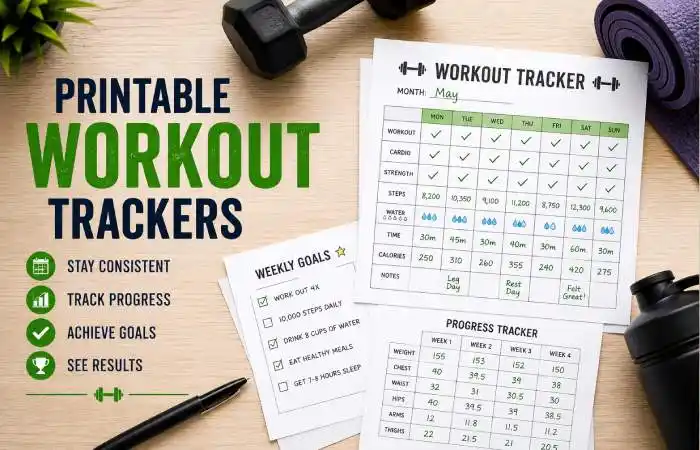
Workout tracking transforms goals into measurable progress.
Trackers help monitor:
- Daily workouts
- Weekly progress
- Body measurements
- Step counts
- Strength gains
Recommended Tracker Sections
| Metric | Frequency |
| Workout Completed | Daily |
| Steps | Daily |
| Water Intake | Daily |
| Weight | Weekly |
| Measurements | Monthly |
| Progress Photos | Monthly |
Most accountability programs are effective because they allow for easy progress monitoring, which helps to build positive habits.
Fitness Challenges That Keep You Motivated
Not all fitness challenges work equally well.
The most successful challenges focus on consistency rather than extreme performance.
Step Challenges
- 8,000–12,000 daily steps
Workout Streak Challenges
- Exercise 20 minutes daily
Team Challenges
- Group step goals
- Team workout competitions
Habit Challenges
- Daily hydration
- Sleep improvement
- Mobility routines
Fitness Bingo Challenges
Participants complete activities across a bingo card.
Popular challenge formats increasingly use gamification and group participation to improve engagement.
2026 Fitness Accountability Tools Comparison
| Tool Type | Best For | Cost |
| Fitness Apps | Automated tracking | Low |
| Wearables | Data collection | Medium |
| Workout Journals | Habit building | Low |
| Coaches | Personalized support | High |
| Accountability Groups | Community support | Free-Low |
Features to Look For
- Streak tracking
- Habit reminders
- Progress reports
- Community engagement
- Goal setting
Common Accountability Mistakes
Mistake #1: Starting Too Aggressively
This is also one of the most common mistakes people make; thinking you’re going to get an 1-1.5 hour workout 4-5 times a week.
Do it like this: 2-3 times a week to start.
Mistake #2: Just Motivation
Motivation fades.
Systems last.
Error #3: No measurement of progress
If there is no progress measured it would be harder to evaluate development.
Error #4: Jumping over the rest after one skipped session
This one missed training session would not sabotage development.
Long-term consistency for months would matter more than consistency with one workout.
Troubleshooting
Problem: Lost Motivation
Solution:
- Start a new challenge
- Change workout style
- Join a fitness group
Problem: No Time
Solution:
- Use 15–20 minute workouts
- Schedule sessions in advance
Problem: Plateau
Solution:
- Increase training intensity
- Track new performance metrics
Problem: Workout Partner Quit
Solution:
- Join online accountability groups
- Use fitness tracking apps
- Find a replacement partner
Conclusion
Work challenges and accountability systems are still one of the most consistent strategies to maintain success over time. Motivation is something that will naturally come and go, but challenges, training partners, logs and other accountability systems instill consistency. Aim to establish lasting habits and record progress. Use the support systems available to you. In 2026, fitness success is going to be far less about will power and much more about accountability.
Afiya Jafar is a fitness and wellness writer who focuses on making health, exercise, and healthy lifestyle information simple and practical. Her work covers workouts, fitness motivation, strength training, nutrition, weight management, stress management, mindfulness, and everyday wellness.
Read Full Bio of Afiya Jafar →
Sameena Begum reviews selected health, wellness, fitness, and digital content for clarity, factual presentation, consistency, and reader usefulness. Her review work helps maintain clear and responsible editorial standards across PhysicalFitt content.
Read Full Bio of Sameena Begum →
Dr. Khizrana Begum is a qualified medical professional with MBBS and MD qualifications and 5+ years of experience in the medical field. She works as a General Physician and Dermatologist, with expertise in general medicine, dermatology, preventive healthcare, and skin health.
Read Full Bio of Dr. Khizrana Begum →