
Last Updated: September 2, 2026
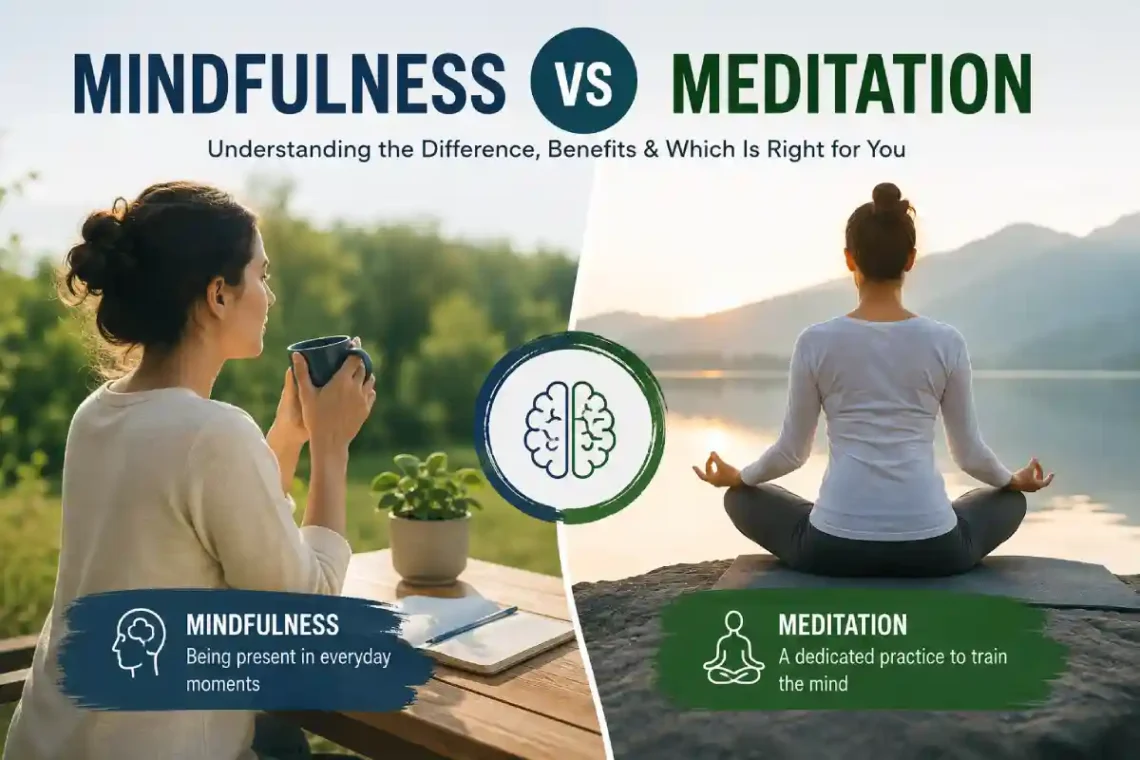
Mindfulness vs meditation is one of the most common questions among beginners exploring stress management, mental wellness, and personal growth. While the two terms are often used interchangeably, they are not exactly the same. Meditation is a formal practice that trains the mind, while mindfulness is a state of awareness that can be practiced anytime throughout the day.
Understanding how these approaches differ—and how they work together—can help you build a sustainable mental wellness routine. Whether your goal is reducing stress, improving focus, sleeping better, or increasing emotional resilience, both mindfulness and meditation offer powerful benefits supported by scientific research.
Mindfulness vs Meditation at a Glance
| Feature | Mindfulness | Meditation |
| Definition | Being fully aware of the present moment | A structured mental training practice |
| Time Required | Can be practiced anytime | Usually requires dedicated time |
| Formal Practice | Not required | Required |
| Goal | Awareness and presence | Mental training and focus |
| Beginner Friendly | Very easy to start | May require guidance |
| Examples | Mindful eating, walking, breathing | Guided meditation, mantra meditation |
What Is the Difference?
The biggest difference between mindfulness and meditation is that mindfulness is a way of being, while meditation is a practice.
Mindfulness means paying attention to your thoughts, feelings, surroundings, and experiences without judgment. You can practice mindfulness while eating breakfast, driving, working, or having a conversation.
Meditation, on the other hand, is a dedicated exercise where you intentionally set aside time to train your attention. During meditation, you may focus on your breath, repeat a mantra, observe thoughts, or follow guided instructions.
Example
Imagine you’re drinking a cup of tea.
- Mindfulness: Paying attention to the taste, aroma, warmth, and sensation of each sip.
- Meditation: Sitting quietly for 10 minutes focusing only on your breathing.
Meditation often helps develop mindfulness skills, but mindfulness can also exist without formal meditation sessions.
2026 Research Snapshot
| Outcome | Mindfulness Practice | Meditation Practice |
| Stress Reduction | High | Very High |
| Focus Improvement | High | High |
| Anxiety Management | Moderate to High | High |
| Emotional Regulation | High | High |
| Sleep Quality | Moderate | High |
| Workplace Productivity | High | Moderate to High |
Similarities Between Mindfulness and Meditation
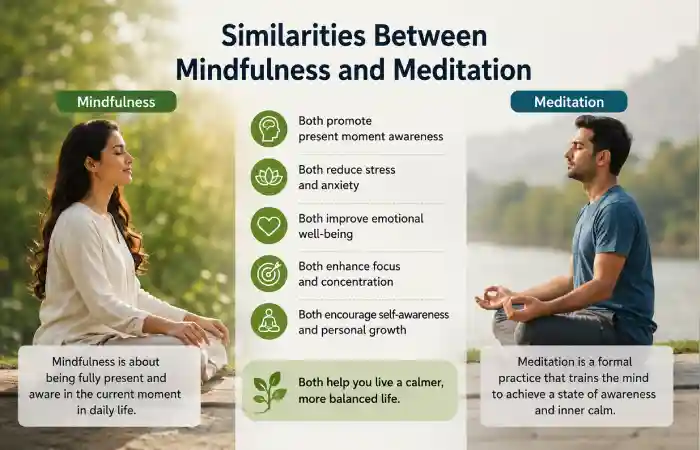
Although they are different, mindfulness and meditation share many common goals.
Both Help Reduce Stress
Research consistently shows that both practices can lower perceived stress levels and improve overall well-being.
Both Improve Focus
Training attention helps reduce distractions and enhances concentration, making both techniques valuable for students and professionals.
Both Encourage Self-Awareness
Mindfulness and meditation help people become more aware of thoughts, emotions, and behavioral patterns.
Both Support Mental Health
Regular practice may contribute to lower anxiety, improved emotional balance, and greater resilience during challenging situations.
Both Are Accessible
Neither practice requires expensive equipment. A quiet space and a few minutes each day are often enough to get started.
Benefits of Each Practice
Benefits of Mindfulness
Mindfulness is ideal for people who want to bring more awareness into daily life.
Key Benefits
- Improves present-moment awareness
- Enhances emotional intelligence
- Reduces overthinking
- Strengthens workplace productivity
- Encourages healthier habits
- Improves communication skills
Benefits of Meditation
Meditation offers deeper mental training through structured practice.
Key Benefits
- Lowers stress and anxiety
- Improves attention span
- Enhances sleep quality
- Supports emotional regulation
- May lower blood pressure
- Promotes long-term mental resilience
Comparison of Benefits
| Benefit | Mindfulness | Meditation |
| Daily Awareness | Excellent | Good |
| Deep Relaxation | Moderate | Excellent |
| Stress Relief | High | Very High |
| Better Sleep | Moderate | High |
| Productivity | High | Moderate |
| Emotional Balance | High | High |
Which One Is Right for You?
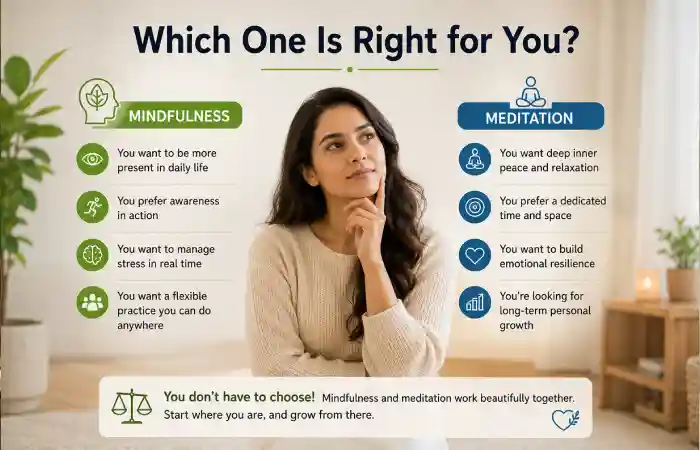
Choosing between mindfulness and meditation depends on your goals and lifestyle.
Choose Mindfulness If:
- You have a busy schedule.
- You struggle to find dedicated practice time.
- You want immediate practical tools.
- You prefer integrating wellness into daily activities.
Choose Meditation If:
- You enjoy structured routines.
- You want deeper mental training.
- You struggle with chronic stress or anxiety.
- You want measurable personal growth over time.
Beginner Recommendation
For most beginners, mindfulness is easier to start because it doesn’t require a special environment or schedule. Once mindfulness becomes comfortable, adding a short meditation session can significantly amplify results.
Combining Both for Better Results
The most effective approach is often combining mindfulness and meditation.
Think of meditation as a workout for your mind and mindfulness as applying those skills throughout your day. (NCCIH)
Simple Daily Routine
| Time | Practice |
| Morning | 10-minute meditation |
| Work Hours | Mindful breathing breaks |
| Lunch | Mindful eating |
| Evening | 5-minute reflection |
| Before Bed | Guided meditation |
This combination helps build awareness, reduce stress, and improve emotional resilience more effectively than relying on only one technique.
Common Mistakes to Avoid
- Expecting instant results
- Judging your thoughts during practice
- Skipping consistency
- Meditating only when stressed
- Trying advanced techniques too early
Troubleshooting Common Challenges
“My Mind Won’t Stop Thinking”
This is completely normal. The goal is not to eliminate thoughts but to notice them and gently return your attention.
“I Don’t Have Time”
Start with one minute of mindful breathing or a five-minute meditation session.
“I Feel No Results”
Benefits often appear gradually after several weeks of consistent practice.
“I Keep Forgetting”
Set reminders or attach mindfulness practices to existing habits like brushing your teeth or drinking coffee.
Recommended Tools and Apps (2026)
| App | Best For | Free Version |
| Headspace | Guided meditation | Yes |
| Calm | Sleep and relaxation | Limited |
| Insight Timer | Free meditation library | Yes |
| Balance | Personalized plans | Trial |
| Waking Up | Deep mindfulness training | Trial |
FAQs
Is mindfulness the same as meditation?
No. Mindfulness is a state of present-moment awareness, while meditation is a formal practice used to develop awareness and concentration.
Can I practice mindfulness without meditating?
Yes. Mindfulness can be practiced during everyday activities such as walking, eating, or working.
Which is better for anxiety?
Both can help, but meditation often provides stronger anxiety-reduction benefits because of its structured nature.
How long should I meditate each day?
Beginners can start with 5–10 minutes daily and gradually increase duration.
Can mindfulness improve productivity?
Yes. Mindfulness helps reduce distractions, improve focus, and enhance decision-making abilities.
Do I need an app to practice mindfulness or meditation?
No. Apps can be helpful for beginners, but both practices can be done independently.
Conclusion
When comparing mindfulness vs meditation, it is important to remember that they are complementary rather than competing practices. Mindfulness helps you stay present throughout the day, while meditation provides dedicated mental training that strengthens awareness and focus. For most people, combining both creates the best results, leading to lower stress, improved concentration, better emotional health, and a greater sense of well-being.