
Last Updated: August 18, 2026
Can I Make Healthy Eating Effortless with a DASH Diet Guide? Are you looking for a healthy eating plan to manage blood pressure or improve your overall health and your typical day’s food intake? This, you can do easily with a simple, sensible DASH diet plan! What does DASHDiet mean, and Why shouldI follow DASH?
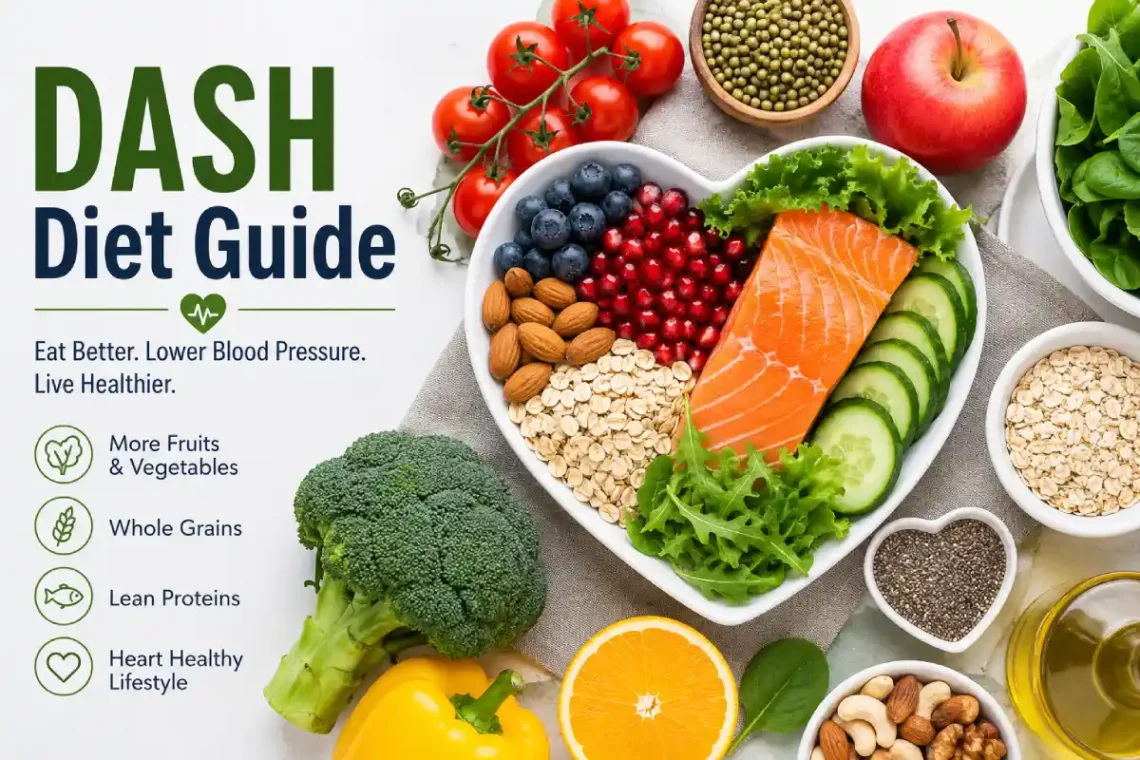
DASH stands for Dietary Approaches to Stop Hypertension; this dietary regime was designed as a part of the intervention of prevention and managing the elevated blood pressure. If opposed to those fashionable diets that have restrictive natures, this plan emphasizes on veggies, Fruits, whole grains, low-fat dairy product, legumes,nuts and also other nutritionally dense foods. And also restricts sodium, excessive sugars as well as fats as well as commercially-processed foods.
No peculiar or elaborate dishes, the DAHDiet regime is straightforward, provides day-to-day and also once weekly goals and the program is customizable according to calorie and also dietary requireements as weLlL as food preference.
What Is the DASH Diet?
The DASH diet is an eating plan that the (NHLBI)recommends as a healthful dietary pattern and that helps promote lower blood pressure, through research to identify lifestyle habits and a diet style to affect this condition and, in the process to decrease fat intake.
NHLBI recommends that a 2,000-calorie daily diet be on a standard DASH program of approximately 6 to 8 servings of grains per day, 4 to 5 servings of fruits and vegetables per day, 2 to 3 servings per day of low fat/ fat-free milk and dairy products per day, and 6 servings or less per day of poultry, meat or fish. Nuts, seeds and peas and dried beans generally are eaten several times per week.
DASH Diet at a Glance
| Category | Typical DASH Target |
| Vegetables | 4–5 servings/day |
| Fruits | 4–5 servings/day |
| Whole grains | 6–8 servings/day |
| Low-fat dairy | 2–3 servings/day |
| Lean meat, poultry & fish | Up to 6 servings/day |
| Nuts, seeds & legumes | 4–5 servings/week |
| Fats & oils | 2–3 servings/day |
| Sweets | Up to 5 servings/week |
| Sodium | 2,300 mg/day; 1,500 mg may lower BP further |
These figures are based on a 2,000-calorie plan; individual needs can differ.
Benefits for Heart Health
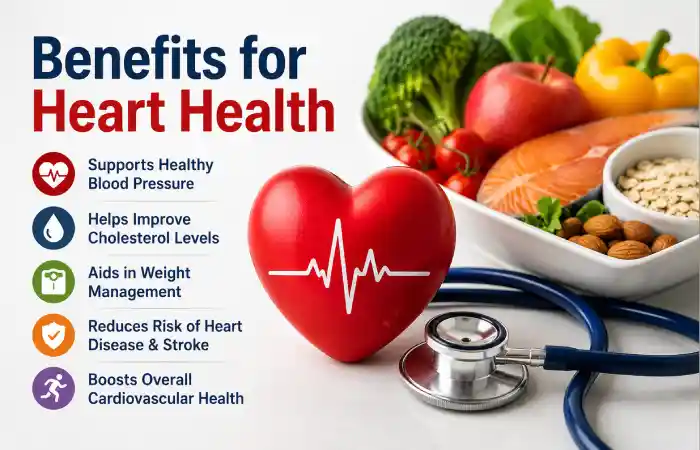
The biggest reason people follow DASH is its effect on blood pressure. Current hypertension guidance continues to recommend a DASH-style dietary pattern, along with sodium reduction and other lifestyle measures.
What the research shows
Clinical research summarized in hypertension guidelines indicates DASH can lower systolic blood pressure in adults with hypertension by an estimated 5-8 mmHg and adults without hypertension by 3-7 mmHg, depending on the DASH implementation and the individual population characteristics. DASH can also have beneficial effects on blood cholesterol and weight by displacing calorie-rich, processed foods high in saturated fat. Yet it’s mainly a pattern for maintaining heart health, rather than an instant weight-loss plan.
Recommended Foods
The easiest way to think about DASH is to ask yourself what you want to eat more of. How to Eat DASH Foods Foods to Eat More
Foods to Eat
- Less leafy greens, broccoli, carrots, tomatoes & peppers
- Apples, berries, oranges, bananas & more whole fruits
- Oatmeal, brown rice, whole-wheat bread and other whole grains
- Beans, lentils, chickpeas & peas
- Unsalted nuts and seeds
- Fish and skinless poultry
- Low-fat or fat-free milk and yogurt
- Unsaturated oils like olive or canola oil
Foods to Limit
A lot of people seem to think the DASH diet means going completely zero-waste with all less-healthy food and, you know, I will argue against that. It just means cutting down on food that might make it difficult to keep up with sodium, saturated fat, sugar and calories.
- Processed meat – lean fish, whole fruit, beans 15, or skinless bird
- Sodium packaged, crunchy snacks – raw fruit, unsalted nuts
- High fat meat – lean meat or poultry
- Whole products – healthy snacks, bread whole product, brown rice
- Drinks – sweetened coffee, green teas, sweet or sweet fruit
- Salt in the past – low sodium sauce, lemon, or spices
- Lean meat is made by home-cooking – highly processed foods
A Simple Product Comparison
When shopping, compare similar products rather than automatically choosing a product labeled “healthy.”
| Product Type | Watch For | Better DASH Choice |
| Bread | Sodium per serving | Whole-grain, lower-sodium |
| Canned beans | Added sodium | No-salt-added or low-sodium |
| Yogurt | Added sugar | Plain low-fat yogurt |
| Cereal | Sodium and added sugar | Whole-grain, low-sugar |
| Peanut butter | Added salt and sugar | Unsalted or lower-sodium |
| Soup | Very high sodium per serving | Low-sodium variety |
| Frozen vegetables | Sauces and added salt | Plain vegetables |
The goal is not to buy expensive “DASH” products. DASH is designed around ordinary foods available at regular grocery stores.
Meal Planning Tips
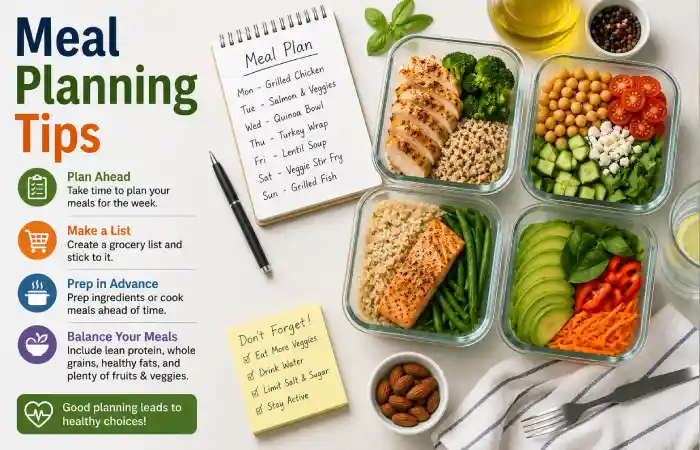
Build Meals Around Plants
For your dining out you may need to create meals using mostly vegetables, fruits, and whole grains and including a lean protein and fat-free dairy product if available.
One of possible menus is:
- Oatmeal, banana, berries, and low-fat yogurt for your breakfast
- Whole-grain sandwich wrap filled with grilled chicken, lots of vegetables and fruit,
- Unsalted nuts and an apple for your snack
- Dinner, made with grilled salmon, brown rice, roasted vegetables and the low-fat yogurt
As described above NHLBI also publishes these menus on their site if need you can use one to calculate it for a requirement.
Reduce Sodium Without Losing Flavor
But food doesn’t have to be bland. Try using lemon juice, vinegar, salt-free spice mixtures, pepper (black), paprika, garlic, ginger, cumin, herbs.
At the beginning, it is easy to remove apparent salt culprits such as processed meat, instant foods, snacks that are salty enough to suck and bottled sauces and concentrated canned items.
Make the Transition Gradual
If you regularly eat foods high in sodium, trying to transform your current eating patterns overnight makes DASH challenging. Focus on making just a couple of changes at a time – adding veggies to dinner, incorporating more veggies at lunch, and drinking more water in lieu of sugary drinks.
Next, compare food labels and opt for the lower sodium choices.
Troubleshooting Common DASH Problems
“DASH food tastes bland.”
Use herbs, spices, citrus, garlic and vinegar instead of depending on salt.
“I’m snacky between meals”
Add veggies or fruit to sandwiches, pack high-fiber foods (such asbeansorwhole grains), such as when adding them to sandwiches or serving alongside meat, or ensure that you have enough protein per meal that your feeling is somewhat satiated.
“I have no idea what to eat at restaurants.”
Opt for grilled, veggies, salads, fruit and low-sodium choices. Order sauces and dressing on the side.
“I can’t reach the sodium target.”
Focus first on processed and packaged foods. You do not have to make every meal perfect immediately.
“Can I follow DASH if I have a medical condition?”
Not necessarily without modification. Those with kidney disease, or taking drugs which alter potassium levels, are advised to discuss major changes to potassium-rich diet or the use of potassium based salt substitutes with their medical professionals.
Who Should Follow It?
The Dash diet will really help any adult whose current dietary pattern may be putting them at risk or for people hoping to lower high blood pressure. It will also benefit a wide variety of others seeking to lower sodium, cut back saturated saturated fat and get much more vegetables, fruit, and whole grain. Just know it’s an overall plan for improving eating and not a replacement for medicines that already help manage high blood pressure or physician monitoring.
When you have any hypertension or any cardiovascular or other chronic conditions (heart and kidney disease, diabetes) that involve restricted amounts of sodium or potassium, or are taking any medications, you need to plan dietary change with your doctor.
Other modifications of the Dash approach accommodate different caloric needs. NHLBI has materials for calorie amounts ranging from 1200 to 2600 calories a day, and that’s right because the serving goals aren’t the same for everybody.
FAQs
Is the DASH diet effective for high blood pressure?
It is. DASH was actually created to prevent high blood pressure and assist manage this condition, as well as today’s hypertension recommendations suggest a diet style on the order of DASH be utilized as an element of a total lifestyle approach.
Just how much sodium can I take in on the DASH diet?
Common DASH suggestions go a bit below 2,300 milligrams of salt each day. Consuming somewhat less than this may give added advantages for blood pressure reduction if this objective satisfies you specifically as well as satisfies health criteria established by the medical care provider or diet professional.
Can I slim down on DASH?
Maybe, yes.
While DASH isn’t specifically designed as a diet for weight management, the choices most naturally made on the diet– selecting vegetables, fruit, whole grains, and also lean proteins over sugary or processed items– could aid you in keeping a much healthier weight if it supports your caloric consumption and calorie outlays.
Can I consume potatoes on the DASH diet plan?
As long as they aren’t soaking in grease, and salt of course! Balanced, moderate portions: a medium carbohydrate-serving of food (think a starchy side like a potato) teamed with protein (lean of course!), healthy fats and lots of leafy vegetables.
Can I consume meat on DASH?
Sure. However keep meals of lean beef, poultry or seafood in check by including plenty of whole food-based, non-animal healthy foods like vegetables as well as fruits, whole grains and/or plant-based healthy proteins.
Is DASH better than the Mediterranean diet?
DASH emphasizes low-fat products as well as the moderation of salt more so than the Mediterranean diet, the latter involving much more daily doses of healthy fat sources such as fish, olive oil, beans, and nuts.
How rapidly will DASH make a modification to blood pressure?
Various researches have found considerable reductions in blood stress that happen in simply a few weeks, although effects will certainly differ significantly from person to individual.
DASH must be considered, not as a remedy, yet instead as an achievable consuming plan with long-term advantages.
Final Takeaway
Approach this DASH Diet Guide by concentrating on building up what is better on the plate: add veggies, fruits, whole grains, beans, nuts, fat-free dairy and lean proteins, while reducing added sodium, added saturated fat, added sugar and highly refined foods and drinks; in place of, concentrate on an increase on the positive on what you have on your plate, not on restriction. Recent 2026 information and update will confirm the continued focus on this healthy meal style for Blood pressure.