
 Afiya Jafar
Fitness & Wellness Writer
Afiya Jafar is a fitness and wellness writer who focuses on making health, exercise, and healthy lifestyle information simple and practical.
Read Full Bio of Author →
Afiya Jafar
Fitness & Wellness Writer
Afiya Jafar is a fitness and wellness writer who focuses on making health, exercise, and healthy lifestyle information simple and practical.
Read Full Bio of Author →
 Sameena Begum
Health, Fitness & Digital Content Reviewer
Sameena reviews selected health, wellness, fitness, and digital content for clarity, factual presentation, and reader usefulness.
Read Full Bio of Reviewer →
Sameena Begum
Health, Fitness & Digital Content Reviewer
Sameena reviews selected health, wellness, fitness, and digital content for clarity, factual presentation, and reader usefulness.
Read Full Bio of Reviewer →
 Dr. Khizrana Begum
General Physician & Dermatologist
Dr. Khizrana Begum is a General Physician and Dermatologist with MBBS and MD qualifications and 5+ years of experience in the medical field.
Read Full Bio of Medical Reviewer →
Dr. Khizrana Begum
General Physician & Dermatologist
Dr. Khizrana Begum is a General Physician and Dermatologist with MBBS and MD qualifications and 5+ years of experience in the medical field.
Read Full Bio of Medical Reviewer →
Being guided on how to eat as a vegan doesn’t mean just banning meat, dairy and eggs. A balanced vegan meal swaps these out for protein-filled and fibre-rich vegetables and whole grains, along with important nutrients and healthy fats, in plant foods. It’s important to try and produce delicious and satisfying meals that are still easily replicable on a regular basis.
Nutrition guidance in 2026 reflects these benefits for properly Planned Vegan Dietary Patterns for Adults – this is even confirmed in the Academy of Nutrition and Dietetics’ 2026 position papers, stating ‘Properly planned vegetarian and vegan diets could have nutritional advantages and long-term benefits.’
❝
This article is a part of
Special Diets Hub
What Is a Vegan Diet?
A vegan diet avoids food that comes from any animal; that means you can’t eat meat, poultry, fish and any products made from any animal including eggs and milk, usually honey is not eaten either.
Instead your meals will focus on:
- Vegetables and fruits
- Beans, lentils and peas
- Tofu, tempeh and soy products
- Whole grains (e.g. Oats, brown rice, quinoa)
- Nuts and seeds
- Plant milks and yogurts which have been fortified
- Plant oils and spreads
The NHS advices to have a diverse diet, including fruits and vegetables, starches, plant based protein, alternatives and nuts and seeds, and with extra care of nutrients that can be more difficult to get hold of on a vegan diet.
A Simple Vegan Plate Formula
For an easy starting point, build most meals around:
½ plate: vegetables and/or fruit
¼ plate: plant protein
¼ plate: whole grains or other high-fiber carbohydrates
Plus: a small serving of healthy fat
A vegan diet is one of several approaches to eating. If you’re exploring different eating patterns, our guide to the different types of diets provides an overview of the most common options and how they differ.
Essential Nutrients
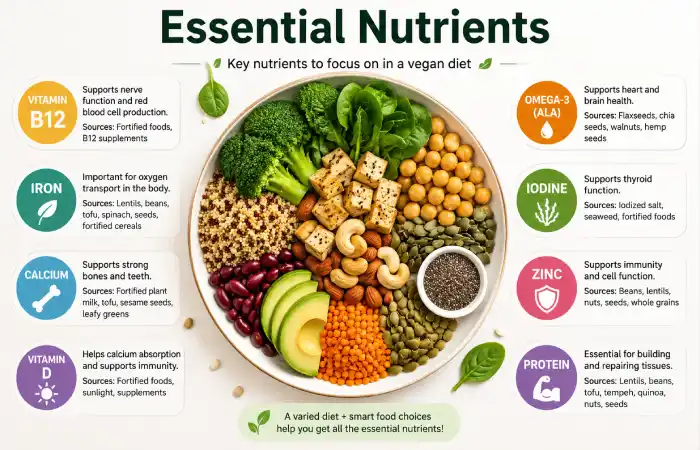
What veganism leaves out is typically what is considered when newbies enter. What nutrients do I need to be sure I am including is what the bigger question should be.
| Nutrient | Key consideration | Vegan-friendly sources |
| Protein | Include a protein source at meals | Tofu, tempeh, lentils, beans, seitan, soy yogurt |
| Vitamin B12 | Especially important because reliable natural vegan sources are limited | Fortified foods or supplements |
| Iron | Pair plant iron with vitamin C | Lentils, beans, tofu, seeds, leafy greens, fortified cereals |
| Calcium | Check food labels | Calcium-set tofu, fortified plant milk, fortified yogurt, greens |
| Vitamin D | Requirements vary by individual | Fortified foods and supplements where appropriate |
| Iodine | Intake can be inconsistent | Iodized salt and suitable fortified foods |
| Omega-3 ALA | Include a regular source | Flax, chia, hemp seeds, walnuts |
| Zinc | Variety helps | Beans, lentils, seeds, nuts and whole grains |
Vitamin B12 Deserves Special Attention
A supplement on the sidelines It’s worth not taking vitamin B12 to chance. Fortified cereals, supplemented plant milks and fortified nutritional yeasts are sources, but whether your supplements depend on your specific diet and products you can consume are.
Although the traditional Mediterranean diet can include fish, dairy, and other animal foods, it also places a strong emphasis on vegetables, fruits, legumes, whole grains, nuts, and seeds, making it possible to adapt some Mediterranean principles to a vegan lifestyle.
Plant-Based Protein Sources
“Vegans do not consume adequate protein”-overstated. You can consume sufficient protein with an inclusive vegan diet by adding such foods as legumes, soy products, nuts and seeds, and whole grains to your meals. “A vegan diet could meet all of the body’s protein requirements if you consume a broad variety of such plant foods”, according to Tufts Health & Nutrition Letter.
Some of the most practical options include:
| Food | Best use |
| Tofu | Stir-fries, curries, wraps |
| Tempeh | High-protein bowls and sandwiches |
| Lentils | Dal, soups and salads |
| Chickpeas | Curries, hummus and salads |
| Beans | Burritos, rice bowls and stews |
| Edamame | Snacks, bowls and salads |
| Seitan | High-protein meat alternative |
| Soy yogurt | Breakfast and snacks |
| Nuts & seeds | Toppings and snacks |
Another 2026 meal-level optimization of vegan protein quality has indicated that the correct combination of plant foods can still be effective as part of meals that is targeting and constructing protein. That is if you keep an eye on building blocks (so) for all amino-acid.
And there you are! You still don’t need to eat proteins that, according to a plan, match perfectly at each individual food choice, but consume a well balanced and variety filled foods on a daily basis.
The keto diet takes a very different nutritional approach by severely restricting carbohydrates and increasing fat intake, while a vegan diet focuses primarily on eliminating animal-derived foods.
Common Challenges
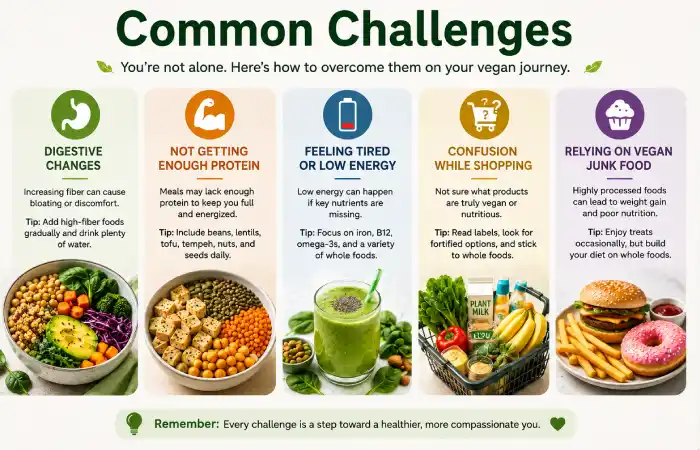
- Feeling Hungry
The meals that you will be preparing are light, in most cases, due to their vegetable focus. You will want to include grains, whole nuts, seeds, tofu, beans, potatoes and similar in every meal to keep you full!
- Not Getting Enough Protein
Perhaps you’ve recently upped your whole grain / plant protein intake but haven’t eaten enough to compensate for the fiber intake. Ensure that each meal contains a dedicated portion of plant based protein like tofu, legumes, lentils or tempeh .
- Digestive Changes
Eating too much fibre at once will create problems such as gas or bowel motion changes such as excessive bloating or changes in frequency. Do a little fibre intake first, steadily and keep drinking plenty.
- Relying Too Heavily on Vegan Junk Food
Being “vegan” is no guarantee of health foods. Vegan burgers, cakes and processed snacks may come in handy from time to time but the mainstay of your diet should be whole foods.
- Forgetting Fortified Foods
Fortified plant milk, yogurt and cereals can take the planning out of ensuring you get enough nutrients. Always check food labels as fortified levels are different for different brands and countries.
People who want a plant-forward eating pattern but don’t necessarily want to eliminate all animal products may also consider the DASH diet, which emphasizes vegetables, fruits, whole grains, legumes, nuts, and other nutrient-rich foods.
Meal Planning Tips
Here’s a really easy way to have a healthy meal day after day, instead of scrambling to find a recipe.
Use the 3-Part Meal Method
Protein-like beans, lentil, tofu or tempeh, energy-giving carb-rice, potatoes, oats or wholegrain toast and fruits or veggies -that’s really what you need for 3 meals in a day. Combined these components create a great combo of flavor when adding little bit of healthy fat in form of some walnuts, flax or chia seeds.
One-day Vegan menu example
Breakfast: Oats; soy based protein drink made with fortified soy milk, banana and seeds, top with some walnuts.
Lunch: Indian food: brown rice, lentil dal with mixed vegetables, with some lemon-flavored Indian salad.
Snack: Fresh fruit and roasted chickpeas; alternatively fortified soy yogurt with some nuts.
Dinner: End your day of nutritious eating with a stir-fry consisting of tofu and vegetables served with whole-grain noodles.
We do recommend that each one of us organizes the meals for each day. Have, with the right number and amount, different vegetables, good foods that give the possibility to have groups providing various nutrient.
Providing, taking from these, which will help the organism to cover protein food, calcium, good foods having healthy fat, especially those, which play such an important role in our intake of B12, iodine, selenium and, especially vitamin D.
Make Indian Meals Work
A vegan diet does not involve fancy or expensive specialty foods. Most foods can be derived from Indian ingredients such as dal, rajma, chana, soy items, vegetables, rice, roti, peanuts, sesame and various regional grains. Here’s how a typical Indian Indian household’s shopping list could look like –
- Toor, moong and masoor dal
- Chickpeas and kidney beans
- Tofu or tempeh
- Fortified soy or other plant milk
- Oats and whole grains
- Seasonal vegetables
- Fruit
- Flaxseed and chia
- Peanuts and other nuts
- Iodized salt
- Fortified foods or supplements as appropriate
Vegan Food Products: What Should You Compare?
When choosing packaged vegan products, don’t judge them by the word “vegan” alone.
Compare:
| Check | Why it matters |
| Protein | Helps make the product more useful as a protein source |
| Calcium | Particularly important in plant-based milk/yogurt |
| Vitamin B12 | Useful when fortified |
| Vitamin D | Can help contribute to intake |
| Added sugar | Lower-sugar choices are generally preferable |
| Sodium | Some meat alternatives can be high in sodium |
| Ingredients | Helps identify highly processed products |
The Paleo diet and vegan diet differ significantly because Paleo typically includes animal foods such as meat, seafood, and eggs, while vegan eating excludes all animal-derived foods.
FAQs
Is a vegan diet healthy?
It can be. Evidence to date suggests that appropriate vegan dietary approaches for adults are nutritious. Adequacy must, however be achieved by including a range of food sources of nutrients, include adequately fortified foods, and pay attention to certain nutrients (B12).
Where do vegans get enough protein from?
Some foods that provide useful amounts of protein are sources like beans, pulses, tofu, seitan, soya foods, nuts, seeds and whole cereals. If you include a combination of sources of plant protein each day then sufficient intake should be achieved.
Do vegans require vitamin B12?
Sources of vitamin B12 are relatively few in an unfortified vegan diet, hence suitably fortified foods/and or adequate vitamin B12 supplements are routinely useful.
Can enough iron be obtained from a vegan diet?
Yes; plant iron may be less bioavailable than meat iron but lentil, bean, soya and seed sources together with cereal sources and dark leafy green foods may provide adequate iron. Increasing vitamin C- rich foods at mealtimes with iron-rich foods can enhance absorption.
Is a vegan diet appropriate for all individuals?
No not all individuals have the same requirements for nutrients. Children or pregnant/breastfeeding women, older people or people with other illnesses/diseases will have specific requirements.
A vegan diet is stricter than most forms of a vegetarian diet, because it eliminates not only meat and seafood but also dairy, eggs, and other animal-derived ingredients.
Final Takeaway
Eating successfully on a vegan diet requires more than just a collection of don’t-eats. The foundation of healthy vegan eating is plants-plus, plus a substantial source of protein, fortified foods if beneficial and a conscious effort to address essential nutrients.
Afiya Jafar is a fitness and wellness writer who focuses on making health, exercise, and healthy lifestyle information simple and practical. Her work covers workouts, fitness motivation, strength training, nutrition, weight management, stress management, mindfulness, and everyday wellness.
Read Full Bio of Afiya Jafar →
Sameena Begum reviews selected health, wellness, fitness, and digital content for clarity, factual presentation, consistency, and reader usefulness. Her review work helps maintain clear and responsible editorial standards across PhysicalFitt content.
Read Full Bio of Sameena Begum →
Dr. Khizrana Begum is a qualified medical professional with MBBS and MD qualifications and 5+ years of experience in the medical field. She works as a General Physician and Dermatologist, with expertise in general medicine, dermatology, preventive healthcare, and skin health.
Read Full Bio of Dr. Khizrana Begum →