
Last Updated: September 15, 2026
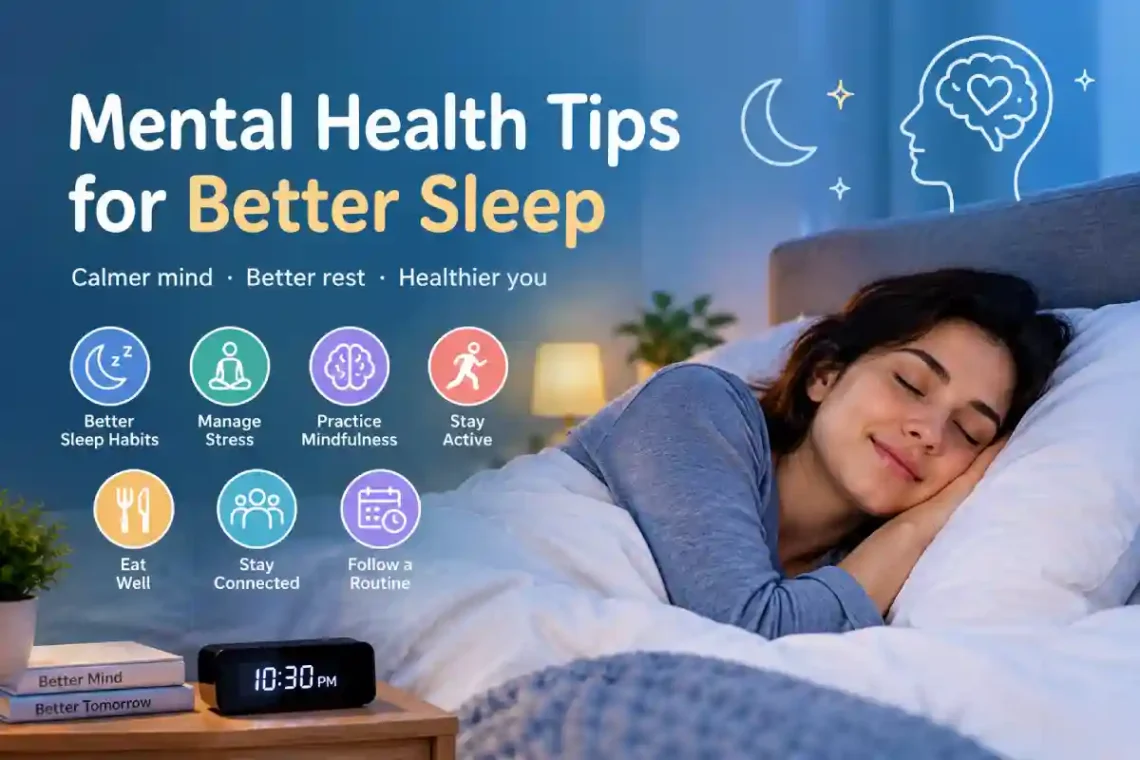
Mental Health Tips for Better Sleep Just one thing that you do in your life that impacts how you sleep can influence your mental health. The inability to sleep because of illness or our mental health and emotional wellbeing can be a very powerful burden. How well your body and mind can sleep is informed by how well the two bodies work with each other-and these bodies work with each other’s healthy functioning, and they can work in dysfunction and disorder.
In 2024, 30.5% of U.S. adults who talked to the CDC reported not sleeping 7 hours per night for 7 days in a week.
Why Sleep Matters for Mental Health
Amplified response to triggers – Sleep plays a vital role in our emotional health, memory, concentration and mental health. When we don’t get enough sleep, all the other things we do in our day feel 10x harder.
The other way round too. Anxiety, depression and chronic stress can lead to sleeping difficulties, night time awakenings or racing thoughts at bedtime. More and more we are learning that sleep and mental health and wellbeing are interrelated rather than sleep being a ‘stand alone’ issue separate from mental health and wellbeing.
Creating a Consistent Sleep Schedule
One of the easiest strategies to a good night’s sleep is to stick with a fairly consistent bed and wake time.
Aim to:
- Rise at around the same time daily.
- Go to bed at a time that allows for adequate rest.
- Don’t have a major shift in your routine on weekends.
- Expose yourself to sunlight during the day.
- Don’t make up for sleep debt with long naps during the daytime.
Building a Relaxing Bedtime Routine
Your brain needs some time to unwind from all the daily mental and physical stimulation. Don’t go straight from Facebook and stressful conversations to bed. Allow yourself a 30 to 60-minute transition period.
You can:
- Turn down the lights.
- Put away the laptop.
- Take a warm bath.
- Read a book.
- Pond over gentle music.
- Do some light stretching.
- Jot down things you need to do tomorrow.
Managing Stress Before Bed
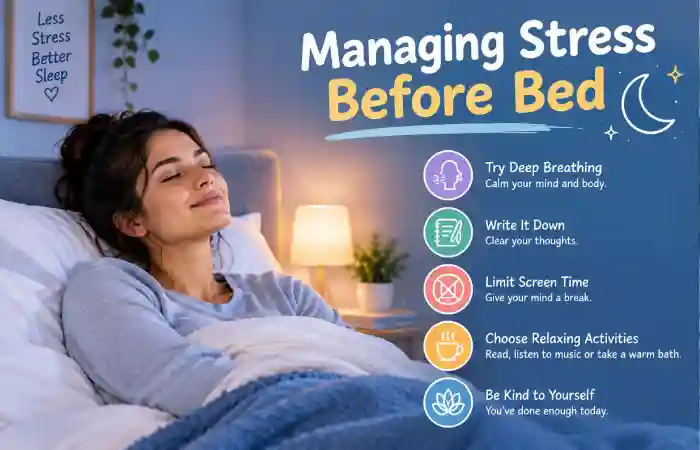
The Racing Mind One of the biggest sleep stealers is the racing mind. Instead of snacking on your issues at midnight, put them on paper.
Create a simple “worry and tomorrow” list:
| Thought | Action |
| “I might forget something tomorrow.” | Write the task down |
| “I need to finish an assignment.” | Add a specific next step |
| “I’m worried about tomorrow.” | Write what you can control |
| “I can’t stop thinking.” | Try slow breathing or reading |
The goal is not to solve every problem at bedtime. It is to give your brain permission to pause.
Mindfulness and Relaxation Before Sleep
Using relaxation techniques. They can divert your focus from stress. Use one for a few minutes instead of trying many of them:
- Deep breathing
- Meditation
- Progressive muscle relaxation
- Gentle yoga
- Guided relaxation
- Journaling
If doing meditation makes you more irritated, select the simple activity of reading or listening to relaxing sound. Find a great combination that you can perform again.
Exercise and Sleep Quality
Exercise can promote healthier sleep and help with a healthy mind. If you can, try to go for a walk or get some other kind of moderate exercise in the morning, afternoon or early evening, as this can help you sleep better. If you can’t work in the exercise until the evening, don’t do it right before bed – some people find that it actually enhances their alertness.
You can also exercise to fight stress, which can aid sleep indirectly.
Harvard Health suggests exercising regularly and avoiding it before bedtime; Mayo Clinic also lists exercise as one of several fundamental sleep tips.
Screen Time and Sleep
The blue light is not the only issue – stimulating content on a screen can also keep your brain actively engaged. This is especially pertinent to doomscrolling. About 38 percent of adults told a poll by the American Academy of Sleep Medicine in 2026 that looking at the news or trending topics on a device before bed is a really good/mean or somewhat of a bad idea.
Easy rule to follow: Turn off stressful screens 30-60 minutes before you go to sleep.
If you require your device as your alarm, put your device away from the bed & turn on the not disturbed.
Creating a Sleep-Friendly Environment
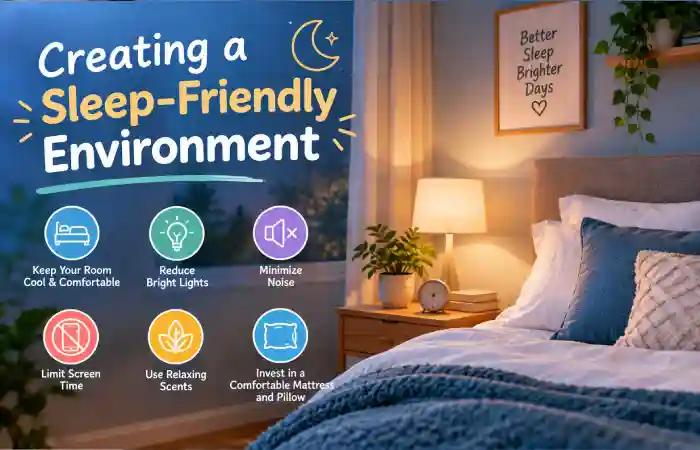
What you need in your bedroom to enhance sleep:
- Comfortably cool and comfortable
- Darkness Peace and quiet
- No clutter
- Comfortable for your pillows and mattress
Sleep accessories such as blackout curtains, an eye mask, ear plugs, or a white-noise machine are helpful optional items. They will not cure insomnia.
Sleep-environment comparison
| Option | Priority | Best for | Cost |
| Blackout curtains | High | External light | $$ |
| Eye mask | Medium | Light sensitivity | $ |
| Earplugs | Medium | Environmental noise | $ |
| White-noise device | Medium | Inconsistent background noise | $$ |
| Sleep tracker | Optional | Tracking patterns | $$–$$$ |
Start with environmental changes that solve a specific problem rather than buying multiple sleep products at once.
Healthy Sleep Habits
Daytime actions matter for sleep.
- Make sure you’re in bed for enough hours to meet your sleep need.
- Reduce caffeine later in the day.
- Don’t use nicotine near bedtime.
- Don’t eat large meals right before sleep.
- Limit alcohol, which can cause disrupted sleep later in the night.
- Get daylight exposure during the day.
- Keep naps short if you need to nap and don’t take naps in the late afternoon if they will affect your sleep at night.
Medline Plus and Harvard Health list these as some of the behavior tips for better sleep.
A simple evening routine
60 minutes before bed: Stop work and reduce stimulating screen use.
45 minutes: Shower, wash up or prepare for tomorrow.
30 minutes: Dim lights and read or listen to calming audio.
15 minutes: Journal, stretch or practice slow breathing.
Bedtime: Go to bed when you feel ready to sleep.
When Sleep Problems Need Professional Attention
Healthy habits can help, but ongoing sleep problems are not always a lifestyle issue. Check with your doctor if:
- your sleep problem persists for weeks or months;
- if poor sleep is disrupting your work, education or relationships;
- if you frequently have difficulty falling or staying asleep;
- if you have excessive daytime sleepiness;
- if you snore loudly, gasp or stop breathing during sleep;
- if anxiety or low mood is impacting your daily functioning;
- if you frequently depend on sleep medicines or supplements.
Sometimes, the longer you have trouble sleeping, the more it’s connected to a health condition or another issue like apnea or a circadian rhythm disorder. According to Stanford Medicine, “if sleep issues last for weeks or months, see a health care provider,” and that you need to seek treatment for chronic insomnia rather than “throwing more tips at the problem.”
The Bottom Line
Good sleep and good mental wellbeing can support each other. You don’t need to change everything at once. Get into a good sleep routine and bed time routine, manage stress, do some exercise during the day and create a good sleep environment.
Most importantly, don’t take it personally if you’re unable to resolve your sleep issues. If your sleep issues don’t improve with these tips, a sleep specialist may discover an underlying sleep or mental health disorder.