
Last Updated: September 15, 2026
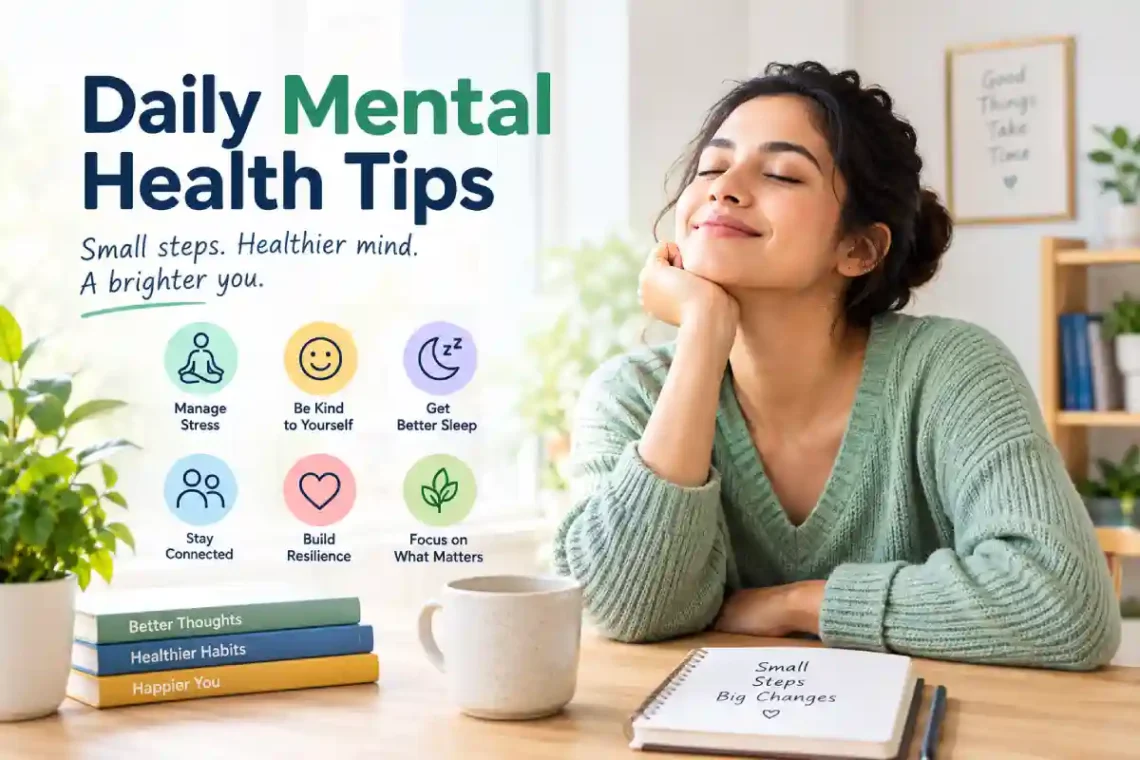
Tips for mental health shouldn’t require an elaborate health and wellness regimen, or hours of meditation. Regular acts of self-care, like sleeping, exercising, taking breaks, eating regularly, connecting with others, and making room for stress can all promote mental health in the long run – but the daily habit you adopt must be simple enough to sustain.
Definition of Self-Care It is a state of well being largely associated with thoughts, emotions, and a person’s psychological state affecting stress levels, relationships, and the ability to make decisions. Self-care can be an effective component of mental health treatment but does not replace professional care.
Simple Mental Health Habits
The most useful mental health habits are usually simple rather than extreme.
Try building your day around these basics:
- Get enough sleep.
- Eat regular, balanced meals.
- Move your body.
- Take short breaks.
- Spend time with people you trust.
- Practice mindfulness or relaxation.
- Set realistic priorities.
- Make time for activities you enjoy.
You don’t have to change all at once. Select one or two habits that can easily be incorporated into your current routine. An achievable approach is important – NHS advises that, to make wellbeing habits stick, repetition of the skills learned is key.
Starting the Day With Healthy Habits
The way you start the day can affect how manageable the day feels.
– don’t check your alerts straight away
– take five minutes before starting work/school
– drink a glass of water, lift the curtains, do some stretches, walk outside, or sort out what’s important to you today.
You could start each morning with a routine that involves:
- Wake
- hydrate
- get some sunshine
- move for a few minutes
- decide what’s most important.
Not that kind of routine – a ‘good’ routine shouldn’t be another stress-inducing rule.
Taking Regular Breaks
Consider a digital detox: Put your phone aside for a few minutes instead of constantly picking it up. You can even choose to take a digital break!
TMSI, NIMH , 2022 For some people, having a break from the news and social media can also help to restore a sense of normalcy.
Staying Physically Active

Doing some physical activity is probably the cheapest and easiest way to feel good and improve your physical health and mental health.
Few minutes of walk, cycling, stretching, dancing, yoga, whatever you like to do is sufficient.
According to WHO Physical activity is associated with better mental health, better cognitive health, and better sleep in adults.
| Daily habit | Easy starting point |
| Walking | 10–30 minutes |
| Stretching | 5–10 minutes |
| Mindful breathing | 2–5 minutes |
| Social connection | One meaningful conversation |
| Screen break | 10 minutes |
The goal isn’t to achieve a perfect number every day. Consistency is more useful than perfection.
Eating for Overall Well-Being
Eat and drink you and your body needs to your body: Eat meals regularly and sensibly, and stay well-hydrated. As you have a drink of water and drink throughout the day. You will feel or drink water – alcohol or caffeine may disrupt your sleep.
NIMH: General Advice Several healthy eating schedule and drink plenty of fluids during the day.
Instead of a “mental health diet” that discourages, try sustainable lifestyle in eating habits.
Staying Connected With Others
You’re not alone with your mental health. Reach out to someone you trust – a friend, family, colleague, partner or anyone you feel comfortable talking to. You don’t need long – a quick chat with someone can be a real boost, making you feel less isolated or giving you an opportunity to simply talk about what you’re feeling.
There is increasing recognition of the importance of social connection for public health. And, the WHO estimates that about 1 in 6 people in the world report feeling lonely.
Practicing Mindfulness
Becoming aware of your thoughts and feelings-on purpose-in the present moment, without judgment.
Try this simple exercise:
- Sit comfortably.
- Take a slow breath.
- Notice how your body feels.
- Pay attention to your breathing.
- When your mind wanders, gently return your attention to the present.
You can do this while cooking, walking, showering, or other normal activity. Meditation, breathing exercises, and more relaxation activities are other self-care strategies that your doctor may recommend.
Managing Daily Stress
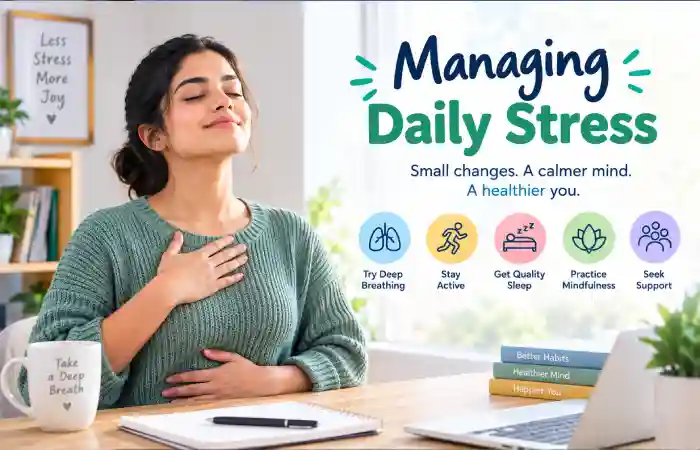
Stress cannot always be eliminated, so learning how to respond to it is important.
Start by identifying what is actually demanding your attention. Then separate your priorities into:
- Must do today
- Can wait
- Can be delegated
- Doesn’t need to be done
This prevents your entire task list from feeling equally urgent.
Test out breathing techniques, a walk, journaling, listening to music, going outdoors or whatever you use to help you relax that creates a gap of time between you and the trigger. Get
Getting Enough Sleep
Get Adequate Sleep, not a luxury, but a lifestyle necessity. Maintain a regular sleep/ wake schedule. Establishing a calming nightly ritual. Reducing screen time before bed. NIMH recommends maintaining a regular sleep schedule.
Being tired all the time might be a brain signaling you to see your doctor. No, but-if you can’t get consistent sleep all the time, you might want to consider talking to a doctor.
Creating a Sustainable Daily Routine
The best mental health routine is one you can actually maintain.
Here’s a simple example:
| Time | Mental wellness habit |
| Morning | Hydrate, daylight, short movement |
| Midday | Balanced meal + short break |
| Afternoon | Stretch or take a short walk |
| Evening | Connect with someone or enjoy a hobby |
| Before bed | Reduce stimulation and follow a consistent wind-down routine |
You can adapt this around work, school, family responsibilities, health needs, and personal preferences.
Conclusion
Keep in mind that taking care of your mental health doesn’t have to involve huge lifestyle changes or being perfect. It can be small, simple daily habits such as: getting a good night’s sleep, moving your body, eating a healthy diet, taking breaks, mindfulness, managing your stress and staying connected.
That’s what makes the most effective mental health tips every day the ones that become, and remain, sustainable. Get a few small things you can do each day, each week, and then add as needed (and put a bit of room in that plan for flexibility). And don’t forget–each of us can benefit from professional mental health care when something becomes serious, prolonged, and disruptive.