
Last Updated: September 16, 2026
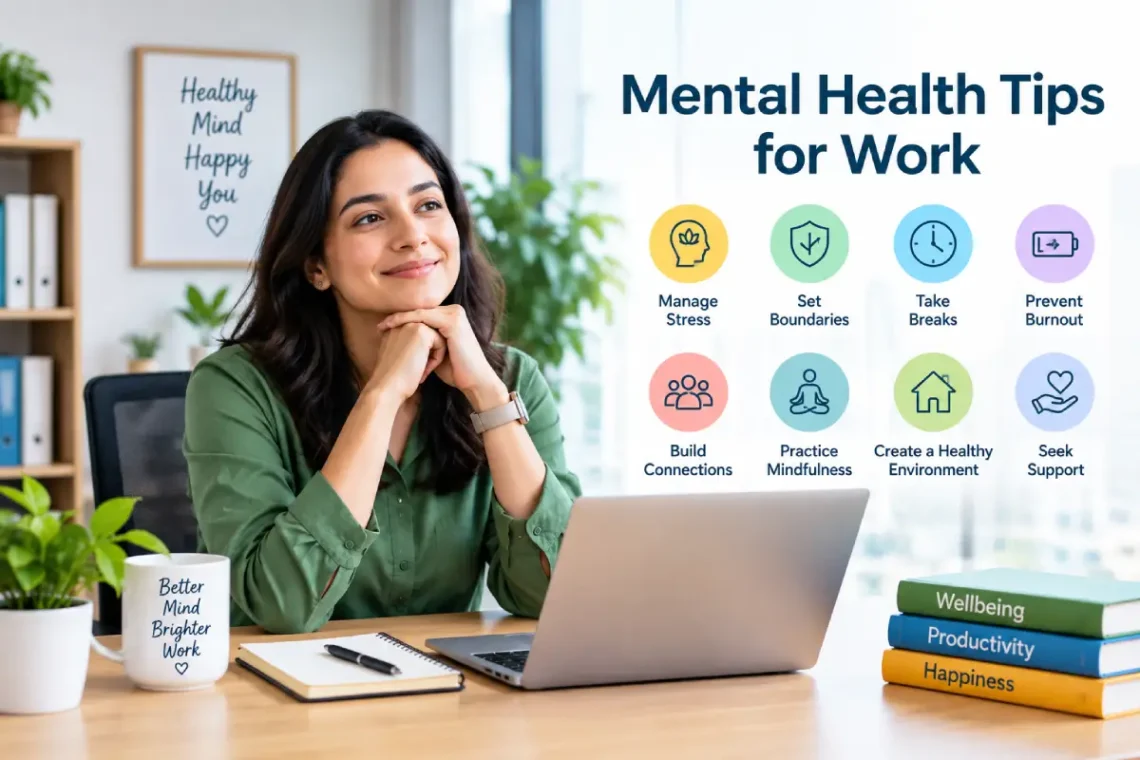
Mental Health Tips for Work can help you cope with stress, protect your energy, set boundaries, and stay healthy and productive at work. Work is a source of purpose and belonging, and can help provide income, but it’s also a source of mental-health risks if too much work, too little control, insecurity, toxic relationships, and long hours cause harm.
Depression and anxiety together cause about 12 billion days of working days lost annually and costs the global economy nearly US$1 trillion a year, said the World Health Organization.
Your worst days aren’t going anywhere-but learn some easy rituals that will help you notice stress, dust yourself off, and reach out when work begins to take a toll on your mental health.
Managing Workplace Stress
First, identify what actually causing you stress common causes include deadline pressure, work overload, role ambiguity, conflicts, low control, job insecurity and interruptions. Concerning work related stress WHO has mentioned workload, pace of work, work schedules and pressures of time, lack of control over work, work environment.
Try this simple approach:
- Write down your three biggest work stressors.
- Differentiate those you can make headway on from those that are out of your hands.
- Address one controllable issue at a time.
- Challenge your manager on unworkable schedules or priorities.
- Plan some recovery time rather than burning out.
A fast tip: If even after these positive lifestyle changes, your stress persists, don’t just assume you need to be stronger or more resilient. Review the work environment itself.
Creating Healthy Work Boundaries
Healthy boundaries allow you to transition from work to home.
Here are some examples:
- Do not reply to work communications upon waking.
- Establish a reasonable quitting time.
- Disable non-essential notifications after hours.
- Do not take on every new assignment.
- Let colleagues know when you are at capacity.
- Create distinct work and relaxation areas in your home office.
This is important because employees are growing in support of separation.
Prior APA research has reported that 95% of employees indicated that respect for work/non-work boundaries in the workplace is important.
Taking Productive Breaks
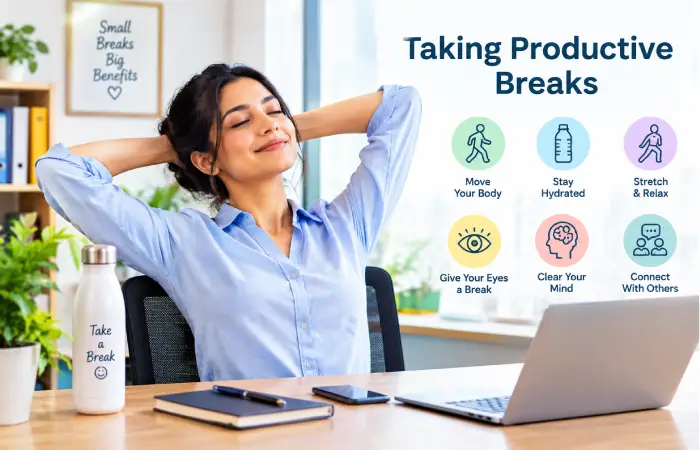
A break isn’t wasted time. Short periods away from demanding tasks can help you reset attention and reduce mental fatigue.
Instead of scrolling through work messages during a “break,” try:
- Walking for a few minutes
- Stretching
- Drinking water
- Looking away from your screen
- Practicing slow breathing
- Having a brief conversation with a coworker
Designed breaks may be more beneficial for heavy work demands than waiting until you are totally exhausted. WHO workplace guidance also lists planned breaks and workload variation as organizational strategies for preventing workplace stress.
Preventing Burnout
Stress and burnout aren’t exactly the same. The feeling of “overload” may be very different from the ongoing, drained feelings, apathy, and detachment that characterize burnout.
Watch for warning signs such as:
- Constant exhaustion
- Increasing irritability or negativity
- Loss of motivation
- Difficulty concentrating
- Withdrawing from coworkers
- Feeling ineffective
- Sleep problems
When these feelings persist, don’t expect “more effort” to solve the problem. Minimize additional stressors; talk about your workload; take time off work; and get help if needed.
Managing Workload and Priorities
When everything feels urgent, productivity can quickly become overwhelming.
Use a simple Now–Next–Later system:
| Priority | What to do |
| Now | Complete urgent, high-impact work |
| Next | Schedule important tasks |
| Later | Defer low-impact tasks |
| Delegate | Give suitable tasks to someone else |
Ask your manager which tasks should take priority when deadlines conflict. Clear responsibilities and manageable workloads are recognized components of healthier workplaces.
Improving Work-Life Balance
Work-life balance is not always about giving time in the same proportion. It is also about having the headspace and energy for both. Reserve activities that bring you back: sleep, exercise, activities, relationships, screen free time.
If you work from home, try creating a hard stop start point, a walk round the block at the end of the day, changing your clothes, turning off your PC and leaving your working space.
Staying Connected With Coworkers

Good relationships at work can be beneficial for your mental health. You don’t have to become best mates with everyone. Simply things like:
- asking how someone’s day is going
- asking for support acknowledging their efforts
- joining in with team conversations
- chatting to a few trusted colleagues during stressful times
APA’s 2025 research showed that employees who felt they mattered to their colleagues were less likely to report concerns relating to job insecurity.
Mindfulness at Work
Mindfulness defines the mentality of being consciously present in the moment instead of merely reacting to all that has been going on around you.
Try a one-minute reset:
Stop → Breathe → Notice → Choose
Take a couple of slow breaths, observe how you’re feeling, decide what your immediate priority is, and go back to work. Mindfulness doesn’t substitute working to improve a bad work volume or problematic workplace environment.
It is one of the tips for stress handling in the workplace on this list of workplace stress tips by mental-health organizations.
Creating a Healthy Work Environment
Workplace factors, too. Mental health at work isn’t just the responsibility of the individual. Supervisors and managers contribute to the work environment. Workplaces that promote good mental health will provide:
- a manageable workload
- role clarity
- respectful communication
- psychological safety
- respect
- suitable flexibility
- mental health resources
- time off to recharge
According to WHO, policies should focus on risk reduction strategies rather than individual coping strategies.
2026 workplace snapshot
| Measure | Latest data |
| Global employees engaged | 20% |
| Global employees thriving in wellbeing | 34% |
| India employees engaged | 23% |
| South Asia employee engagement | 21% |
Gallup’s 2026 report is based on data from 2025 in over 140 countries and territories. These numbers are a stark reminder of one truth we keep returning to – that our mental health in the workplace is affected by how we act and also by the culture of our organisation.
When to Seek Professional Support
Get professional help from a registered mental health professional if you feel a heavy dose of stress, anxiety, depression, exhaustion, sleep problems or lack of motivation lasting for a long time or your symptoms impact your functioning.
If your employer is contributing to the problem, speak to your manager or human resources office about reasonable adjustments, adjustments to your workload, flexibility in your working hours or any other suitable support. WHO recognises workplace accommodations as an option to assist workers with mental-health issues in gaining access and achieving success at work.
Final Takeaway
Healthy work-life balance is not necessarily cheerfulness or the art of just putting up with all the pressure. It’s about investing in the sustainable ways that we work, recover, connect with others, and turn to for help. Take one step today, one boundary, one well-earned break, one priority with work that you’ve got clear information on.
These small steps matter more when you have a culture of good health, in the workplace.