
 Afiya Jafar
Fitness & Wellness Writer
Afiya Jafar is a fitness and wellness writer who focuses on making health, exercise, and healthy lifestyle information simple and practical.
Read Full Bio of Author →
Afiya Jafar
Fitness & Wellness Writer
Afiya Jafar is a fitness and wellness writer who focuses on making health, exercise, and healthy lifestyle information simple and practical.
Read Full Bio of Author →
 Sameena Begum
Health, Fitness & Digital Content Reviewer
Sameena reviews selected health, wellness, fitness, and digital content for clarity, factual presentation, and reader usefulness.
Read Full Bio of Reviewer →
Sameena Begum
Health, Fitness & Digital Content Reviewer
Sameena reviews selected health, wellness, fitness, and digital content for clarity, factual presentation, and reader usefulness.
Read Full Bio of Reviewer →
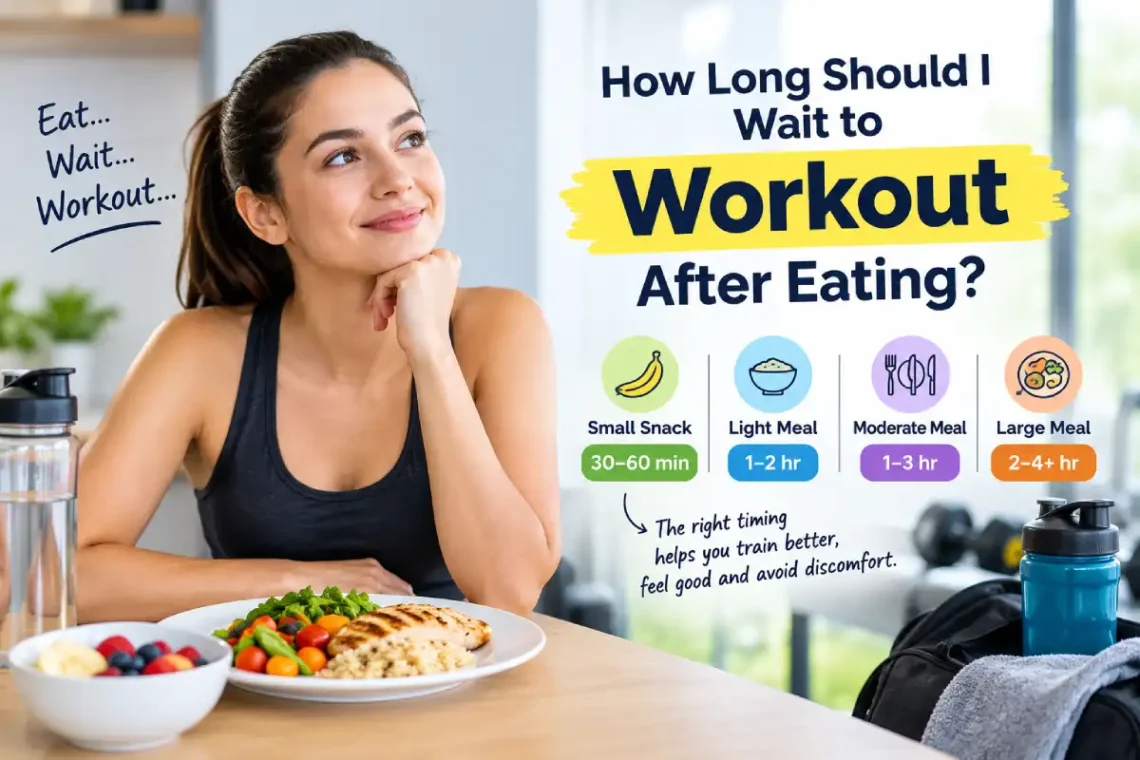
How long after eating can I work out? In general, the more you ate, what you ate and how hard you’re working out will affect the amount of time you wait after a meal to work out. A small snack you can likely do in 30 minutes, and a large, heavy meal wi ll take 2-3 hours or more before you want to do a heavy workout.
How Long Should You Wait to Workout After Eating?
A practical starting point for most healthy adults is:
| What you ate | Suitable activity | Typical waiting period |
| Very small snack | Walking, mobility | 15–30 minutes |
| Light snack | Strength training, easy cardio | 30–60 minutes |
| Small/light meal | Gym workout, moderate cardio | 1–2 hours |
| Moderate meal | Strength training, running | 1–3 hours |
| Large/heavy meal | Intense cardio or HIIT | 2–4+ hours |
These are ranges not rules. Everyone can flex out a little or a lot with time, some have been known to have the occasional bowl of rice to help with bloating and reflux several hours pre-workout..
Why Does Eating Affect Your Workout?
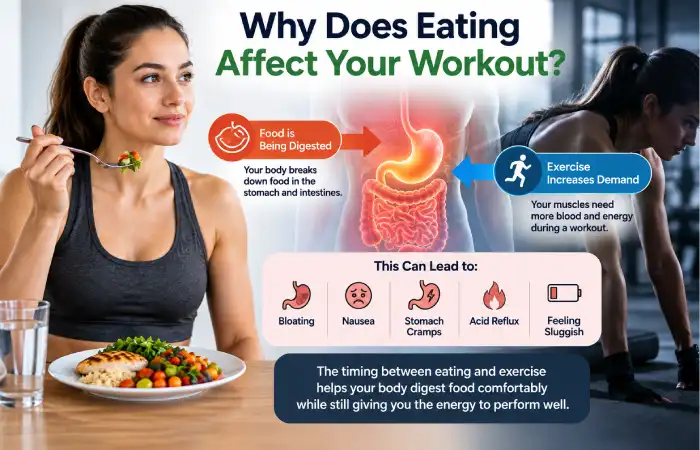
Digesting: Once you‘ve eaten, your gastrointestinal system is breaking down the food and absorbing nutrients. During exercise it shifts its focus from the digestive to the working muscles by increasing the flow of blood and energy to them.
Intesne exercise with a very full stomach can also be a factor in gastrointestinal symptoms; the following are sometimes experienced.
- Nausea
- Bloating
- Stomach cramps
- Burping
- Acid reflux or heartburn
- Feeling unusually heavy
- Sluggishness
- In some cases, vomiting or diarrhea
The more intensely and for a longer duration you exercise, the more critical meal timing comes into play.
That doesn‘t mean you don‘t need to eat before your workout. Working out can often be more comfortable when you‘ve eaten because having the energy you need can really help you reach your potential. The key is getting the right balance of fueling your workout and giving yourself time to digest.
How Long Should You Wait Based on Your Workout?
This is a huge factor.
Walking After Eating
After you have eaten the simplest, also best to add few steps.
After a modest meal, a gentle walk commonly won‘t do any harm. It could actually be beneficial in avoiding high blood sugar.
If you just want to achieve something for inactivity for a few hours after a meal, don‘t delay going for a walk all night long.
Strength Training
For weight training, a good starting point is about 1-2 hours after a moderate-sized meal.
A light snack of only about 30-60 minutes.
Pay special focus to reistance work consisting of heavy bracing of the abs, squats, deadlifts, or other activities that might be uncomfortable when your stomach is full.
Running and Cardio
Running, swim, and high-impact cycling are often more difficult for digestion and at the same time as more gentle exercise.
More comfortable than all day or 12-15 hours post, after a big meal you should give yourself about 2-3 hours (or more) for more vigorous cardio.
If you need to work out earlier, a quick snack that is easy on your gut is usually better than eating a full meal just before.
Yoga and Pilates
Yoga may be especially important to consider as many of the poses entail some bending, twisting or compression of the abdomen.
Even if you feel you can work out comfortably once you have eaten, a bloated stomach can also make many poses painful-such as forward folds, twists and inversions.
Thus, a longer break after a complete meal may actually be better.
Does the Type of Food Change How Long You Should Wait?
Yes.
Meal composition can affect how comfortable you feel during exercise.
| Food type | General consideration | Example |
| Easy-to-digest carbohydrates | Often suitable closer to exercise | Banana, toast, rice |
| Lean protein | May require more time depending on portion | Greek yogurt, eggs, chicken |
| High-fat foods | Often slower to digest | Fried foods, heavy sauces |
| High-fiber foods | Can cause bloating in some people | Large servings of beans or raw vegetables |
| Large mixed meal | Usually needs the longest window | Rice + protein + vegetables + fats |
Equally if you are hungry and want to eat 30-60 minutes before training, a small carbohydrate based snack may be more suitable than a large-fat based meal. Advice on sports nutrition also takes into account individual tolerance and how to adapt your food intake to duration and intensity of training.
What If You Only Have 30 Minutes Before Your Workout?
Don’t panic.
If there is only half hour before you begin training, then don‘t try to “fuel up” by consuming a huge meal, even if you believe you require extra fuel.
Instead, consider a small, familiar snack such as:
- Banana
- Toast
- Applesauce
- Small yogurt
- Small portion of cereal
- Easily tolerated carbohydrate drink
Keep the rep range low, stay without over doing the experiment with new foods/brands until the day of an important work out.
If you find yourself already satiated from eating in your warm-up, it might pay to go for a longer warm-up and take it easier until you get used to it.
What Happens If You Exercise Too Soon After Eating?
The most frequent concern, of course, is stomach upset, not that your workout suddenly becomes unsafe just because you went to the gym an hour after lunch.
Symptons should have been warning signs to drop out or to reduce intensity.
Troubleshooting Table
| Problem | What to try | Possible reason |
| Stomach cramps | Increase the gap | Meal was too large or workout started too soon |
| Bloating | Reduce portion before training | Large/high-fiber meal |
| Heartburn | Choose lighter foods | Heavy, fatty or spicy food |
| Nausea | Lower intensity and wait longer | High intensity with a full stomach |
| Low energy | Try a small pre-workout snack | Too little food or hydration |
| Feeling heavy | Allow more digestion time | Large meal |
| Diarrhea during running | Track foods and timing | Food intolerance or exercise-related GI stress |
If symptoms are severe, persistent or unusual, don’t assume they are simply caused by meal timing. Speak with a healthcare professional.
Does Exercising After Eating Help Blood Sugar?
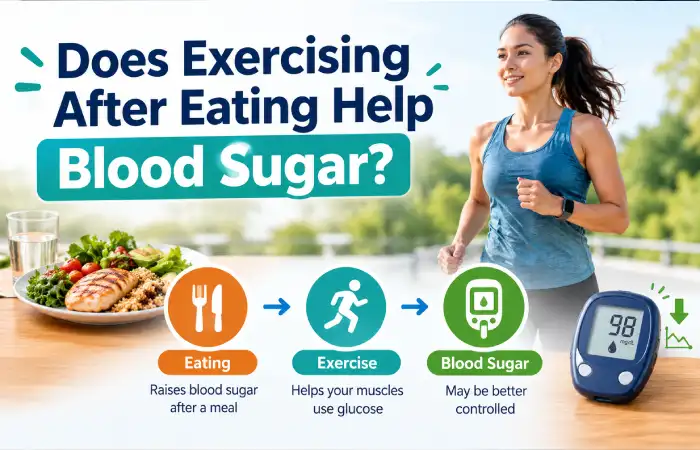
Moving around after eating may benefit some, particularly those who are monitoring their blood glucose.
Cleveland Clinic states that working out a little while after you eat can reduce blood glucose; the glucose can often spike quite high during the hours after a meal.
The nature and level of exercise matter. A stroll after the meal is very different from a pure, in-your-face, high-intensity interval workout straight out of the box.
People with diabetes who are on insulin or other medicines can cause hypoglycaemia should follow the advice of the health professional and monitor blood glucose levels when instructed to.
Should You Exercise on an Empty Stomach?
Not necessarily.
You don’t have to exercise fasted to lose fat or improve fitness.
For some people, exercising before breakfast feels comfortable. Others perform better after a small meal or snack.
The better approach is to consider:
- Your workout intensity
- Workout duration
- Hunger level
- Daily calorie needs
- Personal digestive tolerance
- Training goals
Consistency matters far more than forcing yourself into a fasting routine that makes your workouts miserable.
A Simple 2026 Rule to Remember
Think of pre-workout timing as a sliding scale:
Small snack → ~30–60 minutes → workout
Light meal → ~1–2 hours → workout
Moderate meal → ~1–3 hours → workout
Large/heavy meal → ~2–4+ hours → intense workout
Quick Timing Visual
SNACK
30–60 min ━━━━━●━━━━━ WORKOUT
LIGHT MEAL
1–2 hr ━━━━━━━━━●━━━━ WORKOUT
MODERATE MEAL
1–3 hr ━━━━━━━━━━━●━━ WORKOUT
LARGE MEAL
2–4+ hr ━━━━━━━━━━━━━● WORKOUT
Use these ranges as starting points rather than rules you must follow perfectly.
Pre-Workout Nutrition: What Should You Eat?
If you have several hours before training, a balanced meal containing carbohydrates, protein and a moderate amount of fat can work well.
If you have less time, simplify the meal.
For example:
2–3 hours before:
Rice + chicken + vegetables
1–2 hours before:
Oatmeal + yogurt + fruit
30–60 minutes before:
Banana + toast or another small carbohydrate-rich snack
Dietary composition (as well as food state) is of increasing importance the nearer your approach to training.
For those wanting to boost their protein through training, high-protein foods and easy-to-eat protein snacks should be used as suited to one‘s own nutritional requirements, rather than seeing supplementation as a substitute for a balanced diet.
The Bottom Line
How long should I wait before I work out after I eat? A rough guide for most people is 30-60 minutes after a small snack, 1-2 hours after a light meal, and 2-4 hours after a large meal.
Don’t get caught up in the clock. Your meal size, food quality, exercise level and individual tolerance trumps an overall number. If you are confident in your performance and the clock, then the time is right. Otherwise, you may want to test with less food, lower fat content, less protein and a longer delay between eating and exercise.
Afiya Jafar is a fitness and wellness writer who focuses on making health, exercise, and healthy lifestyle information simple and practical. Her work covers workouts, fitness motivation, strength training, nutrition, weight management, stress management, mindfulness, and everyday wellness.
Read full bio of Afiya Jafar
Sameena reviews selected health, wellness, fitness, and digital content for clarity, factual presentation, and reader usefulness.
Read full bio of Sameena Begum