
 Afiya Jafar
Fitness & Wellness Writer
Afiya Jafar is a fitness and wellness writer who focuses on making health, exercise, and healthy lifestyle information simple and practical.
Read Full Bio of Author →
Afiya Jafar
Fitness & Wellness Writer
Afiya Jafar is a fitness and wellness writer who focuses on making health, exercise, and healthy lifestyle information simple and practical.
Read Full Bio of Author →
 Sameena Begum
Health, Fitness & Digital Content Reviewer
Sameena reviews selected health, wellness, fitness, and digital content for clarity, factual presentation, and reader usefulness.
Read Full Bio of Reviewer →
Sameena Begum
Health, Fitness & Digital Content Reviewer
Sameena reviews selected health, wellness, fitness, and digital content for clarity, factual presentation, and reader usefulness.
Read Full Bio of Reviewer →
 Dr. Khizrana Begum
General Physician & Dermatologist
Dr. Khizrana Begum is a General Physician and Dermatologist with MBBS and MD qualifications and 5+ years of experience in the medical field.
Read Full Bio of Medical Reviewer →
Dr. Khizrana Begum
General Physician & Dermatologist
Dr. Khizrana Begum is a General Physician and Dermatologist with MBBS and MD qualifications and 5+ years of experience in the medical field.
Read Full Bio of Medical Reviewer →
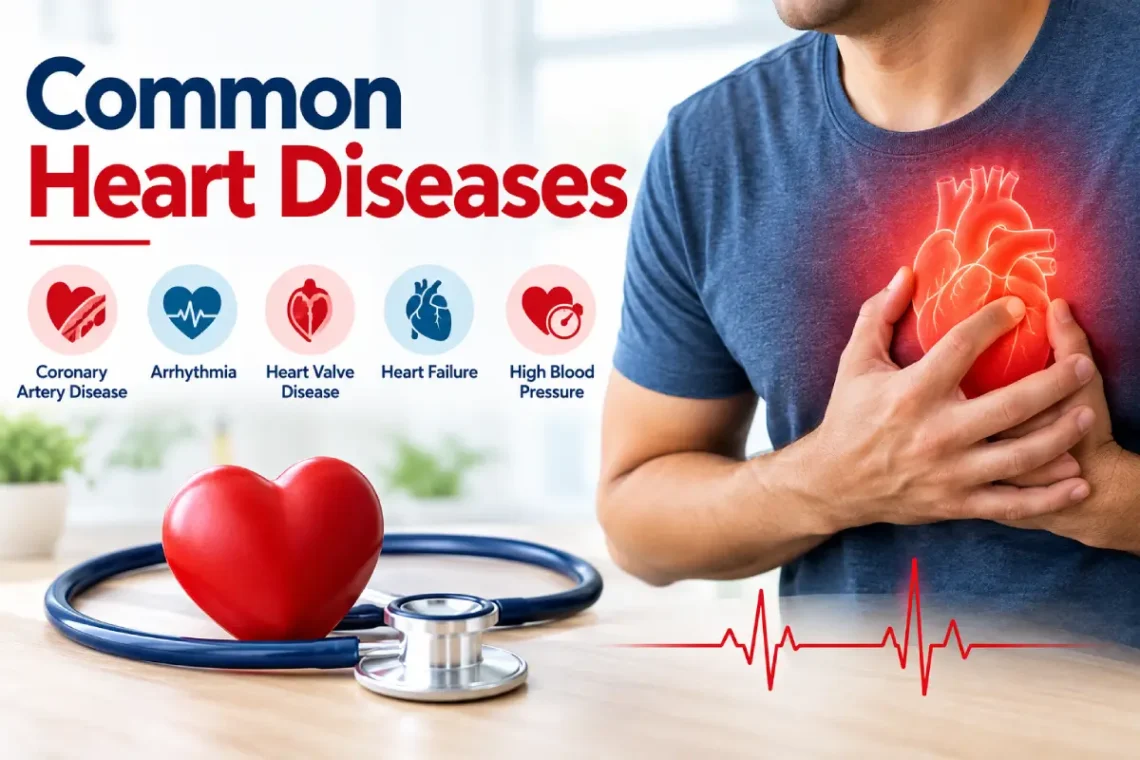
Heart conditions include various diseases relating to the heart’s valves, muscle, electrical system, coronary arteries and pump performance. Such conditions may develop slowly over a long period of time showing very little symptoms or arise suddenly to bring forth life threatening issues.
Heart disease is the biggest health threat world wide. It has been revealed that cardiovascular diseases led to the death of 19.8 million people throughout the world in 2022 alone with this figure representing approximately 32% of all deaths world wide and 85% of cardiovascular deaths being a result of strokes and heart attacks.
Knowledge regarding most common conditions related, the symptoms to look out for and risk factors that may be prevented could greatly assist individuals seek earlier help and medical advice.
Heart disease is one of the many health conditions that can affect people at different stages of life. Explore our complete guide to common diseases to learn about other conditions, their symptoms, causes, risk factors, and prevention.
❝
This article is a part of
Health Conditions Hub
What Are Heart Diseases?
Heart disease: refers to any disease that affects the heart and also blood vessels if counted into the broader disease area Cardiovascular disease. Typical cases:
- Coronary artery disease.
- High blood pressure.
- Heart failure.
- Arrhythmia.
- Heart valve diseases.
- Myocardium diseases.
- Congenital heart diseases.
- Endocarditis/myocarditis/pericarditis etc.
Common forms: Coronary artery disease; usually the commonest. There is an increased prevalence of plaque which builds up inside the coronary arteries. It lowers blood flow to the muscle.
Common Cardiovascular Conditions
Not all heart diseases affect the body in the same way.
| Condition | Common symptoms | What happens |
| Coronary artery disease | Chest pressure, breathlessness, fatigue | Coronary arteries become narrowed or blocked |
| Hypertension | Often no symptoms | Blood pressure remains abnormally high |
| Heart failure | Breathlessness, swelling, fatigue | Heart cannot pump or fill adequately |
| Arrhythmia | Palpitations, dizziness, fainting | Heart beats too fast, slowly or irregularly |
| Valve disease | Breathlessness, fatigue, chest discomfort | Heart valves don’t open or close normally |
| Cardiomyopathy | Fatigue, breathlessness, swelling | Heart muscle becomes abnormal |
At times individuals are presenting with more than one form of cardiovascular disease concurrently. Long-term uncontrolled high blood pressure is responsible for heart failure. Blockages in the coronary arteries cause damage to the muscle of the heart, leading to the onset of heart failure.
Coronary Artery Disease
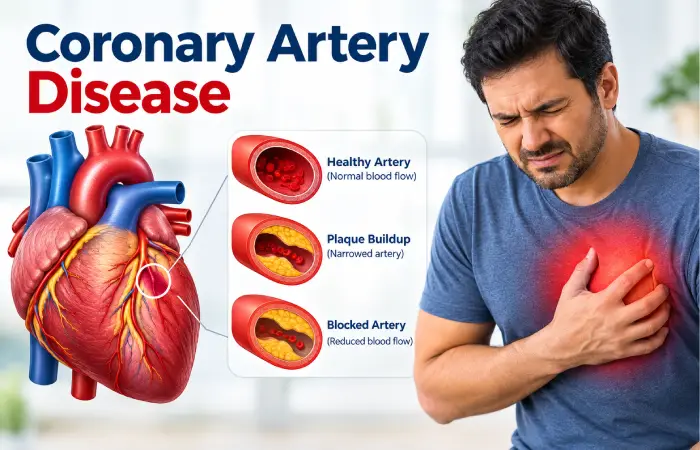
Coronary artery disease occurs when arteries that pump blood to the heart clog up with plaque.
These narrow and reduced flow of blood leads to angina. Angina may seem like any other like squeezing, heavy, pressure or aching pain anywhere in the chest. Complete blocking of these arteries cause heart attack.
Some risk factors involved are high blood pressure, higher cholesterol, diabetes, Smoking, Lack of physical activity, Being overweight and Unbalanced diet and life style. One is also prone to coronary artery disease with having a history of the disease in the family and is also dependent on one’s age.
Treatment also varies in accordance with its seriousness of being a lifestyle modification, medicine based procedure, operation or even surgical operation.
High Blood Pressure and Heart Health
With high blood pressure (hypertension) blood is pumped around the body, but the force that high blood pressure puts on arteries and the heart remains constant. It is critical to get your blood pressure checked regularly as high blood pressure usually does not produce any symptoms.
Under present American Heart Association standards-
- normal reads under 120/80,
- elevated are in the 120s (less than 80),
- stage 1 hypertension reads 130s/80s,
- stage 2 hypertension 140s/90s, respectively.
An average reading should be given by a healthcare provider and not by a single reading. Readings of 180/120+ require immediate care. If associated chest pain, shortness of breath, weakness, vision loss or problems, difficulty in speaking could result in a hypertensive emergency where the patient needs to call 911.
Heart Failure
When a person has heart failure, their heart hasn’t stopped beating. Heart failure is a condition in which the heart cannot meet all the body’s requirements for blood pumping and filling.
The key features include:
- Lack of breath
- Excessive tiredness
- Swelling of the legs, ankle and abdominal areas
- Exercise tolerance limited
- A fast, irregular heartbeat
A key pre-disposing condition includes coronary heart disease (diseases of the arteries of the heart), former myocardial infarctions (heart attacks), high blood pressure, diabetes, cardiomyopathy (an enlarged heart), and other such things. Many medicines, lifestyle alterations, the control of contributing conditions, sometimes implants and surgery exist for those who suffer from this condition.
Heart Rhythm Disorders
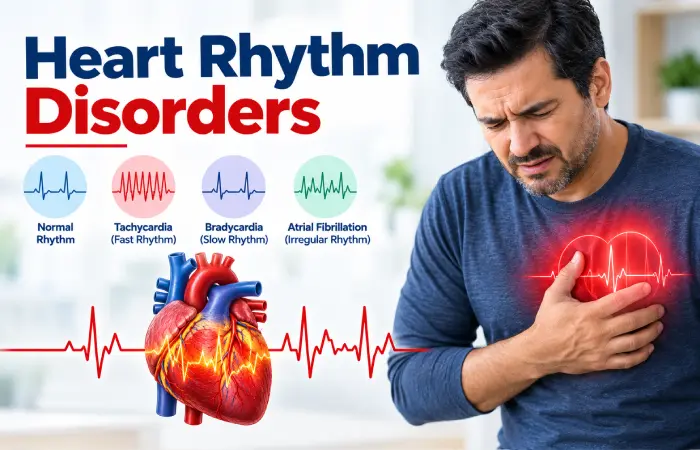
Arrhythmias-are problems with the heart’s electrical beat. The heartbeat may be too fast, too slow, irregular in pace or some combination of the above. You might experience any of these symptoms:
- Flapping or throbbing in your chest.
- Racing heartbeat.
- Skipped heartbeat
- light-headedness/diziness.
- Fainting
- Shortness of breath
Some abnormal rhythms pose no problem to the patient, whereas others place a patient at an increased risk for stroke or cardiac arrest, for example. An electrocardiogram ( ECG, also known as an EKG) is one of the tests often used to diagnose abnormal rhythms or other problems associated with the heart.
Risk Factors
Some risk factors, such as age and family history, cannot be modified but many others can be modified. Some key modifiable risk factors:
- Smoked or any use of tobacco
- High blood pressure
- High blood cholesterol
- Diabetes Mellitus
- Lack of Physical Activity
- Overweight or obesity
- Malnutrition diet
- Alcoholism
The WHO also points out air pollution as an environmental cardiovascular risk factor.
The best news is that changing numerous risk factors simultaneously would be a great progress for the cardiovascular system.
Warning Signs
Though sometimes silently appearing, potential warning signs of heart disease include:
- Chest pain or pressure
- Shortness of breath
- Abnormal fatigue
- Dizziness or fainting
- Heart palpitations
- Leg and/or abdominal swelling
- Decreased capacity for exercise
- Sudden sweating, nausea or pain
Presentation of a heart attack may vary significantly. New, severe or unexplainable chest discomfort especially in the presence of shortness of breath, sweating, nausea or weakness must be considered an emergency.
Never attempt to diagnose heart disease based on signs and symptoms alone.
Diagnosis and Treatment
Doctors may use several approaches depending on the suspected condition.
Common diagnostic tests include:
| Test | What it can help assess |
| Blood pressure measurement | Hypertension |
| Blood tests | Cholesterol, glucose and other markers |
| ECG/EKG | Heart rhythm and electrical activity |
| Echocardiogram | Heart structure and pumping function |
| Stress testing | Heart response to exertion |
| Cardiac imaging | Structure and blood flow |
| Coronary angiography | Coronary artery narrowing/blockage |
It can also be used non- invasively to check for arrhythmias, damage caused by previous heart attack and certain conditions affecting coronary arteries.
Some infections can affect the cardiovascular system directly or contribute to complications in people with existing heart conditions. Learn more about common infectious diseases and how infections can affect overall health.
Treatment and rehabilitation will vary depending on the condition and may be carried out through changes in lifestyle, prescribing medication and possibly some sort of operation.
Some health conditions can involve both the cardiovascular and digestive systems, while digestive problems can also have many other causes. Read about common digestive diseases to learn more about conditions affecting the stomach, intestines, and other parts of the digestive system.
Heart Disease Prevention
A foundation of risk factor modification for prevention is built on behavior changes.
Be physically active
Unless your health care provider says different, most adults need to do 150 minutes a week of moderate aerobic activity and 75 minutes a week of vigorous aerobic activity, or a combination of both.
Use a heart healthy diet
Build a plate around veggies, fruits, whole grain, legumes, nuts, and fish/minimally processed foods; avoid sodium and other fats that are added or occur naturally in highly processed foods and some manufactured goods that do not require refrigeration.
Don’t use tobacco products
These are major cardiovascular risk contributors. One thing a person can do to boost the odds of a healthy heart is to stop using tobacco.
Keep important health measures current
Several metabolic health conditions can increase cardiovascular risk, particularly when factors such as blood glucose, body weight, and blood pressure are not well controlled. Learn more about common metabolic diseases and the factors that can affect metabolic health.
Check your numbers for blood pressure, cholesterol, and (if appropriate) blood glucose so that risk factors can be checked for so that cardiovascular disease is caught, if necessary, before it progresses significantly.
Use prescribed medications
Those on medications for high blood pressure, cholesterol, diabetes or heart disease should adhere to their provider’s instructions and NOT simply stop them.
Heart conditions can also affect children, including congenital conditions that are present from birth. For a broader look at childhood health conditions, explore common diseases in children and learn about their symptoms, risk factors, and prevention.
Conclusion
More common diseases of the heart is Coronary Artery disease, Hypertension, Heart Failure, Arrhythmias and Heart valve diseases. Whereas only certain are modifiable risks of cardiovascular diseases and many important contributing factors to the risks of cardiovascular are modifiable such as healthy nutrition; regular exercise; not smoking; proper understanding ofself’s condition by regular medical checkup and correct medical intervention.
Heart and lung health are closely connected, and conditions affecting the respiratory system can sometimes place additional stress on the heart. Explore common respiratory diseases to learn about conditions affecting the lungs and airways.
The prime essence is not to wait until you have developed significant cardiac symptoms, as diagnosis and treatment of the risk factors for cardiovascular disease will significantly prevent or defer advanced heart diseases. WHO further insists on early detection- so that an effective medical counseling session and drugs might be initiated when and where ever required.
Afiya Jafar is a fitness and wellness writer who focuses on making health, exercise, and healthy lifestyle information simple and practical. Her work covers workouts, fitness motivation, strength training, nutrition, weight management, stress management, mindfulness, and everyday wellness.
Read Full Bio of Afiya Jafar →
Sameena Begum reviews selected health, wellness, fitness, and digital content for clarity, factual presentation, consistency, and reader usefulness. Her review work helps maintain clear and responsible editorial standards across PhysicalFitt content.
Read Full Bio of Sameena Begum →
Dr. Khizrana Begum is a qualified medical professional with MBBS and MD qualifications and 5+ years of experience in the medical field. She works as a General Physician and Dermatologist, with expertise in general medicine, dermatology, preventive healthcare, and skin health.
Read Full Bio of Dr. Khizrana Begum →