
 Afiya Jafar
Fitness & Wellness Writer
Afiya Jafar is a fitness and wellness writer who focuses on making health, exercise, and healthy lifestyle information simple and practical.
Read Full Bio of Author →
Afiya Jafar
Fitness & Wellness Writer
Afiya Jafar is a fitness and wellness writer who focuses on making health, exercise, and healthy lifestyle information simple and practical.
Read Full Bio of Author →
 Sameena Begum
Health, Fitness & Digital Content Reviewer
Sameena reviews selected health, wellness, fitness, and digital content for clarity, factual presentation, and reader usefulness.
Read Full Bio of Reviewer →
Sameena Begum
Health, Fitness & Digital Content Reviewer
Sameena reviews selected health, wellness, fitness, and digital content for clarity, factual presentation, and reader usefulness.
Read Full Bio of Reviewer →
 Dr. Khizrana Begum
General Physician & Dermatologist
Dr. Khizrana Begum is a General Physician and Dermatologist with MBBS and MD qualifications and 5+ years of experience in the medical field.
Read Full Bio of Medical Reviewer →
Dr. Khizrana Begum
General Physician & Dermatologist
Dr. Khizrana Begum is a General Physician and Dermatologist with MBBS and MD qualifications and 5+ years of experience in the medical field.
Read Full Bio of Medical Reviewer →
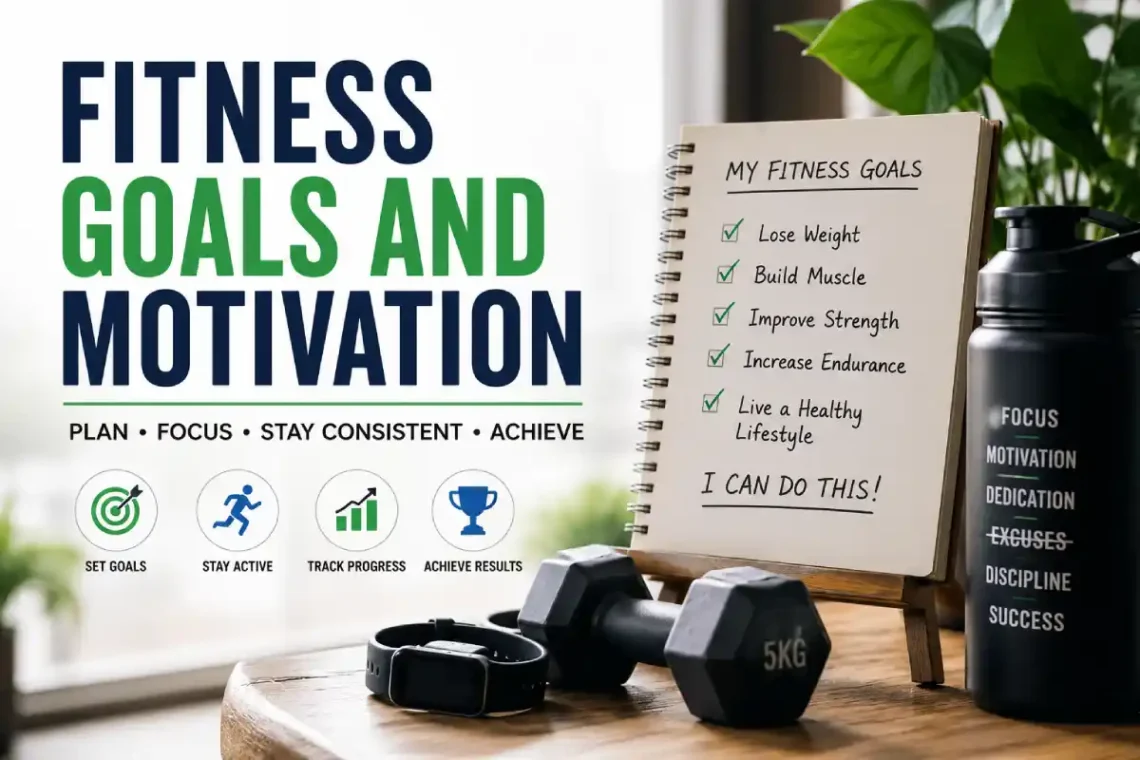
Whether your objective is fat loss, muscle mass growth, enhanced stamina, or general well-being, Motivation and fitness goals are essential components for long term success. Most individuals begin exercising enthusiastically, but after a couple of weeks lose their drive when they don’t have a definite approach in location. Fortunately, inspiration does not necessarily need willpower.
Developing genuine objectives, determining your development and adopting healthy and sustainable routines will help you stick to it as your motivation ebbs and flows normally.
In this guide, you’ll find the methods to set valuable fitness objectives, track achievements, and develop forward momentum in your exercise objectives.
❝
This article is a part of
Gym Hub
Why Goals Matter
Setting goals helps you navigate workouts and gives you a framework to know if you’re heading in the right direction, as well as if and when you have made progress toward where you want to go. If you don’t have a place to go, your workouts are all over the place and don’t get you anywhere.
Benefits of setting fitness goals include:
- Better workout consistency
- Increased motivation
- Easier progress tracking
- Higher confidence
- Improved accountability
- Greater long-term success
Research keeps pointing to people who scribble down clear objectives and check in frequently sticking to fitness regimes than those with loose aims.
Looking for more ways to stay committed? Explore our complete gym motivation guide for practical strategies that support long-term fitness success.
Comparison Table: Exercising With Goals vs Without Goals
| Factor | With Clear Goals | Without Goals |
| Workout consistency | High | Often inconsistent |
| Motivation | Sustainable | Short-lived |
| Progress tracking | Easy | Difficult |
| Confidence | Builds over time | Often decreases |
| Results | More predictable | Random |
| Long-term adherence | Strong | Low |
SMART Fitness Goals
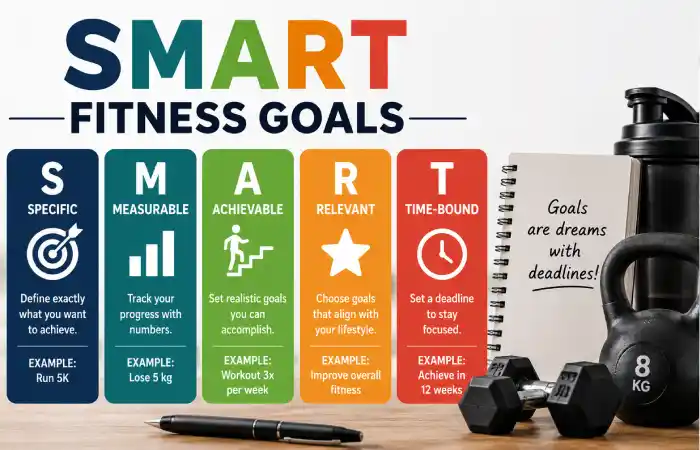
By using SMART goals, one of the best ways to set targets, make a progress check up, or stay highly driven throughout a workout trip, an individual can maintain motivation. SMART fitness goal helps one get through the murky goals of desiring “getting fitter.” This objective also ensures that a plan remains obtainable.
Achieving your goals becomes easier when you understand motivation vs. discipline and how each contributes to consistency.
| SMART Principle | Example |
| Specific | “Walk 8,000 steps every day.” |
| Measurable | “Lose 5 kg in 12 weeks.” |
| Achievable | “Strength train three times per week.” |
| Relevant | “Improve cardiovascular fitness to complete a 5K run.” |
| Time-bound | “Complete my goal within three months.” |
Why SMART Goals Work
SMART goals Eliminate Vagueness. The best thing about using SMART Goals is that you are working from a place of knowing. When the workout is more than just a sweat session and instead translates to a visible goal you are sure to stay committed. You’re always checking off success points along the way, rather than thinking “am I doing this just because?” This gives you momentum in a positive direction and you’re much less likely to become discouraged.
Some of the key benefits include:
- Sets you up for success.
- Allows you to track your wins (big or small).
- Keeps your motivation levels high.
- Prevents you from having unattainable fitness goals.
- Gets you into a long-term habit.
- Shows you what works and what doesn’t for your body.
Tips for Creating Effective SMART Fitness Goals
Stay motivated and realistic with these useful tips:
- Select only one fitness goal at time to feel less overwhelmed.
- Divide into large goals into smaller ones each week or each month.
- Record your exercises in a diary or fitness app or wear a smart watch with your tracking.
- Reassess on a monthly two or three weeks and revise.
- Reward small milestones so you remain on track.
This is tool will assist in making dream to reality plan for you. Using this process to develop a SMART Goal setting program can lead you to confidence, accountability and a system that ultimately will change the trajectory of your overall fitness journey.
Along with setting goals, follow these practical gym motivation tips to stay focused and avoid losing momentum.
Short-Term Goals
Short-term goals allow for rapid wins that breed motivation and self-belief.
Examples include:
- Complete three workouts this week
- Drink more water daily
- Walk 10,000 steps five days this week
- Improve push-ups from 10 to 20
- Sleep at least seven hours nightly
Small achievements reinforce positive habits and keep you engaged.
Long-Term Goals
These is the big win in what you are striving for.
Examples include:
- Lose 20 kg
- Complete a half marathon
- Gain 5 kg of muscle
- Reduce body fat percentage
- Improve overall strength
- Maintain healthy blood pressure
Break large goals into smaller milestones to make them feel more manageable.
Goal Timeline Example
| Time Frame | Goal Example |
| 1 Week | Complete 4 workouts |
| 1 Month | Lose 2 kg |
| 3 Months | Improve strength by 20% |
| 6 Months | Complete first 10K run |
| 12 Months | Maintain healthy lifestyle |
Tracking Goal Progress
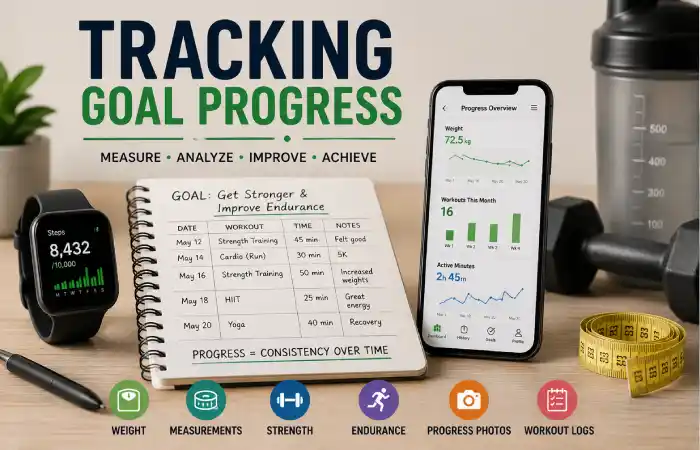
Tracking helps you identify what works and where adjustments are needed.
Popular tracking methods include:
- Workout journals
- Mobile fitness apps
- Smartwatches
- Progress photos
- Body measurements
- Strength logs
- Weekly weigh-ins
Progress Tracking Comparison
| Tracking Method | Best For | Frequency |
| Scale weight | Weight loss | Weekly |
| Progress photos | Body composition | Monthly |
| Measurements | Fat loss | Monthly |
| Workout log | Strength gains | Every workout |
| Fitness apps | Habit tracking | Daily |
| Smartwatch | Activity monitoring | Continuous |
Learn how to stay motivated to go to the gym with daily habits that help you stick to your fitness goals over time.
Adjusting Goals Over Time
Fitness is never a straight line – our lives change, schedules adapt, and progress inevitably stalls sometimes.
You may need to adjust your goals when:
- You’ve achieved your current target.
- Your priorities change.
- You’re recovering from injury.
- Progress stalls for several weeks.
- Your schedule becomes busier.
Adjusting a goal isn’t failure—it’s part of maintaining a sustainable fitness journey.
Focus on consistent improvement rather than perfection.
2026 Fitness Goal Tracking Tools Comparison
| Tool | Pros | Best For | Cons |
| Workout Journal | Simple, affordable | Beginners | Manual tracking |
| Fitness Apps | Reminders, analytics | Habit tracking | Some premium features |
| Smartwatch | Real-time metrics | Activity monitoring | Higher cost |
| Spreadsheet | Fully customizable | Detailed analysis | Time-consuming |
| Personal Coach | Expert guidance | Accountability | Most expensive |
If you’re just starting your fitness journey, our gym motivation for beginners guide will help you build confidence and create lasting habits.
Troubleshooting Common Goal-Setting Challenges
| Problem | Solution |
| Lost motivation | Revisit your “why” and celebrate small wins |
| Busy schedule | Shorten workouts instead of skipping them |
| No visible progress | Track measurements and strength, not just weight |
| Unrealistic expectations | Break goals into smaller milestones |
| Workout boredom | Try new exercises or training styles |
Conclusion
Long-term fitness success isn’t a result of feeling motivated day in and day out. It is based on an actionable plan and creating long-lasting habits. Establishing goals through the SMARTTI technique will assist you in setting clear, concise and reachable fitness objectives which can be achieved over time.
Combining these goals along with short-run goals will be effective in keeping you on your health trip. Monitoring development is one factor which most folks miss but you would discover the same useful to hold you inspired and in line along with your plan. Sometimes progress could also be slow for your first week but keep consistent and soon you would notice the variations.
Whenever your motivation drops, revisit these motivational gym quotes to regain focus and keep moving toward your goals.
You will get more motivated seeing your progress which in turn would motivate you to stick together with your regimen. You need to remember to vary the aims according to your fitness standards and lifestyle.
Remember this- Perfection isn’t the key but consistency leads to long-term fitness success.
Begin with one goal today!
Afiya Jafar is a fitness and wellness writer who focuses on making health, exercise, and healthy lifestyle information simple and practical. Her work covers workouts, fitness motivation, strength training, nutrition, weight management, stress management, mindfulness, and everyday wellness.
Read Full Bio of Afiya Jafar →
Sameena Begum reviews selected health, wellness, fitness, and digital content for clarity, factual presentation, consistency, and reader usefulness. Her review work helps maintain clear and responsible editorial standards across PhysicalFitt content.
Read Full Bio of Sameena Begum →
Dr. Khizrana Begum is a qualified medical professional with MBBS and MD qualifications and 5+ years of experience in the medical field. She works as a General Physician and Dermatologist, with expertise in general medicine, dermatology, preventive healthcare, and skin health.
Read Full Bio of Dr. Khizrana Begum →