
 Afiya Jafar
Fitness & Wellness Writer
Afiya Jafar is a fitness and wellness writer who focuses on making health, exercise, and healthy lifestyle information simple and practical.
Read Full Bio of Author →
Afiya Jafar
Fitness & Wellness Writer
Afiya Jafar is a fitness and wellness writer who focuses on making health, exercise, and healthy lifestyle information simple and practical.
Read Full Bio of Author →
 Sameena Begum
Health, Fitness & Digital Content Reviewer
Sameena reviews selected health, wellness, fitness, and digital content for clarity, factual presentation, and reader usefulness.
Read Full Bio of Reviewer →
Sameena Begum
Health, Fitness & Digital Content Reviewer
Sameena reviews selected health, wellness, fitness, and digital content for clarity, factual presentation, and reader usefulness.
Read Full Bio of Reviewer →
 Dr. Khizrana Begum
General Physician & Dermatologist
Dr. Khizrana Begum is a General Physician and Dermatologist with MBBS and MD qualifications and 5+ years of experience in the medical field.
Read Full Bio of Medical Reviewer →
Dr. Khizrana Begum
General Physician & Dermatologist
Dr. Khizrana Begum is a General Physician and Dermatologist with MBBS and MD qualifications and 5+ years of experience in the medical field.
Read Full Bio of Medical Reviewer →
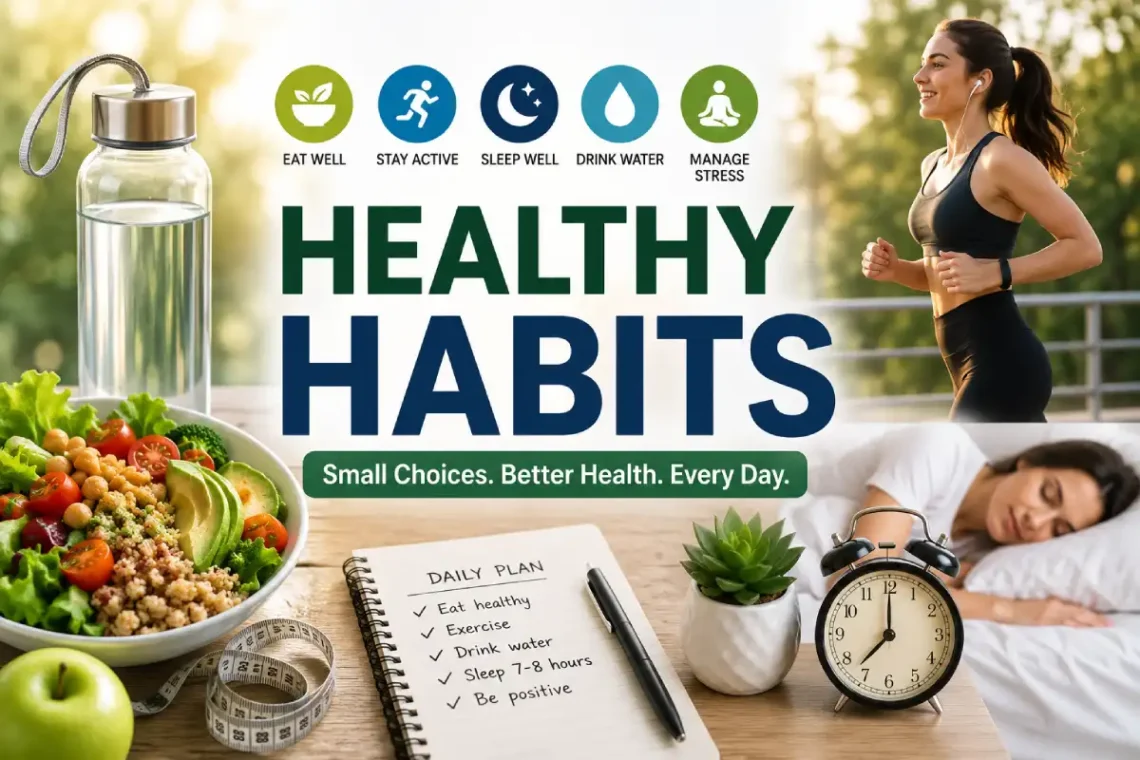
Healthy Habits consist of small, reusable every day selections for promoting proper physical fitness and in shape to be successful during our lifetimes. You needn’t have a dietary regime of excessive weight-decrease-diet weight loss, pricey club dues or an exhausting agenda earlier within the morning days. Eating wholesome meals, engaging in everyday physical games, sleep good, drinking enough quantity of H2O, regulating one’s stress levels and private care gadgets consist of few on day-by-day healthy residing life type behaviors.
Best way is to select realbehaviors for those repeated daily routines.
As now a days the highest recommendations of the principal health businesses reiterate standard bodily activity, sound nutrition, satisfactory hours of sleep, in addition to many different day by day tasks.
Developing better habits is an important part of maintaining your overall health and well-being. Explore these practical health tips for simple ways to support a healthier lifestyle.
❝
This article is a part of
General Health Hub
What Are Healthy Habits?
Healthy behaviors are those things you do routinely that contribute to your physical or psychological health and or well-being: Some things may seem very obvious – regular physical activity and eating foods from the five food groups are good examples. Others are perhaps easily overlooked, for instance regular sleep, handwashing techniques or taking regular breaks from sedentary postures.
Consistency over perfection is the key to habit formation and maintenance. It is likely someone that goes for a twenty-minute walk almost every day than someone that embarks on a hardcore training program for two weeks then abandons ship!
Generally healthy habits fall within areas:nutrition, physical activity, sleep, hydration, hygiene, managing stress and preventative medical care.
Good habits are easier to maintain when they become part of a balanced lifestyle. Learn more about healthy lifestyle choices that can support your physical and mental well-being.
Best Healthy Habits to Follow Every Day
A practical daily routine can include:
| Habit | Simple Daily Target |
| Eat nutritious foods | Include vegetables, fruit, whole grains and quality protein |
| Move your body | Walk, exercise or perform another enjoyable physical activity |
| Drink water | Drink regularly throughout the day and more when conditions increase fluid needs |
| Sleep consistently | Aim for at least 7 hours as an adult |
| Manage stress | Use walking, breathing exercises, hobbies or social connection |
| Practice hygiene | Wash hands and maintain dental and personal hygiene |
| Limit unhealthy behaviors | Reduce smoking, excessive alcohol, highly processed foods and prolonged inactivity |
Building healthy habits can also play a role in taking a proactive approach to your well-being. Discover these preventive health tips to learn more about protecting your health through prevention.
The goal is not to complete every habit perfectly every day. Instead, build a routine that remains practical during busy or stressful periods.
Healthy Eating Habits
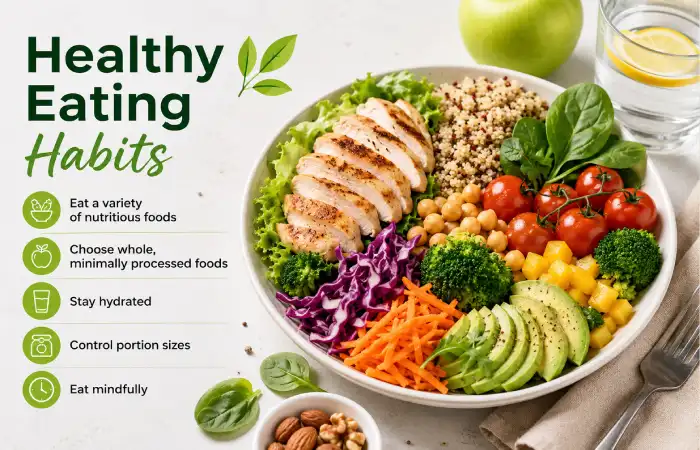
Nutrition experts say that an adequate diet will encourage a range of nutritious foods, rather than a ‘super-food’ approach. TheWHO suggests a ‘balance of fruits and vegetables, pulses, nuts and whole cereals; a limit on the consumption of free sugars, saturated fats and salt’, also advising the consumption of at least 400g (five portions) of fruit and vegetables per day for adults. A simple technique for creating nutrient-rich meals is to plan meals to contain a portion of fruit or vegetables, a protein source, a high fiber grain product and a smaller portion of a healthy fat.
Healthy daily habits work best alongside regular attention to your overall health. Learn why regular health checkups can be an important part of monitoring your health.
Healthy eating habits to prioritize:
- Eat a variety of foods rather than repeating a very limited menu.
- Include vegetables or fruit with meals and snacks.
- Choose whole grains and high-fiber foods regularly.
- Limit foods and drinks high in added sugar.
- Keep highly processed foods occasional rather than making them dietary staples.
- Pay attention to portion sizes and hunger cues.
Daily Exercise Habits
Active doesn’t necessarily mean the gym, walking, cycling, dancing, swimming, exercise while working at home and sports activities for leisure can count toward becoming active, U.S guidelines currently suggest that for adults the recommendation of 150 minutes of moderate intensity activity spread over the week, and strength training activities at least twice per week, can be carried out in shorter periods over the entire week. A workout could look like a 30-minute brisk walk five times per week and 2 short strength sessions.
| Activity | Example | Weekly Goal |
| Moderate cardio | Brisk walking | 150+ minutes |
| Vigorous cardio | Running or fast cycling | 75+ minutes |
| Strength training | Squats, resistance bands or weights | 2+ days |
| Everyday movement | Stairs, walking breaks, household activity | Add throughout the day |
One of the most important habits for overall wellness is maintaining a consistent and healthy sleep routine. Explore these sleep health tips to improve your approach to quality rest.
Importantly, some physical activity is better than none. Regular movement can improve sleep, reduce anxiety and support cardiovascular and metabolic health.
Healthy Sleep Habits
Rest is an integral aspect of a well-rounded and functioning day, not just free time. However, many of us don’t get the necessary 7+ hours.
Based on CDC reports from 2026, in 2024 over three in ten adults were found to get insufficient rest with 30.5% reporting average nighty sleep less than 7 hours which reveals our ongoing problem with sleep.
To establish adequate sleep habits, aim for consistent bedtimes and awakening, stay away from electronic devices before bed, and establish an environment conducive to sleep (e.g. A good room temperature) along with consistent physical activity during the day.
If your sleeping problem doesn’t improve despite working to cultivate proper sleeping habits, it is beneficial to speak with a competent medical provider about any continuous symptoms.
Hydration Habits
Water is key to normal body functioning, including regulation of body temp, cushioning of the joints and flushing waste. It can help people cut down on sweet drinks: since water has no calories, it’s a great substitute. If there’s one habit to embrace – that no one really needs to be a water-o-holic, drink throughout the day and also, the level of how much you need to drink varies depending on your activity, weather, fever and whether you’re vomiting or experience diarrhea.
Hydration Hacks Set up your station: Invest in a reusable water bottle, keep it within arm’s reach, drink from your bottle with meals, and don’t forget water when you head to the gym or are lounging outside.
Marked bottle or app For those whose routine fails them, using a marked bottle or a hydration reminder app will transform drinking water into a quantifiable one.
Managing stress is another healthy habit that can contribute to better overall well-being. Try these practical stress management tips to develop healthier ways of handling everyday pressure.
Personal Hygiene Habits
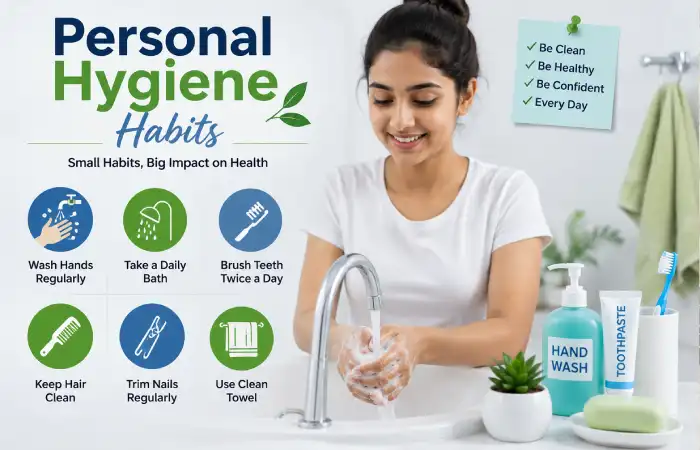
Personal hygiene procedures keep you clean and limit contact with some pathogens (infectious microorganisms). Recommended hygiene practices are; regular bathing, oral hygiene (including flossing) and personal cleaning habits-such as regularly washing your hands, as well as, cleaning personal effects that you use a lot.
Of especial importance are handwashing procedures after contact with food or eating utensils, after going to the toilet, coughing/sneezing and any other interaction you’ve had that may transmit or contact infection/agents from it to yourself.
Personal hygiene should be practical- not that over the top kind of idea! It should provide a consistent level of cleanliness in your living environment without eradicating all bacteria.
Stress Management Habits
Stress is a normal response, but prolonged or poorly managed stress can affect sleep, mood, concentration and daily functioning.
Useful habits include taking short movement breaks, spending time outdoors, practicing slow breathing, maintaining social connections, pursuing enjoyable hobbies and organizing demanding tasks into manageable steps.
You do not need a one-hour meditation session to manage stress. A 10-minute walk, five minutes of controlled breathing or a short break away from screens may be more sustainable for many people.
Current health guidance increasingly favors manageable changes rather than trying to overhaul every part of your lifestyle simultaneously.
How to Build Healthy Habits
The biggest mistake people make is trying to change everything at once. Instead, select one behavior and attach it to an existing routine.
For example:
Existing routine: Finish breakfast
New habit: Drink a glass of water
Existing routine: Finish work or studying
New habit: Take a 10-minute walk
Existing routine: Brush your teeth
New habit: Prepare for tomorrow’s bedtime routine
Make the habit easy to start. Keep walking shoes visible, place a water bottle on your desk or prepare vegetables before you become hungry.
Track consistency rather than demanding perfection. If you miss one day, resume the next day instead of waiting for Monday or the beginning of a new month.
A Simple 4-Week Habit-Building Framework
| Week | Focus | Example |
| Week 1 | Start small | 10-minute daily walk |
| Week 2 | Add nutrition | Add vegetables to one meal |
| Week 3 | Improve recovery | Set a consistent bedtime |
| Week 4 | Strengthen consistency | Track all three habits |
This gradual approach reflects the broader recommendation from leading health publishers to make manageable changes that fit individual lifestyles.
Common Habits That Can Affect Your Health
Some everyday behaviors can gradually work against your health goals.
Common examples include regularly sitting for long periods, relying heavily on sugary drinks, frequently choosing highly processed foods, smoking, excessive alcohol consumption, chronically sleeping too little and avoiding physical activity.
However, healthy living should not become an all-or-nothing exercise. An occasional dessert, missed workout or late night does not erase weeks of positive behavior.
The more useful question is: What does your normal routine look like?
If an unhealthy behavior happens frequently, replace it with a realistic alternative. Swap a sugary drink for water, take a short walking break during a long work session or establish a consistent bedtime instead of attempting a complete lifestyle transformation overnight.
Healthy Habits: 2026 Evidence Snapshot
The following figures provide useful benchmarks when evaluating your routine:
| Health Area | Evidence-Based Benchmark |
| Physical activity | 150+ minutes moderate activity weekly |
| Strength | At least 2 days weekly |
| Fruit and vegetables | At least 400 g daily |
| Adult sleep | At least 7 hours nightly |
| Hydration | Drink regularly; needs vary by circumstances |
| Processed/high-sugar foods | Limit foods high in added sugar, salt and unhealthy fats |
The figures above come from current CDC and WHO guidance rather than arbitrary wellness targets.
Healthy Habits Product Comparison
Products cannot create healthy habits by themselves, but the right tool can reduce friction and make progress easier to track.
| Product/Tool | Best For | What to Check | Main Benefit |
| Reusable water bottle | Hydration | Size, leak resistance, cleaning | Keeps water accessible |
| Fitness tracker | Activity tracking | Battery life, accuracy, comfort | Records movement and workouts |
| Food-tracking app | Nutrition awareness | Food database, privacy, usability | Helps identify eating patterns |
| Resistance bands | Home strength training | Resistance range, durability | Portable and inexpensive |
| Sleep tracker | Sleep awareness | Treat measurements as estimates | Identifies sleep patterns |
The best product is the one you will actually use. Avoid buying multiple gadgets before establishing the underlying behavior.
Final Takeaway
Healthy habits are built through ordinary actions repeated consistently. Start with a few high-impact behaviors: eat more nutritious foods, move regularly, sleep at least seven hours when possible, drink water throughout the day, maintain personal hygiene and create practical ways to manage stress.
Do not try to become perfectly healthy overnight. Build a routine that works on ordinary days, busy days and difficult days. That is what turns individual healthy choices into a sustainable lifestyle.
Afiya Jafar is a fitness and wellness writer who focuses on making health, exercise, and healthy lifestyle information simple and practical. Her work covers workouts, fitness motivation, strength training, nutrition, weight management, stress management, mindfulness, and everyday wellness.
Read Full Bio of Afiya Jafar →
Sameena Begum reviews selected health, wellness, fitness, and digital content for clarity, factual presentation, consistency, and reader usefulness. Her review work helps maintain clear and responsible editorial standards across PhysicalFitt content.
Read Full Bio of Sameena Begum →
Dr. Khizrana Begum is a qualified medical professional with MBBS and MD qualifications and 5+ years of experience in the medical field. She works as a General Physician and Dermatologist, with expertise in general medicine, dermatology, preventive healthcare, and skin health.
Read Full Bio of Dr. Khizrana Begum →