
 Afiya Jafar
Fitness & Wellness Writer
Afiya Jafar is a fitness and wellness writer who focuses on making health, exercise, and healthy lifestyle information simple and practical.
Read Full Bio of Author →
Afiya Jafar
Fitness & Wellness Writer
Afiya Jafar is a fitness and wellness writer who focuses on making health, exercise, and healthy lifestyle information simple and practical.
Read Full Bio of Author →
 Sameena Begum
Health, Fitness & Digital Content Reviewer
Sameena reviews selected health, wellness, fitness, and digital content for clarity, factual presentation, and reader usefulness.
Read Full Bio of Reviewer →
Sameena Begum
Health, Fitness & Digital Content Reviewer
Sameena reviews selected health, wellness, fitness, and digital content for clarity, factual presentation, and reader usefulness.
Read Full Bio of Reviewer →
 Dr. Khizrana Begum
General Physician & Dermatologist
Dr. Khizrana Begum is a General Physician and Dermatologist with MBBS and MD qualifications and 5+ years of experience in the medical field.
Read Full Bio of Medical Reviewer →
Dr. Khizrana Begum
General Physician & Dermatologist
Dr. Khizrana Begum is a General Physician and Dermatologist with MBBS and MD qualifications and 5+ years of experience in the medical field.
Read Full Bio of Medical Reviewer →
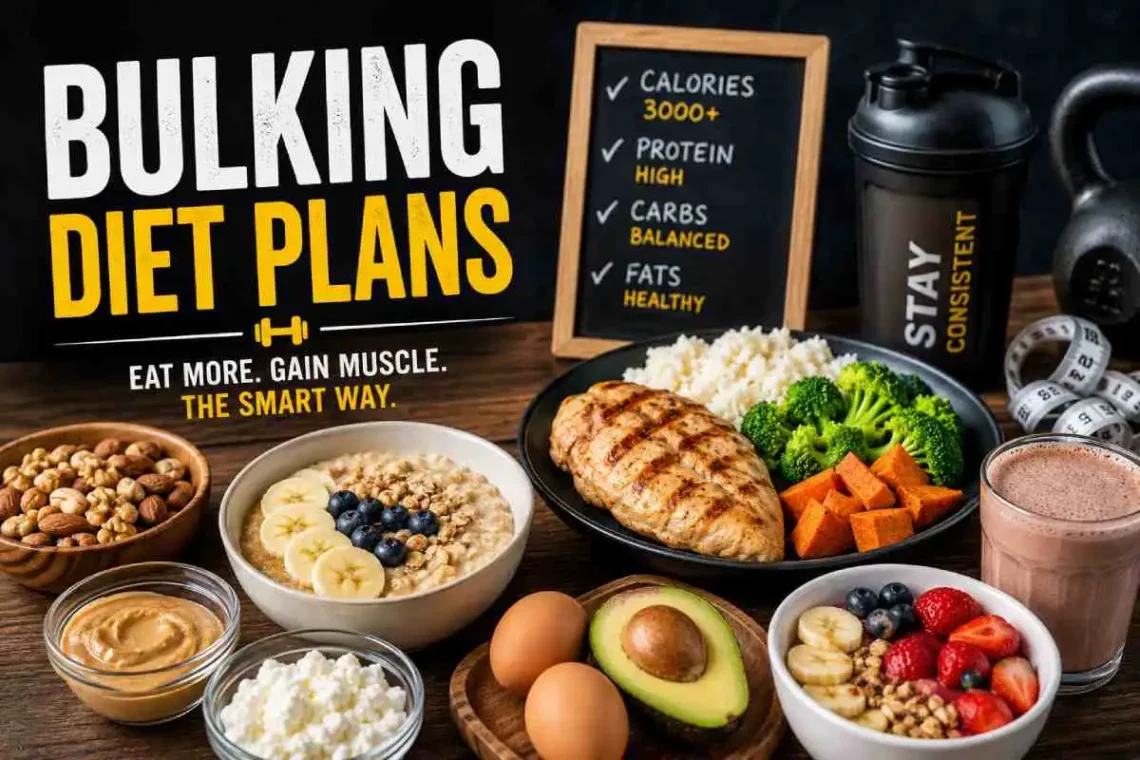
Building muscle is not, about lifting heavier weights. What you eat is really important because it decides if your workouts will give you muscle or extra body fat. You need a Bulking Diet Plan to make sure you are eating enough calories to grow and that you are getting the protein, carbohydrates and healthy fats that your body needs to recover and build muscle. A good plan helps your body get what it needs.
Unlike the way of thinking where you just eat a lot modern bulking is about gaining good muscle while not getting too much fat. This way is often called bulking or lean bulking.
In this guide you will learn how to make a bulking diet pick the best foods to eat and follow a simple 3000-calorie plan to gain muscle.
- You will learn how to create a bulking diet
- You will also learn how to choose best foods, for bulking
- Follow a 3000-calorie muscle gain plan.
❝
This article is a part of
Protein Meals Hub
What Is a Bulking Diet Plan?
A bulking diet plan is a eating plan that helps you gain weight.
- It makes sure you eat food than you burn.
- This extra food helps your muscles grow.
- It is, like a way of eating.
- You need to eat calories than you use up each day.
- This helps your body make muscle.
Main Goals of Bulking
- Build lean muscle mass
- Improve strength and workout performance
- Support recovery between training sessions
- Minimize unnecessary fat gain
Research shows that eating a bit calories than you need along, with lifting weights helps build muscle over time. Studies find that this method works well for people who want to gain muscle. A moderate calorie surplus means you eat calories than your body burns but not so many that you get fat.
When you combine this with resistance training like lifting weights you build muscle. Get stronger. This approach helps you achieve your muscle-building goals in the run. It is an idea to eat a bit more and work out with weights to see results.
The best results come from finding a balance between eating enough and exercising regularly. Moderate calorie surplus and resistance training is a way to build muscle.
Clean Bulking vs Dirty Bulking
| Factor | Clean Bulking | Dirty Bulking |
| Food Quality | Mostly whole foods | Any food source |
| Fat Gain | Lower | Higher |
| Health Benefits | Better | Poorer |
| Energy Levels | Stable | Often inconsistent |
| Sustainability | Long-term | Short-term |
How Many Calories Do You Need for Bulking?
The ideal calorie surplus really depends on how much you weigh how active you’re how long you’ve been training.
Those following a plant-based lifestyle can still gain muscle by incorporating vegetarian high-protein meals for muscle gain into their bulking diet.
- It also depends on your body weight.
- Your activity level and training experience are also factors.
- The calorie surplus is different, for everyone.
- It depends on your body weight, activity level and training experience.
Recommended Surplus
| Goal | Daily Calorie Surplus |
| Lean Bulk | +250 to +350 calories |
| Moderate Bulk | +350 to +500 calories |
| Aggressive Bulk | +500 to +750 calories |
Most lifters get results with lean bulk. It helps create an environment, for muscle growth.
Recommended Macronutrient Breakdown
Protein
Aim for:
- 1.6–2.2g per kg body weight
- Around 25–30% of total calories
Carbohydrates
Aim for:
- 45–55% of calories
- Primary fuel source for training
Healthy Fats
Aim for:
- 20–30% of calories
- Supports hormones and recovery
Example 3000-Calorie Muscle Gain Diet
| Macronutrient | Grams | Calories |
| Protein | 210g | 840 |
| Carbohydrates | 390g | 1560 |
| Fat | 67g | 600 |
| Total | — | 3000 |
Clean Bulking Meal Plan
Breakfast
- 4 whole eggs
- 100g oats
- 1 banana
- 1 tablespoon of peanut butter
Calories: ~ 750 calories.
Mid-Morning Snack
- Greek yogurt
- Mixed nuts
- Apple
Calories: ~450
Adding high-protein snacks for muscle gain between meals can help increase calorie and protein intake during a bulking phase.
Lunch
- 200g chicken breast
- 2 cups rice
- Later I will eat mixed vegetables with olive oil
Calories: ~800
Pre-Workout Meal
- I will eat wheat bread
- some turkey slices
- Banana
Calories: ~350
Post-Workout
I also like to have a whey protein shake and some rice cakes
Calories: ~250
Dinner
I really like to have salmon for dinner. Sometimes I also have beef. I like to eat these with potato and some green vegetables. Salmon is a favorite of mine. I think it is really good, with vegetables.
Calories: ~650
Before Bed
- Cottage cheese
- Almonds
Calories: ~250
3000 Calorie Muscle Gain Diet
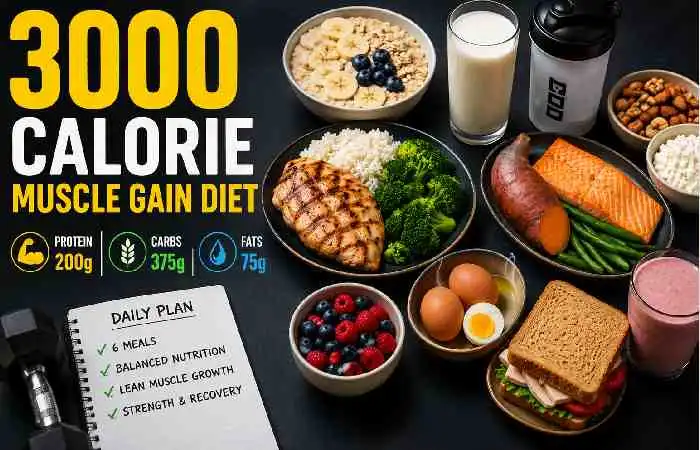
A diet that has 3000 calories and is meant for muscle gain is something that a lot of people use to get muscles and have energy all day. This kind of diet is really good for people who’re very active, like strength trainers and athletes because they need extra calories to help their muscles grow and get better. But the thing is, how calories someone needs depends on how much they weigh how active they are, how old they are and how their body works so 3000 calories might not be right for every single person who wants to build muscle mass with a muscle gain diet and follow a 3000 calorie muscle gain diet.
A successful bulking phase starts with choosing the right high-protein meals for muscle gain to support consistent muscle growth and recovery.
A good 3000-calorie bulking diet is about eating quality protein foods, complex carbs, healthy fats and foods packed with nutrients. It is better to avoid junk foods that’re high in calories but low, in nutrients.
A successful bulk can still be cost-effective when you incorporate budget-friendly high-protein foods into your daily plan.
Sample 3000-Calorie Muscle Gain Macro Split
| Macronutrient | Daily Amount | Percentage of Calories |
| Protein | 180–220g | 25–30% |
| Carbohydrates | 350–400g | 45–55% |
| Healthy Fats | 70–90g | 20–25% |
For additional meal ideas, explore these high-protein recipes for muscle gain that support muscle-building goals.
Tips for Success
- This means you can have five or six meals. It helps your body digest food and get the stuff it needs.
- You need to have protein in every meal. This is important for your muscles.
- This helps your body recover from things like exercise. It is good, for your overall health.
- You should weigh yourself every week to see if you are gaining weight like you want to. If you are not gaining weight then you need to eat calories.
When you do strength training and get stronger over time eating the foods as part of a 3000-calorie diet can really help your muscles grow steadily. This way you can build muscle without gaining much fat that you do not need. A 3000-calorie diet is important, for muscle growth.
Including a high-protein breakfast for muscle gain can help increase daily calorie and protein intake during a bulking phase.
Lean Bulking Foods List
Best Protein Sources
| Food | Protein Per 100g |
| Chicken Breast | 31g |
| Turkey | 29g |
| Lean Beef | 26g |
| Salmon | 25g |
| Eggs | 13g |
| Greek Yogurt | 10g |
Healthy Fat Sources
- Avocados
- Almonds
- Walnuts
- Olive oil
- Peanut butter
- Chia seeds
Best Foods for Healthy Weight Gain
Not all weight gain foods are equal.
Recommended Foods
| Food | Benefit |
| Oats | Slow-digesting carbs |
| Rice | Easy calorie source |
| Eggs | Complete protein |
| Salmon | Protein + Omega-3 |
| Nut Butters | Calorie dense |
| Greek Yogurt | Protein and probiotics |
| Sweet Potatoes | Nutrient-rich carbs |
How to Bulk Without Gaining Fat
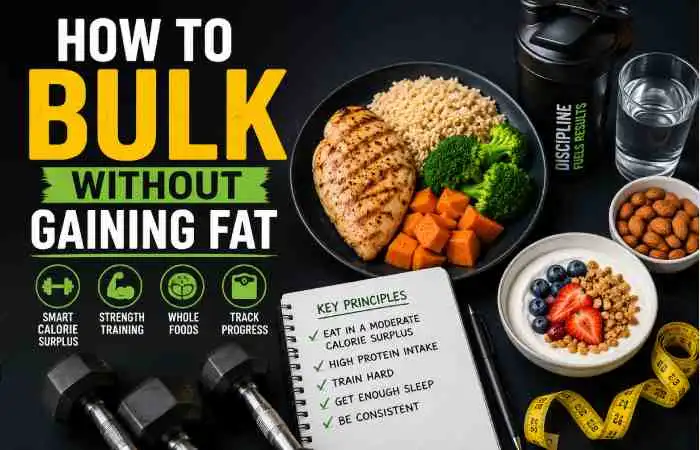
Follow a Moderate Surplus
Do not add, than 500 extra calories to what you usually eat.
Prioritize Protein
You have to eat a lot of protein. Eating a lot of nutrient- carbs and protein helps your body build muscle.
Higher protein intake is very important because it helps your body make muscle protein synthesis, which’s what builds muscle.
So remember, nutrient- carbs and protein are very important.
Train Progressively
Increase weights or reps over time.
Get Enough Sleep
Aim for 7–9 hours nightly.
Track Weekly Progress
Ideal muscle-building rate:
| Experience Level | Monthly Weight Gain |
| Beginner | 1–2 kg |
| Intermediate | 0.5–1 kg |
| Advanced | 0.25–0.5 kg |
Common Bulking Mistakes
Eating Too Much Junk Food
Extra calories don’t automatically mean more muscle.
Ignoring Protein Intake
Protein remains the most important muscle-building nutrient.
Following a bulking plan becomes much easier when you use high-protein meal prep strategies to stay consistent with your nutrition goals.
Skipping Vegetables
Micronutrients play a major role in recovery.
Muscle growth is optimized when a bulking diet is paired with proper post-worko… nutrition for recovery after training sessions.
Product Comparison: Helpful Bulking Supplements
| Supplement | Purpose | Best For |
| Whey Protein | Recovery | Most lifters |
| Creatine Monohydrate | Strength | Beginners & advanced |
| Mass Gainer | Extra calories | Hard gainers |
| Fish Oil | Recovery | General health |
Many individuals following a bulking strategy research different protein supplements and sources to optimize results.
Conclusion
To have a bulking phase you need to be consistent. This means you should not eat much. The best plans for bulking focus on eating a more calories than you normally do and they include good protein like chicken and fish carbohydrates like brown rice and whole wheat and healthy fats like nuts.
Many athletes include high-protein chicken recipes in their bulking meal plans because they provide a convenient source of lean protein.
If you follow a bulking plan track how you are doing and make small changes you can build muscle and avoid getting fat. You will get muscle mass and you will not get too much fat. Bulking is, about building muscle and a clean bulking plan is the best way to do it. Then you need to recover which is very important for your body.
Afiya Jafar is a fitness and wellness writer who focuses on making health, exercise, and healthy lifestyle information simple and practical. Her work covers workouts, fitness motivation, strength training, nutrition, weight management, stress management, mindfulness, and everyday wellness.
Read Full Bio of Afiya Jafar →
Sameena Begum reviews selected health, wellness, fitness, and digital content for clarity, factual presentation, consistency, and reader usefulness. Her review work helps maintain clear and responsible editorial standards across PhysicalFitt content.
Read Full Bio of Sameena Begum →
Dr. Khizrana Begum is a qualified medical professional with MBBS and MD qualifications and 5+ years of experience in the medical field. She works as a General Physician and Dermatologist, with expertise in general medicine, dermatology, preventive healthcare, and skin health.
Read Full Bio of Dr. Khizrana Begum →