
 Afiya Jafar
Fitness & Wellness Writer
Afiya Jafar is a fitness and wellness writer who focuses on making health, exercise, and healthy lifestyle information simple and practical.
Read Full Bio of Author →
Afiya Jafar
Fitness & Wellness Writer
Afiya Jafar is a fitness and wellness writer who focuses on making health, exercise, and healthy lifestyle information simple and practical.
Read Full Bio of Author →
 Sameena Begum
Health, Fitness & Digital Content Reviewer
Sameena reviews selected health, wellness, fitness, and digital content for clarity, factual presentation, and reader usefulness.
Read Full Bio of Reviewer →
Sameena Begum
Health, Fitness & Digital Content Reviewer
Sameena reviews selected health, wellness, fitness, and digital content for clarity, factual presentation, and reader usefulness.
Read Full Bio of Reviewer →
 Dr. Khizrana Begum
General Physician & Dermatologist
Dr. Khizrana Begum is a General Physician and Dermatologist with MBBS and MD qualifications and 5+ years of experience in the medical field.
Read Full Bio of Medical Reviewer →
Dr. Khizrana Begum
General Physician & Dermatologist
Dr. Khizrana Begum is a General Physician and Dermatologist with MBBS and MD qualifications and 5+ years of experience in the medical field.
Read Full Bio of Medical Reviewer →
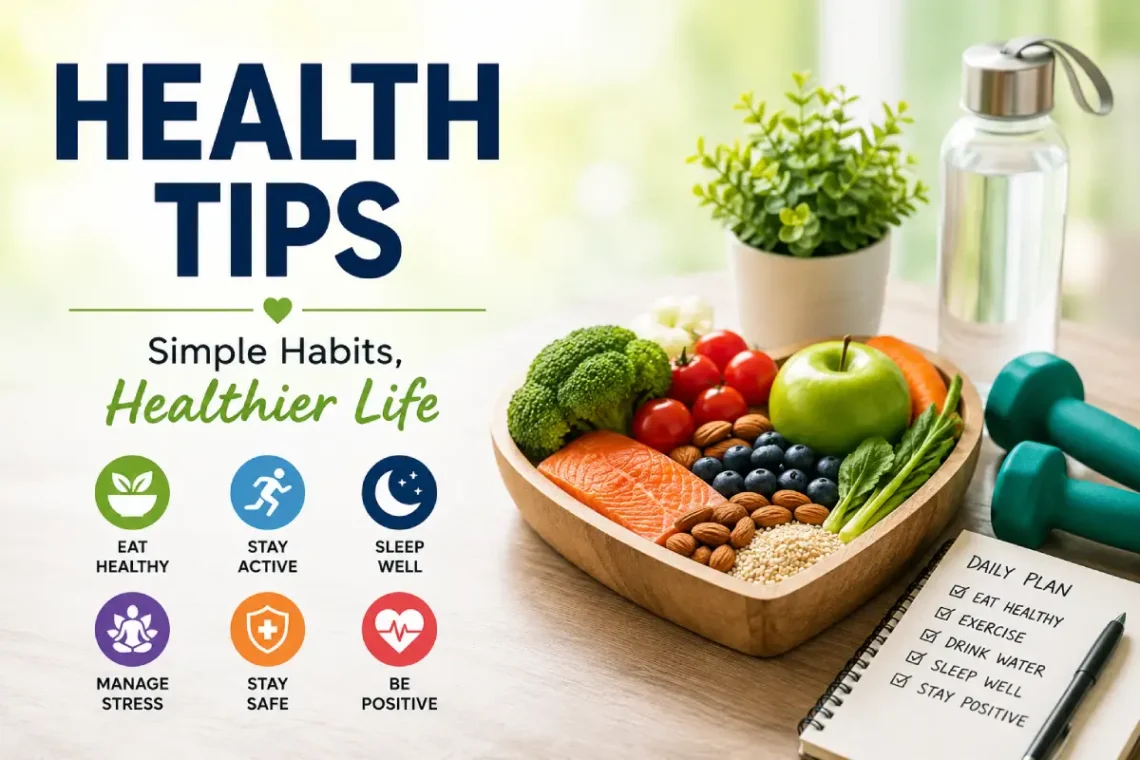
Making healthy decisions every day, and practical health tips that can be built into a realistic life will all contribute to your long-term health. These 6 cornerstones of health can help you prevent the development of illness and illness, and lead a fuller, happier life. They will all lead to a fuller, healthier life, and reduce preventable risks.
A perfectly balanced, healthful routine isn’t always needed to be “healthy”.
A balanced healthy lifestyle will be composed of, rather than an absence, of, every unhealthy activity, each day. We, each individually, have control of every major factor in our health. We simply have to make educated and thoughtful decisions at every turn.
Today, advice from organizations such as the WHO, CDC, NIH, and from institutions such as MedlinePlus and leading medical centers have the same basic recommendations based on the above pillars of health. Healthy Living Health Tips to Cover Nutrition, Physical Activity, sleep and other lifestyle measures including preventivetreatments and habits as they age. It will offer practical Healthtips in all areas and what NOT to do to remain safe with your health in all ages and stages of your life, from childhood to old age. It is also helpful to discuss any other life-health related topics with a certified health provider.
Medical disclaimer: Health and medical information provided herein may contain errors or omissions and can vary based on your age, gender history of illness, medications, pregnancy, or activity. Do not consider this information as medical advice for any personal or health problem, or as a substitute for diagnosis or treatment. Consult a healthcare provider concerning any personal or any particular health care condition.
A healthy lifestyle is built through consistent everyday choices, including nutrition, physical activity, and other habits that support long-term wellness. Explore these practical healthy lifestyle tips to make better choices every day.
❝
This article is a part of
General Health Hub
What Are Health Tips?
Health tips Health tips are actions people can take that tend to be beneficial to the body and the spirit, as well as help to prevent illness and improve life quality. They include what you eat, the way you get moving, your sleeping habits, how you deal with the stress that you encounter in life, how you can fight disease, and the time that you have to make visits to a health professional. What helps to set a health tip apart is that it has to be action-oriented, rather than trending.
Some “tips” on the web say, “Drinking the detox will help eliminate your toxic load” or “Never, ever use carbs” sound very tempting, and even accurate in a limited, individual way, yet they hardly encompass healthy living.
A more rounded way of looking at it, with the use of widely backed behavior, that “health, according to MedlinePlus, means making decisions that help the body as well as mind, in turn, keeping good health, even if genetics and age can’t be fixed” and that making “small and steady changes in life is more easier and doable to stay longer in the system, rather than changing everything in whole at once”
Small daily actions can have a major impact on your overall health over time. Learn how to develop healthy habits that can support your physical and mental well-being.
The main areas of healthy living
| Area | Long-term goal | Examples of healthy habits |
| Nutrition | Adequate nutrients and metabolic health | Vegetables, fruits, whole grains, pulses, adequate protein |
| Physical activity | Cardiovascular and muscular fitness | Walking, cycling, strength training, sports |
| Sleep | Physical and mental recovery | Consistent schedule and adequate duration |
| Mental wellness | Emotional resilience | Stress management, social connection, relaxation |
| Prevention | Early detection and disease prevention | Vaccination, screenings, checkups |
| Hygiene | Infection and disease prevention | Handwashing, oral care, food safety |
| Harm reduction | Lower preventable health risks | Avoid tobacco and limit harmful exposures |
Prevention is an important part of staying healthy and identifying potential concerns early. Discover these preventive health tips to take a proactive approach to your wellness.
The best health strategy is therefore not a single “magic” habit. It is a collection of manageable behaviors that work together.
Why Healthy Habits Matter
Behavior can affect your health over the months and years Small shifts in your nutrition, physical activity, sleeping schedule, stress level, tobacco use or exposure, drinking habits or amount of health and wellness screenings performed regularly all play a role in your chances of getting and keeping chronic disease, while also affecting how much energy you have day-to-day. The Cleveland Clinic suggests it’s not all or nothing: Building good habits by introducing manageable shifts over time into everyday health and wellness. This is important Because very drastic habits can lead someone to quickly ditch a completely new healthy lifestyle plan.
Someone might try a huge diet overhaul, exercise like crazy daily, cut out every high-interest foods and snacks, switch sleep times significantly and start a demanding supplement regiment only to walk away from it altogether.
Instead a sustainable health habits plan could start by adding a 15 minute walk, placing veggies into one meal, going to bed at a uniform time or substituting 1 sugar drink with a glass of water.
Health benefits are interconnected
Behaviors befit each other When you exercise you tend to sleep better and have a better mood. Well rested you feel better with controlling appetite and concentration. Healthy food gives you energy for your activities.
If you handle stress well then also your healthy lifestyle habits tend to stick.
As American Heart Association states a healthy lifestyle has also much to do withsleep, coping mechanisms, mindfullness,social connections,etc. Holistic lifestyle is more effective then focusing only on one thing, like on weight.
Daily Health Tips for a Healthier Life
You don’t need a fancy wellness program to get started getting your health on track. Start by picking a handful of habits that are realistically within your daily reach.
Move your body
A huge amount of sedentary sitting, time off your feet – whether you’re taking the stairs, walking the room while on the phone, getting chores done while on your feet, or getting away from your seat just a few minutes here and there – isn’t great for your body.
The CDC says that adults should strive to have at least 150 minutes of moderate physical activity per week, as well as on two or more days per week working our major muscle groups. Any exercise is better than none.
Regular medical screenings and checkups can help you monitor your health and identify potential issues before they become more serious. Find useful information about health checkups and staying on top of your health.
Make nutritious foods the center of your meals
Instead of calculating your daily intake by calories, focus on just what’s healthy at each meal. A well-rounded, easy meal meal may have a vegetable or two (or some fruit), a lean protein, and a slightly less processed carbohydrate, a few of which can be whole-grain.
Prioritize your sleep
Adults from age 18–60 typically require seven or more hours of sleep per day; sleep needs change with age. Aim for consistent bedtimes and wake-up times rather than large weekend sleep catchups.
Sip often
Water isn’t really, itself a vitamin or mineral, but the right water, delivered at the right time to match the right physiology at the moment, is quite the ingredient for a healthy you. The quantity your individual requires varies by climate and activity, diet, size, gender, and other factors. The amount is determined by such criteria as thirst, the color of your urine, prevailing weather conditions, and other information available through your health professional, etc.
Stay connected
When your health is holistic, then it’s as much tied to the good you feel and enjoy, too. Healthy emotional relationships, including those made in the family, as well as friends, family, community organizations, or peers or mentors you trust and enjoy, contribute toward your good health.
Get in the habit of going in for health visits
Don’t wait until you feel ill to think of visiting a provider. Health checks such as recommended screening programs, vaccinations and medications and visits for regular physical or dental care can help us either avoid illness or recognize illness and treat it earlier.
Simple daily health routine
| Part of day | Practical health habit |
| Morning | Wake at a consistent time, hydrate, get natural light, move |
| Breakfast/first meal | Include protein and nutrient-rich foods |
| Daytime | Break up long sitting periods |
| Afternoon | Take a walk or perform planned physical activity |
| Evening | Eat a balanced meal and reduce unnecessary screen time |
| Before bed | Follow a calming routine and maintain a consistent bedtime |
Quality sleep plays an important role in physical recovery, energy levels, mood, and overall health. Improve your nighttime routine with these practical sleep health tips.
The goal is not to follow this schedule perfectly. Adapt it to your work, school, family responsibilities, culture, and health needs.
Healthy Eating and Nutrition Tips
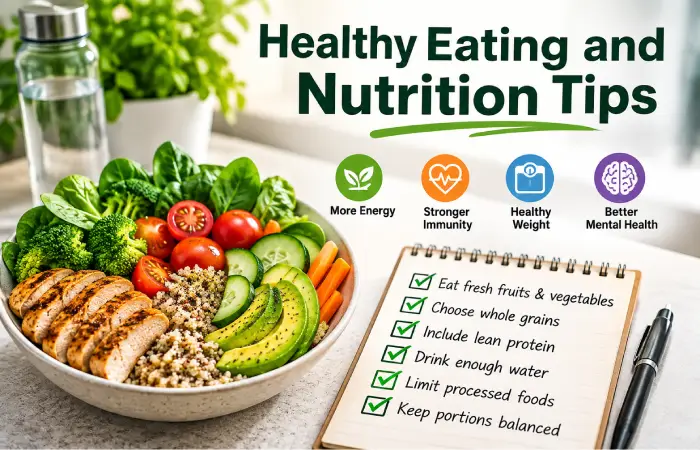
Healthy eating the bedrock for lifelong health not expensive fare or the daily menu of ‘super-foods’
WHO eating principles, balance and adequacy and the absence of too much would appear crucial over diversity and moderation. Balanced foods with vegetable, fruits, legume, nuts, whole cereal and in appropriate proportions according to requirement, choices and choice and need of body for animal foods.
Make vegetables and fruits your food pillar
Four hundred grams of fruits and vegetables per day are what WHO recommends to adults and children over 10. That equals to five portions (40 gm) for both and in fact the higher they are in portion, the better it is. One should consume variety vegetables and fruits for nutritional well being also as a food habit.
You have to eat varied vegetables everyday but you may change vegetables. The variation in them could be a great way to make you appreciate varied foods also be exposed to varied nutrients.
One can include vegetables from daily meals like a mix vegetable or spinach in varied cooking: some vegetable dal, soup, salad and steamed and boiled vegetable curries.
Include adequate protein
Protein contributes to the maintenance of muscles and other body tissues. Useful sources include:
- Eggs
- Fish
- Chicken
- Milk and yogurt
- Lentils and dal
- Chickpeas
- Beans
- Soy foods
- Nuts and seeds
Managing everyday stress is another important part of maintaining a healthy lifestyle. Explore these effective stress management tips to support better mental and physical well-being.
Plant-based diets can also provide adequate protein when a variety of protein-rich foods are included throughout the day.
Focus on complex carbohydrates
When choosing carbohydrates like your staple of grains, vegetables and fruits should naturally provide these with an infusion of other nutrients including Fiber. The WHO says the majority of carbohydrates should be from complex sources such as whole grains, vegetables, fruit and pulses, not simply derived from sources made complex for the consumer.
Enjoy Sugar Smart Portion of Added Free
The guideline is free sugars should account for less than 10 percent of your total daily energy, and should ideally be 5 percent or less, which means even smaller, health-boosting doses can be attained.
Most often, added sugar comes from sugary drinks, but also sweet foods, desserts, syrupy products, and foods high in additional sugar. This isn’t suggesting we have to say goodbye to the occasional dessert, but controlling the portion sizes and how often you indulge.
Get your limit for Salt intake
We have to restrict salt to less than 5g (one teaspoon) a day for adults. Those individuals who frequent consume packaged foods, ready-meals, processed meats, salty snacking foods, sauces, and restaurant food need to pay much more attention to their sodium intake.
Take Supplements in the correct context
Supplements can serve purpose when there is deficiency, and particular clinical reason. Taking a cocktail of pills doesn’t, as one may imagine, lead to healthy habits, so if it is a high dose vitamin, mineral, or herb we need for whatever the reason we may need, perhaps it’s worth speaking to you doctors first, especially if we are also taking prescription medication.
Exercise and Physical Activity Tips
This is the area of healthy behaviour most strongly associated with multiple benefits in numerous well-conducted studies. Adults: At least 150 minutes of moderate intensity aerobic activity a week or 75 minutes of vigourous physical activity and muscle strengthening 2 days a week. More physical activity leads to more benefits, so start where you are and progress!
Start with accessible activities
You do not need a gym membership to become more active.
Examples include:
- Brisk walking
- Cycling
- Dancing
- Swimming
- Jogging
- Home workouts
- Resistance-band exercises
- Bodyweight strength exercises
- Recreational sports
- Gardening and active household work
The best activity is often one you can perform consistently.
Combine cardio and strength training
Cardiovascular exercises, as the name suggests are activities aimed at conditioning your cardiovascular system. The body must be able to sustain intense exercise activity for a prolonged period. T
he other part, the conditioning should come in the form of resistance type of exercises, so that we not only preserve but even strengthen muscle groups which will assist to maintain posture and also carry the weight of the abdominal structures. A person starting out, can start with two full body-based strength workouts of short duration and increase duration gradually.
Break exercise into smaller sessions
Shorter training intervals and sessions do matter as they contribute to cumulative benefits; we are not restricted in performing a whole 30-minute set and the exercises can be performed all throughout the day.
For example:
10-minute morning walk + 10-minute afternoon walk + 10-minute evening walk = 30 minutes.
The CDC specifically notes that activity can be broken into manageable periods and that any amount can provide health benefits.
Avoid the “more is always better” mistake
Although you do gain from exercising there can be health disadvantages from training too much with no enough downtime – This will leave you feeling drained and more susceptible to injury. The key really is rest.
If during any exercise you begin to feel chest tightness, lightheadedness, chest tightness, dizzy spells, shortness of breath or fainting and also if a particular area is painful for you then be sure to not carry on and visit your local GP.
Sleep and Recovery Tips
Sleep is an active component of health rather than wasted time.
The CDC states that adults aged 18–60 generally need at least seven hours of sleep each night.
Current data also demonstrate why sleep deserves attention. CDC National Center for Health Statistics data published in 2026 found that 30.5% of U.S. adults slept less than seven hours on average in 2024.
2026 sleep snapshot
| Measure | Current data |
| Recommended sleep for adults 18–60 | 7+ hours |
| U.S. adults sleeping under 7 hours in 2024 | 30.5% |
| Teenagers 13–17 | 8–10 hours |
| Adults 61–64 | 7–9 hours |
| Adults 65+ | 7–8 hours |
Stress Management and Mental Wellness
The feeling of stress is an natural human reaction to difficulty and the challenges of life, however constant stress is damaging to sleep, sleep as well as concentration, mood and our relationships as well as physical health. Therefore emotional wellness needs to not be considered an entirely separate area.
Use practical stress-management strategies
Different strategies work for different people. Options include:
- Walking outdoors
- Breathing exercises
- Meditation
- Journaling
- Stretching
- Spending time with supportive people
- Engaging in hobbies
- Listening to music
- Maintaining a regular sleep routine
- Reducing unnecessary digital stimulation
- Speaking with a mental health professional
The American Heart Association includes stress management, mindfulness, sleep, and social connection among components of a healthy lifestyle.
Avoid using unhealthy behaviors as stress relief
These activities like smoking, abuse of alcohol, use of non-medical drugs, constantly overeating, long periods of dieting extremely, and consistent sleep deficit may produce transient stress relief, but also introduce more health complications.
A healthier strategy is to identify the source of stress and develop coping mechanisms that do not create new risks.
Know when stress requires professional support
If stress, anxiety, sadness, sleep problems or emotional difficulties continue for a long time, if they affect your everyday functions or if you have a hard time managing them yourself. You should contact a certified mental health professional If you are experiencing an acute mental health emergency or if you are having suicidal thoughts, get urgent help from professionals or in the emergency room.
Preventive Health Tips
Preventive health care is aimed at lowering risks to health and detecting disease in the early stages while it is manageable without the appearance of more symptoms. According to MedlinePlus: keep current with all of your vaccinations, get the screening tests that are suggested, keep important health levels watched carefully, seek regular dental and vision care and continue to have consistent appointments to the health care system.
Keep vaccinations up to date
Your country, age, medical needs, occupation, trip you might be planning to take, etc will determine which vaccines you need. For example, you’ll notice that the current recommendations from the CDC for adult vaccination includes vaccines for: Influenza, Tdap/Td, COVID-19, HPV, Hepatitis B, MMR, Varicella, Pneumococcal, and Shingles (Age-appropriate).
If you are an Indian national, do not just copy a different country’s recommendations and consult relevant Indian national health guidelines and your personal healthcare provider for any vaccination decisions.
Know important health measurements
Depending on age and risk factors, healthcare professionals may monitor:
- Blood pressure
- Blood glucose
- Cholesterol
- Body weight and waist circumference
- Dental health
- Vision
- Immunization status
- Age-appropriate cancer screening
Do not take one measurement in isolation from its entire clinical background.
Do not skip dental care and eye exams.
Our teeth aren’t only for appearances, our gums and other structures involved in chewing and speaking can also indicate more general issues like tooth decay and gum disease.
Our eyes’ health are a gateway to many issues too.
Each person needs unique preventative care “Preventive care guidelines are not one-size-fits-all.Based on factors like your age, gender, family history, symptoms, previous results, medications, pregnancy status, and risk factors, your appropriate set of checkups might be different.”
Personal Hygiene and Healthy Habits
Personal hygiene reduces exposure to infectious organisms and supports everyday health.
Wash your hands properly
There are few public health practices more straightforward than good hand hygiene. The public is best advised to wash hands thoroughly, with soap and water in all cases when so available. Particularly significant times to practice good hand hygiene include before, during, or after food preparation, before food ingestion, following the use of a toilet facility, following coughing and sneezing, and following the touching of likely contaminated surfaces.
If soap and water are unavailable at necessary or opportunistic times, an appropriate alcoholic preparation would be helpful in many contexts.
Have good oral hygiene
Use fluoride containing toothpastes and ensure regular cleaning around the tooth by standard means, if you use. Ensure appropriate use of interdental cleaning implements. Regular visits to a dental professional for check ups are essential for the detection and management of oral disease before its impact becomes significant.
Practice safe food handling
Good hygiene has been interpreted to mean; washing hands prior to handling and preparation of food; keeping food separate- raw and cooked; proper cooking of foods; prompt refrigeration of potentially hazardous food; refusal of potentially adulterated food.
Protect your skin against over- exposure to solar rays
This may take the form of seeking the shade, using clothing/ hats and the application of a broad- spectrum sunscreen.
Skin type and environmental exposures (activity, duration and local conditions) are influential upon suitability of the Sun Protection Factor.
Avoid tobacco
Non-cigarette smoking is perhaps the singlemost decisive decision a person could make to enhance the chances of a healthy life span and life without disabling illness: and smoking cessation.
Health Tips for Different Age Groups
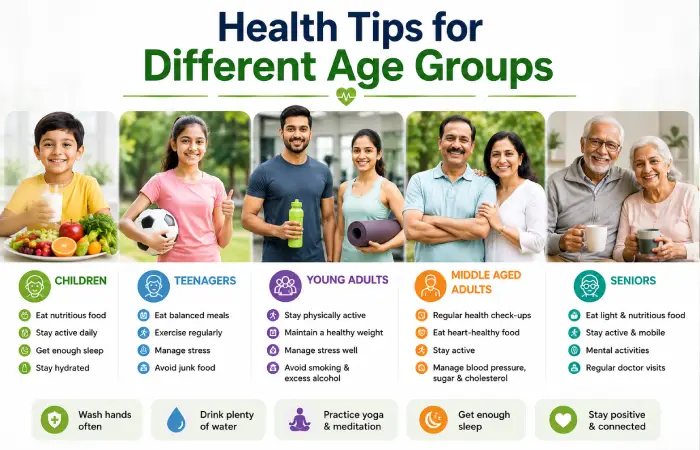
Every stage of life has its own health concerns. The health needs of a teenage can differ greatly from those of older adults. Children and teenagers Young people need good food and a good diet, physical exercise, enough sleep, social interactions and emotional and mental development, basic medical care, and opportunities to grow through play and activity.
Sleep requirement
As young people are still growing, they require more sleep than the average adult. CDC says that teens (13-17 years) require 8 to 10 hours. It’s better for the adults in the lives of teens to concentrate more on house patterns than on body weight. Young adulthood This stage is one stage at which you’ll want to establish lifelong healthy patterns.
This period of your life is ideal to concentrate on:
- Regular physical activity
- Good eating habits
- Adequate sleep
- Good oral and preventive care
- Get your recommended vaccinations
- Protect your health by preventing yourself from tobacco
- Use limit alcohol consumption
- Mental health awareness
- Foster positive relationships
When you create good habit patterns at this stage, maintaining them later becomes easier.
Middle-age adults
Middle-age adult. This stage is ideal to pay more attention to heart and metabolic issues. Talk to your health professional to address risk factors such as blood pressure, cholesterol levels andblood-sugar levels, screen for cancer, encourage sleep, exercise and physical activity, family history.
Older adults
Maintaining fitness of mind and body is a primary goal of older adults. Older adults should maintain bone health and mobility, cardiovascular activity and good nutrition, and balance and social engagement. If you have a medical condition, you should get your exercise program modified.
The CDC encourages the maintenance of physical activity among older adults and strongly recommends muscle strengthening and balance exercises, as it is relevant for older adults.
Quick age-based comparison
| Life stage | Major health priorities |
| Children | Nutrition, sleep, activity, vaccines, development |
| Teens | Sleep, physical activity, nutrition, mental health |
| Young adults | Healthy routines, preventive care, mental wellness |
| Middle age | Cardiovascular risk, metabolic health, screening |
| Older adults | Strength, balance, mobility, nutrition, social connection |
How to Build a Healthy Lifestyle
Knowing health tips is easier than consistently applying them. The key is to turn recommendations into systems.
Start with one or two behaviors
Instead of attempting ten changes simultaneously, choose two.
For example as per weeks:
1: Walk for 15 minutes five days per week.
2: Add vegetables to one meal each day.
3: Establish a consistent bedtime.
4: Add two strength-training sessions.
This gradual approach makes health improvements less overwhelming.
Use habit stacking
Habit stacking means attaching a new behavior to something you already do.
Examples:
- After brushing your teeth → perform a short stretching routine.
- After lunch → take a 10-minute walk.
- After making coffee → prepare fruit for later.
- After finishing work → change into workout clothes.
The American Heart Association specifically recommends linking new healthy behaviors to established routines as a way to make habits more consistent.
Track behaviors, not just outcomes
Weight, blood pressure, fitness, and a range of other health markers can all tell a story but they are not the only measures.
Track behaviors such as:
| Behavior | Example target |
| Exercise | 150+ minutes/week |
| Strength training | 2+ days/week |
| Sleep | 7+ hours for most adults |
| Fruit/vegetables | 400 g+/day |
| Tobacco | Avoid |
| Preventive care | Follow individualized schedule |
The targets above are general reference points, not personalized prescriptions.
Make healthy choices convenient
Environment often matters more than motivation.
Keep nutritious foods accessible. Put walking shoes somewhere visible. Schedule workouts like appointments. Keep your bedroom conducive to sleep.
A healthy lifestyle becomes easier when the healthy choice is also the convenient choice.
Common Health Mistakes to Avoid
Trying to change everything overnight
A complete lifestyle overhaul can create unnecessary pressure. Sustainable progress generally comes from manageable changes.
Following extreme diets
Strict Dieting diets can leave you deficient and difficult to keep. These types of restrictions are often not necessary and much harder to stick to compared to simply balancing your meals.
Not a quick-fix supplement
Many supplements don’t outweigh poor lifestyle choices including smoking, poor diet,lack of exercise and not enough sleep.
Only Weightloss Exercise
One reason to continue engaging in healthy physical activity is the numerous health benefits it offers besides a lean body that you would never have known.
Ignoring sleep
Trying to “make up” for chronic sleep deprivation with caffeine or occasional weekend sleep is not a substitute for consistent adequate sleep.
Trusting social media health claims without checking sources
A viral video is not automatically reliable health information.
Search for evidence based on credible medical authorities, peer-reviewed academic studies, the qualifications of the individual providing the information, and clear Editorial Policies.
Measuring health only by body weight
Body weight is one measurement, not a complete definition of health.
Fitness, blood pressure, metabolic health, sleep, mental well-being, nutrition, mobility, and quality of life also matter.
Delaying medical care
Lifestyle habits are valuable, but they do not replace diagnosis and treatment when illness is present.
Health Tools and Product Comparison
Some products can make healthy habits easier to track or implement. However, a product should support a healthy behavior rather than become a substitute for one.
Useful health-product categories
| Tool | Potential benefit | Limitation | Best use |
| Fitness tracker | Tracks activity, steps, heart rate and some sleep metrics | Estimates are not clinical diagnoses | Motivation and trend tracking |
| Digital weighing scale | Convenient weight monitoring | Weight alone does not measure overall health | Monitoring trends |
| Food scale | Helps estimate portions | Can encourage excessive tracking in some people | Portion awareness |
| Home blood-pressure monitor | Useful for people advised to monitor BP | Technique and device accuracy matter | Clinician-guided monitoring |
| Water bottle | Makes drinking water more convenient | Does not guarantee adequate hydration | Habit support |
| Sunscreen | Helps reduce UV exposure | Needs correct application and reapplication | Sun protection |
The commercial angle should remain secondary. Readers should be encouraged to choose products based on actual needs, accuracy, usability, warranty, privacy, and professional guidance rather than marketing claims.
Troubleshooting Common Healthy-Lifestyle Problems
“I do not have time to exercise.”
Start with short sessions.
A 10-minute walk is more useful than waiting for a perfect one-hour workout that never happens. You can gradually accumulate activity throughout the day. CDC guidance specifically recognizes that physical activity can be divided into manageable periods.
“I eat healthy from Monday to Friday, but over eat on weekends.”
Don’t just give up the healthy eating concept all together A better plan of action is to structure moderate meals throughout the week and still make room for the occasional social event, while just not letting a single meal become a weekend long buffet.
“I cannot sleep early.”
Do not simply jump ahead a few hours in order to change your bedtime. Go bed a few minutes earlier at night, rise earlier in the morning, get some sunshine early in the day, and stop the stimulants before you go to sleep.
“Healthy eating is expensive.”
Healthy eating can be inexpensive. Lentils, beans, beans, beans, fresh in season produce, Oats, eggs, rice, WHO recommend fresh, frozen, and canned produce in your diet as long as they’re not packed with salt or sugar.
“I keep losing motivation.”
Build systems rather than depending entirely on motivation.
Schedule activity, prepare food in advance, keep exercise equipment accessible, and establish small minimum goals for difficult days.
“My health app says something is wrong.”
Do not diagnose yourself from an app notification.
Consumer health devices can provide useful trends, but measurements may have limitations. Persistent or concerning results should be discussed with a qualified healthcare professional.
When Should You Talk to a Healthcare Professional?
Lifestyle advice is appropriate for general health promotion, but some situations require individualized medical evaluation.
Talk with a healthcare professional if you have:
- Persistent or worsening symptoms.
- Unexplained weight changes.
- Recurrent dizziness or fainting.
- Persistent chest discomfort.
- Unusual shortness of breath.
- Significant or persistent sleep problems.
- Ongoing digestive problems.
- Persistent anxiety, depression, or other mental health concerns.
- Abnormal home blood-pressure or glucose readings.
- A strong family history of a serious condition.
- Questions about medications or supplements.
- Concerns about starting an exercise program because of an existing medical condition.
Some individuals such as those with long term health conditions, disabilities, pregnancy or with other special circumstances might require individual exercise recommendations and tailored nutrition advice. For those who are pregnant with chronic conditions or disabilities, CDC guidelines explicitly suggests consult health care provider in choosing exercise programs.
Contact the closest urgent care, emergency department or call your nearest and closest provider of medical emergency health symptoms which can cause you an impairment and such are like:
– Severe chest pain, difficulty with serious breathing
– Loss of or loss of awareness of consciousness
– Loss of speech, numbness/paralysis on one face or body side, disorientation
– Significant injuries
– Any other signs of potential or life-threatening cause
Frequently Asked Questions About Health Tips
What are some basic health tips?
The most basically applicable health tip include eating a well balanced diet with a variety of nutritious food, maintain physical activity regularly, attain sufficient amount of sleep, refrain from smoking, manage stress, practice good health practice and observe timely screening for health care recommended by experts. It also becomes advisable to take medical advise whenever, we feel some symptom.
How much physically active, per week an adult must get involved?
A minimum for 150 min. Aerobic physicalactivity per week along with two day or so workout on musles should be engaged in a healthy manner by and large the world health organization or the centers for disease prevention recommends on an average for adults an amount of physical activity. For children on two or three, three or four day per week it vary for gender, age etc., but.
How many hours does an adult need to sleep at night?
Typically 7 to 9 hours per day, a grown up must reach this minimum need for good health.
What amount of food should I eat every day?
2 to 3 handful of fruits and 2 cups of vegetables daily should be consumed along with plenty of fluids like water etc, according to WHO and other authoritative health authorities worldover.
When it is healthy to drink water?
A good portion for hydration purpose can help to a large extent but it depends up on other individual conditions like amount of physical activity, weather condition, lifestyle. The adequate amount can vary from per person.
What’s an easy healthy habit to try?
Often times that may look like a brief walk in nature each day or simply including one piece of fruit or an extra serving of vegetables in an existing food. Most important thing: Choose the behavior that you’re most confident you will do consistently.
How do I make it easier to maintain healthy habits?
Start small. Link new behavior to something you already do, make health a no-brainer for you in your environment. Celebrate consistencies not perfect consistency. Habit stack is one behavioral strategy that is commonly recommended by health care professionals, such as the American Heart Association.
Are fitness tracking devices or apps accurate?
Their accuracy varies based on the device and metric tracked, as well as your unique environment. While wearable technologies can help track your trends of physical activity and sleep, these devices shouldn’t replace medical procedures to help evaluate your health status.
When should I visit my doctor?
A visit with your health care provider is beneficial if you’re experiencing new or ongoing symptoms that get worse, that are hindering your abilities or causing you worry. You should consider a visit if you haven’t visited your doctor for routine preventive care in the last year.
The Bottom Line
The best health advice isn’t over the top. It’s not a dramatic overhaul, but the mundane activities that you can do day in and day out: have a balanced diet, get moving on a daily basis, sleep enough, stress manage effectively, wash your hands and maintain good hygiene, reduce or eliminate use of tobacco, take precautions to protect yourself against illness caused by preventable conditions, and take part in appropriate medical preventive services and screenings. The current evidence base supports an integrated approach to wellness over a specific “perfect” diet, exercise program, nutritional supplement or wellness device.
The WHO dietary guidelines advise consuming a diversified diet including over 400 grams of fruit and vegetables per day, while the CDC advises that adults do at least 150 minutes of moderate intensity exercise and two days per week of muscle strengthening exercise.
In general adults also require seven plus hours of nightly sleep. So the practical message is quite simple: design a lifestyle that issustainable. Commit to one to two new behaviors, practice them and make them part of your repertoire before add ing more. Health is not a sprint but a marathon-it is the ongoing practice of reducing avoidable exposures to danger and protecting physical and mental health.
Afiya Jafar is a fitness and wellness writer who focuses on making health, exercise, and healthy lifestyle information simple and practical. Her work covers workouts, fitness motivation, strength training, nutrition, weight management, stress management, mindfulness, and everyday wellness.
Read Full Bio of Afiya Jafar →
Sameena Begum reviews selected health, wellness, fitness, and digital content for clarity, factual presentation, consistency, and reader usefulness. Her review work helps maintain clear and responsible editorial standards across PhysicalFitt content.
Read Full Bio of Sameena Begum →
Dr. Khizrana Begum is a qualified medical professional with MBBS and MD qualifications and 5+ years of experience in the medical field. She works as a General Physician and Dermatologist, with expertise in general medicine, dermatology, preventive healthcare, and skin health.
Read Full Bio of Dr. Khizrana Begum →