
 Afiya Jafar
Fitness & Wellness Writer
Afiya Jafar is a fitness and wellness writer who focuses on making health, exercise, and healthy lifestyle information simple and practical.
Read Full Bio of Author →
Afiya Jafar
Fitness & Wellness Writer
Afiya Jafar is a fitness and wellness writer who focuses on making health, exercise, and healthy lifestyle information simple and practical.
Read Full Bio of Author →
 Sameena Begum
Health, Fitness & Digital Content Reviewer
Sameena reviews selected health, wellness, fitness, and digital content for clarity, factual presentation, and reader usefulness.
Read Full Bio of Reviewer →
Sameena Begum
Health, Fitness & Digital Content Reviewer
Sameena reviews selected health, wellness, fitness, and digital content for clarity, factual presentation, and reader usefulness.
Read Full Bio of Reviewer →
 Dr. Khizrana Begum
General Physician & Dermatologist
Dr. Khizrana Begum is a General Physician and Dermatologist with MBBS and MD qualifications and 5+ years of experience in the medical field.
Read Full Bio of Medical Reviewer →
Dr. Khizrana Begum
General Physician & Dermatologist
Dr. Khizrana Begum is a General Physician and Dermatologist with MBBS and MD qualifications and 5+ years of experience in the medical field.
Read Full Bio of Medical Reviewer →
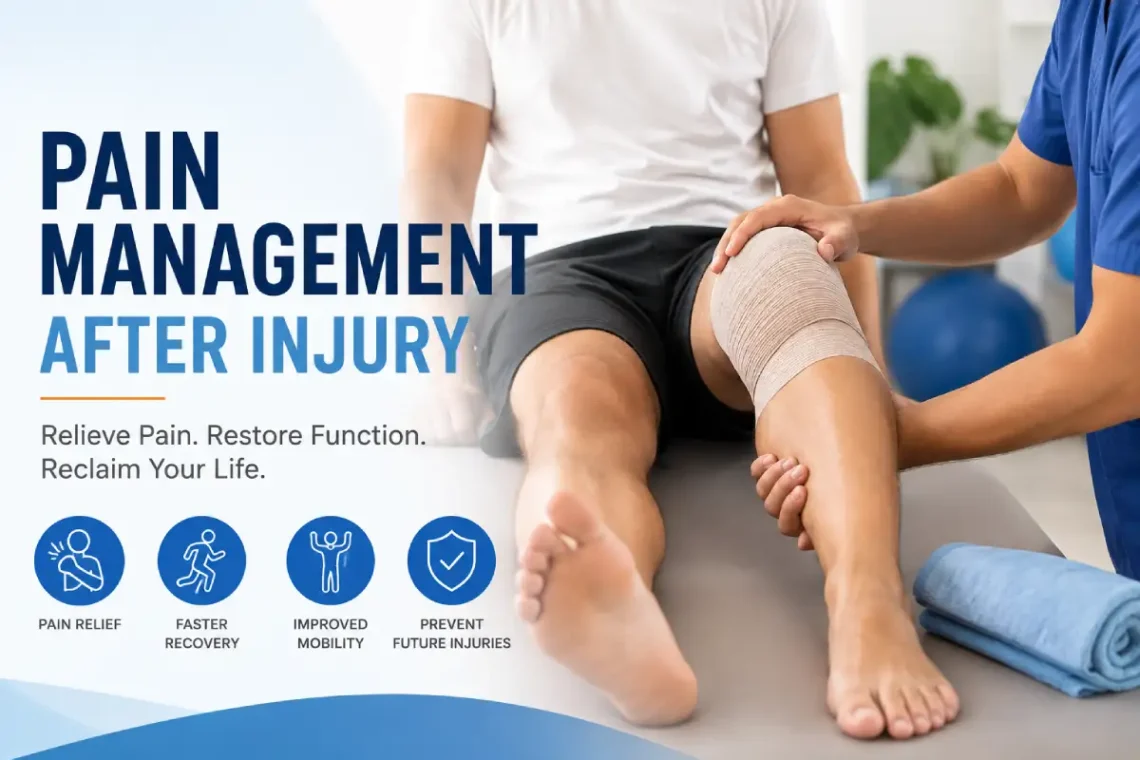
Pain Management Post Injury; management is also crucial. Pain can limit your ability to rest/sleep, perform everyday movements or exercise and get back to your everyday life. After most injuries you expect a certain level of discomfort, but if it is extreme and increasing or not settling down, you should get checked by your doctor or physical therapist.
Modern concepts of Musculoskeletal injury rehab are also deviating from full immobilization of, say, an injury for too long. Some Musculoskeletal injuries often benefit from some degree of controlled movement that can actually decrease pain, maintain muscle strength and a quicker return to function than total rest. It will depend entirely on your specific injury and severity.
Injuries involving the muscles, spine, or surrounding tissues can sometimes result in ongoing back discomfort. If your injury has affected your back, learn more about back pain management and strategies that may support a gradual return to comfortable movement.
Important Information: Please consider the following advice for educational purposes only and do not take any substitute from a physical or medical assessment and professional diagnosis from the above medical professionals.
❝
This article is a part of
Pain and Recovery Hub
Why Does Pain Occur After an Injury?
Pain is the body’s mechanism for protecting itself from further damage following an injury to one or more tissues of the body. This pain may take the form of, amongst others:Muscle pain; Tendon pain; Ligament pain; Joint pain; Bone pain; Nerve pain.
Some common causes of post-injury pain are:-
- Inflammation, this leads to the release of inflammatory mediators which sensitize the nerve endings sending the pain signal.
- Tissue damage, Sprains, strains, bruises, fractures and tears can all remain tender and painful for a period during the body’s repair process.
- Swelling, the build up of fluid around the injured tissue, leading to reduced movement and increased pressure.
- Muscle Guarding, when muscles around the injured tissue involuntarily protect the affected area by tensing.
Irritation to Nerves: burning, tingling, shooting pain, electric shock type pains or areas of numbness may all be associated with irritation to one or more nerves involved in or around the area of the injury.
Joint pain is another common symptom that can occur after an injury, particularly following sprains, strains, falls, or sports-related trauma. For additional guidance, explore our joint pain management guide.
The intensity of acute pain tends to resolve as the tissues heal but if the pain is inadequately treated this can lead to lasting problems with function-hence, the rationale for the modern approach to managing an injury using a combination of medication, physical techniques, rehabilitation and appropriate psychological support.
How to Manage Pain During Injury Recovery
Multimodal is the best term to describe the appropriate treatment of effective pain relief, and therefore combinations of individual techniques will generally be employed in management, rather than single treatments. Appropriate clinical guidelines endorse the combining of methods, encompassing physical, cognitive and medication.
Common recovery strategies
Injuries involving the knee may cause pain, swelling, stiffness, or difficulty with normal movement. If the knee is the main area affected, our guide to knee pain management provides more specific information about exercises, recovery, and protecting the joint.
| Approach | Potential role during recovery | Important consideration |
| Cold therapy | May temporarily reduce pain and swelling | Protect the skin and avoid excessive exposure |
| Heat | May help relax tight muscles and improve comfort | Generally avoid applying heat directly to a newly swollen injury unless advised |
| Elevation | Can help manage swelling in some limb injuries | Position should remain comfortable |
| Gentle movement | Helps maintain mobility and reduce stiffness | Should match the injury and professional advice |
| Physical therapy | Restores movement, strength and function | Exercise should be individualized |
| Medication | Can reduce pain enough to support recovery | Check safety, interactions and dosing with a healthcare professional |
With the presence of some acute traumatic injury, pain relievers like acetaminophen or an NSAID such as ibuprofen or naproxen can be an option for some individuals but not for everyone. Individual medical histories of kidney disease or any stomach issues, a risk for cardiovascular events, pregnancy, interactions with other medications, as well as the injury type will determine the type of medication which is appropriate. Use of your clinician’s instructions or the package labeling are the best way to do this and do not use over the counterpain medications together carelessly.
With severe traumatic injury management clinician’s will usemore potent multimodal treatments to address the pain. Opioid’s may play a part in selected cases but are carefully prescribed due to potential for adverse reactions and the likelihood of dependence.
Rest and Recovery After an Injury
Some injuries can irritate or compress nearby nerves, resulting in burning, tingling, shooting pain, electric-shock-like sensations, or numbness. When these symptoms occur, learn more about nerve pain management.
Some injuries can irritate or compress nearby nerves, resulting in burning, tingling, shooting pain, electric-shock-like sensations, or numbness. When these symptoms occur, learn more about nerve pain management.
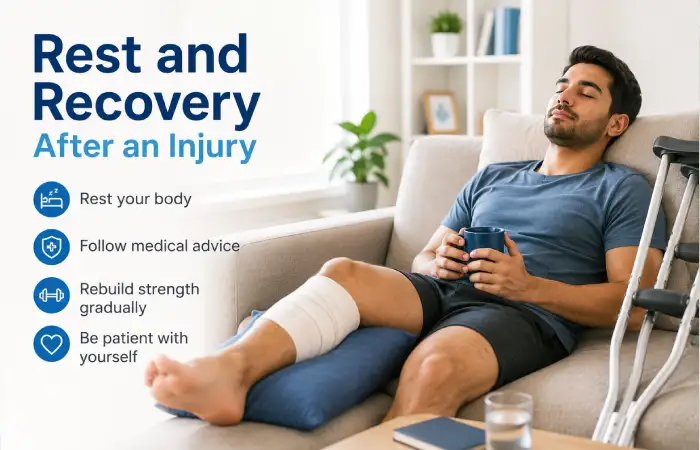
Rest can be a valuable tool right after an injury; however long term inactivity isn’t automatically the fastest path to rehabilitation.
In current rehabilitative thought, relative rest and controlled motion are preferred over long term immobilization, where applicable. University of Miami sports-medicine professionals at say the approach is turning to the concept of active rest-the use of controlled, simple movement. This would be appropriate for a great deal of musculoskeletal injuries which could be easily managed with this approach.
An example progression may be:
Protect the injury → control symptoms → restore gentle movement → rebuild strength → regain normal function → return to activity
During recovery:
- Avoid movements that clearly aggravate the injury.
- Follow instructions for braces, splints, crutches, or other supports.
- Keep unaffected parts of your body moving when appropriate.
- Prioritize adequate sleep and nutrition.
- Increase activity gradually rather than testing the injury repeatedly.
Recovery time varies substantially. A minor soft-tissue injury may improve within days, while fractures, ligament tears, surgery, or major trauma can require weeks or months of rehabilitation.
Exercise During Injury Recovery
Although exercise may play a valuable role in the pain management of injuries, the chosen forms of exercise need to be in conjunction with the current stage of healing.
Although many injuries improve as the affected tissues heal, some people experience pain that continues beyond the expected recovery period. If pain becomes persistent and starts affecting sleep, activity, or everyday life, explore our guide to chronic pain management.
During early stages, it is beneficial to incorporate range-of-motion exercises, then in the later stages, it becomes possible to implement strengthening, balancing exercises, cardiovascular conditioning, and sport-specific movements.
Through physical therapy individuals can learn rehabilitation from injury or post-operatively while enhancing motion, flexibility, strength and functional ability.
A practical progression
| Recovery stage | Example | Typical focus |
| Early | Gentle range-of-motion work | Protection and comfortable movement |
| Intermediate | Light resistance exercises | Mobility and strength |
| Functional | Balance or low-impact cardio | Coordination and endurance |
| Return-to-activity | Gradual sport/work movements | Specific performance |
These are general categories, not a prescription. A fracture, tendon rupture, severe sprain, concussion, or surgical repair may require very different restrictions. (PubMed)
Do not use pain alone as permission to push harder. Severe pain, increasing swelling, weakness, instability, or new neurological symptoms are reasons to stop and seek professional guidance.
Stretching and Mobility After Injury
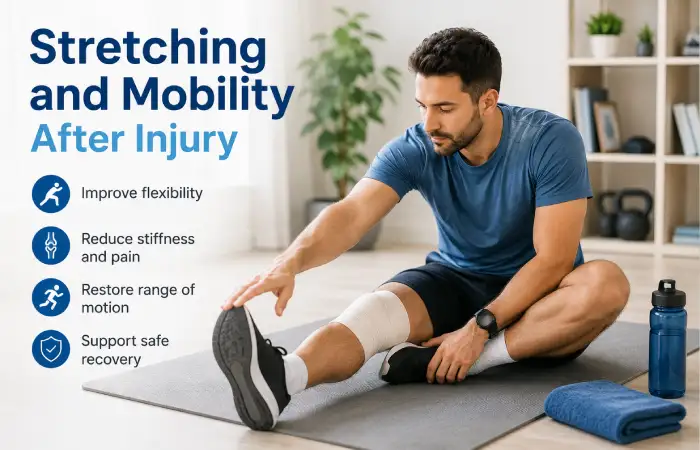
Can restoring mobility, it’s useful when stiff. But stretching too hard straight after an injury can strain injured tissue too much. Safely starting rehabilitation, do gentle movement within limits of where it is comfortable not forcing through range.
Incrementally increases as pain and swelling resolve, include mobility within alongside with strengthening where possible and strictly follow post operative guidelines or guidelines post major injury provided by your physio.
The management for ankle injury for instance may include; range of movement protected exercises, flexibility exercises, strengthening exercises and neuromuscular training exercises. Balance exercises will also increase depending on seriousness of injury as per instructions given by the physiotherapist.
When Can You Return to Exercise?
You should decide when to return to exercise based on your function and recovery – and not solely on the number of days that have elapsed since the injury.
Returning to exercise gradually will most likely be safe for you to do versus jumping right back into the same amount of activity or intensities that you performed before the injury. Following Kaiser Permanente’s recommendation, begin with short, relatively comfortable and then work up as tolerated with increasing intensity, being observant of symptoms.
Before returning to challenging activity, consider if you can:
Perform normal daily activities comfortably.
- Move the injured area through an appropriate range.
- Complete basic strengthening exercises without significant symptom worsening.
- Maintain good technique and control.
- Tolerate gradually increasing activity.
- Follow any sport- or injury-specific clearance requirements.
For competitive athletes or significant injuries, a physical therapist, sports-medicine clinician, or other qualified professional can create a structured return-to-sport plan.
Signs an Injury Needs Professional Evaluation
Not every injury needs immediate medical attention, but certain symptoms should not be ignored.
Seek prompt medical evaluation if:
- Pain is severe or rapidly worsening.
- You cannot bear weight or use the affected body part normally.
- There is significant deformity.
- Swelling continues to increase substantially.
- You develop new numbness, weakness, or loss of sensation.
- The area becomes unusually cold, pale, or blue.
- You develop fever or other signs of infection.
- Symptoms are not improving as expected.
- Pain returns or increases substantially when activity resumes.
Kaiser Permanente specifically recommends contacting a clinician when symptoms worsen, new pain, numbness or weakness develops, or recovery does not progress as expected.
The Bottom Line
Achieving good post-injury pain management is not about the absence of pain, but more so controlling the pain to enable gradual restoration of movement, strength, confidence and the function of injured part. The most effective strategies are often person specific and encompass protection of the injury where needed, adequate pain management, safe movement, gradual increases in exercise, and seeking professional assessment of symptoms when severe, atypical, exacerbating or persistent.
Increasing research has highlighted evidence for multi modal, balanced approach including physiotherapy, possible medication, advice and other means (rest).
Afiya Jafar is a fitness and wellness writer who focuses on making health, exercise, and healthy lifestyle information simple and practical. Her work covers workouts, fitness motivation, strength training, nutrition, weight management, stress management, mindfulness, and everyday wellness.
Read Full Bio of Afiya Jafar →
Sameena Begum reviews selected health, wellness, fitness, and digital content for clarity, factual presentation, consistency, and reader usefulness. Her review work helps maintain clear and responsible editorial standards across PhysicalFitt content.
Read Full Bio of Sameena Begum →
Dr. Khizrana Begum is a qualified medical professional with MBBS and MD qualifications and 5+ years of experience in the medical field. She works as a General Physician and Dermatologist, with expertise in general medicine, dermatology, preventive healthcare, and skin health.
Read Full Bio of Dr. Khizrana Begum →