
 Afiya Jafar
Fitness & Wellness Writer
Afiya Jafar is a fitness and wellness writer who focuses on making health, exercise, and healthy lifestyle information simple and practical.
Read Full Bio of Author →
Afiya Jafar
Fitness & Wellness Writer
Afiya Jafar is a fitness and wellness writer who focuses on making health, exercise, and healthy lifestyle information simple and practical.
Read Full Bio of Author →
 Sameena Begum
Health, Fitness & Digital Content Reviewer
Sameena reviews selected health, wellness, fitness, and digital content for clarity, factual presentation, and reader usefulness.
Read Full Bio of Reviewer →
Sameena Begum
Health, Fitness & Digital Content Reviewer
Sameena reviews selected health, wellness, fitness, and digital content for clarity, factual presentation, and reader usefulness.
Read Full Bio of Reviewer →
 Dr. Khizrana Begum
General Physician & Dermatologist
Dr. Khizrana Begum is a General Physician and Dermatologist with MBBS and MD qualifications and 5+ years of experience in the medical field.
Read Full Bio of Medical Reviewer →
Dr. Khizrana Begum
General Physician & Dermatologist
Dr. Khizrana Begum is a General Physician and Dermatologist with MBBS and MD qualifications and 5+ years of experience in the medical field.
Read Full Bio of Medical Reviewer →
Digestive disease-also referred to as the disorders of the gastrointestinal (GI) tract, of the system which moves food, waste and digested particles, throughout the mouth, stomach, small and large intestines, and even the anus; and of organs which carry out the processes of digestion such as the liver, pancreas and gall bladder-includes both brief infections, or long term inflammation, and malfunction of the digestive system.
❝
This article is a part of
Health Conditions Hub
What Are Digestive Diseases?
Digestive health is an important part of overall well-being, but digestive conditions are only one category among many illnesses that can affect the body. Explore our guide to common diseases to learn more about different health conditions, their symptoms, causes, risk factors, and prevention.
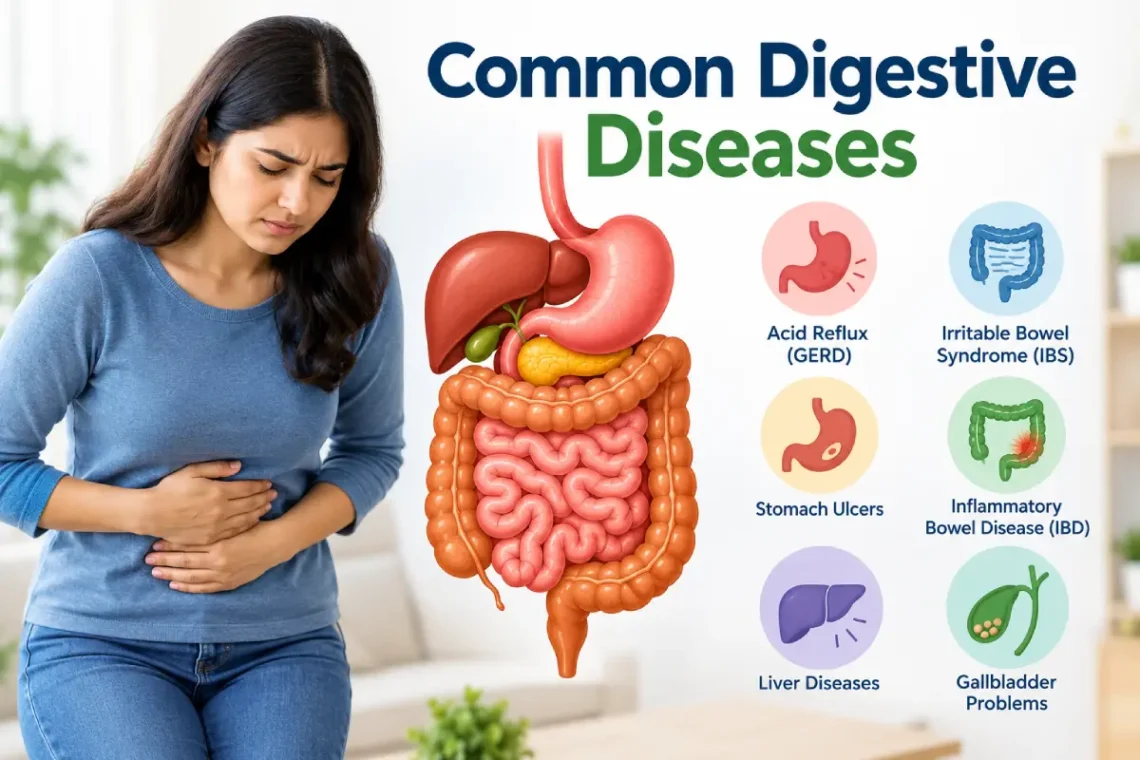
Digestive diseases are diseases of the gastrointestinal (GI) system or organs. The digestive system refers to the mouth, esophagus, stomach, small intestine, large intestine, rectum and anus, in addition to such organs as the liver, pancreas and gall bladder.
Digestive disorders range from short-term infections to chronic inflammatory or functional conditions.
Common digestive diseases at a glance
| Condition | Typical symptoms | Mainly affects |
| GERD | Heartburn, regurgitation | Esophagus/stomach |
| IBS | Abdominal pain, diarrhea, constipation | Large intestine/function of gut |
| Crohn’s disease | Diarrhea, abdominal pain, weight loss | Digestive tract |
| Ulcerative colitis | Diarrhea, rectal bleeding | Colon/rectum |
| Peptic ulcer disease | Upper abdominal pain, indigestion | Stomach/small intestine |
| Gastrointestinal infections | Diarrhea, vomiting, cramps | Stomach/intestines |
| Celiac disease | Diarrhea, bloating, malabsorption | Small intestine |
| Constipation | Infrequent or difficult stools | Large intestine/bowel |
Common Digestive Conditions
The digestive system can suffer from problems that are commonplace and others that are comparatively rare but may be a little more worrying.
Some infections can affect the digestive system through contaminated food, water, or contact with infectious organisms. Learn more about common infectious diseases and how these conditions can spread and affect different parts of the body.
NIDDK list GERD (Gastro oesophageal reflex disease) as one of the major conditions seen diagnoses with digestive disease in ambulatory care along with constipation and IBS (Irritable bowel syndrome). Other significant conditions affecting the digestive system include gallstones, diverticular disease, peptic ulcer disease and liver disease.
The major issues to comprehend are;
- Acis reflux or GORD
- Irritable bowel syndrome
- Crohn’s disease
- Ulcerative colitis
- GI infections (Gastrointestinal Infections)
- Peptic ulcers
- Celiac disease
- Diarrhoea/Constipation
- Gallstones
- Diverticular disease
- Pancreatitis
Digestive disease is a wider topic than that affecting just the stomach.
Acid Reflux and GERD
Although digestive diseases primarily affect the gastrointestinal system, some infections and illnesses can also involve the lungs and airways. Explore common respiratory diseases to learn about conditions affecting the respiratory system.
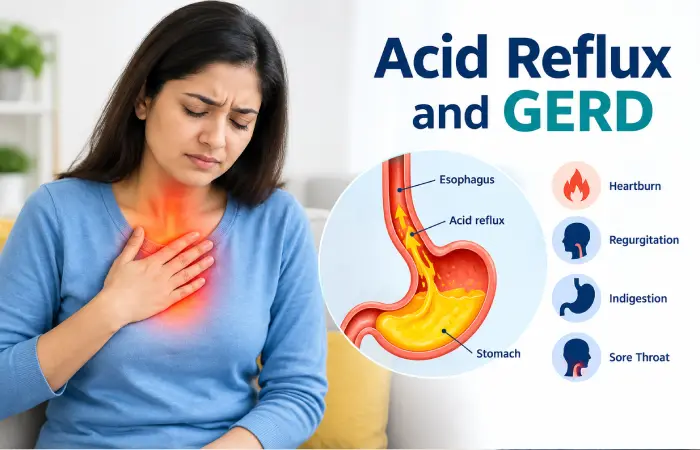
Acid reflux occurs when some content of the stomach regurgitates backward into the esophagus. Reflux becomes considered the gastroesophageal reflux disease when it happens on a chronic basis or with adverse consequences.
The heart burn and the regurgitations are cited as the “most typical symptoms of GERD” by the American College of Gastroenterology and “affect perhaps as many as about 20 percent of the U.S. Population”.
Symptoms include:
- chest burns
- sour or bitter taste
- regurgitations
- problems in swallowing
- chest and / or upper abdominal pain
- Worse symptoms after meals and when in horizontal position
Treatments, based on what is prescribed at an individual level and when prescribed, may include change in living style and prescription medicines aimed to decrease the amount of acid in the stomach. Symptoms may recur to a point in which they should not be endured as the best option for a lifetime treatment of them with self medication only.
The digestive and cardiovascular systems can influence overall health in several ways, particularly when diet, weight, and other risk factors are involved. Learn more about common heart diseases, including their symptoms, risk factors, and warning signs.
Irritable Bowel Syndrome
Irritable Bowel Syndrome (IBS)is a widespread disorder associated with the abdomen that includes episodes of pain and modifications of bowel habits. It can result in periods of diarrhea, constipation or a combination of each. It is thought that IBS effects 12% of the US population according to NIDDK and is associated with the symptoms listed below:
- Abdominal cramping or pain
- Bloating
- Constipation
- Diarrhea
- Change in stool appearance or frequency
Inflammatory Bowel Diseases
IBD is composed predominantly of Crohn’s disease and ulcerative colitis.
Crohn’s disease can occur anywhere throughout the digestive tract; the areas where it most often appears is the small bowel and proximal large bowel.
Symptoms of IBD can present as:
- Chronic diarrhea
- Abdominal pain
- Bleeding from the rectum
- Unexplained weight loss
- Fatigue
- Anorexia
Unlike IBS IBD causes inflammation to the gut which can also leads to complication. The treatment of IBD consists of medications which suppresses inflammation, nutrition, or sometimes surgery.
Digestive health can also be influenced by conditions that affect the body’s metabolism and how it processes nutrients and energy. Explore common metabolic diseases to better understand these conditions and their potential health effects.
Stomach and Intestinal Infections
Gastrointestinal infections can be spread via viruses, bacteria or parasites. They often transmit via food/water or unhygienic practices, or person to person contact.
Common symptoms associated with these types of infections can be the result of the body attempting to protect itself from contaminants; they can manifest as such:
- Diarrhea
- Vomiting
- Abdominal cramps
- Nausea
- Fever
- Dehydration
Typically, simple short term infections resolve on their own, without required medical treatment or medical assistance. Nevertheless severe/protracted cases of diarrhea warrant medical checkups; this years’ 2026 World Digestive Health Day, championed by the World Gastroenterology Organisation will raise awareness about chronic diarrhea as on some occasions this may be a symptom that denotes further problems such as IBD or IBS.
Common Symptoms
Digestive symptoms can overlap between different conditions. Common symptoms include:
- Abdominal pain
- Bloating
- Gas
- Heartburn
- Nausea
- Vomiting
- Diarrhea
- Constipation
- Changes in bowel habits
- Blood in the stool
- Unexplained weight loss
- Difficulty swallowing
Digestive problems can occur in children as well as adults, although symptoms and common conditions may differ by age. Learn more about common diseases in children and the signs, prevention strategies, and care considerations associated with childhood illnesses.
The best way to illustrate what this means is to describe a common example. Dyspepsia (indigestion) can lead to upper abdominal discomfort, early satiety, bloatings, nausea and eructations-but is itself simply a cluster of symptoms, not a diagnosis of a single disease.
Risk Factors
Digestive diseases can have many causes. Risk factors vary considerably by condition.
Potential factors include:
- Diet and eating habits
- Obesity or excess body weight
- Smoking
- Alcohol consumption
- Certain medications
- Infections
- Family history
- Age
- Physical inactivity
- Chronic stress
- Autoimmune or immune-system abnormalities
- Genetic factors
For example, peptic ulcers can be associated with Helicobacter pylori infection or nonsteroidal anti-inflammatory drugs (NSAIDs).
Recent research also continues to investigate how factors such as aging, the gut microbiome, lifestyle and immune responses influence digestive health.
Diagnosis and Treatment

There is no single test for all digestive diseases. Doctors choose diagnostic tests based on symptoms, medical history and examination.
Possible tests include:
| Diagnostic approach | What it may help evaluate |
| Blood tests | Anemia, inflammation, infection and other abnormalities |
| Stool tests | Infection, inflammation or gastrointestinal bleeding |
| Ultrasound | Gallbladder, liver and some abdominal problems |
| CT/MRI | Structural problems and complications |
| Endoscopy | Esophagus, stomach and upper digestive tract |
| Colonoscopy | Colon and rectum |
| Breath tests | Certain digestive and absorption disorders |
The treatment method varies based solely on the cause; possibilities may be diet, lifestyle modification, prescription medication, over-the-counter medication, an antibiotic (for certain illnesses), nutrition or surgery.
Don’t just assume symptoms that appear to mirror another person’s is sufficient cause for you to start a dietary supplement or medicine to deal with digestive health.
Digestive Health Prevention
It’s true that some types of digestive disease cannot be prevented, especially those that are genetically or immunity-driven, though the correct daily routines are said to help the digestive system.
Helpful habits include:
- Eat a varied diet rich in fiber where appropriate.
- Drink enough fluids.
- Stay physically active.
- Avoid smoking.
- Limit alcohol.
- Maintain a healthy weight.
- Use medicines such as NSAIDs only as directed.
- Practice good food and hand hygiene.
- Pay attention to persistent changes in bowel habits.
- Get medical advice when symptoms do not improve.
Current research increasingly emphasizes that “gut health” is broader than simply having regular bowel movements. A 2026 review notes that an international consensus has been working toward a clearer definition incorporating gastrointestinal function and symptom burden.
Final Takeaway
The majority of conditions are well managed or only appear infrequently, like having the occasional problem with an occasional heart burn or being constipated occasionally, but then there are chronic conditions, like GERD, IBS and IBD that are more serious diseases. Since there are numerous similar-sounding conditions, patients should seek to not self diagnose when symptoms are chronic or a concern.
The idea is to be informed about the different symptoms, what the contributing factors may be, and when the condition warrants doctor visits. This information can be obtained from valuable resources like NIDDK, The American College of Gastroenterology, or an array of great medical school hospitals.
Afiya Jafar is a fitness and wellness writer who focuses on making health, exercise, and healthy lifestyle information simple and practical. Her work covers workouts, fitness motivation, strength training, nutrition, weight management, stress management, mindfulness, and everyday wellness.
Read Full Bio of Afiya Jafar →
Sameena Begum reviews selected health, wellness, fitness, and digital content for clarity, factual presentation, consistency, and reader usefulness. Her review work helps maintain clear and responsible editorial standards across PhysicalFitt content.
Read Full Bio of Sameena Begum →
Dr. Khizrana Begum is a qualified medical professional with MBBS and MD qualifications and 5+ years of experience in the medical field. She works as a General Physician and Dermatologist, with expertise in general medicine, dermatology, preventive healthcare, and skin health.
Read Full Bio of Dr. Khizrana Begum →