
 Afiya Jafar
Fitness & Wellness Writer
Afiya Jafar is a fitness and wellness writer who focuses on making health, exercise, and healthy lifestyle information simple and practical.
Read Full Bio of Author →
Afiya Jafar
Fitness & Wellness Writer
Afiya Jafar is a fitness and wellness writer who focuses on making health, exercise, and healthy lifestyle information simple and practical.
Read Full Bio of Author →
 Sameena Begum
Health, Fitness & Digital Content Reviewer
Sameena reviews selected health, wellness, fitness, and digital content for clarity, factual presentation, and reader usefulness.
Read Full Bio of Reviewer →
Sameena Begum
Health, Fitness & Digital Content Reviewer
Sameena reviews selected health, wellness, fitness, and digital content for clarity, factual presentation, and reader usefulness.
Read Full Bio of Reviewer →
 Dr. Khizrana Begum
General Physician & Dermatologist
Dr. Khizrana Begum is a General Physician and Dermatologist with MBBS and MD qualifications and 5+ years of experience in the medical field.
Read Full Bio of Medical Reviewer →
Dr. Khizrana Begum
General Physician & Dermatologist
Dr. Khizrana Begum is a General Physician and Dermatologist with MBBS and MD qualifications and 5+ years of experience in the medical field.
Read Full Bio of Medical Reviewer →
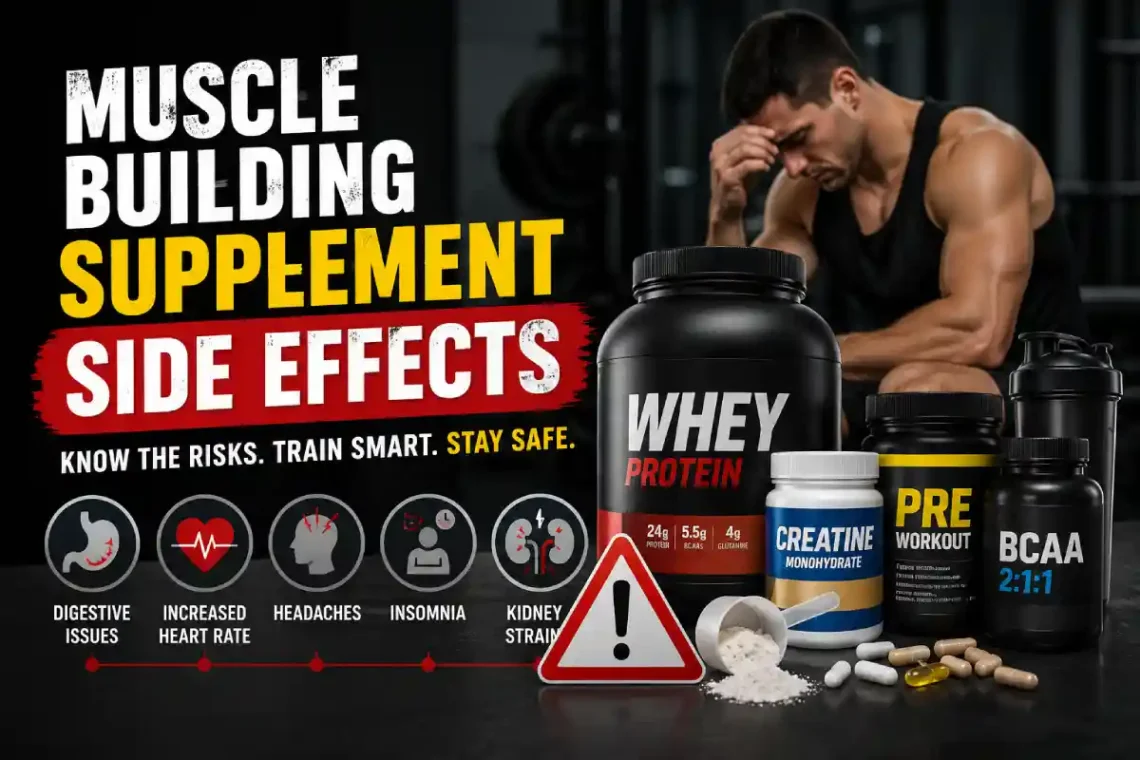
Muscle Building Supplement Side Effects remain the biggest fear factor for both beginners as well as experienced bodybuilders and gym enthusiasts. Whether you’re consuming a protein powder like whey protein, creatine, a pre workout supplement, amino acids, or anything else, the fear of having a side effect always hangs over the head. Fortunately, there are only very few proven supplements that actually produce unwanted side effects.
Before adding amino acid products to your routine, read our BCAA vs EAA comparison to choose the supplement that best fits your fitness goals.
The side effects depend mostly on the ingredient in question, its amount used, the quality of the supplement and a person’s existing health condition.
Luckily, the vast majority of proven supplements do not pose health risks when taken responsibly. The issue mainly arises with using and abusing high doses of certain supplements, consuming a poor-quality supplement, hidden ingredients and sometimes by taking too many different supplements at once without proper consultation from a health expert.
Understanding potential side effects is important, but our complete guide to muscle-building supplements also explains how to choose and use supplements safely for better results.
❝
This article is a part of
Muscle Building Hub
Are Supplements Safe?
Generally, a healthy adult who uses most commercially available muscle-building supplements from reliable manufacturers according to directions shouldn’t experience adverse effects. But again, safe isn’t to say that it’s for all adults.
Of all dietary supplements, those made to support bodybuilding are most frequently reported to the FDA for causing all manner of negative events. This is mainly when unlisted stimulants, and sometimes steroid compounds are in use, stated the U.S. National Center for Complementary and Integrative Health (NCCIH).
Safety depends on several factors:
- Your medical history
- Current medications
- Ingredient quality
- Daily dosage
- Duration of use
- Hydration and nutrition
Common Side Effects
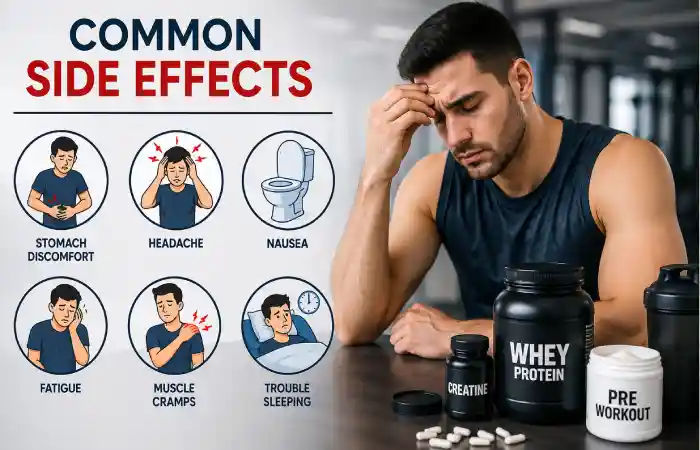
Different supplements can cause different reactions.
Comparison Table
| Supplement | Common Side Effects |
| Whey Protein | Bloating, gas, digestive discomfort |
| Creatine Monohydrate | Water retention, temporary weight gain |
| Pre-Workout | Jitters, increased heart rate, insomnia, anxiety |
| Beta-Alanine | Tingling sensation |
| Mass Gainers | Digestive upset, unwanted fat gain with excess calories |
| Caffeine-Based Fat Burners | Elevated blood pressure |
In general, between 3-5 g/day of creatine is tolerated by most, with only some people experiencing water retention and minor GI issues. However, high stimulant pre-workouts have more of a risk of increasing heart rate, insomnia and anxiety, particularly when combined with other stimulants such as coffee or tea.
Despite common myths, creatine for muscle growth has been extensively studied and is considered safe for most healthy adults when used as directed.
Ingredient Quality
The problem is, not every supplement is made to strict manufacturing guidelines. Many supplements have actually been shown to contain undeclared harmful steroids, stimulants, or chemicals that might cause such serious illnesses like liver failure. As you likely know there are countless of supplements on the market today that contain such dangerous undeclared ingredients and steriods.
Look for:
- NSF Certified for Sport
- Informed Sport
- Informed Choice
- USP Verified (where applicable)
- GMP-certified manufacturing
- Third-party laboratory testing
Avoid products with:
- Proprietary blends hiding ingredient amounts
- Unrealistic muscle gain claims
- Extremely high stimulant doses
- No batch testing information
Choosing the best protein powder for muscle gain from reputable brands can help reduce the risk of low-quality ingredients and unnecessary additives.
Comparison Table: High-Quality vs Low-Quality Supplements
| High-Quality Product | Feature | Low-Quality Product |
| Full disclosure | Ingredient Transparency | Proprietary blends |
| Yes | Third-Party Tested | Usually No |
| Yes | Clinical Dosages | Often Under/Overdosed |
| Rare | Hidden Ingredients | Higher Risk |
| GMP Certified | Manufacturing Standards | Unknown |
Avoiding Overuse
More supplements do not always produce better results.
Common mistakes include:
- Taking double servings
- Mixing several pre-workouts
- Excessive caffeine intake
- Ignoring serving recommendations
- Skipping hydration
- Using supplements instead of food
Consuming more than the recommended dose can lead to side effects like gastrointestinal upset, faster heart rate, interrupted sleep or additional body strain.
Practical Tips
- Take as directed on the product.
- Begin at lowest effective dosage level.
- Do not stack multiple stimulant-based products.
- Maintain a adequate water intake.
- Listen to how your body feels.
Who Should Consult a Healthcare Professional?

Many muscle building supplements are completely harmless if taken correctly, but some people should be taking guidance from a medical professional when starting to supplement. This professional can help assess if you are taking any unnecessary risks, assist with your dosage, and avoid negative health implications and interaction between products and existing issues you have with your body.
Individuals with Pre-Existing Medical Conditions
For instance, some of you may be aware of, but will have, existing health problems such as kidney/liver issues, heart disease, high blood pressure or diabetes. All of these conditions will impact on the way the body can break down or benefit from your Supplement. In particular some Pre-Workout products, as they are often stim based, are known to be harmful when the body is suffering from Cardiovascular issues.
People Taking Prescription Medications
Muscle supplements and medication Many supplement ingredients have interactions with prescription medication. Stimulants might interact with blood pressure medication and other stimulants. Some herbal ingredients may not be compatible with blood thinners and other medicines.
Speaking with a medical professional beforehand can help you decide whether it would be wise for you to take supplements and will prevent a loss in effectiveness of medications, as well as prevent other side effects from the drug or supplement.
Pregnant or Breastfeeding Women
For pregnant women, breastfeeding women, it is not recommended for women who are breast-feeding or are pregnant to take muscle building supplements unless previously approved by a health care professional, since the supplements have not had much clinical testing for pregnancy. (FDA)
Teenagers and Young Athletes
While teens may be tempted by the quick results of certain supplements, the fact remains that teenagers aren’t miniature versions of adults, and therefore they do not have the same dietary requirements. Athletes in training can look into sports supplements for teenagers, but they should be aware that there are a variety of precautions to take. Prior to supplements for teenagers becoming an interest, teens and parents should educate themselves and consult with health experts and sports dietitians.
Individuals Experiencing Side Effects
Some serious side effects of taking any supplement may include, and these must be discussed with your doctor. They consist of a racing heartbeat, indigestion, severe stomach ache, dizziness, insomnia, headaches or a rash (allergic reactions) from the supplements. If any of these side effects appear while you’re taking supplements for teenagers consult your doctor to identify if there’s an ingredient in the supplement that doesn’t agree with you or an existing underlying condition.
Those Planning to Stack Multiple Supplements
Combining a lot of supplements together may also result in you to be getting way too much caffeine, other stimulants, or active components at once. Prior to developing an supplement stack, be sure that you talk to an expert and a doctor.
When in Doubt, Seek Expert Advice
A healthcare, a registered sports dietitian, and/or sports nutritionists can help with providing recommendations on how you can achieve the right muscle building supplement mixture and also how you can prevent muscle building supplement side results.
Selecting the best post-workout supplements for recovery can help you support muscle repair while avoiding unnecessary or overlapping ingredients.
Safe Supplement Practices
Following simple habits can significantly reduce the risk of side effects.
Best Practices Checklist
- Stay hydrated
- Avoid combining multiple stimulants
- Store supplements properly
- Track your body’s response
- Eat a protein-rich balanced diet
2026 Evidence Snapshot
| Practice | Why It Matters |
| Third-party testing | Confirms ingredient quality |
| Correct dosage | Reduces side-effect risk |
| Balanced nutrition | Supports better recovery |
| Adequate hydration | Helps manage creatine and exercise demands |
| Professional guidance | Identifies personal risk factors |
Troubleshooting Common Issues
| Problem | Solution | Possible Cause |
| Bloating | Try whey isolate or reduce serving size | Whey concentrate or high serving size |
| Water retention | Maintain hydration and allow time to adjust | Creatine |
| Jitters | Reduce dose or choose a lower-stimulant product | Excess caffeine |
| Poor sleep | Take earlier or use a stimulant-free option | Late-day pre-workout |
| Upset stomach | Take with food or split servings | Empty stomach or large dose |
Frequently Asked Questions
What is the safest muscle building supplement?
Creatine monohydrate and whey protein are well researched and typically well tolerated in healthy adults taking recommended amounts. However people do react differently.
Do any supplements damage the liver?
There are few reputable supplements which have a documented tendency to harm the liver when taken in correct dosages.
Should beginners use muscle building supplements?
Training, diet, and sleep are priority one for beginners. Supplements may assist you with addressing nutritional deficiencies but are not required for you to achieve your goals to develop muscle mass.
Are natural supplements 100% safe?
Many supplements have actually been shown to contain undeclared harmful steroids, stimulants, or chemicals that might cause such serious illnesses like liver failure.
If you’re concerned about artificial ingredients, consider natural muscle-building supplements as an alternative to highly processed products.
Is it okay to combine multiple muscle building supplements?
Some combination such as protein plus creatine are very common. However, combining too many stimulant type supplements is potentially more dangerous and should only be approached with extreme care.
Conclusion
Being aware of the Side Effects of Muscle Building Supplement gives you a sense of how to safely and rationally use it. High-quality and research based muscle-building supplements like creatine monohydrate, and whey protein help gain muscle mass only in conjunction with a proper training program, and diet, with enough recovery time. The biggest threats, on the other hand, originate from products of poor quality, high dose usage, as well as undiscovered substances in supplements. When you utilize the assistance of third-party checked supplements, maintain a suitable dose, and seek medical advice whenever you suffer from some pre-existing medical condition.
Afiya Jafar is a fitness and wellness writer who focuses on making health, exercise, and healthy lifestyle information simple and practical. Her work covers workouts, fitness motivation, strength training, nutrition, weight management, stress management, mindfulness, and everyday wellness.
Read Full Bio of Afiya Jafar →
Sameena Begum reviews selected health, wellness, fitness, and digital content for clarity, factual presentation, consistency, and reader usefulness. Her review work helps maintain clear and responsible editorial standards across PhysicalFitt content.
Read Full Bio of Sameena Begum →
Dr. Khizrana Begum is a qualified medical professional with MBBS and MD qualifications and 5+ years of experience in the medical field. She works as a General Physician and Dermatologist, with expertise in general medicine, dermatology, preventive healthcare, and skin health.
Read Full Bio of Dr. Khizrana Begum →