
 Afiya Jafar
Fitness & Wellness Writer
Afiya Jafar is a fitness and wellness writer who focuses on making health, exercise, and healthy lifestyle information simple and practical.
Read Full Bio of Author →
Afiya Jafar
Fitness & Wellness Writer
Afiya Jafar is a fitness and wellness writer who focuses on making health, exercise, and healthy lifestyle information simple and practical.
Read Full Bio of Author →
 Sameena Begum
Health, Fitness & Digital Content Reviewer
Sameena reviews selected health, wellness, fitness, and digital content for clarity, factual presentation, and reader usefulness.
Read Full Bio of Reviewer →
Sameena Begum
Health, Fitness & Digital Content Reviewer
Sameena reviews selected health, wellness, fitness, and digital content for clarity, factual presentation, and reader usefulness.
Read Full Bio of Reviewer →
 Dr. Khizrana Begum
General Physician & Dermatologist
Dr. Khizrana Begum is a General Physician and Dermatologist with MBBS and MD qualifications and 5+ years of experience in the medical field.
Read Full Bio of Medical Reviewer →
Dr. Khizrana Begum
General Physician & Dermatologist
Dr. Khizrana Begum is a General Physician and Dermatologist with MBBS and MD qualifications and 5+ years of experience in the medical field.
Read Full Bio of Medical Reviewer →
Pain management is a personalized approach to reducing pain, improving movement and helping you return to everyday activities. It can include exercise, physical therapy, lifestyle changes, psychological techniques, medications, medical procedures and other treatments depending on the cause and type of pain.
Pain isn’t simply a signal that something hurts. Persistent pain can affect sleep, mobility, mood, work, relationships and overall quality of life. That’s why modern pain management increasingly focuses not only on reducing pain intensity but also on improving function and helping people participate in the activities that matter to them.
For pain affecting the lower or upper back, explore our guide to back pain management for practical strategies, exercises, and recovery tips.
There isn’t one treatment that works for everyone. The best approach depends on whether pain is acute or chronic, where it occurs, what is causing it, how severe it is and your overall health. Major medical organizations recommend individualized, multimodal approaches that combine appropriate non-drug and drug-based treatments.
❝
This article is a part of
Pain and Recovery Hub
What Is Pain Management?
Pain management is the process of assessing pain, identifying contributing causes and using appropriate strategies to reduce its impact on your life.
Treatment may target the underlying condition causing pain, the pain itself, or both.
For example, someone with an acute muscle injury may need temporary activity modification, ice or heat, physical therapy and appropriate pain relief. Someone with long-term back pain may benefit from exercise therapy, physical therapy, behavioral strategies, lifestyle changes and carefully selected medication.
If joint discomfort is affecting your movement or daily activities, learn more about joint pain management, including exercises and lifestyle strategies.
Modern pain management generally has several goals:
- Reduce pain when possible
- Improve physical function
- Support sleep and daily activities
- Help people return to work or normal activities
- Reduce disability
- Improve emotional well-being
- Address contributing medical conditions
- Minimize unnecessary treatment risks
The National Institute of Neurological Disorders and Stroke notes that the goal of pain management is to improve quality of life and function, including the ability to work, attend school and participate in everyday activities.
Importantly, pain relief does not always mean eliminating pain completely. Some chronic pain conditions cannot currently be cured, but symptoms can often be managed through a combination of strategies.
What Are the Most Common Types of Pain?
Understanding the type of pain is important because different pain mechanisms can respond to different treatments.
Acute Pain
Acute pain usually develops suddenly and is associated with an injury, illness, procedure or surgery.
Examples include:
- Sprained ankle
- Cuts and burns
- Broken bones
- Dental procedures
- Surgical pain
- Some infections
- Muscle injuries
Acute pain often improves as the underlying problem heals.
For pain specifically affecting the knees, our guide to knee pain management covers exercises, treatment options, and ways to protect knee health.
Chronic Pain
Chronic pain lasts longer and can continue even after the original injury or condition has improved.
Pain is commonly described as chronic when it persists for more than three months. However, the exact definition can vary depending on the clinical context.
Chronic pain may result from arthritis, nerve conditions, persistent back problems, fibromyalgia, previous injuries and many other conditions.
It can affect much more than physical comfort. Long-term pain may interfere with sleep, work, exercise, relationships and emotional well-being.
U.S. National Center for Health Statistics data found that 24.3% of U.S. adults experienced chronic pain in 2023, while 8.5% experienced high-impact chronic pain that frequently limited life or work activities.
Nociceptive Pain
Nociceptive pain occurs when tissues are damaged or irritated and pain receptors send signals through the nervous system.
If your pain began following an injury, see our guide to pain management after injury for information on recovery, movement, exercise, and rehabilitation.
It may involve:
- Muscles
- Joints
- Bones
- Skin
- Internal organs
Arthritis and many musculoskeletal injuries can produce nociceptive pain.
Neuropathic Pain
Neuropathic pain results from damage or dysfunction involving nerves.
It may feel like:
- Burning
- Tingling
- Electric shocks
- Pins and needles
- Shooting pain
- Numbness
Conditions such as peripheral neuropathy and certain nerve injuries can cause neuropathic pain.
Mixed Pain
Some people experience more than one type of pain simultaneously. For example, someone with a spinal condition may have both muscle or joint pain and nerve-related symptoms.
This is one reason why pain management often needs to be individualized rather than based solely on pain intensity.
What Causes Different Types of Pain?
Pain can develop from hundreds of conditions, injuries and diseases.
Common causes include:
| Cause | Examples of Pain |
| Musculoskeletal problems | Back pain, strains, sprains |
| Arthritis | Joint pain and stiffness |
| Nerve problems | Burning or shooting pain |
| Injury | Fractures, bruises, soft-tissue damage |
| Surgery | Postoperative pain |
| Headache disorders | Migraine, tension headache |
| Autoimmune conditions | Joint and widespread pain |
| Cancer | Tumor- or treatment-related pain |
| Circulatory conditions | Limb discomfort |
| Chronic pain disorders | Fibromyalgia, CRPS |
For burning, tingling, shooting, or other nerve-related symptoms, learn about nerve pain management and approaches that may support mobility and daily function.
Cleveland Clinic notes that pain can occur with arthritis and muscle or joint injuries, autoimmune conditions, burns, cancer, nerve conditions, headaches, migraines and spine-related disorders, among many other causes.
Because pain has so many possible causes, treating the symptom without understanding the underlying problem isn’t always appropriate.
How Is Pain Managed?
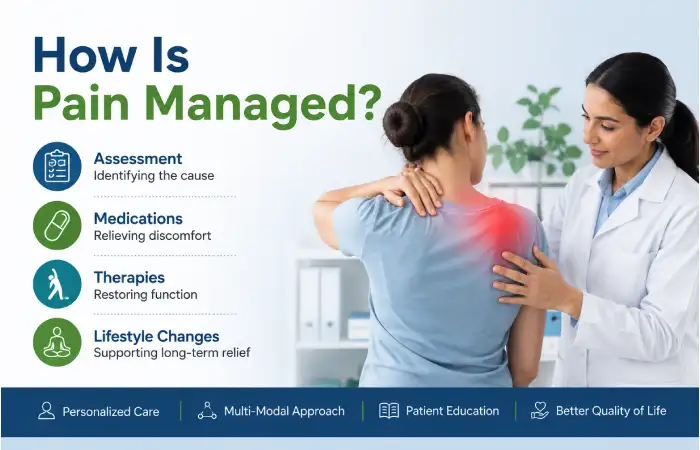
A comprehensive pain management plan may combine several approaches.
The National Institute of Neurological Disorders and Stroke describes a biopsychosocial approach, which recognizes that chronic pain can involve biological, psychological and social factors. Multidisciplinary care may include physicians, nurses, physical or occupational therapists, mental health professionals and other specialists.
- Physical Activity and Exercise
Exercise is an important component of many pain-management programs.
When pain continues for an extended period and begins to affect sleep, activity, or daily life, our guide to chronic pain management provides practical strategies for long-term care.
Depending on the condition, options may include:
- Walking
- Swimming or aquatic exercise
- Strength training
- Mobility exercises
- Gentle aerobic exercise
- Condition-specific therapeutic exercises
The goal isn’t necessarily to exercise through severe pain. Instead, activity should generally be introduced at an appropriate level and progressed gradually.
For chronic primary low-back pain, WHO guidance supports structured exercise therapy as part of care.
- Physical Therapy
Physical therapists can help people improve:
- Strength
- Mobility
- Balance
- Posture
- Movement patterns
- Functional capacity
A physical therapy program may be particularly useful for musculoskeletal conditions, rehabilitation after injury and certain chronic pain conditions.
- Psychological Approaches
Pain isn’t “just psychological,” but the brain, emotions and nervous system influence how pain is experienced.
Psychological therapies can help people develop skills for managing:
- Pain-related stress
- Fear of movement
- Anxiety
- Negative thought patterns
- Sleep problems
- Emotional distress
Cognitive behavioral therapy (CBT), mindfulness and relaxation techniques may be incorporated into multidisciplinary pain programs.
Natural Ways to Manage Pain
Natural or non-drug approaches can be useful for some types of pain, particularly when combined with appropriate medical treatment.
Mindfulness and Relaxation
Mindfulness, breathing exercises, meditation and guided relaxation may help reduce stress associated with pain.
These techniques aren’t a replacement for diagnosis or treatment, but they can become useful self-management tools.
Sleep
Poor sleep can make pain harder to cope with, while pain itself can disrupt sleep.
Developing consistent sleep habits may therefore be an important part of managing persistent pain.
Consider:
- Maintaining a consistent bedtime
- Limiting stimulating activities before bed
- Keeping the bedroom comfortable
- Addressing pain-related sleep difficulties with a healthcare professional
Stress Management
Stress can increase muscle tension and make pain feel more difficult to manage.
Useful strategies may include:
- Breathing exercises
- Meditation
- Gentle movement
- Relaxation techniques
- Social connection
- Counseling when appropriate
Nutrition
A balanced diet supports general health and can be particularly important when managing a chronic condition.
Rather than relying on a single “anti-inflammatory” food or supplement, focus on overall dietary quality and adequate nutrition.
If you take medications or have a medical condition, discuss supplements with a healthcare professional before using them.
Exercises for Pain Management
Exercise should be matched to your condition, current fitness level and symptoms.
Walking
Walking is accessible and can help maintain general physical activity.
Start with a manageable duration and gradually increase activity as tolerated.
Water-Based Exercise
Aquatic exercise can reduce the load placed on joints while allowing movement.
It may be useful for some people with joint or musculoskeletal problems.
Strength Training
Appropriate resistance exercise can help build muscle capacity and support functional movement.
A physical therapist or qualified professional can help determine appropriate exercises if pain limits movement.
Mobility Exercises
Gentle mobility exercises can help maintain or improve range of motion.
However, a new or severe pain response should not simply be ignored.
Important Exercise Rule
More exercise isn’t automatically better.
A gradual, consistent approach is usually more appropriate than suddenly increasing activity.
The CDC lists aerobic, aquatic and resistance exercise among nonpharmacologic approaches that may improve pain and function for appropriate patients.
Stretching and Mobility for Pain Relief
Stretching can be helpful for some people, but it isn’t universally appropriate for every type of pain.
Gentle stretching may help maintain mobility when muscles feel tight or when movement has become restricted.
Examples include:
- Neck range-of-motion movements
- Shoulder mobility
- Hip mobility
- Hamstring stretching
- Calf stretching
- Gentle spinal mobility
Avoid forcing a stretch into sharp, severe or unfamiliar pain.
If stretching consistently makes symptoms worse, stop and seek professional advice about the cause.
How Does Rest and Recovery Help Manage Pain?
Rest is important, but complete inactivity isn’t always the best approach for persistent pain.
After certain acute injuries, temporary rest or activity modification may be appropriate. But prolonged inactivity can sometimes contribute to:
- Muscle weakness
- Reduced mobility
- Loss of conditioning
- Fear of movement
- Difficulty returning to normal activities
The appropriate balance depends on the condition.
A useful concept is relative rest: temporarily reducing activities that aggravate symptoms while maintaining safe movement and daily activity where appropriate.
Heat and Cold Therapy for Pain
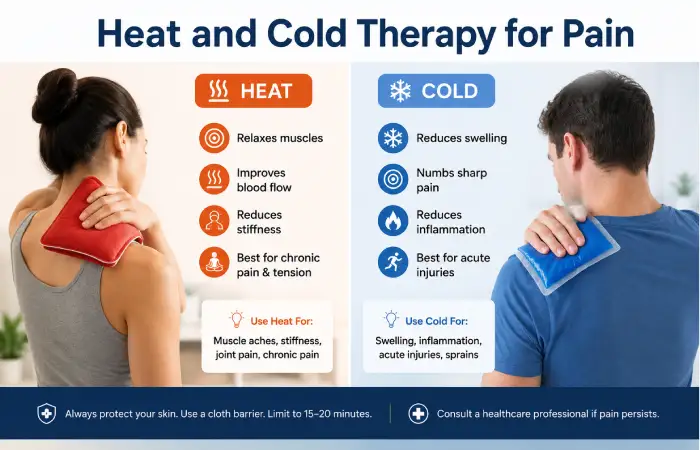
Heat and cold are inexpensive options that may provide temporary relief for certain types of pain.
Cold Therapy
Cold may be useful after some acute injuries because it can temporarily reduce pain and swelling.
Common approaches include cold packs wrapped in a protective layer.
Heat Therapy
Heat may help with muscle stiffness and some chronic musculoskeletal discomfort.
Options include:
- Warm shower
- Heating pad
- Warm compress
- Warm bath
Heat vs. Cold
| Situation | May Be Helpful |
| Some recent soft-tissue injuries | Cold |
| Muscle stiffness | Heat |
| Chronic muscle discomfort | Heat |
| Temporary swelling after injury | Cold |
| Before gentle movement | Heat may help some people |
Neither method is appropriate for every condition.
Never place extreme heat or ice directly against the skin, and avoid prolonged exposure that could cause burns or tissue damage.
Johns Hopkins specifically includes guidance on ice packs versus warm compresses among its pain-management resources.
Lifestyle Habits That May Help With Pain
Pain management works best when it fits into everyday life.
Maintain Appropriate Physical Activity
Regular movement can help maintain strength and function.
Prioritize Sleep
Poor sleep can make chronic pain more difficult to manage.
Manage Stress
Stress-management techniques can help people cope with the emotional and physical burden of persistent pain.
Maintain a Healthy Weight When Appropriate
For certain conditions, weight reduction can reduce mechanical stress on joints.
CDC guidance lists weight loss as a potentially useful nonpharmacologic intervention for appropriate people with knee osteoarthritis.
Avoid Smoking
Smoking can negatively affect overall health and may complicate recovery from some conditions.
Pace Activities
Instead of alternating between doing too much and then needing prolonged recovery, divide demanding activities into manageable portions.
This is sometimes called pacing.
Pain Management for Common Injuries
Back Pain
Back pain is one of the most common reasons people seek pain-management advice.
Depending on the cause, management may involve:
- Staying appropriately active
- Exercise therapy
- Physical therapy
- Mobility work
- Heat
- Psychological strategies
- Medication when appropriate
Persistent or severe back pain requires professional assessment.
Neck Pain
Neck pain may result from muscle strain, posture-related problems, injury or other conditions.
Gentle movement, physical therapy and appropriate activity modification may help some people.
Knee Pain
Knee pain can result from injury, arthritis, overuse or other conditions.
Management may include strengthening, physical therapy, weight management when appropriate and medical treatment.
Sports Injuries
Sprains and strains often require an appropriate balance of protection, gradual movement and rehabilitation.
Returning to sport too quickly can increase the risk of reinjury.
Post-Surgical Pain
Pain following surgery should be discussed with your healthcare team.
Modern pain-management plans may combine medications, regional techniques, physical rehabilitation and other approaches depending on the procedure.
Mayo Clinic’s 2026 guidance emphasizes discussing pain expectations, treatment options and individual needs before surgery when possible.
Medications Used in Pain Management
Medication can be an important component of pain treatment, but the appropriate choice depends on the type and cause of pain.
Common categories include:
| Medication category | Examples/role | Important consideration |
| Acetaminophen | Some mild-to-moderate pain | Excessive use can harm the liver |
| NSAIDs | Ibuprofen, naproxen | Can have gastrointestinal, kidney and cardiovascular risks |
| Topical analgesics | Certain creams/gels | Useful for some localized pain |
| Antidepressants | Certain neuropathic/chronic pain conditions | Used for specific indications |
| Antiseizure medicines | Certain nerve pain | Require appropriate medical guidance |
| Muscle relaxants | Some muscle-related conditions | Can cause side effects such as drowsiness |
| Opioids | Selected severe pain situations | Dependence, overdose and other risks |
The National Institute of Neurological Disorders and Stroke lists acetaminophen, NSAIDs, opioids, certain antidepressants, antiseizure medications, muscle relaxants and topical medications among possible pain treatments.
What About Opioids?
Opioids can be appropriate in selected situations, but they carry significant risks.
Current CDC guidance recommends maximizing appropriate nonpharmacologic and nonopioid treatments, particularly for subacute and chronic pain, and considering opioids when expected benefits for pain and function outweigh risks.
Never change, stop or increase a prescribed opioid without discussing it with your healthcare professional.
Interventional Pain Management
When conservative approaches aren’t sufficient, a specialist may consider an interventional treatment.
Depending on the condition, these can include:
- Nerve blocks
- Epidural injections
- Joint injections
- Radiofrequency procedures
- Electrical nerve stimulation
- Other minimally invasive procedures
Some people may also be evaluated for implantable devices or surgery when appropriate.
Mayo Clinic describes pain medicine as including medication, pain rehabilitation, injection therapies, procedures and implantable devices such as spinal cord stimulators.
These treatments aren’t automatically “better” than conservative approaches. They should be selected based on diagnosis, evidence, potential benefits and risks.
Pain Management: Treatment Comparison
| Approach | Best suited to | Main potential benefit | Key limitation |
| Exercise | Many chronic musculoskeletal conditions | Improves function and physical capacity | Must be appropriately progressed |
| Physical therapy | Movement-related pain | Improves mobility and strength | Requires consistent participation |
| Heat/cold | Selected acute or musculoskeletal symptoms | Temporary symptom relief | Doesn’t treat every underlying cause |
| Mindfulness/relaxation | Persistent pain and stress | Improves coping and relaxation | Not a standalone cure |
| CBT | Chronic pain with psychological burden | Develops coping skills | Requires participation over time |
| OTC medication | Selected short-term pain | Convenient symptom relief | Side effects and contraindications |
| Prescription medication | Specific pain conditions | Can reduce symptoms | Requires individualized assessment |
| Injections/procedures | Selected diagnosed conditions | May provide targeted relief | Procedure-specific risks |
| Multidisciplinary care | Complex persistent pain | Addresses multiple factors | Requires access to multiple services |
The strongest modern approach is often multimodal pain management rather than relying on one intervention.
When Should You See a Healthcare Professional for Pain?
You should consider professional evaluation when pain:
- Is severe or unexplained
- Persists longer than expected
- Is getting worse
- Repeatedly returns
- Prevents normal activities
- Interferes with sleep
- Makes it difficult to work or exercise
- Is accompanied by significant weakness or numbness
- Follows a significant injury
- Requires frequent pain medication
Cleveland Clinic advises seeking care when pain interferes with normal activities, doesn’t improve, worsens or returns after treatment, or contributes to anxiety, depression or sleep problems.
Seek urgent medical attention for serious warning signs
Severe pain accompanied by symptoms such as major trauma, chest pain, difficulty breathing, sudden neurological changes, loss of bladder or bowel control, or rapidly developing weakness may require urgent evaluation.
Don’t attempt to manage potentially serious symptoms at home solely with pain medication.
How to Build a Daily Pain Management Routine
A practical routine can make pain management more sustainable.
Morning
Start with gentle movement appropriate for your condition.
Examples:
- Short walk
- Mobility exercises
- Gentle stretching
- Breathing exercises
During the Day
Avoid remaining in one position for excessively long periods when movement is safe.
Try:
- Short activity breaks
- Proper workstation setup
- Pacing demanding activities
- Hydration
- Appropriate physical activity
Evening
Use relaxation strategies to help your body transition toward sleep.
Consider:
- Gentle mobility
- Warm shower
- Breathing exercises
- Mindfulness
- Consistent bedtime
Track Your Symptoms
A simple pain diary can record:
- Pain intensity
- Location
- Activity
- Sleep
- Medication
- Stress
- What improved symptoms
- What aggravated symptoms
This information can help you and your healthcare professional identify patterns.
A Simple Pain-Management Routine
| Time | Example |
| Morning | Gentle mobility + appropriate physical activity |
| Midday | Movement break + pacing |
| Afternoon | Exercise/physical therapy if prescribed |
| Evening | Relaxation + gentle stretching if appropriate |
| Before bed | Consistent sleep routine |
| Weekly | Review symptoms and progress |
The objective isn’t to create a perfect routine.
The objective is to develop consistent habits that support function and recovery.
What the 2026 Evidence Says About Pain Management
The direction of modern pain care is increasingly toward individualized, multimodal treatment.
The CDC’s current clinical resources emphasize nonpharmacologic approaches such as exercise, physical therapy, mind-body practices, weight management and psychological therapies when appropriate.
The American Academy of Pain Medicine’s 2026 clinical-guideline listings also demonstrate continued development of evidence-informed guidance across specific pain conditions and treatments, including sacroiliac joint pain and topical therapies for neuropathic pain.
Chronic Pain Prevalence Snapshot
According to the latest CDC/NCHS national data currently available:
| Measure | Percentage |
| U.S. adults with chronic pain, 2023 | 24.3% |
| U.S. adults with high-impact chronic pain | 8.5% |
| Men with chronic pain | 23.2% |
| Women with chronic pain | 25.4% |
| Adults 18–29 with chronic pain | 12.3% |
| Adults 65+ with chronic pain | 36.0% |
The data show a substantial increase in chronic pain prevalence with age. Among U.S. adults in 2023, chronic pain affected 12.3% of those aged 18–29 compared with 36.0% of those aged 65 and older.
Important: These statistics describe U.S. adults and should not be presented as global or India-specific prevalence.
Pain Management in India
Pain management is also an important healthcare issue in India.
An earlier multicity Indian study involving 5,004 respondents reported a 13% point prevalence of chronic pain, with knees, legs and joints among the most frequently reported locations. Because this study is older, its results should not be treated as a current 2026 prevalence estimate.
More recent Indian research using Longitudinal Ageing Study in India data found substantial medication use among adults aged 45 and older who reported activity-limiting pain, highlighting the importance of broader access to comprehensive pain-management approaches.
For an India-focused website, it is therefore better to distinguish between current evidence, older prevalence studies and international evidence rather than presenting an outdated Indian percentage as a 2026 statistic.
Frequently Asked Questions About Pain Management
What is the best pain management method?
There is no single best treatment for everyone. The appropriate approach depends on the type, cause and duration of pain. Exercise, physical therapy, psychological strategies, medications and procedures may be combined when appropriate.
Can pain be completely cured?
Sometimes. Acute pain often improves when the underlying injury or illness heals. Some chronic pain conditions, however, may not have a complete cure. Treatment can still improve symptoms, function and quality of life.
Is exercise good for chronic pain?
For many people, appropriately selected exercise can improve physical function and help manage chronic pain. Exercise should be adapted to the condition and progressed gradually.
Is heat or ice better for pain?
It depends on the type of pain. Cold may be useful for some recent injuries and swelling, while heat may help some people with muscle stiffness or chronic musculoskeletal discomfort.
Are natural pain-management methods effective?
Some non-drug approaches, including exercise, mindfulness, relaxation, psychological therapies and other interventions, can help selected people. Their effectiveness depends on the condition and individual circumstances.
Are painkillers safe?
Pain medicines can be safe when appropriately selected and used according to medical guidance, but every medication has potential risks. Acetaminophen, NSAIDs and opioids all have important safety considerations.
Are opioids the best treatment for chronic pain?
Not generally as a first-line approach. CDC guidance recommends maximizing appropriate nonopioid and nonpharmacologic treatments for subacute and chronic pain and considering opioids only when expected benefits outweigh risks.
Should I see a pain specialist?
A pain specialist may be useful when pain is persistent, complex, severe or difficult to manage with initial treatment. Your primary healthcare professional can help determine whether specialist referral is appropriate.
Can stress make pain worse?
Stress can influence how pain is experienced and managed. Relaxation, mindfulness, psychological therapy and adequate sleep can be useful components of a broader treatment plan.
How long does pain management take to work?
It depends on the cause and treatment. Some acute problems improve quickly, while chronic pain often requires a longer-term approach involving several interventions and regular adjustment.
Key Takeaways
Pain management isn’t simply about taking a painkiller whenever something hurts. Effective care starts with understanding why the pain is occurring, how it affects your life and which treatments are appropriate for your specific situation.
The most useful principles are:
- Identify the cause of pain whenever possible.
- Treat acute and chronic pain differently.
- Use exercise and physical rehabilitation when appropriate.
- Consider sleep, stress and lifestyle factors.
- Use medications carefully and appropriately.
- Don’t assume stronger medication means better treatment.
- Use multidisciplinary care for complex chronic pain when available.
- Track symptoms and treatment responses.
- Seek professional care when pain persists or interferes with life.
- Aim not only for less pain but also better function and quality of life.
Modern pain care increasingly recognizes that pain is complex and that one-size-fits-all treatment rarely works. A personalized combination of physical, behavioral, lifestyle, medication and—when appropriate—procedural treatments can provide a more comprehensive approach.
Afiya Jafar is a fitness and wellness writer who focuses on making health, exercise, and healthy lifestyle information simple and practical. Her work covers workouts, fitness motivation, strength training, nutrition, weight management, stress management, mindfulness, and everyday wellness.
Read Full Bio of Afiya Jafar →
Sameena Begum reviews selected health, wellness, fitness, and digital content for clarity, factual presentation, consistency, and reader usefulness. Her review work helps maintain clear and responsible editorial standards across PhysicalFitt content.
Read Full Bio of Sameena Begum →
Dr. Khizrana Begum is a qualified medical professional with MBBS and MD qualifications and 5+ years of experience in the medical field. She works as a General Physician and Dermatologist, with expertise in general medicine, dermatology, preventive healthcare, and skin health.
Read Full Bio of Dr. Khizrana Begum →