

 Afiya Jafar
Fitness & Wellness Writer
Afiya Jafar is a fitness and wellness writer who focuses on making health, exercise, and healthy lifestyle information simple and practical.
Read Full Bio of Author →
Afiya Jafar
Fitness & Wellness Writer
Afiya Jafar is a fitness and wellness writer who focuses on making health, exercise, and healthy lifestyle information simple and practical.
Read Full Bio of Author →
 Sameena Begum
Health, Fitness & Digital Content Reviewer
Sameena reviews selected health, wellness, fitness, and digital content for clarity, factual presentation, and reader usefulness.
Read Full Bio of Reviewer →
Sameena Begum
Health, Fitness & Digital Content Reviewer
Sameena reviews selected health, wellness, fitness, and digital content for clarity, factual presentation, and reader usefulness.
Read Full Bio of Reviewer →
Managing headache pain includes figuring out the cause of your headache and selecting how to relieve it, as well as how to prevent it from happening too often or getting in the way of your daily life. Your headache may be caused by dehydration, anxiety, sinus problems, or other underlying illness, in addition to or other than migraine.
What Is Headache Pain Management?
Management of Headache Pain Headache pain management involves a combination of treatments and daily habits to manage headache pain, address symptoms during an attack, and prevent headache attacks.
Management may involve:
- Lifestyle and self-care strategies
- Over-the-counter pain medicines
- Prescription medicines
- Preventive treatments
- Stress management strategies
- Treatment of an underlying medical condition
- Tracking attacks in a headache diary
Some headaches don’t require medication. If your headaches are infrequent and mild, adequate rest and hydration, relaxation, and other simple steps may be all you need.
Common Types of Headaches and Their Management
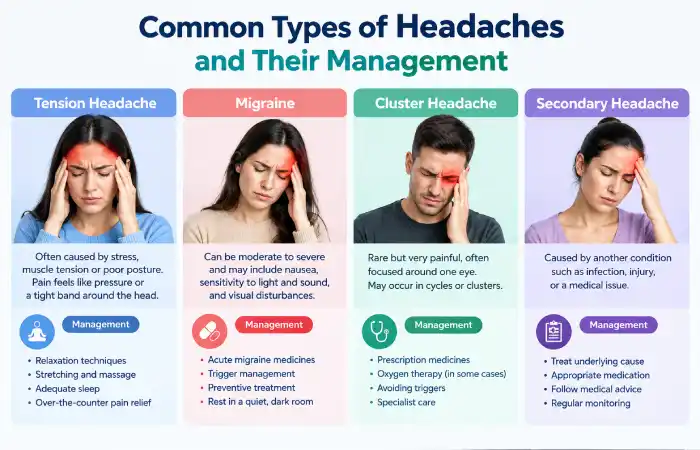
Different headaches can require different approaches.
| Headache type | Management approach | Common characteristics |
| Tension headache | Relaxation, stretching, sleep, hydration and appropriate pain relief | Pressure or tightening, often associated with stress or muscle tension |
| Migraine | Acute medicines, trigger management and preventive treatment when appropriate | Moderate-to-severe pain, sometimes with nausea or sensitivity to light and sound |
| Cluster headache | Requires professional diagnosis and specific treatment | Severe attacks, often concentrated around one eye |
| Secondary headache | Treating the underlying cause | Caused by another condition or factor |
The information on medication is focused on the most common types of headache including; Tension Headaches Migraines (also has other symptoms involved, such as pain in other parts of the body, nausea, sensitivities to light, sound and smell).
How to Relieve a Headache at Home
When it is a mild occassional headache, here are some general first aid tips that may be helpful.
Drink enough fluids
Drink at least eight glasses of water per day to 8Acute headaches during motorcycle pregnancy may also be caused by dehydration. How do you get rid of a headache -good.
Rest in a quiet environment
A still, dark, and silent room can be beneficial during a migraine. Turning down bright lights and eliminating loud noises can ease some of the symptoms.
Try heat or cold
A cold pack might help with some headaches. Heat might be more appropriate if the tension in your neck or muscles is causing the headache. Cleveland Clinic mentions heat or cold packs, stretches and massage as a way of treating yourself.
Address stress and muscle tightness and pain
Stress and muscle tightness may be factors that cause or increase the severity of some types of headache.
Relaxation exercises, stretching, massage, exercise and other techniques to reduce stress may be helpful, especially in the case of tension-type headache.
Headache Medicines: OTC vs. Prescription Options
Medicines used for headache management generally fall into acute and preventive categories.
| Treatment category | Examples | When it is used |
| OTC pain relievers | Acetaminophen, ibuprofen and other NSAIDs | Occasional headache relief |
| Acute prescription medicines | Triptans and gepants | Stopping certain severe headaches or migraine attacks |
| Preventive medicines | Certain blood-pressure, antiseizure and antidepressant medicines; CGRP-targeted therapies | Reducing frequency or severity of recurrent headaches |
| Non-drug approaches | Relaxation, biofeedback, exercise and trigger management | Relief and prevention |
Choosing the right medication depends on the type, frequency, severity of the headache and any other existing medical condition and medicines being taken. A physician or pharmacist can advise on what would be appropriate.
Be careful with frequent painkiller use
Overusing headache medication can cause rebound headache which can become a vicious cycle of increasingly frequent head pains. As a rule of thumb, the Cleveland Clinic says that OTC headache medication should be taken for two days or less each week to avoid rebound headache while NHS recommends avoiding painkillers two or more days per week for migraine.
How to Prevent Headaches
Prevention starts with identifying patterns.
Keep a headache diary
Record:
- Date and time
- Duration
- Pain severity
- Location and type of pain
- Food and drinks
- Sleep
- Stress
- Physical activity
- Menstrual or hormonal patterns when relevant
- Medicines taken
- Other symptoms
A diary can help identify potential triggers and give your healthcare provider useful information for diagnosis and treatment planning.
Build healthy daily habits
Regular physical activity, adequate hydration, consistent sleep, regular meals and stress management can support headache prevention. For migraines, identifying individual triggers can also be useful.
When Should You See a Doctor for a Headache?
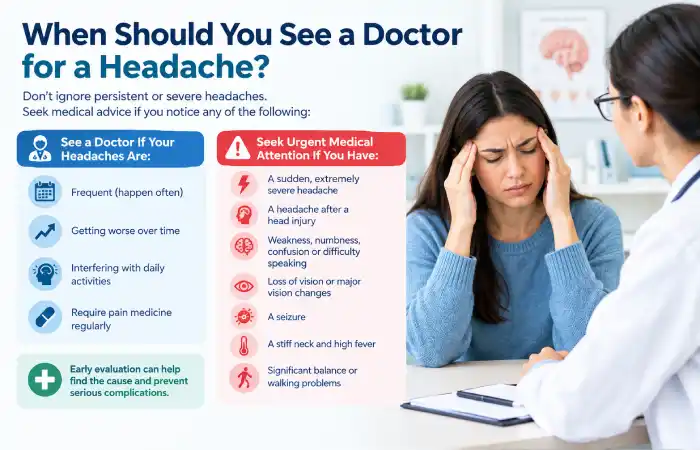
Contact a healthcare professional if headaches are frequent, worsening, interfering with everyday activities, or require pain medicine regularly.
Seek urgent medical attention for a headache that:
- Starts suddenly and is extremely severe
- Occurs after a significant head injury
- Is accompanied by weakness, numbness, confusion or difficulty speaking
- Causes loss of vision or major vision changes
- Occurs with a seizure
- Occurs with a stiff neck and high fever
- Is accompanied by significant balance or walking problems
These symptoms can sometimes indicate a serious underlying condition and should not be managed as an ordinary headache at home.
Troubleshooting Common Headache Problems
“I keep getting headaches”
Record date, possible reason, frequency of painkiller use Recurrent headaches need to be diagnosed and treated by the GP.
“Painkiller isn’t helping”
Don’t keep going up in dose or frequency. The type of headache may need to be reconsidered or it might be necessary to switch the treatment.
“I get several headaches a week”
Repeat pain relief alone may not be sufficient – a plan of preventative management may be needed.
“My headache has suddenly changed”
This should be checked out with the GP.
Frequently Asked Questions
What is the fastest way to relieve a headache?
Rest, hydration, a quiet surroundings and an OTC painkiller may assist with some sort of mild intermittent headache. The best approach depends upon the head aches type and cause.
How to stop getting headaches every day?
Track triggers with a headache diary. Keep your sleep, food, fluid, exercise and stress management routines steady. See your healthcare provider if you have a lot of headaches.
Can too much headache medication cause more headaches?
Yes. Regular use of acute headache medications may result in medication-overuse headache.
Are headaches a sign of danger?
Sudden, worst ever headache with a dramatic onset – especially if it’s associated with neurological symptoms such as weakness, confusion, seizure, difficulty speaking or vision loss needs urgent evaluation.
Final Takeaway
Headache pain management There is more to managing headache pain than taking a painkiller at the first sign of a headache. In the long-term, the most effective management strategies are to know your headache type, to know what sets your headache off, to use your treatments appropriately, not to overuse medication, and to see a healthcare professional if your headaches are frequent, unpredictable, or associated with warning signs.
Afiya Jafar is a fitness and wellness writer who focuses on making health, exercise, and healthy lifestyle information simple and practical. Her work covers workouts, fitness motivation, strength training, nutrition, weight management, stress management, mindfulness, and everyday wellness.
Read full bio of Afiya Jafar
Sameena reviews selected health, wellness, fitness, and digital content for clarity, factual presentation, and reader usefulness.
Read full bio of Sameena Begum