

 Afiya Jafar
Fitness & Wellness Writer
Afiya Jafar is a fitness and wellness writer who focuses on making health, exercise, and healthy lifestyle information simple and practical.
Read Full Bio of Author →
Afiya Jafar
Fitness & Wellness Writer
Afiya Jafar is a fitness and wellness writer who focuses on making health, exercise, and healthy lifestyle information simple and practical.
Read Full Bio of Author →
 Sameena Begum
Health, Fitness & Digital Content Reviewer
Sameena reviews selected health, wellness, fitness, and digital content for clarity, factual presentation, and reader usefulness.
Read Full Bio of Reviewer →
Sameena Begum
Health, Fitness & Digital Content Reviewer
Sameena reviews selected health, wellness, fitness, and digital content for clarity, factual presentation, and reader usefulness.
Read Full Bio of Reviewer →
Handling muscle pain Treatment of muscle pain is necessary but the primary priority is to know what is triggering your pain. Causes of muscle pain could be after an exercise, overuse, stress, infection, dehydration, injury, some medications, as well as some drugs. For some individuals, persistent and generalized muscle soreness may be connected with a medical condition.
The appropriate treatment, therefore, is dependent upon the cause, extent, location and duration of the muscle pain. Normal muscle soreness is manageable with take care of your house, while heavy, persistent or unexplained pain may require a check-up.
What Is Muscle Pain?
Muscle pain (myalgia) can refer to aching, soreness, stiffness, tenderness, or simply discomfort in one or more muscles.
Common causes include:
- Muscle strains and minor injuries
- Overuse or vigorous activity
- Poor posture or repetitive motions
- Stress, physical or mental Infections
- Dehydration or electrolyte imbalance
- Some medication
- Chronic conditions, such as fibromyalgia or inflammatory conditions
Muscle pain can be located in a particular area of the body or can be part of a more generalized process.
Common Muscle Pain Management Options
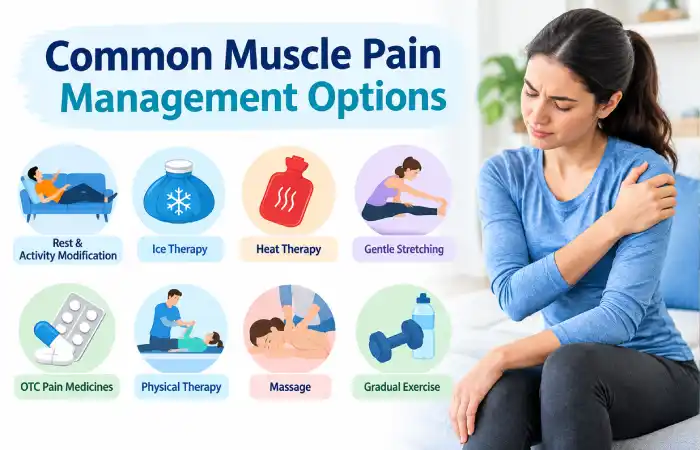
There isn’t one treatment that works for every type of muscle pain. Management usually combines symptom relief with addressing the underlying cause.
| Management option | Important consideration | Common use |
| Rest or activity modification | Avoid prolonged complete inactivity unless advised | Recent strain or overuse |
| Ice | Often used during the first 24–72 hours | Recent injury with swelling |
| Heat | Can be soothing for stiff muscles | Tightness and ongoing soreness |
| Gentle stretching | Stop if it significantly increases pain | Stiffness and reduced mobility |
| OTC pain medicines | Check suitability, dosing and interactions | Temporary pain relief |
| Physical therapy | Treatment is tailored to the underlying cause | Persistent or recurring problems |
| Massage | Not appropriate for every injury | Some muscular tension and soreness |
| Gradual exercise | Increase activity progressively | Recovery and prevention |
For an acute muscle injury, Mayo Clinic and Johns Hopkins describe approaches such as rest, ice, compression and elevation, followed by gradual return to movement. Heat may be more soothing after the initial injury period.
How to Relieve Muscle Pain at Home
Rest the muscle affected
If pain is new, following a physical injury, or pain occurs during vigorous activity, temporarily rest the muscle by avoiding or limiting activities that worsen the pain. Rest, it should be pointed out, doesn’t necessarily mean immobility for a prolonged period. Gentle activity as symptoms subside may be helpful to facilitate the return to normal activity.
Apply ice or heat
Cold applications can reduce pain and swelling with some injuries.
Mayo Clinic states that applying an ice pack for 20 minutes at a time can be helpful for certain minor muscle injuries. Conversely, heat may be a good idea for muscle pain accompanied by stiffness and tightness. Protect your skin when applying extreme cold or heat. Stretch gently Gentle stretching may be helpful for pain associated with stiffness or overuse.
Never push a painful stretch.
Seek assistance from a physical therapist if you are experiencing chronic pain in order to tailor a program of stretching, strengthening, and mobility exercises and proper posture.
Stay well hydrated
Dehydration can lead to muscle cramping and discomfort, particularly when activity has been involved. Drinking sufficient fluids should be considered part of good prevention for muscle soreness.
Rest well
Sleep also allows the body to recover from daily activities and exercise. Additional support of relaxation and stress management techniques may also be beneficial when muscle tension is related to stress.
Muscle Pain Medicines: What Are the Options?
Some individuals take advantage of over the counter drugs for short-term muscle pain relief. For instance, a person may use acetaminophen or NSAIDS such as ibuprofen, depending on the individual’s health situation. There are also topical solutions that are available such as menthol or diclofenac for some kinds of pain.
However, these medicines are not appropriate for everyone.
Before using an OTC pain medicine regularly, check the label and consider asking a healthcare professional or pharmacist if you:
- Take other medicines
- Have kidney, stomach, liver, or cardiovascular problems
- Are pregnant
- Have allergies or previous reactions to pain medicines
- Need pain relief for an extended period
Pain medicines can reduce symptoms without necessarily treating the reason behind the pain.
When Does Muscle Pain Need Medical Attention?
Most mild muscle soreness improves with appropriate self-care. Persistent, severe, or unexplained pain deserves more attention.
Contact a healthcare professional if muscle pain:
- Is severe or unexplained
- Continues despite rest and home care
- Interferes with normal activities
- Is accompanied by redness or swelling
- Develops after starting or increasing certain medicines
- Occurs with fever, rash, or other signs of illness
- Keeps returning without an obvious explanation
Mayo Clinic and Cleveland Clinic list severe weakness or pain, difficulty breathing, any serious injury, or other symptoms as indications that a person should seek immediate medical attention.
Get medical attention for a body pain along with severe symptoms that include: trouble breathing orshortness of breath inability to move a part of your body extreme weakness or injury or other serious symptoms.
How to Prevent Muscle Pain
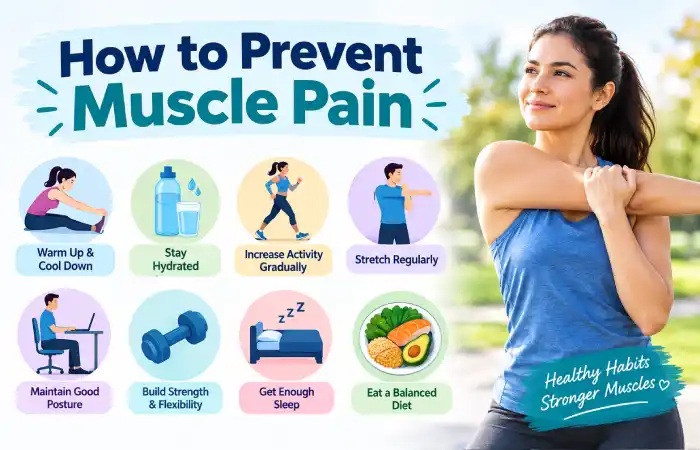
The best approach to prevention will vary depending on the cause of pain, but the following activities may help prevent or alleviate frequent exercise- and overuse-related muscle pain:
- warm-up before intense activity
- cool down after activity
- build up to more intense activity gradually
- stretch when appropriate
- stay well-hydrated
- avoid sitting in one place for too long
- practice good posture and proper body mechanics
- have rest time between intense activities
- treat persistent pain instead of using exercise to push through it
Medline Plus suggests warming up, cooling down, stretching, staying well-hydrated, and taking breaks from sitting for long periods.
Troubleshooting: Why Isn’t My Muscle Pain Improving?
My pain returns when I exercise – make adjustments to the intensity and ask if technique, volume of training or rest needs to be changed. If this keeps happening then it may be worthwhile seeing your doctor about it.
Heat provides relief temporarily but the pain persists – temporary relief does not cause a diagnosis so, if the pain is persistent and persistent then it is a good idea to discuss this with a healthcare professional.
My pain started after trying a new medication – never stop a prescribed medication without consulting your doctor or pharmacist. If you have started or increased the dose of a medication then discuss the pain with the prescribing clinician, especially if it is a statin.
My pain is throughout the body and not local to a single muscle – keep in mind that widespread pain can be due to other causes and not exercise related so persistent symptoms should be discussed with your doctor.
Final Takeaway
Muscle pain remedies are not just about hiding the pain (in the short term). First assess: what caused it? In minor muscle pain use simple self-care, on returning to activity build back up gradually, and see your doctor if symptoms are severe, persistent, recurrent or unexplained.
Afiya Jafar is a fitness and wellness writer who focuses on making health, exercise, and healthy lifestyle information simple and practical. Her work covers workouts, fitness motivation, strength training, nutrition, weight management, stress management, mindfulness, and everyday wellness.
Read full bio of Afiya Jafar
Sameena reviews selected health, wellness, fitness, and digital content for clarity, factual presentation, and reader usefulness.
Read full bio of Sameena Begum