

 Afiya Jafar
Fitness & Wellness Writer
Afiya Jafar is a fitness and wellness writer who focuses on making health, exercise, and healthy lifestyle information simple and practical.
Read Full Bio of Author →
Afiya Jafar
Fitness & Wellness Writer
Afiya Jafar is a fitness and wellness writer who focuses on making health, exercise, and healthy lifestyle information simple and practical.
Read Full Bio of Author →
 Sameena Begum
Health, Fitness & Digital Content Reviewer
Sameena reviews selected health, wellness, fitness, and digital content for clarity, factual presentation, and reader usefulness.
Read Full Bio of Reviewer →
Sameena Begum
Health, Fitness & Digital Content Reviewer
Sameena reviews selected health, wellness, fitness, and digital content for clarity, factual presentation, and reader usefulness.
Read Full Bio of Reviewer →
 Dr. Khizrana Begum
General Physician & Dermatologist
Dr. Khizrana Begum is a General Physician and Dermatologist with MBBS and MD qualifications and 5+ years of experience in the medical field.
Read Full Bio of Medical Reviewer →
Dr. Khizrana Begum
General Physician & Dermatologist
Dr. Khizrana Begum is a General Physician and Dermatologist with MBBS and MD qualifications and 5+ years of experience in the medical field.
Read Full Bio of Medical Reviewer →
Self care means consciously taking care of your physical and mental health, your relationships, your responsibilities in life, and of your quality of life in general. It can be anything from ensuring you sleep a full night’s rest to eating 3 nutritious meals a day and walking in to taking a breath of fresh air, saying no and taking back some time for yourself, or talking through problems with a loved one.
It is important to remember that self care is not what you’ll find online these days as ‘ spa days’, expensive cosmetics or taking a day off: it encompasses a broader scope. WHO defines self-care as the practice of what individuals, families and communities can do for themselves, alone or with others, to promote health, prevent disease and maintain well-being with or without help from healthcare workers;
and of course crucially says that ‘self-care works together with health care, not in place of it.’.
Self-care can start with small, realistic habits that fit into your everyday routine. Explore these simple self care ideas to find practical ways to relax, recharge, and support your overall well-being.
These points are important because you shouldn’t view self care as an endeavor to address and tackle problems independently, but rather it should address and enhance your existing lifestyle, and of course know when an issue can’t be handled in this way.
This guide will go on to look at; defining self care, why self care is important, different types of self care, ideas to try in everyday life, putting it into a routine, how to avoid typical pitfalls when undertaking self-care, and when professional help should be sought.
❝
This article is a part of
Self Care Hub
What Is Self Care?
Self care involves performing behaviors with intent that you recognize is contributing positively to your health and well-being.
Self care can be physical, emotional, mental, social, practical, or otherwise relevant to the specific domains of your life. It will vary across individuals due to differences in each person’s responsibilities, health, beliefs and knowledge base, and resources and available environment.
Self care could mean cooking a nutritious meal and getting a good night’s sleep for one person, but for another person it may mean calling a friend, refraining from a social media diet, breaking down an unmanageable list of tasks, obtaining required medical care, or getting out in nature.
According to Cleveland Clinic, self-care is behavior or actions deliberately taken and/or withheld, for the sake of one’s well-being, and can include behaviors to enhance the physical, emotional, psychological and spiritual self.
Self care is more than pampering
One of the misconceptions around self care: it must mean luxury or indulgence.
Taking care of your body is an important part of overall well-being. Learn more about physical self care, including movement, nutrition, hydration, rest, and other healthy everyday habits.
A nice bath, facial, massage, yummy meal or peaceful downtime might be a nice form of self care. However self care also includes a lot of non glamorous ways to care for ourselves.
- going to sleep instead of scrolling online
- not agreeing to an optional commitment
- cleaning an unsafe or triggering living space
- making a doctor’s appointment
- drinking a glass of water when you’re thirsty
- taking medication correctly when it’s prescribed
- eating instead of skipping a meal
- asking for support from another person
- resting when you’re mentally tired
- establishing boundaries for your workload
- engaging with people who make you feel supported
So bottom line: self care shouldn’t be so much about what the activity looks like but whether it actually serves you wellbeing.
Self care is not selfish
Sometimes people resist doing self care because it is looked down upon, in that by being and doing for yourself it is regarded as being selfish or not caring about others.
In actual truth this cannot further be from the reality: always suppressing and negating your physical and emotional wants and needs has an effect on how you function overall – how you operate at work, with relations and family life, with your responsibilities and how you aid others.
Looking after your emotional well-being is just as important as caring for your physical health. Practicing emotional self care can help you understand your feelings, manage stress, and develop healthier emotional habits.
According to the Cleveland Clinic: “Conscious self care can actually facilitate managing both external expectations placed on your life, such as demands from work, family life, and responsibilities…” The most important message to acknowledge is that healthy self care does not mean avoiding and neglecting your responsibilities. Rather, you realize that you, as well, are among the people that are worthy of care.
Self care and healthcare are not the same thing
While self-care can be effective in maintaining good health it can’t be used to replace professional healthcare. In that example good health practices of taking regular sleep and relaxations can be beneficial to a person experiencing stress. However continuing or serious symptoms will necessitate a visit to a medical practitioner or mental health specialist.
WHO themselves are insistent that self-care does not replace healthcare systems or healthcare workers.
That principle must always be central to any reliable self-care plan.
Why Is Self Care Important?
While self-care can be effective in maintaining good health it can’t be used to replace professional healthcare. In that example good health practices of taking regular sleep and relaxations can be beneficial to a person experiencing stress. However continuing or serious symptoms will necessitate a visit to a medical practitioner or mental health specialist.
WHO themselves are insistent that self-care does not replace healthcare systems or healthcare workers.
There are many simple ways to make self-care part of your daily routine. Try these self care activities for relaxation, physical health, mental well-being, creativity, and social connection.
That principle must always be central to any reliable self-care plan.
-
It supports physical health
Physical self care covers those aspects that look after the basics required to ensure good health.
This can be:
- Eating a healthy balanced diet.
- Participating in regular physical activity.
- Sleeping well and long enough.
- A healthy attention to personal hygiene.
- Staying hydrated.
- Attending all necessary health check-ups and screening events.
- Adhering to medical treatment plans where applicable.
- Allowing your body to relax following physical activity.
None of these need be “special events” but often appear to be less important than one-off “wellness activities”.
-
It can support mental and emotional well-being
You will gain practical means of coping with the various pressures faced every day, from external and emotional ones alike, with self care practices. Examples such as taking walks, keeping a journal, engaging in relaxation exercises, connecting with support groups, having fulfilling hobbies and taking time to recharge.
“The NHS have provided the following self help materials for stress, and general well being, with regards to every day mood, stress-coping methods, support groups, therapy, and other relevant mental health exercises.”
-
It can help with stress management
While everyone has things to stress them out, constant expectations and absence of recovery will eventually burn out even the healthiest individual.
Quality sleep is a key part of a healthy self-care routine. Learn how self care for better sleep can support a consistent bedtime routine and help create better conditions for restful nights.
Self-care enables the intentional introduction of recovery in to your day-today life. Self care might consist of:
- Short naps or breaks
- Being present outside
- Deep breathing
- Canceling obligations
- Turning off phones/notifications
- Physical activity
- Spending time chatting with another person
- Consistent bedtime and waking up
- Incorporating activities you enjoy
The point of self-care is not to eliminate stressors but rather to increase your response to every-day demands.
-
It helps you notice your needs
Self-care requires presence.
Before determining what you actually require, ask:
“What do I need to let go of right now? What is draining me?”
Often you may come to learn that what you really need is not some complex self-care plan, but rather, a nap, a warm meal, to stretch our bodies, to connect with another human being, some silence, tidiness or help.
-
It can strengthen healthy boundaries
Sometimes the most useful self-care activity is not adding another activity to your schedule.
It may be removing something.
Examples include:
- Saying no to an unnecessary commitment.
- Limiting work messages after hours.
- Reducing time on social media.
- Taking distance from consistently unhealthy interactions.
- Scheduling uninterrupted personal time.
Self care should not become another source of pressure.
Types of Self Care
There is no single universal classification of self care. Different health and wellness organizations divide it into different categories.
Caring for your mind can help you manage everyday stress and mental overload. Discover practical mental self care strategies such as mindfulness, healthy boundaries, relaxation, and taking regular breaks.
For practical purposes, it is useful to think about self care across several interconnected areas.
| Type | Examples | Main focus |
| Physical | Sleep, movement, nutrition, hygiene | Body and physical health |
| Mental | Reading, learning, mindfulness | Cognitive well-being |
| motional | Journaling, relaxation, self-compassion | Feelings and emotional regulation |
| Social | Friends, family, community | Relationships and connection |
| Practical | Planning, finances, organization | Everyday responsibilities |
| Spiritual | Reflection, prayer, nature, meditation | Meaning and values |
These categories overlap. A single activity can support several areas at once.
For example, walking with a friend can provide physical activity, social connection, stress relief, and time outdoors.
Physical Self Care
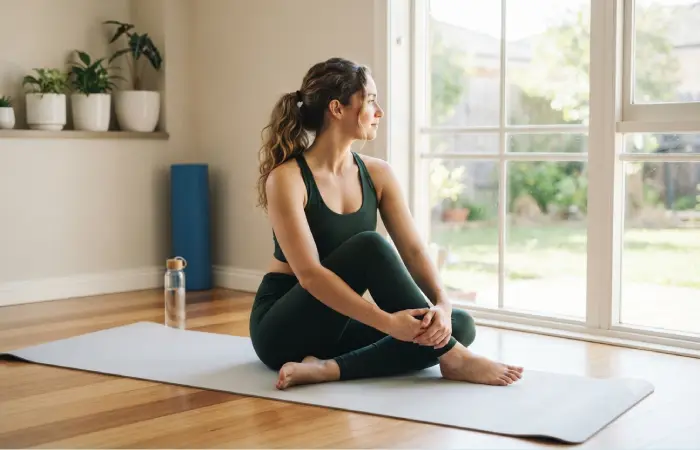
Physical self care involves caring for your body and supporting the habits that allow you to function well.
Prioritize sleep
Sleep is one of the most important foundations of physical and mental well-being.
A useful sleep-focused self-care routine can include:
- Keeping a reasonably consistent sleep and wake schedule.
- Creating a relaxing wind-down period.
- Limiting stimulating activities close to bedtime.
- Keeping your bedroom comfortable.
- Addressing persistent sleep problems rather than ignoring them.
Self care does not require a perfect bedtime routine. A simple routine that you can maintain is usually more useful than an elaborate routine that lasts only a few days.
Move your body
Physical activity does not have to mean an intense gym workout.
Depending on your abilities and preferences, movement could include:
- Walking.
- Cycling.
- Swimming.
- Dancing.
- Yoga.
- Stretching.
- Strength training.
- Gardening.
- Recreational sports.
They also suggest discovering activities that are right for you, rather than believing that there’s a correct way to exercise.
Eat well and regularly
Diet and nourishment is another important element of physical self-care. This is best tackled not through searching for ‘self-care food’ (though some people would identify certain types of food as such!), but instead with practical regularity of meals and diversity of food intake.
Meals will vary depending on what is right for your body, but may include fruits and vegetables, a whole food or high-fiber carbohydrate and/or starch and protein. Depending on your conditions and individual requirements there may be benefit from working with a qualified health practitioner or dietitian for some individual guidance.
Attend to personal hygiene
Personal care practices can sometimes be overlooked when talking about aspects of our lifestyle. Showering, brushing your teeth and combing your hair, ensuring you.
Wash your hands regularly, attending to your skin, Wearing clean clothes and taking care of your surroundings can all be considered forms of self care. While they can seem ordinary and everyday, ordinary practices are often what self care is built upon.
Mental and Emotional Self Care
This relates to the way in which you approach thought, feelings, stress and difficulties during your day.
Exercise Emotional awareness:
The problem is that there can be no effective way of dealing with feelings that you do not first recognise you have.
The questions you might ask yourself:
- What emotion am I currently experiencing?
- What is the likely cause of this emotion?
- What do I require at this precise moment in time?
- Is this in my control?
- Do I require rest, support or space?
It does not matter that you should not immediately banish difficult feelings from yourself- even recognising and name them is likely to be useful.
Journal
Getting my thoughts written down through journaling can be an easy way to bring some clarity to my day.
You might try:
- What did well today?
- What was challenging?
- What am I worrying about?
- What can I influence or impact?
- What do I require tomorrow?
- What am I thankful for?
Keep it easy. A journal of any kind is not designed to become a new product to “get stuff done.”
Practice mindfulness
Mindfulness means attending to this very moment on purpose. Strategies include: Taking notice of your breathing. Taking notice of what’s around you.
- Eating without multitasking.
- Taking a short walk at a slower pace than usual.
- Paying attention to sensations in your body.
- Spending a moment noticing what is heard, seen or felt by you.
- Mind focuses on these practical coping strategies.
These include mindfulness, relaxation, positive daily activities and the physical self in various areas within mental-health settings.
Give yourself permission to rest
Rest is not the same as laziness.
If your mind or body is continually overloaded, adding more tasks labeled “self care” can defeat the purpose.
Sometimes the most appropriate activity is doing less.
Social Self Care
We are social creatures. The quality of your relationships can positively or negatively impact your well-being.
Social self care involves actively nurturing relationships and forming new connections in a healthy and supportive environment.
This could look like:
- calling a friend
- having dinner with family
- joining a club
- taking part in community organizations
- spending time with those you trust
- requesting support when you need it
- implementing boundaries with relationships that drain and disappoint you
Self care does not have to be saying yes to everything and everyone!
If social interaction leaves you consistently drained or anxious, good relationships along with healthy boundaries might be part of your plan.
We’re going for quality, not quantity-though this also relates to not saying yes to everything.
Having lots of people in your life means very little compared to one close friend who fully supports you through what you are going through. Choose the ones where you feel you can be honest with people, are not judged, boundaries are still intact and people respect them.
Practical Self Care
Practical self-care targets those daily acts that promote greater ease, safety, and manageability in your life. It’s one of the least sexy but one of the most necessary types of self-care, which involves practices such as:
- Cleaning out your work area,
- Planning meals,
- Organizing your time,
- Managing a financial budget,
- Laying out clothes the night before bed,
- Clearing an area of clutter that’s making you anxious,
- Making a list of tasks to do that is realistic for you to complete,
- Tackling a task that’s overdue and nagging at the back of your mind,
- Putting reminders on your phone for necessary reminders and making time for actual rest.
For an individual whose life is being undermined by disorganization, piles of bills, and chaotic time management, a bubble bath can provide 30 minutes of relaxation, and an ongoing sense of peace that comes from alleviating a practical difficulty.
Self Care for Stress Management
Stress self care should focus on reducing unnecessary strain and improving recovery.
Identify your main stressors
Make two lists:
Things I can control
and
Things I cannot control
Start with the first list.
For instance, you may have limited to no control over the actions of others or unavoidable situations (an unexpected traffic delay or any demands of your job). However, you do have control over the following (to some extent, depending on the task): taking a break, organizing your workload, seeking help, and tuning out of work tasks at appropriate times.
Use short recovery periods
Self-care doesn’t require a whole weekend devoted to it.
Even a five or ten minute reset will work, such as:
1. Put away your phone.
2. Take several slow deep breaths.
3. Have a drink of water.
4. Stretch or walk.
5. Look outside (or walk outside).
6. Determine the next important item on your agenda.
Mini sessions are usually much easier to integrate into your day than giving yourself such a long break that you become run down and worn out!
Reduce unnecessary stimulation
Excessive alerts, news feeds, emails, and social updates can potentially hamper recovery.
You could look at:
- Disabling non-urgent notifications.
- Having a certain number of screen-free hours.
- Unfollowing people that bring about sustained stress.
- Not taking your work-related applications in the bedroom.
- Taking breaks away from devices once in a while.
Self-care can be, at times, about what not to feed ourselves.
Self Care for Better Sleep
A healthy sleep routine is one of the most practical forms of self care.
Try building a simple evening sequence:
Wind down → reduce stimulation → prepare for tomorrow → relax → sleep
For example:
9:30 p.m. — Finish demanding work
9:45 p.m. — Prepare clothes and essentials for tomorrow
10:00 p.m. — Reduce screen activity
10:15 p.m. — Read, stretch, journal, or relax
10:45 p.m. — Prepare for sleep
The time of day becomes irrelevant. The pattern that becomes achievable for you is more important than the precise time it falls on a daily basis.
However if you often have sleep problems, often wake during the night, and/or continue to feel excessively sleepy throughout the day, there may be other factors at work which a self-care routine will not address- consult a physician.
Self Care and Healthy Habits

Self care works best when it becomes part of ordinary life.
Think of these habits as a foundation:
| Habit | Simple starting point |
| Sleep | Maintain a consistent sleep schedule |
| Movement | Add a short walk or preferred activity |
| Nutrition | Plan one balanced meal |
| Hydration | Keep water accessible |
| Stress | Take a short intentional break |
| Social connection | Contact one supportive person |
| Mental well-being | Journal or practice mindfulness |
| Environment | Organize one stressful area |
| Digital health | Create a screen-free period |
| Healthcare | Keep important appointments |
Do not attempt to overhaul everything all at once.
Choose just one or two habits. And keep them simple, make them repeatable.
The 2026 principle of self-care: consistency, not perfection
One of the big flaws of health and wellness content is that it can make self-care seem to be one specific-complex-thing.
You may read about very involved morning routines that combine an hour each of working out, meditating, writing in a journal, taking vitamins, taking a cold shower, a full skincare routine, meal prep, and an ultra-productivity framework.
There’s certainly nothing wrong with all of those habits-but The Problem is when it’s assumed that is what self care must encompass.
It is entirely possible to scale your routine down:
Five minutes every single day is vastly better than attempting to go through an intensely complex program every other week before abandoning it all three days in.
Creating a Self Care Routine
A useful self-care routine should fit your actual life.
Step 1: Assess your current needs
Rate these areas from 1 to 5:
| Area | Score |
| Sleep | /5 |
| Nutrition | /5 |
| Physical activity | /5 |
| Stress management | /5 |
| Emotional well-being | /5 |
| Social connection | /5 |
| Organization | /5 |
| Time for yourself | /5 |
The lowest scores can show you where to start.
This is not a medical assessment. It is simply a reflection exercise.
Step 2: Choose one small action
If sleep is your weakest area, start with a consistent bedtime.
Movement is low, begin with a short walk.
If stress is high, introduce a five-minute breathing or quiet period.
If social connection is lacking, contact one supportive person.
Step 3: Attach the habit to something you already do
This makes routines easier to remember.
For example:
After brushing my teeth → two minutes of stretching.
Lunch → ten-minute walk.
After dinner → prepare tomorrow’s essentials.
Before bed → five minutes of reading.
Step 4: Make it convenient
Reduce friction.
If you want to walk in the morning, prepare your shoes and clothes beforehand.
If you want to drink more water, keep a bottle nearby.
Step 5: Review the routine
After one or two weeks, ask:
- Is this helping?
- Is it realistic?
- Does it fit my schedule?
- Do I actually enjoy it?
- What should I change?
Self care is adjustable.
A Simple Daily Self Care Routine
Here is a beginner-friendly example.
Morning
- Wake at a reasonably consistent time.
- Drink water.
- Eat breakfast if it suits your needs.
- Get some natural light.
- Move your body briefly.
- Identify your most important task.
Afternoon
- Eat a balanced meal.
- Take a short movement break.
- Step away from screens periodically.
- Check whether you are becoming tense or overwhelmed.
- Adjust your workload where possible.
Evening
- Finish essential tasks.
- Spend some time with people you care about or enjoy a hobby.
- Reduce unnecessary digital stimulation.
- Prepare for tomorrow.
- Do something relaxing.
- Follow your usual bedtime routine.
This does not have to happen perfectly every day.
Self Care Ideas for Everyday Life
Here are practical ideas that require little or no money.
Five-minute ideas
- Take slow breaths.
- Stretch.
- Drink water.
- Step outside.
- Listen to a favorite song.
- Put your phone away.
- Write down your priorities.
- Tidy one small area.
- Sit quietly.
- Check in with your emotions.
Ten- to thirty-minute ideas
- Walk.
- Read.
- Journal.
- Call a friend.
- Cook a simple meal.
- Practice yoga.
- Take a relaxing shower.
- Work on a hobby.
- Meditate.
- Spend time in nature.
Longer self-care activities
- Take a day away from unnecessary commitments.
- Meet someone you care about.
- Explore a new hobby.
- Plan a weekend outdoors.
- Organize your home.
- Schedule overdue appointments.
- Take a genuine break from work.
Self Care Product Comparison
Self care does not require products, but certain tools can make healthy routines easier.
| Product/tool | Useful for | Benefits | Potential downside |
| Journal | Reflection | Low cost, flexible | Can become another task |
| Water bottle | Hydration habit | Convenient | Needs cleaning |
| Fitness tracker | Activity awareness | Provides data | Can encourage over-monitoring |
| Sleep mask | Sleep environment | Blocks light | Not necessary for everyone |
| Yoga mat | Movement | Supports home exercise | Requires storage |
| Meditation app | Mindfulness | Guided support | Some require subscriptions |
| Planner | Organization | Makes tasks visible | Can become overly complicated |
| Reading light/book | Evening relaxation | Encourages screen-free time | Personal preference |
What should you buy?
Before purchasing a self-care product, ask:
- Does it solve a real problem?
- Will I actually use it?
- Is there a simpler free alternative?
- Does it fit my routine?
- Am I buying it because I need it—or because social media made it look necessary?
The best self-care tool is usually the one that helps you maintain a useful habit.
A Simple Self Care Comparison: What Works Best?
There is no single “best” self-care activity.
| If you feel… | Consider trying… |
| Physically exhausted | Rest, sleep, hydration, nutritious food |
| Mentally overloaded | Reduce tasks, quiet time, breathing, planning |
| Lonely | Contact someone supportive |
| Stressed | Walk, relaxation, movement, reduce stimulation |
| Disorganized | Practical planning and decluttering |
| Emotionally overwhelmed | Journaling, grounding, trusted support |
| Restless at night | Wind-down routine and reduced stimulation |
| Unmotivated | Start with a very small achievable action |
The point is to match the activity to the need.
Common Self Care Mistakes
Mistake 1: Thinking self care must be expensive
Self care can be free.
Walking, sleeping, talking with a friend, journaling, stretching, spending time outside, and taking a break can cost nothing.
Mistake 2: Trying to make huge changes overnight
Forcing yourself to implement ten new habits at the same time places undue expectations on yourself. Aim for one or two habits in the beginning.
Mistake 3: conflating avoiding tasks with self-care
While watching hours of videos might seem stress-relieving, if the act of being entertained is an attempt at avoiding any and every challenging responsibility, the act might not be truly serving you. Optimal self-care usually helps to facilitate your daily function, instead of hindering it.
Mistake 4: Self-care is not a replacement for formal treatment
This point is especially pertinent for chronic health concerns, either mental or physical. The Mayo Clinic reiterates self-care activities can supplement mental health treatments, but they are by no means a substitute.
Mistake 5: Comparing your routine to those of online influencers
The concept of wellness depicted online are often highly curated images. That being said, your daily self-care routine does not have to look good. It merely has to work.
Mistake 6: Not forgiving yourself when you have an off day
Missing one self-care ritual does not signify the end of it all. Continue moving forward and begin again. Ultimately, perfection should never be expected from a self-care pattern.
Frequently Asked Questions About Self Care
In plain language – what is self-care?
Self-care involves taking an active step toward caring for your physical body, emotional and mental health, social connections and your day-to-day life. These can take a variety of forms, from getting enough sleep and good nutrition to physical activity, social connection, organization and relevant medical care.
Why is self-care important?
Self-care can help people to manage their everyday physical and emotional selves and support a range of their health and well-being-enabling behaviors. Such behaviors include Healthy lifestyle behaviors, stress management strategies, social connection and access to the appropriate health supports. The WHO states that “self-care … [may contribute] to the maintenance and promotion of health and a good social well being.”.
What are the key kinds of self-care?
The categories that are commonly include physical, mental, emotional, social, practical and spiritual self-care. Note that these categories will overlap, and vary with organizations using varying classifications.
Is self-care being selfish?
No. In healthy ways, self-care involves meeting legitimate individual physical, social, emotional and practical needs. It is not necessarily doing things without consideration of others.
Final Thoughts
Self-care can be simpler than you think. It is not having to perfect your morning routine or investing a fortune in well-being products or carving out several hours a day for yourself. It is about listening to your needs and taking sensible actions that benefit you and your physical well-being and health.
For some that might be to increase sleep; for others that might be to introduce some physical activity; eating on a regular basis, minimising stress, or catching up with friends, implementing better boundaries, trying to keep days a little more organized or having professional support to help.
Generally, the way forward for you is going to be the most sustainable one for you. Start small. Choose a way to meet the specific need that you have. Don’t try to compare what you are doing with what somebody else is doing and recognize the relationship between self-care and health care, which will not replace professional medical care.
You do not require the perfect morning routine to practice self-care, you require a sustainable model.
Afiya Jafar is a fitness and wellness writer who focuses on making health, exercise, and healthy lifestyle information simple and practical. Her work covers workouts, fitness motivation, strength training, nutrition, weight management, stress management, mindfulness, and everyday wellness.
Read Full Bio of Afiya Jafar →
Sameena Begum reviews selected health, wellness, fitness, and digital content for clarity, factual presentation, consistency, and reader usefulness. Her review work helps maintain clear and responsible editorial standards across PhysicalFitt content.
Read Full Bio of Sameena Begum →
Dr. Khizrana Begum is a qualified medical professional with MBBS and MD qualifications and 5+ years of experience in the medical field. She works as a General Physician and Dermatologist, with expertise in general medicine, dermatology, preventive healthcare, and skin health.
Read Full Bio of Dr. Khizrana Begum →