
 Afiya Jafar
Fitness & Wellness Writer
Afiya Jafar is a fitness and wellness writer who focuses on making health, exercise, and healthy lifestyle information simple and practical.
Read Full Bio of Author →
Afiya Jafar
Fitness & Wellness Writer
Afiya Jafar is a fitness and wellness writer who focuses on making health, exercise, and healthy lifestyle information simple and practical.
Read Full Bio of Author →
 Sameena Begum
Health, Fitness & Digital Content Reviewer
Sameena reviews selected health, wellness, fitness, and digital content for clarity, factual presentation, and reader usefulness.
Read Full Bio of Reviewer →
Sameena Begum
Health, Fitness & Digital Content Reviewer
Sameena reviews selected health, wellness, fitness, and digital content for clarity, factual presentation, and reader usefulness.
Read Full Bio of Reviewer →
 Dr. Khizrana Begum
General Physician & Dermatologist
Dr. Khizrana Begum is a General Physician and Dermatologist with MBBS and MD qualifications and 5+ years of experience in the medical field.
Read Full Bio of Medical Reviewer →
Dr. Khizrana Begum
General Physician & Dermatologist
Dr. Khizrana Begum is a General Physician and Dermatologist with MBBS and MD qualifications and 5+ years of experience in the medical field.
Read Full Bio of Medical Reviewer →
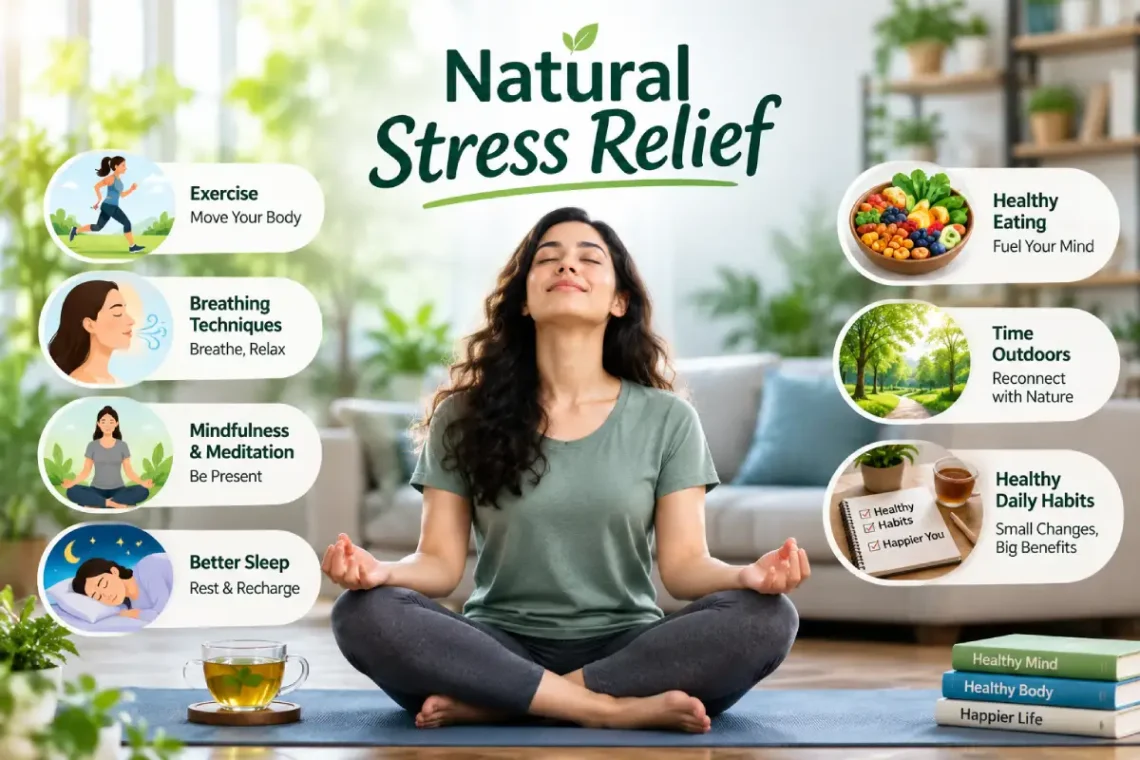
Natural stress relief is about building basic healthy habits into your routine that allow your mind and body to rest from life’s stresses. Movement, slow breathing, mindfulness, a good sleep regime, nutrition, spending time outside and consistent routine practices are some of the best natural techniques you can introduce.
Actually, stress is a natural response in challenging situations however it’s when it remains elevated or happens too often that the problems are created. Frequent or ongoing stress will then have an impact on a number of things; sleep, concentration, behavior and in the end physical health.
Building healthy habits is an important part of stress management, helping you respond to everyday pressure in a healthier and more sustainable way.
❝
This article is a part of
Stress Management Hub
What Are Natural Ways to Relieve Stress?
Common types of effective natural stress relievers fall into the following few categories:
- Physical activity
- Slow breathing & relaxation
- Mindfulness/Meditation
- Restorative and reliable sleep
- Healthy eating
- Being outdoors in nature
- Strong social networks
- Healthy lifestyle habits
There really is no such thing as the single ‘best’ natural stress reliever for everyone. Finding a routine that can incorporate several elements will provide more sustained relief then one method or type of activity alone.
2026 evidence snapshot
Along with lifestyle changes, learning practical stress management techniques can give you additional tools for reducing tension and handling stressful situations.
| Strategy | Evidence/health guidance | Main benefit | Ease of starting |
| Walking/exercise | Strong | Reduces anxiety and supports mood | ⭐⭐⭐⭐⭐ |
| Slow breathing | Supported | Promotes relaxation | ⭐⭐⭐⭐⭐ |
| Mindfulness | Supported | May reduce perceived stress | ⭐⭐⭐⭐ |
| Sleep routine | Strong | Supports physical and emotional recovery | ⭐⭐⭐⭐ |
| Healthy diet | Strong | Supports overall well-being | ⭐⭐⭐⭐⭐ |
| Nature exposure | Growing evidence | May improve well-being | ⭐⭐⭐⭐⭐ |
| Social connection | Supported | Helps coping and emotional well-being | ⭐⭐⭐⭐ |
According to the CDC, just one bout of moderate to vigorous physical activity may produce short-term health benefits, such as a decrease in anxiety and better quality of sleep.
Exercise for Natural Stress Relief
Exercise is probably the easiest way that you can contribute to your body’s own stress relief mechanism. However, you won’t need to go to the gym and push yourself through grueling physical exertion. Simply walking, biking, swimming, or perhaps doing some stretching, yoga or simply another activity you enjoy, will enable you to get some exercise.
Try starting with:
- A 10–20 minute walk
- Gentle stretching after work
- A short yoga session
- Taking the stairs when practical
- Dancing to a few favorite songs
Emphasize persistence over pushing yourself too hard; pick an exercise that brings you pleasure.
Breathing and Relaxation Techniques
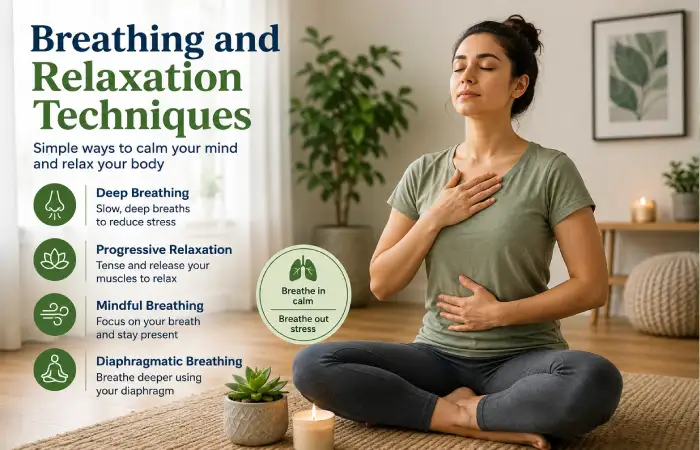
You may breathe more rapidly and less deeply under stress. Slowing down your breathing in a conscious way can promote the relaxation response.
NCCIH indicates that relaxation response can be stimulated with deep breathing, progressive relaxation, guided imagery and other ways, which helps reach a state with better physiological functions.
Try this simple breathing exercise
- Sit comfortably.
- Relax your shoulders.
- Breathe gently through your nose.
- Exhale slowly.
- Continue for 2–5 minutes.
- Stop if you feel dizzy or uncomfortable.
Regular movement can support both physical and emotional well-being, so adding stress relief exercises such as walking, stretching, yoga, or cycling can be a simple way to manage everyday stress.
You don’t need complicated breathing patterns. The goal is comfortable, controlled breathing—not forcing yourself to hold your breath.
Mindfulness and Meditation
Mindfulness has been defined as the voluntary focus of your attention on the present moment, without judging your immediate experience. Beginners don’t need to spend more than five minutes learning how:
1. Find a quiet place.
2. Focus on breathing.
3. Concentrate on physical feelings.
4. Let go of scattered thoughts, guiding your attention back when it wanders.
Studies, according to an article summarized by NCCIH, indicate that meditation and mindfulness may relieve symptoms of stress and anxiety, although outcomes differ greatly according to each person and method used. Note: Medication shouldn’t be used as an alternative for professional therapy when in the midst of serious anxiety, depression, or other mental illness issues.
Sleep and Stress Relief
Usually, having a poor sleep can amplify how demanding daily stress can appear, while chronic stress can usually amplify how demanding poor sleep can appear. Adults are supposed to obtain 7 hours of sleep per night. While in the year of 2026, roughly 30.5% of American adults obtained less than a desirable portion of sleep, as shown by the CDC.
- Try setting up a basic routine.
- Try to stay on the same sleep schedule each day.
- Make the bedroom quiet and dark and comfortable.
- Stay away from a lot of screens when you go to bed at night and the large meal you are eating close to then.
- Caffeine is better kept out of your system later in the day than being put in it and exercise helps your body rest and fatigue later on.
If workplace demands are contributing to your stress, combining natural relaxation habits with strategies for managing work stress can help you create healthier boundaries and routines.
Always discuss problems with your sleep that might be stress related to a professional, it may be something that is beyond “sleep hygiene.”
Healthy Eating and Stress
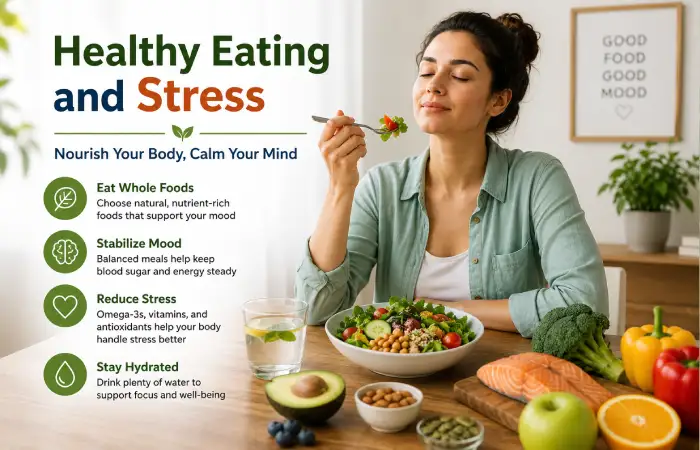
According to the WHO , the best diet is a varied one of “appropriate staple foods including whole grains or other staple foods, vegetables, fruit, nuts and appropriate protein sources along with limited quantities of salt, free sugar and unhealthy fats.”
Everyday advice for dealing with stress include:
* Make sure not to regularly skip meals.
* Make sure to always include fruit and veg.
* opt for slightly more minimally processed foods in your diet.
* make sure to consume fluids.
* Reduce overall consumption of caffeine if it makes you hyper or feel anxious.nd “sleep hygiene.”
Natural vs. “natural supplement” isn’t the same thing
Mindfulness is another simple approach to natural stress relief, and practicing mindfulness for stress can help you focus on the present moment rather than becoming overwhelmed by stressful thoughts.
| Option | What to consider |
| Walking | Low cost, easy to begin |
| Breathing practice | Free and portable |
| Meditation | Free or low-cost |
| Herbal tea | Can be relaxing, but ingredients matter |
| Essential oils | Evidence varies; safety and allergies matter |
| Supplements | Evidence and interactions vary considerably |
“Natural” does not automatically mean safe or effective. NCCIH specifically recommends discussing complementary approaches with healthcare professionals when appropriate.
Spending Time Outdoors and Stress
A change of environment can provide a useful mental reset.
Try:
- Walking through a park
- Gardening
- Sitting outside without your phone
- Eating a meal outdoors
- Taking a weekend nature walk
Cleveland Clinic includes spending time in nature among practical stress-relief approaches.
You don’t need an expensive vacation. A nearby green space can be enough to introduce a calming break into your day.
Building Healthy Daily Habits
The biggest benefit comes from turning individual techniques into a repeatable routine.
A simple natural stress-relief routine
Morning:
5 minutes of mindful breathing + brief movement
Midday:
10–20 minute walk or outdoor break
Afternoon:
Regular meal + short screen break
Evening:
Gentle stretching + reduced stimulation
Before bed:
Consistent bedtime + relaxing activity
When Natural Stress Relief Isn’t Enough
While natural stress relief methods are good for common everyday pressures they should not take priority over getting professional help, particularly when it is not responding or difficult to deal with. It would be wise to speak with your doctor about stress if it:
- Is ongoing and is beginning to effect your lifestyle.
- Is constantly disturbing your sleep.
- If you seem unusually down or anxious and worried.
- Is difficulty managing work or your social relationships.
- Physical signs.
Final Takeaway
You can also incorporate meditation techniques for stress into your routine as a simple way to encourage relaxation and create a calmer transition between busy parts of the day.
Natural stress relief functions best as a whole collection of small, easy habits rather than one magic bullet. It starts with the basics: exercising your body, slowing down your breath, catching enough sleep, fueling with nutritious food, being out in nature and creating time for genuine renewal in your life.
Afiya Jafar is a fitness and wellness writer who focuses on making health, exercise, and healthy lifestyle information simple and practical. Her work covers workouts, fitness motivation, strength training, nutrition, weight management, stress management, mindfulness, and everyday wellness.
Read Full Bio of Afiya Jafar →
Sameena Begum reviews selected health, wellness, fitness, and digital content for clarity, factual presentation, consistency, and reader usefulness. Her review work helps maintain clear and responsible editorial standards across PhysicalFitt content.
Read Full Bio of Sameena Begum →
Dr. Khizrana Begum is a qualified medical professional with MBBS and MD qualifications and 5+ years of experience in the medical field. She works as a General Physician and Dermatologist, with expertise in general medicine, dermatology, preventive healthcare, and skin health.
Read Full Bio of Dr. Khizrana Begum →