
 Afiya Jafar
Fitness & Wellness Writer
Afiya Jafar is a fitness and wellness writer who focuses on making health, exercise, and healthy lifestyle information simple and practical.
Read Full Bio of Author →
Afiya Jafar
Fitness & Wellness Writer
Afiya Jafar is a fitness and wellness writer who focuses on making health, exercise, and healthy lifestyle information simple and practical.
Read Full Bio of Author →
 Sameena Begum
Health, Fitness & Digital Content Reviewer
Sameena reviews selected health, wellness, fitness, and digital content for clarity, factual presentation, and reader usefulness.
Read Full Bio of Reviewer →
Sameena Begum
Health, Fitness & Digital Content Reviewer
Sameena reviews selected health, wellness, fitness, and digital content for clarity, factual presentation, and reader usefulness.
Read Full Bio of Reviewer →
 Dr. Khizrana Begum
General Physician & Dermatologist
Dr. Khizrana Begum is a General Physician and Dermatologist with MBBS and MD qualifications and 5+ years of experience in the medical field.
Read Full Bio of Medical Reviewer →
Dr. Khizrana Begum
General Physician & Dermatologist
Dr. Khizrana Begum is a General Physician and Dermatologist with MBBS and MD qualifications and 5+ years of experience in the medical field.
Read Full Bio of Medical Reviewer →
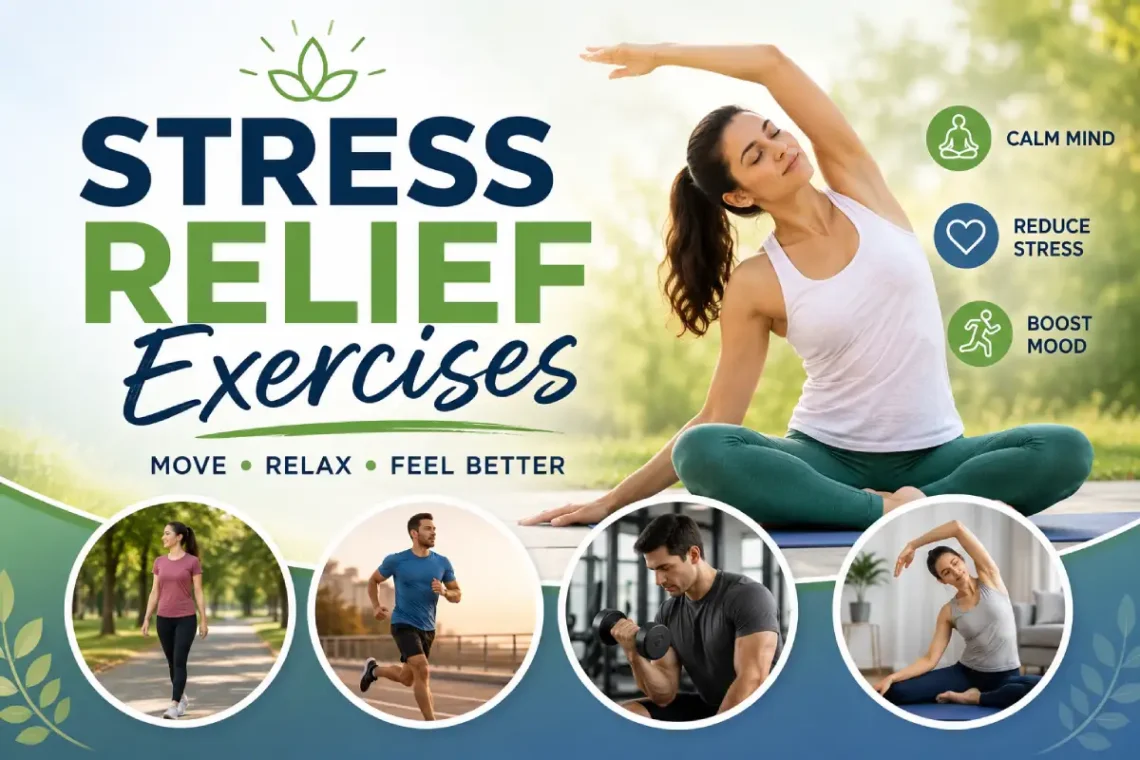
Working out is the perfect way to clear your mind, release tension, and take care of your entire being. You don’t need an expensive or intense workout or a membership to a gym-a quick run, a mini cardio session, a weightlifting program, or a stretching workout can become part of your stress management toolkit.
Researchers continue to reinforce the strong link between exercise and the mind. A systematic review and network meta-analysis of 25 randomized controlled trials with 2,127 university students reported improvements in stress, anxiety and depression from physical exercise, though for this particular 2026 study, aerobic activity offered the most convincing comparative signal for decrease in stress, while researchers cautioned substantial variation between results did not support the superiority of any one specific workout.
Regular exercise can be an important part of a broader stress management routine, especially when combined with healthy sleep, relaxation, and lifestyle habits.
❝
This article is a part of
Stress Management Hub
Can Exercise Help Reduce Stress?
That’s a big ‘yes’. Exercise benefits the body’s reaction to stress in a few different ways:
Your mood will feel better, a few feel-good neurotransmitters will be released from your body, your mind will briefly be diverted away from the stressor, and the benefits also affect how you sleep! The Mayo Clinic calls exercise ‘meditation in motion’. Paying attention to how the body is feeling during a particular action can distract your mind from day-to-day issues.
There is no need to begin the process with some extremely vigorous workout – The CDC states that some activity is always better than none, and can be spread out into several different times during the week.
Best Exercises for Stress Relief
The best stress relief exercise is usually one that you enjoy, can perform safely, and are likely to do consistently.
Along with physical activity, learning practical stress management techniques can give you additional ways to manage tension and respond to everyday stress.
| Exercise | Equipment | Best for | Beginner time |
| Walking | Comfortable shoes | Everyday stress | 10–30 min |
| Cycling | Bicycle | Cardio + mood | 15–30 min |
| Swimming | Pool | Low-impact cardio | 20–30 min |
| Strength training | Optional weights | Physical and mental resilience | 20–40 min |
| Yoga | Mat optional | Stress + flexibility | 10–30 min |
| Stretching | None | Muscle tension | 5–15 min |
| Dancing | None | Mood + movement | 10–30 min |
| Tai chi | None | Gentle mind-body movement | 10–20 min |
Walking for Stress Relief
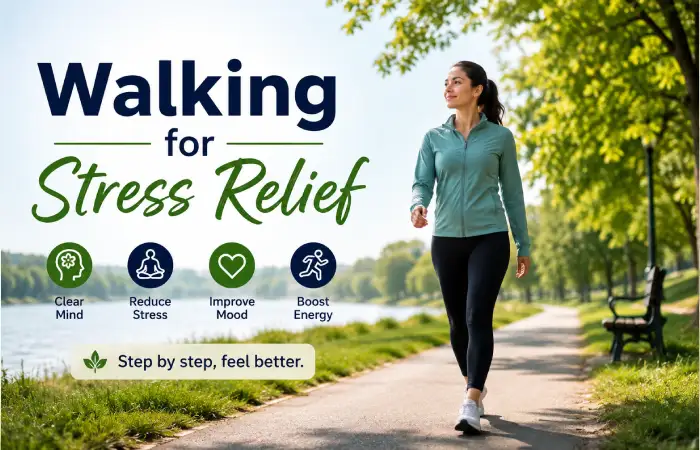
One of the simple exercises to release tension is by walking. You do not need to prepare a lot of anything for this particular exercise and it will be suitable for nearly every one of us regardless of the condition of our health. You can do for 10-20 min rapid walk through the most overwhelming hours of the day.
Where possible try and walk outside and do not look at your cellular phone or not over thinking about what you have to do while you walk, try to only think about the environment around you while you exercise.
And with long-term targets in mind current guidelines from the CDC say that adults should aim to receive a minimum of 150 minutes a week of moderate cardio, together with muscle-strengthening exercise for at least 2 days. However, this weekly amount can also be done in smaller installments. So, for instance, you can perform five 30-minute walks on weekdays.
Cardio Exercises and Stress
Get your heart pumping. A great way to use cardiorespiratory exercise to de-stress is to build it into your workout plan.
Good options include:
- Brisk walking
- Jogging
- Cycling
- Swimming
- Dancing
- Stair climbing
A 2026 network meta-analysis suggests aerobic exercise provides strongest comparative evidence for stress reduction of the exercise types explored, though notes low certainty of evidence.
If new to exercise,begin slowly and build your length and intensity.
Strength Training and Stress
Strength training isn’t only about building muscle. It can also become part of a balanced stress-management routine.
You can start with bodyweight exercises such as:
- Squats
- Wall push-ups
- Glute bridges
- Lunges
- Modified planks
It does not have to be ambitious. A quick, full-body workout, to which you look forward, will typically be sustainable over that of a draining mandatory one.
If work is a major source of pressure, combining regular movement with strategies for managing work stress can help you build a healthier approach to workplace demands.
Stretching and Relaxation Exercises
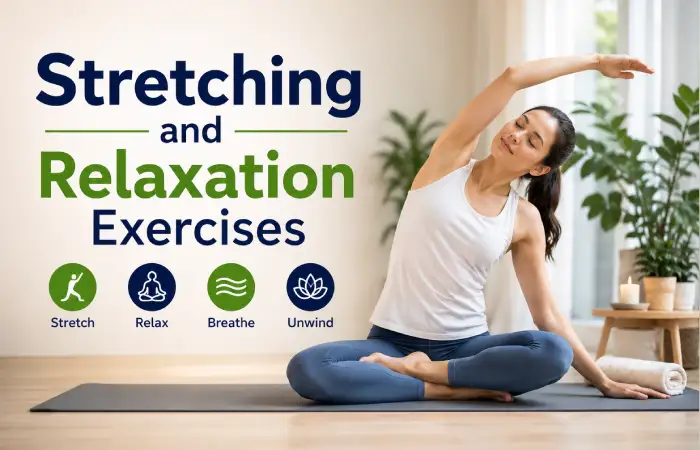
Where physical tension accompanies psychological stress (particularly to the neck, shoulder and back) gentle stretches will help to take you slowly toward releasing tension in your body and increase awareness of where you store it.
Practices such as Yoga, which integrate movement and breath with an attention component, fall under this heading.Examples include:
- Neck and shoulder stretches
- Chest-opening stretches
- Cat-cow movements
- Hamstring stretches
- Gentle yoga
- Tai chi
The research evidence for specific mind-body techniques can be inconsistent. For instance, NCCIH says the evidence about yoga, tai chi, and Qigong as treatments for anxiety and stress is less well-established then is the evidence for exercise more generally, although studies suggest some may be effective.
How Long Should You Exercise for Stress Relief?
There is no magic number, but for the average adult health recommendations say we should achieve 150 minutes of moderate aerobic activity per week or 75 minutes of vigorouse per week and muscle strengthening activities twice per week minimum.For stress specifically, consider this practical progression:
5–10 minutes:
A useful starting point when you’re busy or overwhelmed.
10–30 minutes:
A realistic daily stress-management session for many beginners.
30+ minutes:
A useful target when you have the time and your fitness level allows it.
The important thing is consistency rather than trying to compensate with occasional exhausting workouts.
Exercise can also be combined with other forms of natural stress relief, such as healthy sleep habits, slow breathing, mindfulness, and spending time outdoors.
How to Create a Stress-Relief Workout Routine
A simple weekly routine could look like this:
| Day | Time | Activity |
| Monday | 30 min | Brisk walking |
| Tuesday | 20–30 min | Strength training |
| Wednesday | 30 min | Walking + stretching |
| Thursday | 20 min | Yoga or gentle movement |
| Friday | 30 min | Brisk walking or cycling |
| Saturday | 20–30 min | Strength training |
| Sunday | 20–30 min | Easy walk + stretching |
For an approach that combines awareness with movement, practicing mindfulness for stress can complement activities such as walking, stretching, and other gentle exercises.
This is good as it incorporates aerobic exercise, strength work and movement at a lower intensity than would normally be the case instead of one exercise focus.
Similar advice from the American Heart Association suggests that at least 150 minutes of moderate intensity aerobics or 75 minutes of vigorous activity per week is recommended, with strength training advised twice a week or more. They also note people should ease into activity gently.
General advice: do what you are going to do
There is no point choosing running for your stress relief programme if you get enjoyment from nothing else. Walking, swimming, dancing, swimming, cycle or strength training are just a few examples of the activities that can be performed and bring you the benefits of movement.
Mayo Clinic has also said to pick things that are enjoyable, try to schedule exercise into your day and even shorter bursts of movement can be put together at various times of the day.
You can also pair exercise with meditation techniques for stress to create a more balanced routine that supports both physical activity and relaxation.
Final Takeaway
Relief exercises doesn’t have to be complex. Begin with moving in a way that you love – going for a walk, short cardio routine, light stretch, dancing, strength training or yoga and work to gradually build a ritual that can be upheld. Strongest protocol doesn’t mean the most strenuous exercise or activity.
Regular movement should be integrated that makes lifestyle changes with reasonable fitness goals possible.
To stay healthy try to achieve150 minutes/week moderate physical activity planwith two muscle strength-building workouts/week adapted to your individual fitness level and health condition.
Afiya Jafar is a fitness and wellness writer who focuses on making health, exercise, and healthy lifestyle information simple and practical. Her work covers workouts, fitness motivation, strength training, nutrition, weight management, stress management, mindfulness, and everyday wellness.
Read Full Bio of Afiya Jafar →
Sameena Begum reviews selected health, wellness, fitness, and digital content for clarity, factual presentation, consistency, and reader usefulness. Her review work helps maintain clear and responsible editorial standards across PhysicalFitt content.
Read Full Bio of Sameena Begum →
Dr. Khizrana Begum is a qualified medical professional with MBBS and MD qualifications and 5+ years of experience in the medical field. She works as a General Physician and Dermatologist, with expertise in general medicine, dermatology, preventive healthcare, and skin health.
Read Full Bio of Dr. Khizrana Begum →