
 Afiya Jafar
Fitness & Wellness Writer
Afiya Jafar is a fitness and wellness writer who focuses on making health, exercise, and healthy lifestyle information simple and practical.
Read Full Bio of Author →
Afiya Jafar
Fitness & Wellness Writer
Afiya Jafar is a fitness and wellness writer who focuses on making health, exercise, and healthy lifestyle information simple and practical.
Read Full Bio of Author →
 Sameena Begum
Health, Fitness & Digital Content Reviewer
Sameena reviews selected health, wellness, fitness, and digital content for clarity, factual presentation, and reader usefulness.
Read Full Bio of Reviewer →
Sameena Begum
Health, Fitness & Digital Content Reviewer
Sameena reviews selected health, wellness, fitness, and digital content for clarity, factual presentation, and reader usefulness.
Read Full Bio of Reviewer →
 Dr. Khizrana Begum
General Physician & Dermatologist
Dr. Khizrana Begum is a General Physician and Dermatologist with MBBS and MD qualifications and 5+ years of experience in the medical field.
Read Full Bio of Medical Reviewer →
Dr. Khizrana Begum
General Physician & Dermatologist
Dr. Khizrana Begum is a General Physician and Dermatologist with MBBS and MD qualifications and 5+ years of experience in the medical field.
Read Full Bio of Medical Reviewer →
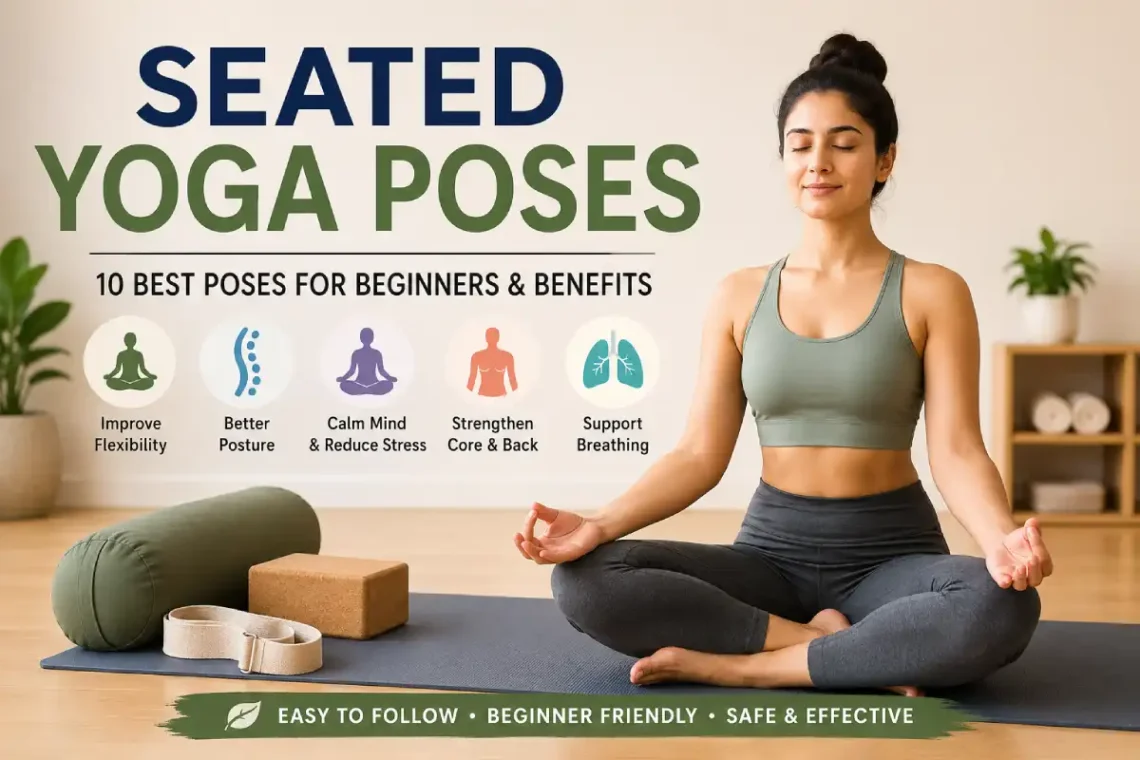
A seated practice is a good place to begin with practicing range of motion, awareness of breath, or any movement without standing up. Standing postures may make us unstable, whereas many of the below exercises use the seated posture as our base and have ways they are modified using a folded blanket, yoga block, strap, bolster, or even a chair.
In current teaching resources, the below standing yoga postures, are many seated or can easily adapted for the seated practice into some of the below categories: criss-cross legs, legs straight and a twist, a forward fold and a variation in a chair, kneeling postures, etc. Most postures have a modified approach and will suit and be adjusted to whatever flexibility levels you currently possess.
Editor’s note: yoga may not be substituted for diagnosis of the medical condition, should not be a substitute for medical treatment and no position should be pushed with pain.
❝
This article is a part of
Yoga Hub
Benefits of Seated Yoga Poses
These poses are helpful when you need to work out with the benefit of lower-impact movements, while increasing the control of how you position yourself. Yoga Basics says that these poses open up and work on the flexibility of our joints, while “creating an stable base to draw energy for breathing and meditation.”
Seated poses are one of many ways to practice yoga, whether your goal is mobility, relaxation, strength, or mindfulness. Explore our complete collection of yoga poses to discover more options for your practice.
These poses can:
-
-
- Open the hips, hamstrings, ankles, spine and shoulder joints.
- Promote improved posture awareness as you work on sitting up tall, spine long.
- Safely allow for work within the hamstrings and on your back-body by bending forward from seated positions.
- Enhance your ability to engage mindful, calm breathing.
- Create a stable seat and open the body up for pranayama and meditation.
- Take the balance challenge out, so it might be easier to move deeply into hamstring and hip opening
-
Importantly, “seated” does not automatically mean “easy.” Lotus, Cow Face, Compass, and some deep forward folds can be demanding. Start with poses that allow you to maintain comfortable breathing and good alignment.
Best Seated Poses for Beginners
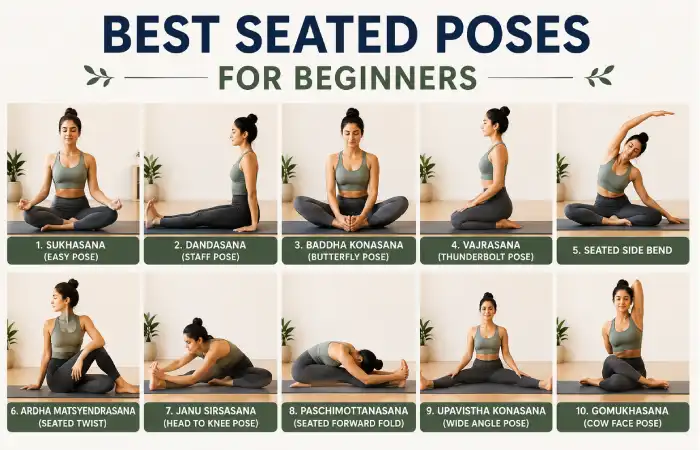
Here are some of the most useful poses to learn first.
Seated positions can provide a stable foundation for gentle stretching and mobility work. If you’re looking to improve your overall range of motion, explore these yoga poses for flexibility.
| Pose | Main focus | Beginner level | Useful modification |
| Sukhasana (Easy Pose) | Hips, posture, breathing | Easy | Sit on folded blanket |
| Dandasana (Staff Pose) | Spine, legs, alignment | Easy | Bend knees slightly |
| Baddha Konasana (Butterfly Pose) | Inner thighs, hips | Easy | Support knees with cushions |
| Vajrasana (Thunderbolt Pose) | Ankles, hips, upright sitting | Easy–Moderate | Place cushion between hips and heels |
| Seated Side Bend | Side body and ribs | Easy | Reduce range of motion |
| Ardha Matsyendrasana (Seated Twist) | Spinal rotation | Moderate | Keep the twist gentle |
| Janu Sirsasana | Hamstrings and hips | Moderate | Bend the extended knee |
| Paschimottanasana | Hamstrings and back body | Moderate | Use a strap; avoid forcing the fold |
| Upavistha Konasana | Inner thighs and hamstrings | Moderate | Keep legs narrower |
| Gomukhasana (Cow Face Pose) | Hips and shoulders | Moderate | Use a strap between hands |
-
-
-
Sukhasana — Easy Pose
-
-
Come to a tall, cross-legged position resting on your sit bones. Your spine is long and straight; avoid forcefully tucking your shoulder blades backward. Your hands rest on your lap as you are breathing.
You will use Sukhasana during your meditation and pranayama practice.
-
-
-
Dandasana — Staff Pose
-
-
If your hips are more forward than your knees (high above your sit bones) and your back rounding, pad your hips with a folded blanket. You’ll be sitting upright and extend your legs straight out in front of you with your feet flexed and your hands placed to the sides of your hips. This pose is more of a foundational seated pose and the intent is to experience an upright seated spine.” According to Verywell Fit, “staff posesits seated twinto Mountain pose is intended to prepare the body for other poses.”
-
-
-
Baddha Konasana — Butterfly Pose
-
-
Bring the soles of the feet together, and just let the knees open outwards naturally. Your spine should be long.
There is nothing wrong with reaching for a pillow for support under the thighs if you are tight – just dont try to press your knees towards the ground at all!!
-
-
-
Vajrasana — Thunderbolt Pose
-
-
Now place yourself in a kneeling position back against your feet with a long tall straight back and relaxed shoulders. Use a blanket or block under your seat bones if your knees or ankles are tight or find a modified version.
-
-
-
Seated Side Bend
-
-
Start with a simple seated position. Lift your right arm up and bend towards the left, staying as anchored as you can with the base of the pelvis on the floor. It’s a simple modification for those of us seeking some side body stretching that isn’t too taxing.
Some seated movements can be adapted to focus on gentle mobility, particularly when you want a slower-paced practice. For a more targeted approach, explore these yoga poses for back pain.
Improving Flexibility and Posture
Flexibility should be developed gradually rather than forced.
This is a really common beginner trap – the need to touch toes/floor/knees wins over spinal alignment. Prioritise the quality of the movement
Try these three principles:
-
-
- Elevate your hips.
You can fold a blanket, take a firm cushion or a yoga block to take any pressure off and help you sit up. - Bend the knees when necessary.
In forward folds, slightly bent knees can make it easier to maintain a more comfortable spinal position. - Use props instead of forcing range.
Yoga Basics specifically recommends blankets, blocks, bolsters and straps as useful modifications for seated poses.
- Elevate your hips.
-
Recommended setup by goal
| Your goal | Start with | Helpful prop |
| Better sitting posture | Sukhasana, Dandasana | Folded blanket/block |
| Hip mobility | Baddha Konasana | Cushion/block |
| Hamstring flexibility | Janu Sirsasana | Yoga strap |
| Gentle spinal mobility | Seated twist | Block |
| Meditation | Sukhasana, Vajrasana | Cushion/bolster |
| Relaxed practice | Supported seated poses | Bolster |
Seated yoga can also create a comfortable setting for controlled breathing, meditation, and relaxation. If your primary goal is to unwind, explore these yoga poses for stress relief.
Meditation-Friendly Yoga Poses
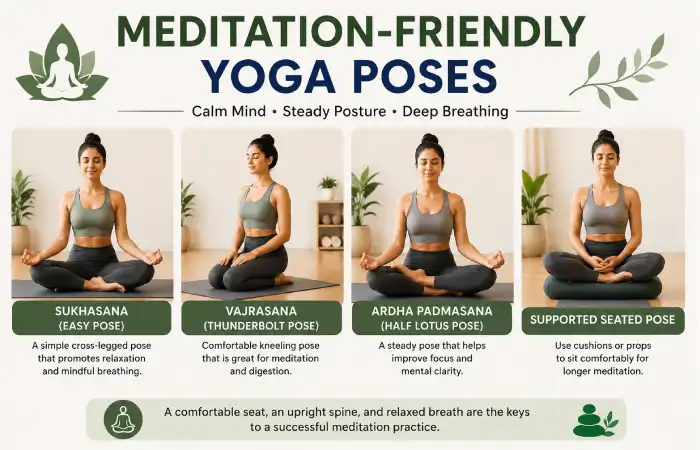
The posture you sit in does not have to be elaborate and impressive in any sense. It should be the one position that will allow you to sit with fairly limited movement and breathe in some relative comfort for some time.
Good starting options include:
-
-
- Sukhasana – Usually the most comfortable cross-legged meditation seat.
- Vajrasana – A possibility for those who have difficulty in cross-legged positions and whose knees/ankles will tolerate it.
- Half Lotus – A further possibility for those who have more experience or are able to comfortable position their legs.
- Supported seated position – Bringing the hips up on to a cushion or folded blanket can help make longer sitting positions feel more comfortable.
-
As the book Yoga Basics states, “Simple seated postures provide good anchors for meditation and yogic breathing. Contemporary guidelines, such as a recently 2026 published version for meditational asanas, also advocate comfortability, stability, an elongated spine and an ability to remain relaxed.”
As Yoga Journal advises against it, you don’t have to put yourself through the wringer trying to assume Full Lotus when you meditate. Verywell Fit even cautions that Lotus can be “hard on the beginner,” and even asanas like Half Lotus can be a better choice for a new yogi.
You can balance a seated practice with movements that build stability and body awareness while standing. Explore these standing yoga poses for a different style of movement.
Yoga Props: What Is Actually Worth Buying?
You do not need expensive equipment to begin. A folded blanket can often substitute for a dedicated yoga cushion during your first sessions.
| Prop | Best for | Priority for beginners |
| Folded blanket | Raising hips and padding knees | ★★★★★ |
| Yoga block | Support and reducing reach | ★★★★★ |
| Yoga strap | Forward folds and flexibility work | ★★★★☆ |
| Bolster | Meditation and restorative support | ★★★★☆ |
| Yoga mat | Grip and floor comfort | ★★★★☆ |
For reference, here are some indicative prices based on current Indian market listings. Yoga blocks currently are around ₹170-700. Straps ₹150-700.
Bolsters generally anywhere from 800-2,200, this may vary depending on construction/brand of what one you get. These prices change constantly, so regard the figures only as approximate.
Safe Practice Tips
Seated yoga still requires attention to alignment and individual limitations.
-
- Warm up before deeper stretches.
- Move slowly into forward folds and twists.
- Don’t force or bounce the joints in an attempt to go through its full range of motion.
- Cease if you encounter any sudden or sharp pain or if the existing pain is increased.
- Instead of holding your breath, you should breathe normally and regularly.
- Use props when they improve comfort or alignment.
- Beginners should not rush into advanced Lotus, deep binds, or extreme hip-opening positions.
- Consult your health professional about the benefits of a specific exercise if you already have a specific injury, have consistent pain, have severe joint issues, have another specific health concern.
Verywell Fit website mentions that you can adapt seated positions using blocks or blankets and specifically mentions that Lotus posture is not suited for Beginners.
Troubleshooting: Why Does My Back Round?
If your lower back immediately rounds in Sukhasana or a forward fold, don’t try to “stretch harder.”
Instead:
-
-
- Sit on a folded blanket or block.
- Move your weight slightly forward onto your sitting bones.
- Bend your knees if you are doing a forward fold.
- Reduce the depth of the pose.
- Focus on lengthening the spine before moving forward.
-
The goal is a comfortable, sustainable position—not touching your toes.
A Simple 10-Minute Seated Yoga Sequence
If you’re new to seated yoga, try this gentle sequence:
1 minute: Comfortable breathing in Sukhasana
1 minute: Neck and shoulder movements
1 minute: Seated side bends
2 minutes: Baddha Konasana
2 minutes: Gentle Janu Sirsasana
1 minute: Seated spinal twist on each side
2 minutes: Quiet meditation in a comfortable seated position
Stay within a range that feels controlled. If a pose creates pain rather than a manageable stretch or movement sensation, come out of it.
As your strength, flexibility, balance, and body awareness develop, you may want to gradually explore more challenging movements. These advanced yoga poses can provide options for progressing your practice.
FAQs
What seated yoga poses are suitable for beginners?
Sukhasana, Dandasana, Baddha Konasana, simple seated side bends and supported Janu Sirsasana could be useful as options to get started. Begin with whichever of these postures allow you to breathe freely and without constraint.
Can yoga be performed fully while seated?
Yes. A routine carried out seated or in a chair might include a sequence to improve mobility and stretching through breathwork and movement along with a sitting meditation. Chair yoga might adapt existing poses which require you to maneuver from standing to the floor to an accessible alternative.
Which seated yoga pose is best for meditation?
Sukhasana might feel like an accessible and practical posture from which many beginners can begin. Alternatively, depending on your range of movement and how you are comfortable seating yourself a seated position which may be supported could work along with Vajrasana and Half Lotus pose, none of which are exclusive options to consider.
Do seated yoga poses help with flexibility?
Seated postures might be seen to complement the goal of improving flexibility and enhancing the range of motion around such areas as the hips, hamstrings, leg joints and also along the spine. Each practitioner will need to explore how the sequences effect you individually. Improvement need to be mindful, gradual and not push joints.
Is Lotus pose good for beginners?
I wouldn’t describe sitting in full Lotus as the ideal posture for all new practitioners, as such posture places demands on the hips and, should you force yourself into the position, the knees too. Take a look atSukhasanainstead.
Can I use a chair for seated yoga if floor work is a challenge?
Of course; an adaptive chair sequence will enable you to participate even if maneuvering down to or from the floor presents challenges
Final Takeaway
The hardest seated yoga postures aren’t necessarily the deepest or the most involved. The consistency, easy breathing, slow movements, and adequate support, rather than how deeply your poses can remain performed, are important for the beginner seated yoga.
Begin by working through Sukhasana, Dandasana, Baddha Konasana, subtle twists, and supported forward folds, to be explored more extensively when the body’s own flexibility has increased, and there is greater proprioception awareness.
Afiya Jafar is a fitness and wellness writer who focuses on making health, exercise, and healthy lifestyle information simple and practical. Her work covers workouts, fitness motivation, strength training, nutrition, weight management, stress management, mindfulness, and everyday wellness.
Read Full Bio of Afiya Jafar →
Sameena Begum reviews selected health, wellness, fitness, and digital content for clarity, factual presentation, consistency, and reader usefulness. Her review work helps maintain clear and responsible editorial standards across PhysicalFitt content.
Read Full Bio of Sameena Begum →
Dr. Khizrana Begum is a qualified medical professional with MBBS and MD qualifications and 5+ years of experience in the medical field. She works as a General Physician and Dermatologist, with expertise in general medicine, dermatology, preventive healthcare, and skin health.
Read Full Bio of Dr. Khizrana Begum →