
 Afiya Jafar
Fitness & Wellness Writer
Afiya Jafar is a fitness and wellness writer who focuses on making health, exercise, and healthy lifestyle information simple and practical.
Read Full Bio of Author →
Afiya Jafar
Fitness & Wellness Writer
Afiya Jafar is a fitness and wellness writer who focuses on making health, exercise, and healthy lifestyle information simple and practical.
Read Full Bio of Author →
 Sameena Begum
Health, Fitness & Digital Content Reviewer
Sameena reviews selected health, wellness, fitness, and digital content for clarity, factual presentation, and reader usefulness.
Read Full Bio of Reviewer →
Sameena Begum
Health, Fitness & Digital Content Reviewer
Sameena reviews selected health, wellness, fitness, and digital content for clarity, factual presentation, and reader usefulness.
Read Full Bio of Reviewer →
 Dr. Khizrana Begum
General Physician & Dermatologist
Dr. Khizrana Begum is a General Physician and Dermatologist with MBBS and MD qualifications and 5+ years of experience in the medical field.
Read Full Bio of Medical Reviewer →
Dr. Khizrana Begum
General Physician & Dermatologist
Dr. Khizrana Begum is a General Physician and Dermatologist with MBBS and MD qualifications and 5+ years of experience in the medical field.
Read Full Bio of Medical Reviewer →
The Key to a Powerful Weight-Loss Gym Card-No, it’s not as simple as “doing more”: When done with the right format (sets, rests, intervals, timing) and intensity, a cardio workout for fat loss can be incredibly effective. This guide shows you the evidence-based method-plus a beginner plan-and a sample week that guarantees to keep fat at bay.
❝
This article is a part of
Cardio Hub
Why Cardio Helps Burn Fat
Cardio is essential for weight loss for one simple reason; cardio burns the maximum calories of your body. Your heart rate is accelerated in a cardio gym for weight loss. This elevates demand and forces the body to mobilize energy stores to be consumed.
How Cardio Creates a Calorie Deficit
Fat loss comes down to eating fewer calories than you’re expending, cardio can help speed things along by upping your total daily calorie burn.
- A 30 minute session can torch 150-400+ calories (depending on how intense it is)
- By continuing that on a regular basis, you can effectively add hundreds to thousands of calories burned to your weekly total.
- Supports sustainable, gradual fat loss
While weight loss and fat loss are related, our guide to cardio for fat loss explains how to maximize fat burning while preserving lean muscle.
How the Body Uses Fat During Cardio
Your body has two fuel types for working out:
- Glycogen (stored carbs)-high intensity workout
- Stored fat-lower intensity, long sessions
Once a certain point is reached in your steady state, your body will begin to burn more fat.
Low-Intensity vs High-Intensity Cardio
The different levels of cardio for fat loss have a different effect:
Low-Intensity Steady State (LISS):
- walking or light cycling
- Higher percentage of fat burnt
- suitable for beginners and for longer bouts
High-Intensity Interval Training (HIIT):
- Short bursts of intense effort
- Burns more total calories in less time
- More efficient for busy schedules
The Afterburn Effect (EPOC)
Perhaps the most exciting part of doing high intensity cardio has to be that EPOC is induced.
- Your body continues burning calories after the workout
- Helps increase total daily calorie expenditure
- Supports faster fat loss compared to steady-state alone
Metabolic and Long-Term Benefits
- Boosts metabolism
- Enhances heart and lung health
- Enhances endurance and recovery
- Makes it easier to stay consistent
Best Gym Cardio Exercises for Weight Loss
- Treadmill (Incline Walking / Running)
- Adjustable intensity
- Ideal for fat-burning zones
If the treadmill is your preferred machine, follow our treadmill cardio workout guide for beginner, incline, and interval routines.
- Elliptical Trainer
- Low-impact
- Full-body engagement
- Rowing Machine
- Burns high calories
- Engages upper + lower body
- Stair Climber
- Targets glutes and legs
- High calorie burn
- Stationary Bike
- Beginner-friendly
- Great for longer sessions
If you’re new to fitness, explore our complete guide to cardio exercises in the gym to understand the most effective machines and workout styles for every fitness level.
HIIT Cardio Routine
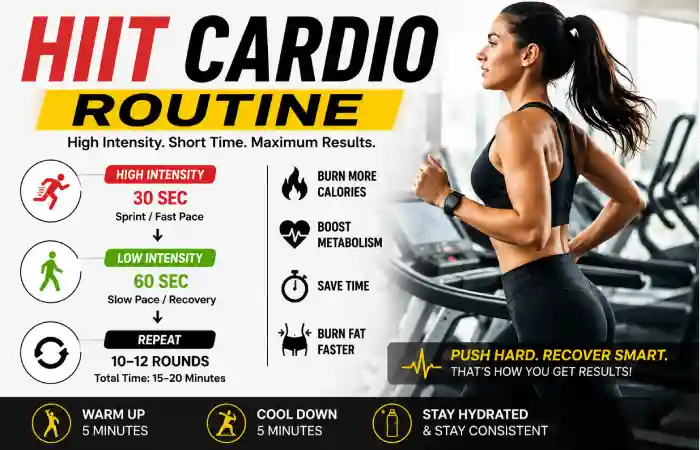
This routine is one of the fastest fat burn methods out there. It’s called aHIIT (High-Intensity Interval Training) cardio workout and it helps because while you don’t spend a long amount of time working out like with standard cardio training. Instead, you cycle through very intense bouts of training and then take short breaks to recuperate.
What is HIIT and How It Works
This type of training requires you to push yourself to your near limits for a very short duration and then rest. This pattern will keep your heart rate high and burning calories. You will usually spend a minute working, then less than a minute recovering.
Work Interval: 20-40 Seconds
Rest Interval: 40-90 Seconds
Total Time: 15-30 Minutes
Once you’ve built a fitness base, HIIT cardio workouts can help increase calorie burn and improve cardiovascular endurance in less time.
Benefits of HIIT for Weight Loss
Many will have you training HIIT to lose fat. Why the hype?
HIIT works it is very effective in fat burning. It changes your biochemistry to become faster. You burn more calories in less time. You’ll also experience EPOC (afterburn effect).
It allows you to keep burning calories for quite sometime after finishing your workout.
Lean muscle is preserved. You reach a extremely high fitness level in a very short time.
Sample 20-Minute HIIT Cardio Routine (Gym)
Warm-up (5 minutes):
Light jogging or brisk walking
Main Workout (15 minutes):
- 30 seconds sprint (treadmill or bike)
- 60 seconds slow pace recovery
- Repeat for 10–12 rounds
Cool-down (5 minutes):
Slow walking + stretching
Beginner vs Advanced HIIT Adjustments
Beginner:
- 15-20 minutes
- Moderate effort instead of all-out sprints
- 1:2 work-to-rest ratio (e.g., sprint for 30 seconds, walk for 60 seconds)
Intermediate/Advanced:
- Near-maximum effort on sprint intervals
- Short rest periods – 1:1 work-to-rest ratio
- Add resistance – a steeper treadmill incline or more resistance on a stationary bike are good options
Best Gym Equipment for HIIT
A good HIIT workout can be done using almost anything on the floor of your gym including:
- Treadmill
- Stationary Bike
- Rowing Machine
- Elliptical
How Often Should You Do HIIT?
- HIIT 2 to 4 times a week should suffice.
- Any more than this will result in too much fatigue and not enough energy for each training session.
- Don’t go too many days in a row Incorporate lower-intensity activity as well
Low-Intensity Fat Burning Workouts
Not everybody has or wants to work at high intensities. For lower intensities you can consider some low intensity stationary cycling at a steady pace, swimming or walking on a flat terrain. You can do these for much longer periods and it will definitely torch calories. I always suggest you alternate your high-intensity workouts with lower intensity exercises and vice versa so that your body gets a variety of challenges and stimulus.
Examples:
- 45–60 min incline walking
- Light cycling
- Elliptical at steady pace
Ideal For:
- Beginners
- Recovery days
- People with joint issues
Weekly Weight Loss Cardio Schedule
You need a strategic weight loss cardio weekly plan. If, for example, you aren’t just going to throw in a few workouts randomly and have your own way about how you approach your workout days, you could plan the days that you’re going to do some combined high and low-intensity cardio so that you get your calories burning as much as you can in a certain amount of time and have days set out so that you get a full rest.
Why You Need a Structured Cardio Plan
Following a weekly schedule helps you:
- Maintain consistency (key for fat loss)
- Balance intensity and recovery
- Avoid overtraining or fatigue
- Track progress more effectively
Wondering about workout timing? Learn whether cardio before or after weight training is better based on your fitness goals.
Beginner Weekly Cardio Schedule
When you’re just starting out at the gym, do it in a manageable manner.
| Day | Workout |
| Monday | 30 min brisk walking (treadmill) |
| Tuesday | Rest or light activity |
| Wednesday | 20 min low-intensity cycling |
| Thursday | Rest |
| Friday | 25 min elliptical |
| Saturday | 30 min incline walking |
| Sunday | Active recovery (walking/stretching) |
Focus: Building consistency and endurance
Just getting started? Our beginner cardio workout plan provides a step-by-step routine to safely improve endurance and burn calories.
Intermediate Weekly Cardio Schedule
Once your fitness improves, you can introduce higher intensity workouts.
| Day | Workout |
| Monday | HIIT (20–25 min) |
| Tuesday | LISS cardio (40 min walk/cycle) |
| Wednesday | Rowing machine (30 min) |
| Thursday | Rest |
| Friday | HIIT (20 min) |
| Saturday | Stair climber (30 min) |
| Sunday | Light walk or recovery |
Focus: Increasing calorie burn and fat loss efficiency
Advanced Weekly Cardio Schedule
For experienced individuals aiming for faster fat loss:
| Day | Workout |
| Monday | HIIT (25 min) |
| Tuesday | LISS (45–60 min) |
| Wednesday | Mixed cardio (row + bike) |
| Thursday | Active recovery |
| Friday | HIIT (20 min) |
| Saturday | Stair climber + incline walk |
| Sunday | Rest |
Focus: Maximizing fat loss while maintaining performance
How to Balance HIIT and LISS
For optimal results:
- Perform 2–4 HIIT sessions per week
- Include 2–3 LISS sessions for recovery and fat burning
- Take at least 1–2 rest days
This balance prevents fatigue while keeping your metabolism active.
Adjusting Your Schedule for Better Results
If you’re not seeing progress:
- Increase workout duration by 5–10 minutes
- Add one extra HIIT session
- Improve workout intensity (speed/resistance)
- Ensure your diet supports a calorie deficit
Diet Tips to Support Cardio Workouts
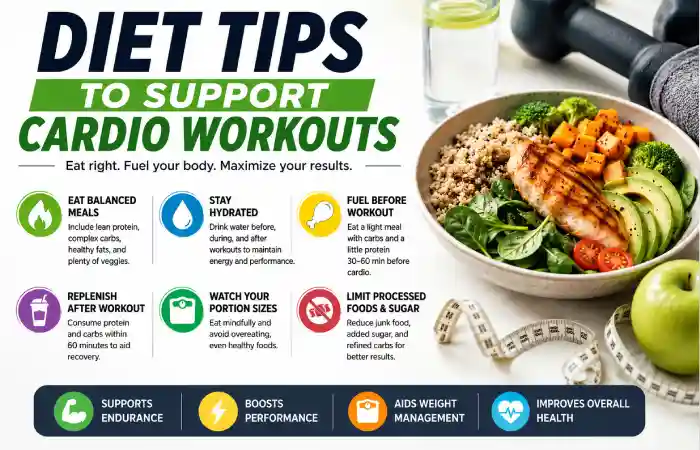
No weight loss through just cardio without clean eating!
Key Principles:
- calorie deficit
- focus on protein 1.2-1.6g per kg
- keep drinking water
- minimize sugars and processed food
Pre vs Post Workout Nutrition
| Timing | What to Eat |
| Before training | Banana + black coffee |
| Before training | Protein + carbs (eggs, chicken, rice) |
Common Weight Loss Mistakes
Avoid these errors that limit results:
- Doing only cardio without strength training
- Overestimating calories burned
- Skipping rest days
- Inconsistent workout schedule
- Poor diet choices
Cardio Equipment Comparison (Gym vs Home)
| Equipment | Gym Version | Home Version | Recommendation |
| Treadmill | Advanced features | Basic models | Gym preferred |
| Bike | High resistance | Compact | Both good |
| Rowing | Professional build | Expensive | Gym better |
| Elliptical | Smooth motion | Limited | Gym better |
Troubleshooting: Not Losing Weight?
If progress stalls, check:
- Are you tracking calories accurately?
- Is your intensity too low?
- Are you getting enough sleep?
- Are you consistent weekly?
Quick Fixes:
- Increase workout intensity
- Add 1–2 HIIT sessions
- Adjust diet calories
FAQ
How much cardio should I do daily for weight loss?
30–60 minutes, 4–6 days per week depending on intensity.
Is HIIT better than steady cardio?
HIIT is faster and burns more calories, but both are effective.
Can I lose weight with cardio only?
Yes, but combining with strength training gives better results.
What is the best time for cardio?
Any time you can stay consistent—morning or evening.
Conclusion
Achieving effective gym cardio for weight loss isn’t all random workout and go. The formula for burning body fat in gym is actually about a combination of cardio: – Hiit workouts; – steady-state cardio; – appropriate dieting and exercise. – a consistent regime on the exercise and the diet. Building a good cardio training program would involve planning of the exercise regime weekly. By then your progress over time can be monitored, and the loss of body fat would appear through a combination of steady loss and consistency.
Afiya Jafar is a fitness and wellness writer who focuses on making health, exercise, and healthy lifestyle information simple and practical. Her work covers workouts, fitness motivation, strength training, nutrition, weight management, stress management, mindfulness, and everyday wellness.
Read Full Bio of Afiya Jafar →
Sameena Begum reviews selected health, wellness, fitness, and digital content for clarity, factual presentation, consistency, and reader usefulness. Her review work helps maintain clear and responsible editorial standards across PhysicalFitt content.
Read Full Bio of Sameena Begum →
Dr. Khizrana Begum is a qualified medical professional with MBBS and MD qualifications and 5+ years of experience in the medical field. She works as a General Physician and Dermatologist, with expertise in general medicine, dermatology, preventive healthcare, and skin health.
Read Full Bio of Dr. Khizrana Begum →