

 Afiya Jafar
Fitness & Wellness Writer
Afiya Jafar is a fitness and wellness writer who focuses on making health, exercise, and healthy lifestyle information simple and practical.
Read Full Bio of Author →
Afiya Jafar
Fitness & Wellness Writer
Afiya Jafar is a fitness and wellness writer who focuses on making health, exercise, and healthy lifestyle information simple and practical.
Read Full Bio of Author →
 Sameena Begum
Health, Fitness & Digital Content Reviewer
Sameena reviews selected health, wellness, fitness, and digital content for clarity, factual presentation, and reader usefulness.
Read Full Bio of Reviewer →
Sameena Begum
Health, Fitness & Digital Content Reviewer
Sameena reviews selected health, wellness, fitness, and digital content for clarity, factual presentation, and reader usefulness.
Read Full Bio of Reviewer →
 Dr. Khizrana Begum
General Physician & Dermatologist
Dr. Khizrana Begum is a General Physician and Dermatologist with MBBS and MD qualifications and 5+ years of experience in the medical field.
Read Full Bio of Medical Reviewer →
Dr. Khizrana Begum
General Physician & Dermatologist
Dr. Khizrana Begum is a General Physician and Dermatologist with MBBS and MD qualifications and 5+ years of experience in the medical field.
Read Full Bio of Medical Reviewer →
Common Rx prescription drugs are drugs prescribed by medical experts to help find, manage, treat or prevent most medical problems that affects most persons. Examples of prescription drugs are pills for the blood pressure and cholesterol, drugs for high blood levels or blood, medicine for common problems like yeast and bacterial infection as well as flu symptoms. We prescribe to manage all kind of illnesses like Asthma, thyroid diseases, mental health, pain and more problems.
These types of prescription pills are not over-the-Counter drugs but drugs that need prescription and authorization from a doctor before taken.
Cold medicines are among the many common medications people may use to manage everyday symptoms and health conditions.
Your right medications, dosage and duration varies from your medical records, previous drugs or your predisposition to some disease risk factors. Never take this types of Rx Drugs until given the direction that it should be taken due to possible side effect and druginteractions and if prescribed do not take other medications on your own accord to prevent your well being.
❝
This article is a part of
Medicines Hub
What Are Prescription Medications?
Prescription drugs are medicines dispensed only on written instructions from health professionals licensed to do so. They may be prescribed to treat acute conditions, such as infections or or for chronic diseases such as high blood pressure, diabetes or high cholesterol.
A medicine’s indications for use (Approved uses), directions (Dosage), contraindications, warnings, drug interactions and adverse effects are all found on its prescription labeling. By law, FDA-approved prescription drugs are required to have prescribing information available designed to make sure the drugs are used safely and effectively.
Prescription medicines may be available under:
- Generic names — the standardized name of the active ingredient.
- Brand names — the manufacturer’s marketed name.
- Different strengths and formulations — such as tablets, capsules, liquids, creams or injections.
Common Types of Prescription Medicines
There are thousands of prescription medicines, but they can be grouped into broad categories based on what they treat.
Because some allergy symptoms can resemble a cold, it is useful to understand how allergy medications differ from medicines used for cold symptoms.
| Typical uses | Medication category | Common examples |
| High cholesterol | Cholesterol-lowering medicines | Atorvastatin, rosuvastatin |
| Hypertension | Blood-pressure medicines | Lisinopril, amlodipine, losartan |
| Type 2 diabetes | Diabetes medicines | Metformin |
| Hypothyroidism | Thyroid medicines | Levothyroxine |
| Depression and certain anxiety disorders | Antidepressants | Sertraline, escitalopram |
| Asthma and bronchospasm | Asthma medicines | Albuterol |
| Certain bacterial infections | Antibiotics | Amoxicillin |
| Seizures and certain nerve-pain conditions | Anticonvulsants/neuropathic-pain medicines | Gabapentin |
| Acid reflux and related conditions | Acid-reducing medicines | Omeprazole, pantoprazole |
While many cold medicines are available over the counter, certain symptoms or underlying conditions may require prescription medications recommended by a healthcare professional.
To give you an example of the sheer scope of how popular some of these medications were, Recent prescription usage statistics show how prevalent some of these drugs really are. Definitive Healthcare data from a recent 2026 prescription statistics report, shows statins, amlodipine, levothyroxine, lisinopril and gabapentin all within the top prescribed drugs based on the amount of claims each had in the year 2025.
How Prescription Medications Work
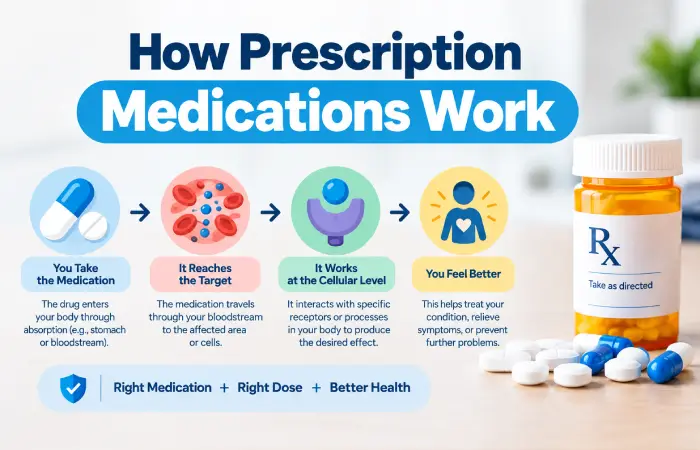
Each different prescription medicine operates through its mechanism according to its different active ingredient and therapeutic group.
Examples:
- Lisinopril – works by altering the renin-angiotensin system to lower blood pressure.
- Amlodipine- acts to relax blood vessels and therefore lowering blood pressure.
- Atorvastatin-works by lowering amount of cholesterol produced by body.
- Metformin- works on lowering glucose blood levels.
- Levothyroxine – works as a body replacement therapy in situations where the thyroid hormone is low.
- Albuterol- works by relaxing muscles surrounding the lungs allowing an easier way for breathing to occur.
- Antibiotics work against any accessible bacteria that there is the susceptible strain and they are inactive in situations with viruses.
Every medicine has different requirements concerning the mechanism, dosage, treatment duration and necessary monitoring.
Common Uses
There are a wide number of medications that are routinely prescribed, which are also commonly prescribed for treating certain diseases. The primary indications include:
- High blood pressure
- High blood cholesterol
- Type 2 diabetes
- Under active thyroid gland
- Asthma
- Bacterial infections
- Depression
- Anxiety states
- Some causes of nerve pain
- Acid reflux
- Heart disease
- Seizure states
Before taking a cold medicine, understanding its medication uses and side effects can help you use it appropriately.
It does not follow from this however, that the common usage for a certain drug will be prescribed for everybody who displays symptoms that would suggest this common indication, because there will be various individual patient features to take into consideration; such as age, diagnoses, other drugs taken concurrently, allergies and kidney and liver function among others.
Prescription Medication Safety
Taking a prescription medication safely starts with understanding exactly what you have been prescribed.
Before taking a new medicine, know:
- The medication’s name.
- Why you are taking it.
- The prescribed dose.
- How often you should take it.
- Whether it should be taken with food.
- What side effects to watch for.
- Which medicines, supplements, foods or drinks may interact with it.
- What to do if you miss a dose.
The FDA suggests going over these questions with your doctor or pharmacist and letting your health care providers know what prescription and over-the-counter drugs, as well as vitamins, minerals and herbs you are taking.
Never give prescription drugs to anyone, even if they seem to be sick with what looks like the same illness as you.
Dosage and Administration
The correct dosage depends on the specific medication and patient.
Prescription labels may specify:
- Dose strength
- Number of doses per day
- Timing
- Route of administration
- Duration of treatment
- Food-related instructions
- Special storage requirements
Do not increase, decrease or stop your medication without professional advice.
Following medication safety guidelines is especially important when combining cold medicines or giving them to children.
Stopping some drugs suddenly could make you experience withdrawal symptoms or lead to a worsening condition. If you forget a dose read the patients information with your medicine or ask your pharmacist what to do, as you should not always just take an extra one.
Common Side Effects
Side effects vary significantly between medications.
Some relatively common effects include:
- Nausea
- Headache
- Dizziness
- Stomach upset
- Diarrhea or constipation
- Drowsiness
- Dry mouth
- Changes in appetite
Some medications can cause serious adverse reactions. Prescription labeling includes sections covering adverse reactions, warnings and precautions, contraindications and overdose information.
Seek urgent medical attention for potentially serious symptoms such as severe difficulty breathing, swelling of the face or throat, loss of consciousness, severe allergic reactions or other symptoms that your medication’s safety information identifies as emergencies.
Drug Interactions
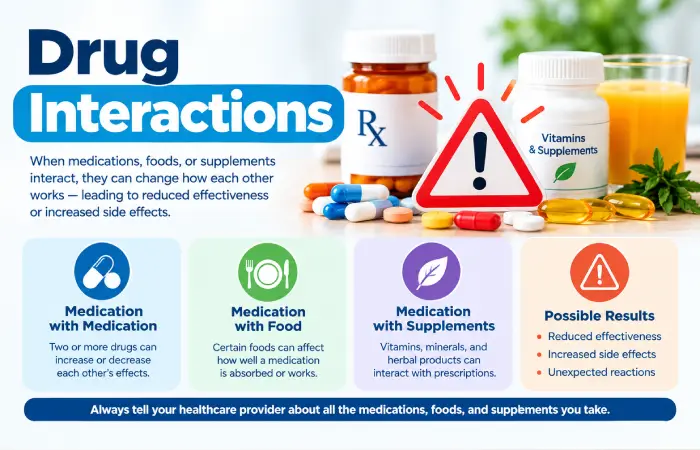
A drug interaction occurs when one medicine changes how another medicine works or increases the risk of harmful effects.
Interactions can involve:
- Prescription medicines
- OTC medicines
- Vitamins
- Herbal supplements
- Foods
- Alcohol
- Existing medical conditions
It has been pointed out for example by guidance in relation to the FDA; interactions with food or drugs can lead to increased activity or decreased activity of a medicine or can produce undesired side-effects, drug and alcohol interactions may also occurs.
If you already take other medicines, check for potential medication interactions before using a new cold medicine.
Maintain a current medication chart to show the doctor or pharmacist at every new prescription.
Refills and Medication Management
When you are on several medications, there are additional things you may need to do. Try:
- One medicine list for all meds.
- Reminders for scheduled dosages.
- Keep your medicines in the original labeled container.
- Request refills prior to your final dose.
- Follow storage directions for meds.
- Review medication list periodically with your prescriber.
- Let your pharmacist know all over-the-counter medications that you take, and any supplements.
If it is possible, try using one pharmacy, it may help the pharmacist notice any drug interactions.
Questions to Ask a Healthcare Professional
As you start taking a prescribed medication, ask yourself about such things as:
- What should this medication do?
- When and how should I take the medication?
- How long will I have to take it?
- Will I need to take it with food?
- What happens if I miss taking a dose?
- What kind of side effects should I expect?
- What side effects do I need to see the doctor for immediately?
- Is it safe to take it with other medications?
- What can I not eat, drink or take while taking this?
- Is there an available generic substitute?
- Will I need any lab or doctor follow ups?
- When will I need to order a refill?
The FDA patients’ guidelines specifically recommends discussing with providers dosage, missed dosages, interactions, adverse effects, monitoring, storage and refill availability.
The Bottom Line
A common prescription medication spans a wide class of drugs prescribed to maintain day-to-day health issues from high blood pressure and cholesterol to diabetes, thyroid conditions, asthma and mental health conditions.
It’s not necessarily important that a drug be widely prescribed, but rather if a specific drug prescription is right for you as an individual. Take medication precisely as labeled, keep an up-to-date list of medications and talk to your doctor or pharmacist about possible side effects of any drug, as well as its interaction with other medications, dosing information and refills needed.
Presently, prescription utilization is reflected in the data for medications including atorvastatin, amlodipine, levothyroxine, lisinopril, gabapentin and metformin but depending on the data sets and methodology, their ranked utilization is ranked in differing orders.
Afiya Jafar is a fitness and wellness writer who focuses on making health, exercise, and healthy lifestyle information simple and practical. Her work covers workouts, fitness motivation, strength training, nutrition, weight management, stress management, mindfulness, and everyday wellness.
Read Full Bio of Afiya Jafar →
Sameena Begum reviews selected health, wellness, fitness, and digital content for clarity, factual presentation, consistency, and reader usefulness. Her review work helps maintain clear and responsible editorial standards across PhysicalFitt content.
Read Full Bio of Sameena Begum →
Dr. Khizrana Begum is a qualified medical professional with MBBS and MD qualifications and 5+ years of experience in the medical field. She works as a General Physician and Dermatologist, with expertise in general medicine, dermatology, preventive healthcare, and skin health.
Read Full Bio of Dr. Khizrana Begum →