
 Afiya Jafar
Fitness & Wellness Writer
Afiya Jafar is a fitness and wellness writer who focuses on making health, exercise, and healthy lifestyle information simple and practical.
Read Full Bio of Author →
Afiya Jafar
Fitness & Wellness Writer
Afiya Jafar is a fitness and wellness writer who focuses on making health, exercise, and healthy lifestyle information simple and practical.
Read Full Bio of Author →
 Sameena Begum
Health, Fitness & Digital Content Reviewer
Sameena reviews selected health, wellness, fitness, and digital content for clarity, factual presentation, and reader usefulness.
Read Full Bio of Reviewer →
Sameena Begum
Health, Fitness & Digital Content Reviewer
Sameena reviews selected health, wellness, fitness, and digital content for clarity, factual presentation, and reader usefulness.
Read Full Bio of Reviewer →
 Dr. Khizrana Begum
General Physician & Dermatologist
Dr. Khizrana Begum is a General Physician and Dermatologist with MBBS and MD qualifications and 5+ years of experience in the medical field.
Read Full Bio of Medical Reviewer →
Dr. Khizrana Begum
General Physician & Dermatologist
Dr. Khizrana Begum is a General Physician and Dermatologist with MBBS and MD qualifications and 5+ years of experience in the medical field.
Read Full Bio of Medical Reviewer →
Mental Health and Fitness are not two things anymore. These days Fitness and Mental Health go together. In the year 2026 scientists are still finding out that exercising regularly can really help how you feel. It can make you feel better reduce the stress you feel make you feel more confident and help you deal with your emotions over a time. If you want to feel better about yourself or if you want to deal with stress or if you want to be more, in control of your life Fitness is an easy way to do it.
Mental Health and Fitness are connected. When you take care of your Fitness you are also taking care of your Mental Health. This guide is, about how exercise affects our health. It looks at what the latest research says. Gives us simple ideas that we can actually do. The guide talks about exercise and mental health and how they are connected.
❝
This article is a part of
Workout Motivation Hub
Mental Health and Fitness Are Closely Linked
These help control how you feel and keep your emotions balanced. The brain and body use these chemicals to stay connected. Exercise helps your body release these feel- chemicals. Dopamineand endorphins are some of the key players, in this process.
It also helps people feel better in their minds. Things like walking, running, cycling and swimming are really good, for this.
A regular morning workout routine can positively impact both mental well-being and physical health.
Key Mental Health Benefits of Exercise
You will feel happier. Your mood will be improved.
Exercise also helps you sleep better at night so you get sleep quality.
When you exercise you feel better, about yourself which means you have enhanced self-confidence.
Exercise helps you deal with situations so you have increased emotional resilience.
Understanding the psychological side of exercise can help you learn how to motivate yourself to work out and maintain healthy habits over time.
You can focus on things better. You are more productive which means you have better focus and productivity.
How Exercise Improves Mental Health
Regular exercise does a lot of things:
- It gets blood to the brain.
- It helps the brain change. Grow.
- It reduces long-term inflammation.
- It controls hormones like cortisol.
- It helps manage emotions
Some recent studies on health show that exercise has a good effect on chemicals in the brain, like serotonin, dopamine and GABA. These chemicals help with feelings and emotions. Exercise helps with health by working on these brain chemicals.
Participating in supportive fitness motivation challenges may help improve accountability and emotional resilience.
Comparison Table: Mental Health Impact of Different Exercise Types (2026 Research)
| Exercise Type | Depression Support | Confidence Boost | Stress Relief | Anxiety Reduction |
| Walking | High | Medium | High | High |
| Running | Very High | High | Very High | Very High |
| Strength Training | High | Very High | High | Medium |
| Yoga | Medium | Medium | Very High | High |
| Swimming | Very High | High | High | High |
| HIIT | High | High | Medium | Medium |
During periods of low energy or stress, exploring workout inspiration ideas can help renew enthusiasm for exercise.
Working Out for Stress Relief
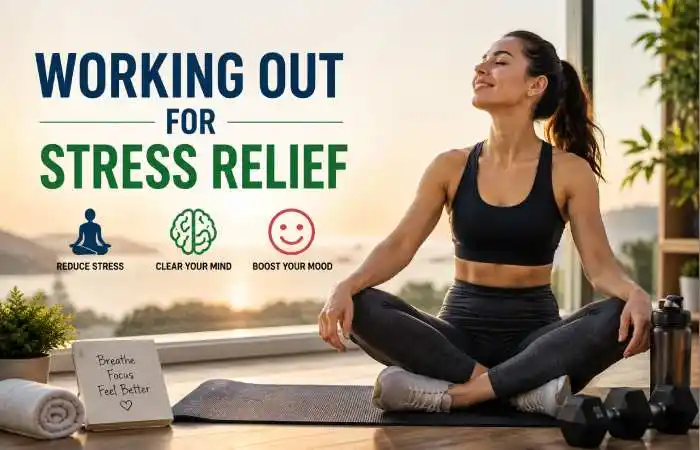
Modern lifestyles expose people to constant stress from work, finances, relationships, and technology.
Exercise helps to manage stress in a way. Here is how it works:
- It brings down cortisol levels
- It makes endorphins active
- It helps sleep
- It reduces muscle tension
Even a short 20-minute walk can make a difference, in stress recovery and mental clarity. Many psychologists say that exercise should be part of a plan to manage stress.
Fitness Motivation During Depression
Depression can really bring you down. Make you not want to do anything. It is hard to get started with exercise when you are feeling this way. The thing to remember is that you will probably feel like doing things after you start doing them not before. With exercise you start and then you will feel like doing more it does not work the other way around with depression and exercise and motivation.
Combining a positive mindset with practical workout motivation tips can make it easier to stay consistent with exercise.
Practical Tips
Start Small
Begin with:
- 5-minute walks
- Light stretching
- Short home workouts
Focus on Consistency
Aim for:
- 10 minutes daily
- 3 workouts per week
- Gradual progression
Celebrate Small Wins
Track progress such as:
- Workouts completed
- Daily steps
- Improved energy levels
Practicing effective fitness productivity strategies can reduce procrastination and support healthier habits.
Every success reinforces positive habits.
Exercise and Confidence Building
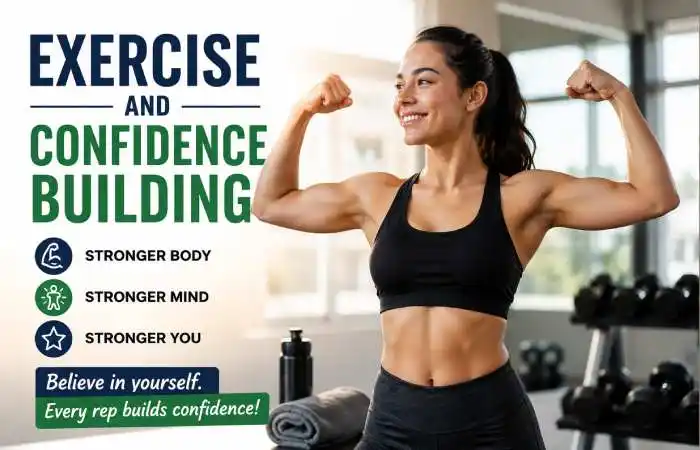
Confidence is not something you are born with. It is something you get from doing things over and achieving small successes. One good way to get confidence is to exercise. When you finish a workout or reach a fitness goal or keep a habit it helps you believe that you can make good things happen in your life. You start to think that you are able to make changes in your life because you are doing things that are good, for you. Confidence is what you get from all these things you do every day.
When you do exercise on a basis you start to see that you are getting stronger and you can do things for longer periods of time. Your posture gets better. You have more energy. It can help you in many ways like, with your physical strength and your overall energy levels.
The Confidence Cycle of Fitness
| Result | Step |
| Feel productive and motivated | Start exercising |
| Build self-belief | Achieve small goals |
| Increase confidence | See physical and mental improvements |
| Develop resilience | Take on bigger challenges |
| Strengthen long-term self-esteem | Maintain consistency |
This positive cycle creates momentum. The more you prove to yourself that you can stay committed to your goals, the more confidence you gain in your ability to handle life’s challenges.
Best Exercises for Building Confidence
Exercise is really good for you. It helps with your confidence in many different ways.
Many newcomers struggle with confidence and motivation, which is why these beginner workout motivation strategies can be especially helpful.
Different types of exercise contribute to confidence in ways:
When you do exercise it makes you feel good about yourself and that is what builds your confidence.
The different types of exercise are all good, for your confidence.
| Exercise Type | Confidence |
| Strength Training | Builds physical and mental strength |
| Running | Improves endurance and goal achievement |
| Yoga | Enhances body confidence |
| Group Fitness Classes | Develops confidence |
| Sports Activities | Improves teamwork and competitive confidence |
Tips to Build Confidence Through Fitness
- Set goals that you can actually reach and be happy with how you’ve come not how perfect you are.
- Write down what you’ve achieved in a fitness journal or use an app to track it.
- Try to exercise instead of looking for fast results.
- Don’t look at others. Think you should be, like them.
- Try things that are a little hard but not too hard so you can feel proud of yourself over time.
The biggest help to how we feel about ourselves from working out does not come from how we look. It comes from knowing that we can stick to something we want to do get past things that’re hard and keep getting better at fitness. Over time this feeling that we can do things becomes a base for really believing in ourselves and becoming a better person. Fitness is really good, for our self confidence and fitness helps with growth. (APA)
Confidence Building Progression
| Week | Goal |
| 1 | Walk 10 minutes daily |
| 2 | Add bodyweight exercises |
| 3 | Increase workout duration |
| 4 | Track personal records |
| 5+ | Set new fitness goals |
For individuals pursuing fat-loss goals, understanding how to stay motivated to work out for weight loss can reduce setbacks and improve long-term adherence.
How Fitness Improves Self Discipline
Self-discipline is one of the most overlooked benefits of fitness.
Every workout requires:
- Planning
- Consistency
- Delayed gratification
- Accountability
Over time, these habits transfer into other areas of life, including:
- Career performance
- Financial management
- Academic achievement
- Personal relationships
Fitness essentially becomes a daily practice of self-discipline.
The Habit Loop
Cue → Workout → Reward
Repeated consistently, this loop strengthens long-term behavioral discipline.
Best Fitness Solutions for Mental Wellness
| Option | Cost | Best For |
| Walking | Free | Beginners |
| Gym Membership | Medium | Structured Training |
| Personal Trainer | High | Accountability |
| Fitness Apps | Low | Home Workouts |
| Group Classes | Medium | Social Motivation |
| Yoga Programs | Low-Medium | Stress Reduction |
Mental resilience also plays a major role in staying motivated to go to the gym and maintaining a regular training schedule.
Common Mistakes That Hurt Mental Health Progress
When You Try To Do Much Too Soon
A lot of people give up because they start with goals that are not realistic.
They want to achieve everything at and that is just not possible.
Doing Much Soon is a big problem for many people.
Only Thinking About How You Look
You should think about how you feel your energy levels and your mental well-being.
Do not just focus on Physical Results because that is not everything.
Physical Results are important. They are not the only thing that matters.
Not Taking Time To Rest
Sleep is really important for your health.
You need to give your body time to recover because that is crucial, for your resilience.
Ignoring Recovery is something that a lot of people do. That is not good.
Final Thoughts
Mental Health and Fitness are really connected. Exercise is a way to feel better about yourself. It does not cost a lot of money. It really works. If you want to feel less stressed or if you want to feel more confident or if you want to deal with depression or if you want to be more in control of yourself then exercising all the time can help you have a life. Mental Health and Fitness are important, for a life.
Creating a comfortable exercise environment with effective home workout motivation strategies can lower barriers to getting started.
The important thing to do is to start working out and keep doing it all the time. The thing that matters the most is not finding the workout it is the workout itself. You just need to start and keep going that is the workout. The workout is what you make it so just start the workout. Do the workout every day.
Afiya Jafar is a fitness and wellness writer who focuses on making health, exercise, and healthy lifestyle information simple and practical. Her work covers workouts, fitness motivation, strength training, nutrition, weight management, stress management, mindfulness, and everyday wellness.
Read Full Bio of Afiya Jafar →
Sameena Begum reviews selected health, wellness, fitness, and digital content for clarity, factual presentation, consistency, and reader usefulness. Her review work helps maintain clear and responsible editorial standards across PhysicalFitt content.
Read Full Bio of Sameena Begum →
Dr. Khizrana Begum is a qualified medical professional with MBBS and MD qualifications and 5+ years of experience in the medical field. She works as a General Physician and Dermatologist, with expertise in general medicine, dermatology, preventive healthcare, and skin health.
Read Full Bio of Dr. Khizrana Begum →